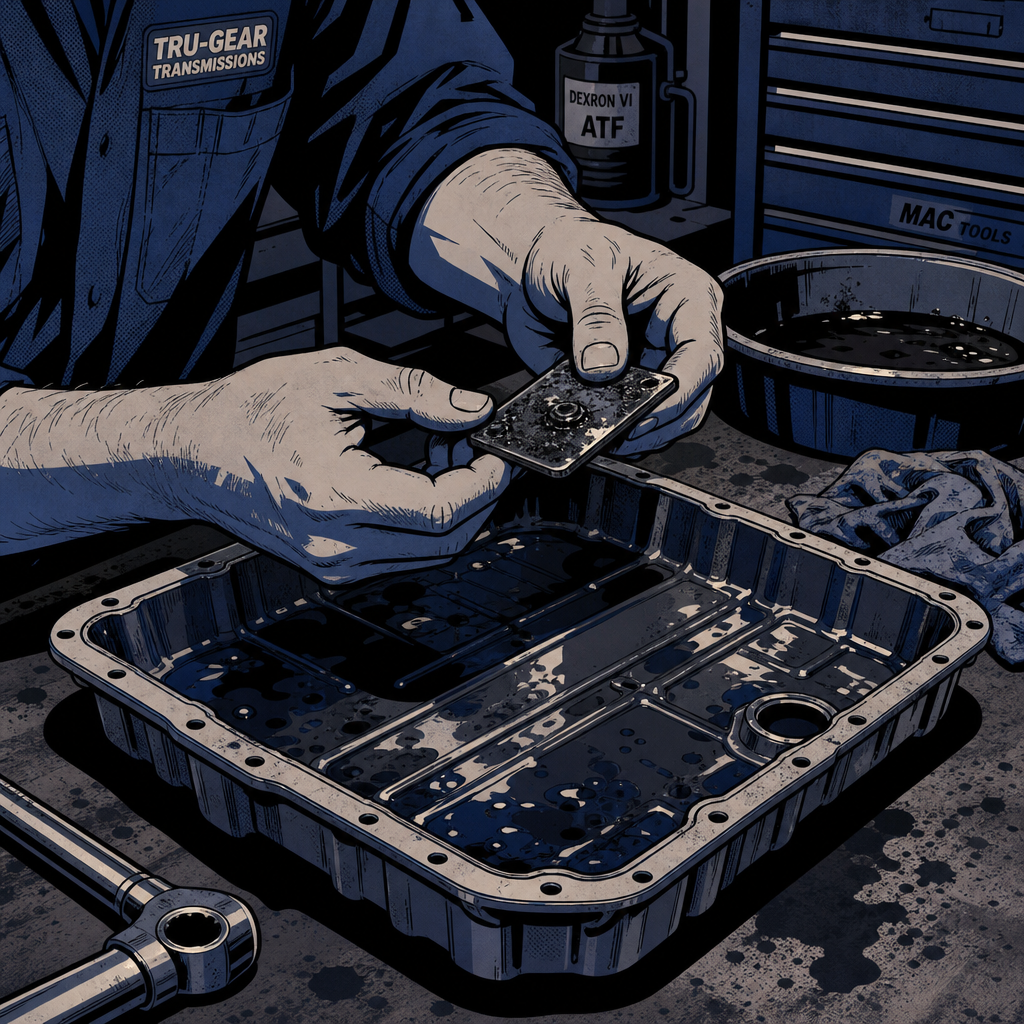
Ask five manufacturers when to change automatic transmission fluid and you’ll get five different answers — anywhere from 15,000 miles to “lifetime.” In the shop, “lifetime” almost always means “lifetime of the warranty,” not lifetime of the transmission. Technicians who stay ahead of ATF degradation with routine drain-and-fills consistently see fewer comebacks for shift quality complaints and fewer catastrophic transmission failures. This post lays out what actually matters when servicing automatic and CVT transmissions: realistic intervals, drain-and-fill technique, when a filter swap is worth the labor, and how to avoid the fill-level mistakes that turn a routine service into a comeback.
Why “Lifetime Fluid” Doesn’t Hold Up
Automatic transmission fluid isn’t just a lubricant — it carries friction modifiers, detergents, and anti-foaming agents that degrade with heat cycling and mileage. As fluid ages, friction modifiers lose their ability to let clutch packs apply and release smoothly, detergents saturate and stop suspending shed clutch material and varnish, and anti-foaming agents break down, which lets aeration interfere with heat transfer at the cooler. The result shows up as a customer complaint before it shows up as a fault code: harsh shifts, flare on engagement, or a growl/shudder while coasting.
“Lifetime fluid” designations are a warranty-period marketing decision, not an engineering claim about the transmission’s actual service life. Manufacturers that publish an interval — Honda at 30,000 miles for conventional automatics (some techs push customers to 15,000–20,000 on hard-use vehicles), Toyota and other OEMs commonly in the 30,000–60,000 range, and CVT-specific intervals often tighter, around 15,000–30,000 miles due to belt/chain heat sensitivity — are telling you something real. When a vehicle has no listed interval, treat it as a red flag, not a green light to skip service.
Setting a Practical Drain-and-Fill Interval
For most conventional automatics without a listed factory interval, a 30,000-mile drain-and-fill is a reasonable default, tightened to 15,000–20,000 for vehicles used for towing, stop-and-go commercial driving, or hot climates. CVTs and dual-clutch transmissions run hotter and are less tolerant of degraded fluid, so lean toward the shorter end of the manufacturer’s range, or 15,000–25,000 miles if nothing is published. Manual transaxles, transfer cases, and differentials on 4×4/AWD vehicles often share a similar 30,000-mile interval and are easy to knock out in the same service — Haldex-based AWD systems (VW/Audi, Volvo) and part-time 4×4 transfer cases are commonly specified at 30,000 miles as well.
A drain-and-fill through the pan or a drain plug typically only removes 30–50% of the total fluid volume, since fluid remains in the torque converter and cooler lines. This means color alone is a poor indicator of remaining service life — fluid can look dark again within 50–100 miles of driving after a single drain-and-fill simply because the old fluid redistributes through the system. Don’t use color as a pass/fail test; use mileage and drain history.
Multiple Drain-and-Fills vs. a Full Flush
If a customer wants closer to a full fluid exchange without machine-flush risk, doing 3–4 drain-and-fills in sequence (with normal driving between each) replaces a much higher percentage of total fluid than a single service. Rough math: draining 50% per cycle, three consecutive drain-and-fills replace roughly 87.5% of the original fluid. This approach is lower-risk than a high-pressure flush machine on a transmission with unknown maintenance history, since flush machines can dislodge debris and push it into narrow cooler passages on a neglected unit.
Getting a true “cherry” fluid color typically requires doing all 3–4 fills within a short window — spacing them out over months lets contamination redistribute and slows the visual improvement, even though the functional benefit is still there. Set customer expectations accordingly: color is a nice-to-have, not the goal.
Filter Replacement: When It’s Worth the Labor
Whether to replace the transmission filter alongside a fluid service depends on the transmission design and what’s already apart:
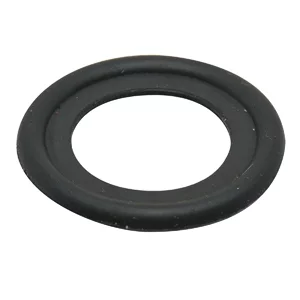
- If the pan has to come off to drain the fluid, and the filter kit is only a few dollars more than the pan gasket alone, replace it. You’re already there, and the labor cost is negligible on top of a pan drop.
- On many conventional automatics, the internal filter functions primarily as a break-in strainer for larger debris in a new or freshly rebuilt unit, then largely goes into bypass. Replacing it on a routine drain-and-fill isn’t strictly necessary if you’re not opening the pan for that reason.
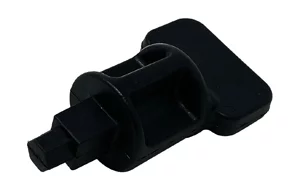
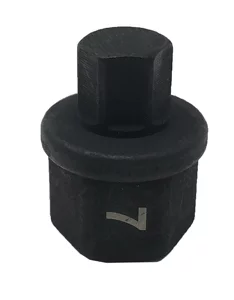
- Some transmissions (a subset of Hyundai/Kia units, for example) have an externally accessible filter element in the pan that can be serviced without splitting the case — these are worth doing on a normal interval since access is easy.
- Dropping the pan is also the opportunity to inspect and clean the magnet and pan sump for metal shavings or clutch material — a useful diagnostic step regardless of whether the filter gets replaced.
Don’t oversell filter replacement as mandatory on every fluid service if the design doesn’t call for it, but don’t skip it when the pan is already off and the incremental cost is minimal.
Getting Fill Level Right
The most common mistake on a drain-and-fill isn’t skipping the service — it’s getting the fill level wrong. Adding back exactly the volume drained is a reasonable starting estimate, but it is not a substitute for OEM fill procedure, since actual capacity varies with torque converter retention, cooler line volume, and whether the vehicle was level and at operating temperature during the drain. Overfilling causes aeration and foaming; underfilling causes pump cavitation and can starve clutch packs — both lead to comebacks and, in the worst cases, a replaced transmission.
Follow the OEM fill procedure every time: engine running or off as specified, transmission in the gear position specified, fluid at the specified temperature range, and checked via dipstick or fill-plug level as designed. Vehicles with a side check valve (common on several Hyundai/Kia transmissions) make this simpler — fluid stops accepting more once it reaches the correct level. Vehicles with a dipstick should be checked on a level surface with the engine running and the gear selector cycled through the gears first to fill the converter and circuit fully before reading the stick.
Reading Symptoms Correctly
A drain-and-fill is preventive maintenance, not a repair — it’s meant to prevent shift quality problems from developing, not necessarily reverse ones that already exist. If a customer reports an existing symptom (growl in a specific gear, shudder on takeoff, harsh 1-2 shift), set expectations that a fluid service may improve shift feel but is unlikely to fully resolve a mechanical or clutch-wear issue already present. Some CVT-equipped models also have TSB-covered software recalibrations for transmission control modules that address shift harshness or overheating protocols — check for an applicable TSB before assuming fluid alone will fix a shift complaint on a CVT.
Quick Reference Checklist
- Check for a published OEM interval before assuming “lifetime fluid” is safe to ignore
- Default to 30,000 miles for conventional automatics, 15,000–25,000 for CVTs, tighter for towing/commercial use
- Don’t judge fluid condition by color alone — track mileage and service history instead
- Replace the filter when the pan is already off and the incremental cost is low
- Follow OEM fill procedure exactly; don’t rely solely on drained-volume replacement
- Inspect the pan magnet and sump for debris any time the pan is removed
- Check for CVT-related TSBs before promising a fluid service will fix a shift complaint
FAQs
How often should ATF actually be changed if there’s no listed interval?
Absent a published OEM interval, 30,000 miles is a reasonable default for conventional automatics, with 15,000–20,000 miles for vehicles used in towing, commercial, or extreme-heat conditions.
Does dark transmission fluid mean it needs to be changed?
Not by itself. Fluid darkens with normal use and heat exposure regardless of remaining service life. Use mileage and drain history to set intervals, not fluid color.
Is a full flush better than a drain-and-fill?
A flush replaces more fluid in one service, but on a transmission with unknown maintenance history it carries a risk of dislodging debris into cooler lines. Sequential drain-and-fills (3–4 services) are a lower-risk way to approach full fluid replacement.
Do I need to replace the filter every time I change the fluid?
Not always. If the filter is easily accessible and the pan is already off, replace it since the added cost is minor. On designs where the filter is a break-in strainer that’s already gone into bypass, routine replacement isn’t required.
Can overfilling a transmission cause damage?
Yes. Overfilling causes aeration and foaming that interferes with cooler heat transfer and pump performance; underfilling can cause pump cavitation and clutch pack starvation. Always follow OEM fill procedure rather than estimating from drained volume alone.
Will a fluid change fix a transmission that’s already shifting harshly?
It may improve shift feel but won’t necessarily resolve an existing mechanical issue or worn clutch material. For CVTs specifically, check for a TSB-covered software update before assuming fluid service alone will fix a harsh-shift complaint.
Recommended Transmission Tools
Having the right specialized equipment makes transmission service work safer, faster, and more precise. Check out our selection of transmission service tools for everything from safe pan access to reliable refill procedures.
- Transmission jacks and lift stands for safe pan access and component work
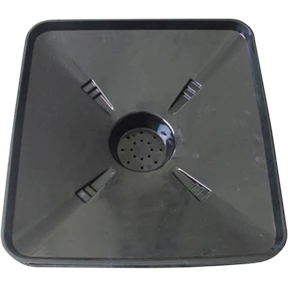
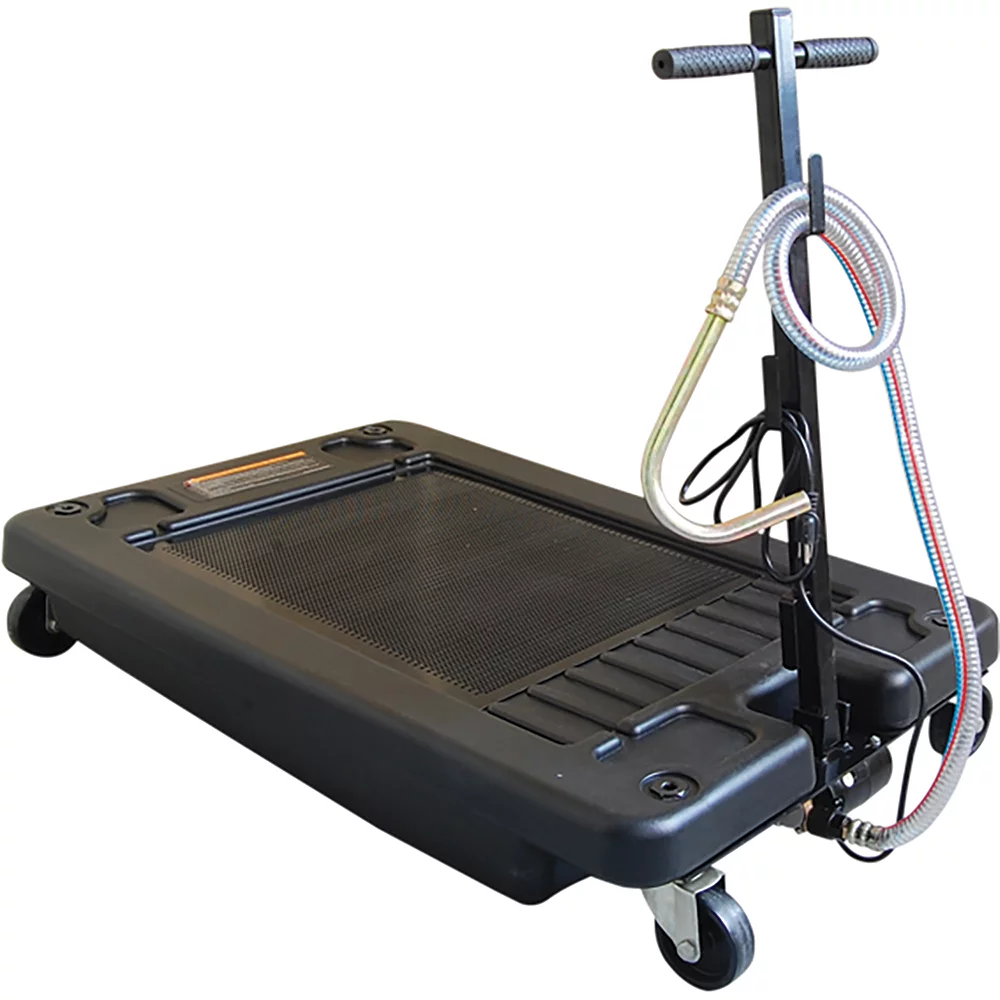
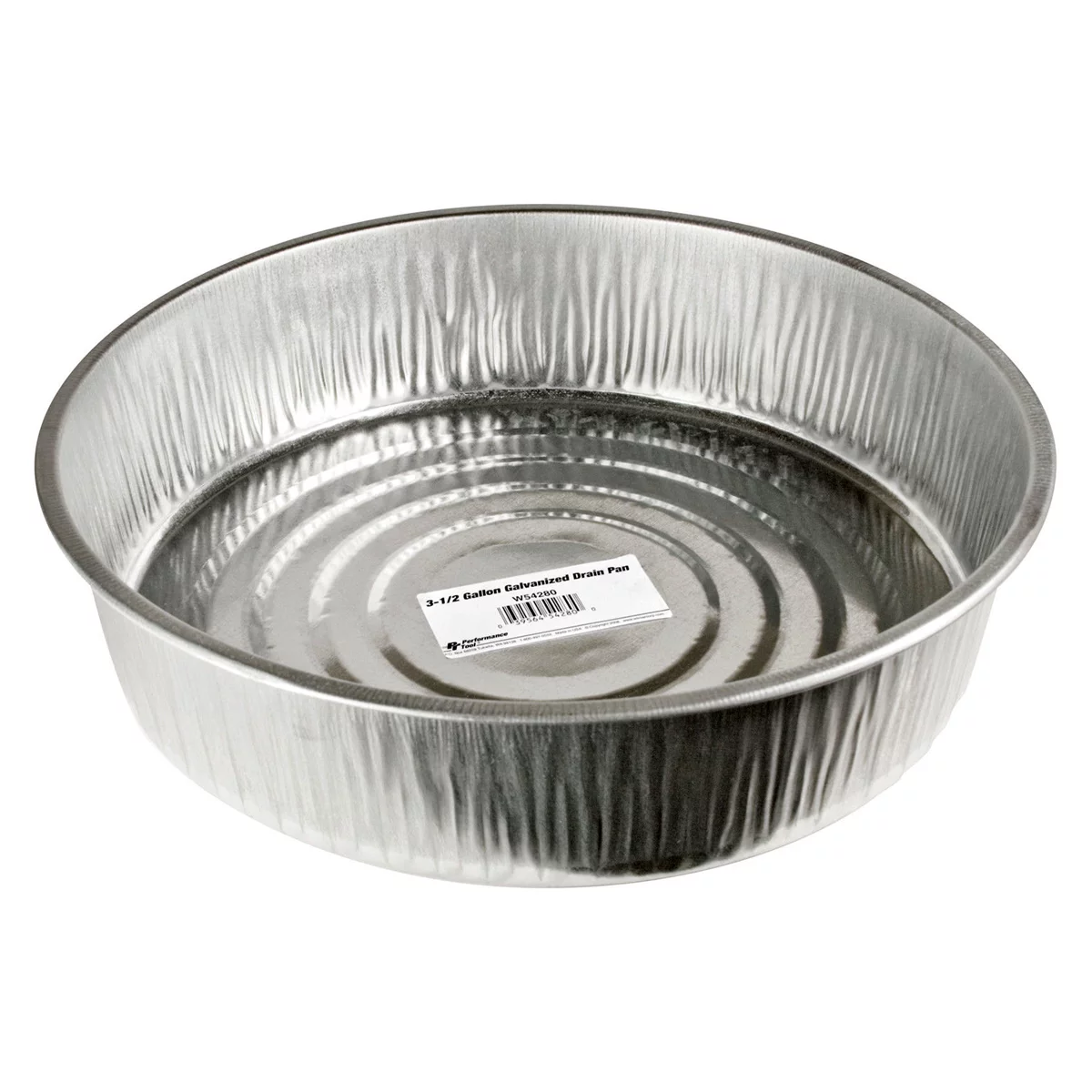
- Drain pans, fill pumps, and collection systems for fluid management
- Level gauges, torque converter tools, and fluid circulation equipment

The Toolsource Technical Team blends decades of real-world automotive service experience with up-to-date technical research. Our writers collaborate with professional mechanics, shop owners, and diagnostic specialists to deliver practical, workshop-ready guidance you can trust.


Follow us on social media