
Checking transmission fluid is critical for extending your transmission’s lifespan. Transmission fluid lubricates moving parts, cools the system, and provides hydraulic pressure for gear shifts. This guide covers proper checking techniques, addresses the temperature debate, and explains alternatives to traditional dipsticks.
Before You Start: Preparation Essentials
Gathering the right tools and materials


You’ll need clean shop rags, a flashlight, and correct automatic transmission fluid (ATF). Park on level ground—even slight inclines throw off readings. For fill-hole systems, gather a ratchet, catch pan, and fluid pump.
Locating your dipstick or fill port
Transmission dipsticks typically have brightly colored handles near the firewall (rear-wheel-drive) or passenger side (front-wheel-drive). Modern vehicles built after 2015 often lack dipsticks, using electronic monitoring or fill plugs instead. Check your owner’s manual if you can’t locate one.
Consult your owner’s manual
Manufacturer procedures vary significantly—some require the engine running in park, others specify neutral, and some mandate the engine be off. Following these specifications is essential to avoid warranty issues and transmission damage.


Mercedes 722.9 Drive Line Filler Adapter ATF 129
Mfg: Assenmacher Specialty Tools
Part #: ATF129
ID: 105640

Engine Temperature: The Hot vs Cold Debate
Why temperature matters for accurate readings
Transmission fluid expands 10-15% between cold and operating temperature. Dipsticks show both “cold” and “hot” ranges to account for this. Checking cold fluid against hot marks suggests you’re low; checking hot fluid against cold marks suggests overfill. Both scenarios cause serious transmission damage. Underfilling starves the pump causing cavitation and erratic shifting. Overfilling creates excessive pressure, foaming, and blown seals.
Warm engine method (160°F ideal) vs cold check differences
Check transmission fluid with the engine and transmission warmed to operating temperature—ideally 160-180°F. Drive for 15-20 minutes until the cooling fan cycles on. This circulates fluid throughout the system, providing an accurate level reading. Cold checks are only appropriate when specified in your owner’s manual.
Step-by-Step Checking Procedure
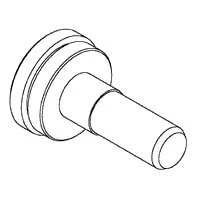
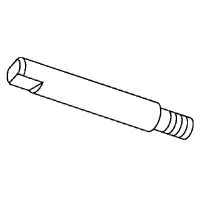
Transmission Fluid Pump Aligner Ford T89T-70010-B
Mfg: OTC Tools and Equipment
Part #: 307-222
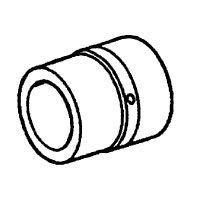
Transmission Fluid Pump Alignment Gauge T74P-77103-B
Mfg: OTC Tools and Equipment
Part #: 307-041
Engine running or off: what your manual says
Most automatics require checking fluid with the engine running—this keeps the torque converter and valve body filled, representing actual operating level. However, exceptions exist (many Hondas require engine off). Always follow your manual’s specification.
Gear shifting ritual
With the engine running and parking brake engaged, shift slowly through each gear position—Park, Reverse, Neutral, Drive, and any lower gears—pausing 5 seconds in each. This circulates fluid through every passage and clutch pack, ensuring an accurate reading.
Proper dipstick insertion and removal
Wipe the dipstick completely clean, reinsert it fully, wait 2-3 seconds, then withdraw it smoothly. Don’t pump it in and out. Hold the dipstick horizontally when reading. Inspect both sides of the blade. If unsure, repeat the process.

Reading Fluid Level and Condition
Understanding hot and cold fill lines
If you’ve warmed the vehicle, fluid should read within the hot range. The fluid doesn’t need to be exactly at the top mark—anywhere within the designated range is acceptable. Never assume marks apply to your current temperature without consulting your manual.
Fluid color assessment
Fresh ATF is bright red or pink (some manufacturers use amber, green, or blue). As it ages, it darkens to brownish-red, then dark brown or black. Hold the dipstick over white paper to assess color. Bright red indicates good condition. Dark brown or black, especially with a burnt smell, indicates overdue service and potential internal damage. Metal particles or a glittery appearance signal clutch material debris—a serious warning requiring professional attention.
What overfill and underfill damage look like
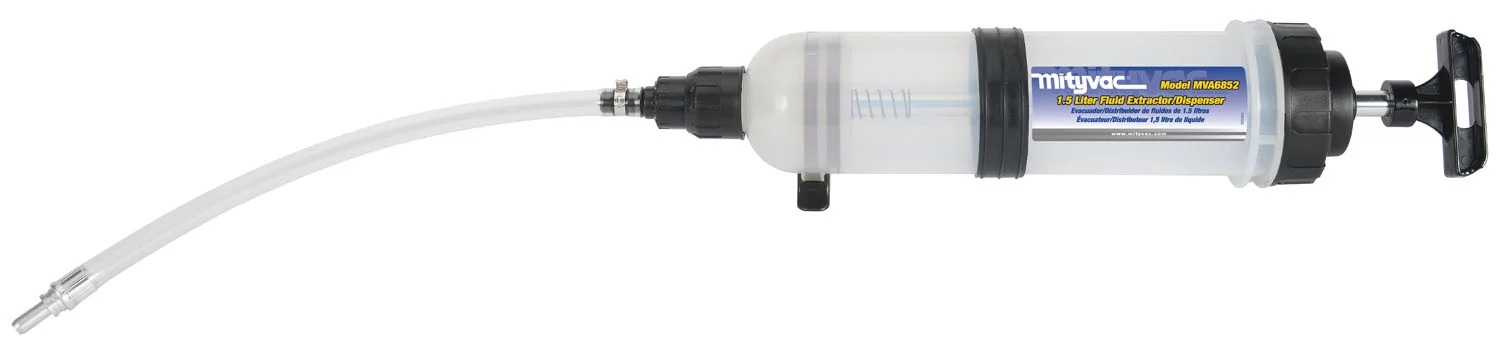
Underfilled transmissions exhibit delayed engagement, slipping, harsh shifts, and overheating. Overfilled transmissions cause foaming, erratic shifts, blown seals, and leaks. If your fluid is more than a quart low, add in small increments (1/4 to 1/2 quart), rechecking between additions. If overfilled, remove excess using a fluid extractor pump.
Vehicles Without Dipsticks
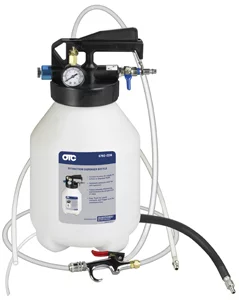

Automatic Transmission Fluid Exchanger
Mfg: RTi Reading Technologies, Inc
Part #: 400 80009 00
Electronic transmission fluid monitoring systems
Many late-model vehicles use electronic monitoring through temperature, pressure, and conductivity sensors. When service is needed, a warning appears in the instrument cluster. These systems require dealer-level scan tools to access transmission module data. They can’t detect sudden fluid loss from leaks, so periodic visual inspection for leaks remains important.
Fill hole method for modern vehicles
Vehicles without dipsticks use a fill plug system. Raise the vehicle on a lift, locate the fill plug on the transmission housing, and remove it. At operating temperature (usually 95-105°F), fluid should be level with the fill hole opening or drip slightly from it. This method requires proper equipment and expertise—improper fill levels or contamination can cause expensive transmission damage.
When to seek professional help
Consult a professional if: you can’t locate a dipstick or fill plug; you experience shifting problems despite correct fluid level; you discover dark, burnt-smelling fluid or metal particles; or your vehicle requires scan tools to verify transmission temperature. Professional shops can perform fluid exchanges and inspect old fluid for diagnostic clues.
Essential Transmission Fluid Checking Checklist
- Park on level ground and engage parking brake
- Consult owner’s manual for vehicle-specific procedure
- Warm transmission to operating temperature (15-20 minutes of driving)
- With engine running (unless manual specifies otherwise), cycle through all gear positions
- Pause 5 seconds in each gear position
- Return to Park or Neutral as specified
- Remove dipstick, wipe clean, reinsert fully, and remove to check level
- Verify fluid level reads within the HOT range
- Inspect fluid color (should be red or pink, not brown or black)
- Check for burnt smell or metal particles
- Add correct ATF in small increments if low (1/4 to 1/2 quart at a time)
- Recheck level after adding fluid
- Note any leaks or fluid on transmission housing
Transmission Fluid Checking Methods Comparison
| Method | Vehicles | Difficulty | Equipment Needed | Accuracy |
|---|---|---|---|---|
| Traditional Dipstick (Hot) | Most pre-2015 vehicles, many current trucks/SUVs | Easy | Clean rags, flashlight, correct ATF | High |
| Traditional Dipstick (Cold) | Some Honda models, specific vehicles per manual | Easy | Clean rags, flashlight, correct ATF | Moderate |
| Fill Plug Method | Many 2015+ vehicles, performance cars, European brands | Moderate to Difficult | Lift/jack stands, scan tool, fluid pump, catch pan | High |
| Electronic Monitoring | Premium/luxury vehicles, some newer models | Easy to Difficult | Dealer scan tool | Variable |
Frequently Asked Questions
Should transmission fluid be checked with engine running or off?
Most automatic transmissions require checking with the engine running. This keeps the torque converter and valve body filled, representing actual operating level. With the engine off, fluid drains back into the pan, giving a falsely high reading. Some manufacturers (particularly Honda on certain models) specify checking with the engine off. Always consult your owner’s manual for your specific vehicle.
What’s the correct ATF type for my vehicle?
Automatic transmission fluid type varies by manufacturer and model. Common specifications include Dexron III, Dexron VI, Mercon V, Mercon LV, and ATF+4 (Chrysler). Your owner’s manual lists the correct specification. Never substitute or mix different fluid types unless specifically listed as compatible. Using incorrect fluid causes shifting problems, clutch slippage, and transmission damage.
How often should I check transmission fluid?
Check transmission fluid monthly or before long trips. Inspect fluid condition every 30,000 miles. Most transmission specialists recommend service every 60,000-100,000 miles despite “lifetime fluid” claims. Severe service (towing, mountainous driving, extreme temperatures) warrants more frequent checking and service. Check immediately if you notice shifting issues, slipping, or unusual transmission behavior.
What should I do if my vehicle doesn’t have a dipstick?
First verify in your owner’s manual that your vehicle truly lacks a dipstick. If confirmed, use electronic monitoring systems to track fluid status, locate the fill plug and use the fill-hole method, or visit a dealership with proper scan tools. Even “sealed for life” transmissions can be serviced—this designation often means “life of the warranty” rather than actual vehicle lifespan.
Can I check manual transmission fluid the same way?
Manual transmissions rarely have dipsticks—they use a fill plug system. Raise the vehicle safely, locate the fill plug, and remove it. Fluid should be at the bottom of the fill hole. Manual transmission fluid differs from automatic transmissions—manuals often use gear oil (75W-90) or specialized transmission fluid. Always consult your manual for the correct specification.
What does it mean if transmission fluid is brown instead of red?
Brown transmission fluid indicates oxidation from age, heat, and mileage. Light brown suggests significant use but possibly serviceable condition—typical around 60,000-100,000 miles. Dark brown or black fluid with a burnt odor indicates severe degradation and potential internal damage. Service immediately. At this point, fluid has lost lubricating and cooling properties, and a transmission specialist should assess whether a fluid change or rebuild is appropriate.

Transmission Holding Fixture T88T-7025-C
Mfg: OTC Tools and Equipment
Part #: 308-170
ID: 108430

Installer/Remover – Service Lockup Valves and TC
Mfg: Mopar Essential Tools
Part #: 6301
ID: 114529

Ford Transmission Grommet Remover T84P-7341-A
Mfg: OTC Tools and Equipment
Part #: 7788
ID: 62219
Now that you understand the importance of checking transmission fluid at the right temperature, it’s time to stock up on quality maintenance products. Our Oil & Fluids category offers everything you need to keep your transmission running smoothly.
- Transmission Fluid: Factory-approved and synthetic alternatives for superior performance
- Fluid Level Dipsticks: Accurate tools to measure transmission fluid depth and condition
- Fluid Extraction Pumps: Make fluid changes easier and cleaner with professional-grade extraction equipment
Essential Transmission Maintenance Tools
Checking your transmission fluid is just the first step in keeping your vehicle running smoothly. Whether you’re performing routine maintenance or diagnosing transmission issues, having the right tools on hand makes the job easier and more accurate. Browse our full selection of transmission maintenance and diagnostic tools to find everything you need.
Popular products in this category:
- Transmission fluid dipsticks and testers for accurate fluid level and condition assessment
- Fluid extractors and pumps for safe and mess-free transmission fluid changes
- Transmission jack stands and lifts for secure vehicle support during maintenance work
For the tools in this guide, browse Coolant Leak Detectors at Tool Source.

The Toolsource Technical Team blends decades of real-world automotive service experience with up-to-date technical research. Our writers collaborate with professional mechanics, shop owners, and diagnostic specialists to deliver practical, workshop-ready guidance you can trust.


Follow us on social media