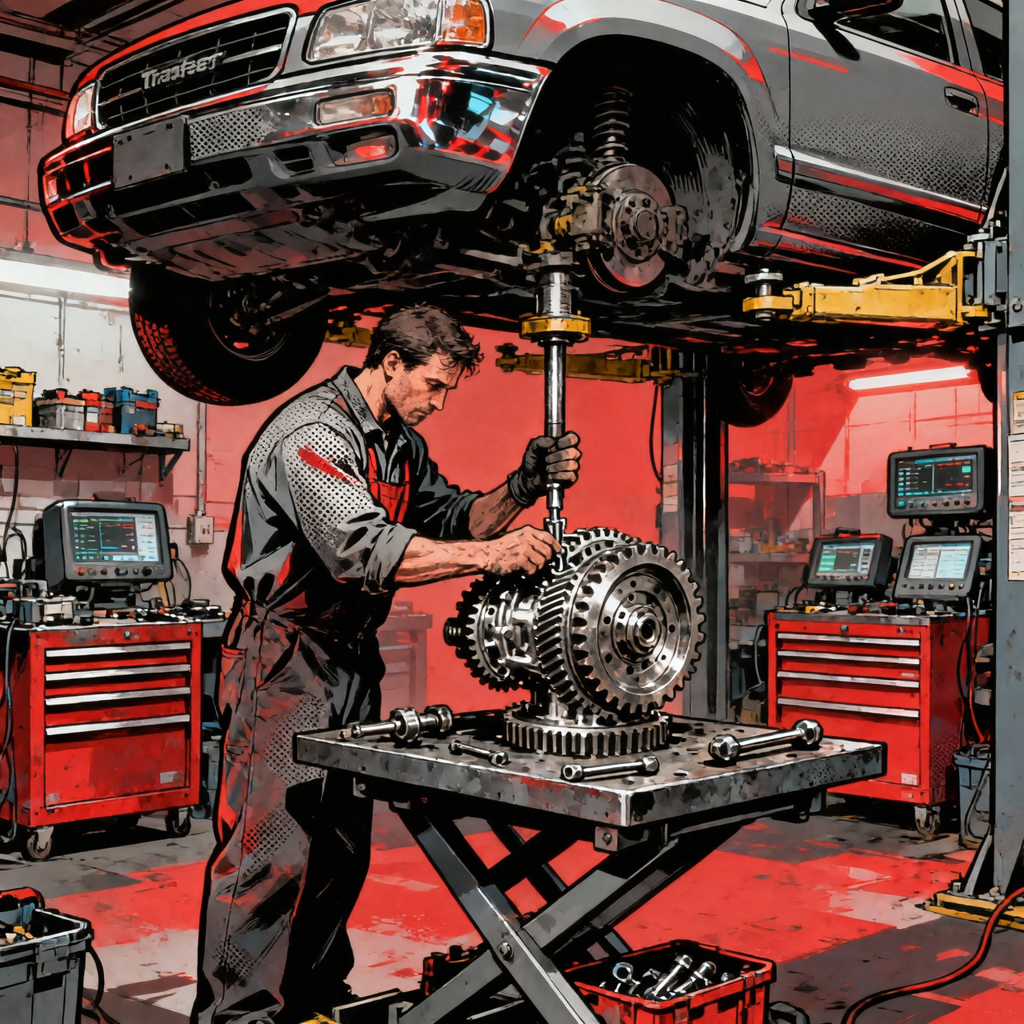
The transfer case distributes engine power between front and rear axles in four-wheel-drive systems while enduring extreme stress cycles. Understanding its operation and failure modes can save thousands in repair costs and prevent drivetrain damage. This guide covers maintenance, troubleshooting, and upgrades for DIYers and technicians.
What Is a Transfer Case and Why It Matters
How transfer cases distribute power to front and rear wheels
The transfer case bolts to the transmission and splits rotational force between both axles. In most configurations, the rear driveshaft receives direct power while a chain or gear set drives the front output shaft. Chain-driven units (NP231, NP241) are lighter and quieter but can struggle under extreme torque. Gear-driven cases (NP205, Atlas) weigh more and produce gear whine, but operate 30+ years with proper maintenance and minimal wear under constant off-road use.
Part-time vs full-time systems explained
Part-time transfer cases offer 2WD/4WD High/4WD Low positions without a center differential. Both axles receive locked, equal power—excellent for low-traction situations but problematic on dry pavement where tire scrubbing creates bind-up stress. You must disengage 4WD before returning to paved roads.
Full-time systems have a center differential or viscous coupling allowing front and rear axle speed differentiation during turns. These can stay engaged on any surface without mechanical damage, making them ideal for varying conditions. The trade-off is complexity—more components increase failure risk and fluid capacity requirements.
Why transfer case health impacts 4WD reliability
Every downstream component—driveshafts, differentials, CV joints, wheel bearings—relies on balanced, smooth power delivery. When internal components wear unevenly or fluid breaks down, vibration travels throughout the drivetrain. A failing chain creates slack that hammers output shaft bearings; worn actuators prevent proper engagement, leaving you unexpectedly stuck in 2WD. Catastrophic failure rarely stays contained—a broken chain can punch through the aluminum housing, dumping fluid and potentially locking the driveline at highway speeds. The National Highway Traffic Safety Administration’s data shows proper transfer case maintenance prevents 70% of driveline-related roadside failures.
Essential Transfer Case Maintenance Schedule
Fluid change intervals by vehicle make and model
Most manufacturers specify transfer case fluid changes between 30,000 and 50,000 miles under normal conditions, with shorter intervals for severe service (towing, frequent 4WD use, or water crossings). Jeep Wrangler NP231 and NP241 cases typically need ATF+4 every 30,000 miles, while GM’s NP263 units use Autotrac II on a 50,000-mile schedule. Ford’s electronic shift-on-the-fly systems call for Mercon ATF with 40,000-mile intervals.
Chain-driven cases need more frequent attention than gear-driven units because chain stretch accelerates fluid contamination with metal particles. If you regularly submerge the transfer case during water crossings, inspect fluid every 15,000 miles—water intrusion destroys bearings within thousands of miles. Always verify your specific fluid type in the owner’s manual; incorrect viscosity or additive packages damage clutch packs in electronically controlled cases.
Warning signs of neglect and fluid degradation
Fresh transfer case fluid appears translucent with a slight amber or red tint. Thick, black liquid with a burnt odor indicates severely degraded lubricant no longer protecting internal components. Metallic glitter indicates bearing or gear wear; chunks suggest catastrophic damage in progress.
Audible symptoms include grinding during mode shifts, whining that changes pitch with vehicle speed (not engine RPM), or clunking when engaging 4WD. Vibration felt through the floor at specific speed ranges often indicates worn output shaft bearings. Difficulty shifting between ranges, especially into 4WD Low, usually suggests issues with the shift fork, rail, or electronic actuator rather than fluid condition.
DIY maintenance checklist to prevent costly failures
- Inspect case exterior for fluid seepage around output shaft seals and case halves every oil change
- Verify proper fluid level at inspection plug when vehicle is level and cold
- Change fluid per manufacturer schedule using exact specified type (never substitute generic gear oil)
- Check shift linkage for binding and proper adjustment
- Inspect driveshaft U-joints and CV boots—vibration accelerates transfer case bearing wear
- Verify all four tires match in size and maintain equal pressure
- Exercise full-time AWD systems monthly if not used regularly
- Listen for unusual noises during test engagement in a safe area before heading off-road
- Inspect vent tube for blockage—pressure buildup forces fluid past seals
- Document fluid condition at each change to track degradation rate
Common Transfer Case Failures and Prevention
How tire size mismatches damage your transfer case
When front and rear tire diameters differ by even 1/4 inch, the transfer case must compensate for speed differential. In part-time systems without a center differential, this creates continuous binding that overheats fluid, stretches chains, and hammers bearings. Driving 10,000 miles with a mismatched spare tire generates wear equivalent to 50,000 miles of normal operation.
Full-time systems with center differentials handle minor variations, but extreme mismatches overwhelm the differential and force continuous coupling work. This generates excessive heat, cooks the silicone fluid inside, and causes lockup or failure. Always rotate tires regularly, replace all four when tread depth variation exceeds 3/32 inch, and never mix tire models or sizes across axles.
Chain vs gear-driven durability and failure modes
Chain-driven transfer cases dominate modern vehicles due to packaging advantages and reduced noise. The NP231, NP241, and similar units use a heavy-duty chain rated for high torque, but they’re ultimately a wear item. Expect 150,000-200,000 miles from a well-maintained chain under normal use, potentially much less with aggressive off-roading, heavy towing, or oversized tires.
When chains fail, they typically stretch first—creating slack and rattling at idle in 4WD. Eventually a link fails or the chain jumps teeth, resulting in complete loss of front axle drive. Gear-driven cases like the NP205 and Atlas eliminate this failure entirely. These units exceed 300,000 miles with only fluid changes, making them ideal for serious off-road builds despite weight penalty and gear whine.
Improper 4WD use on pavement: what actually breaks
Running part-time 4WD on dry pavement creates destructive forces with every turn. As the vehicle corners, locked transfer case forces front and rear axles to turn together, loading the chain, gears, and output shafts with tremendous lateral force.
Damage accumulates in output shaft bearings first—they’re designed for radial loads, not lateral forces from driveline bind. You’ll notice increased play, then vibration, eventually seal failure and fluid loss. Chain or gear teeth experience impact loading rather than smooth rotation, accelerating wear and potentially causing sudden failure. Use part-time 4WD only where wheel slip occurs—snow, ice, mud, sand, or loose gravel—and disengage before returning to high-traction surfaces.
When to Upgrade vs Rebuild Your Transfer Case
Cost comparison: replacement, rebuild, or upgrade options
A factory replacement transfer case typically runs $2,500-$4,500 including 6-8 hours labor. Remanufactured units from suppliers like Zumbrota or Remy cost $1,200-$2,200 with a 3-year unlimited-mileage warranty covering defects. DIY rebuilds using master overhaul kits cost $300-600 but require specialized tools and significant mechanical aptitude.
For vehicles with significant modifications—lifted suspension, 35+ inch tires, or serious off-road use—upgrading to aftermarket cases like the Atlas II ($3,200-$4,000) makes sense when paying for removal and installation anyway. You get lower gear ratios for crawl control, stronger internals for modified drivetrain stress, and improved shift quality. The cost premium over rebuild narrows when factoring performance advantages and reduced failure risk.
| Option | Cost Range | Best For |
|---|---|---|
| OEM Replacement | $3,500-$5,500 installed | Stock vehicles under warranty |
| Remanufactured Unit | $2,000-$3,200 installed | Cost-conscious repairs on stock or mildly modified vehicles |
| DIY Rebuild | $500-$1,200 total | Mechanically skilled DIYers |
| Aftermarket Upgrade | $4,000-$6,000 installed | Modified off-road builds, rock crawlers |
Atlas and premium transfer cases: gear ratios and terrain benefits
The Advance Adapters Atlas II offers 2:1, 3:1, or 5:1 low-range ratios compared to the typical 2.72:1 in factory Jeep NP231 cases. A 5:1 ratio brings crawl speed to walking pace at idle, enabling precise throttle control over technical obstacles without burning the clutch. The all-gear design eliminates chain failure concerns. For most street-driven vehicles, the expense doesn’t pay for itself. But for rock crawlers or frequent technical terrain, the Atlas transforms capability. Other quality options include the Northwest Fab NWF270 and Magnum XLD with various ratio options matching specific terrain and tire size.
Should you regear differentials first? Expert recommendations
When installing oversized tires—moving from 31″ to 35″ diameter—you reduce axle gear ratio, making the engine work harder. Experienced builders recommend regearing differentials first. Changing from 3.73:1 to 4.56:1 axle gears restores highway drivability and reduces transmission stress. Only after optimizing differential gearing should you consider transfer case upgrades for additional low-range reduction. For balanced performance with large tires, expect $1,500-$2,500 on differential regearing before considering a $4,000+ transfer case upgrade.
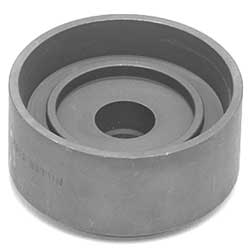
Chrysler Transfer & Output Gear Bearing Cone Installer
Mfg: Atec Trans-Tool
Part #: T-1436
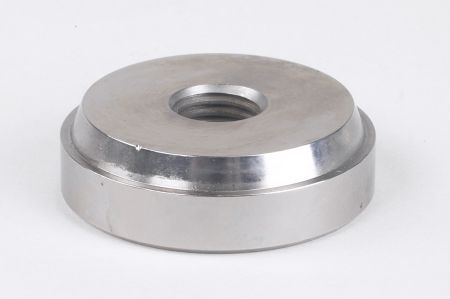
Kent-Moore J-7817 Pinion Bearing Installer NVG 126/266 Tool
Mfg: Kent-Moore
Part #: J-7817

Sourcing Used and Rebuilt Transfer Cases
Finding quality units from junkyards and remanufacturers
Pull-a-part junkyards offer the cheapest replacements at $150-$400, but success requires careful inspection. Target donor vehicles with low mileage, complete service records, and no signs of off-road use. Remanufacturer networks like Remy, Zumbrota, and Transtar provide reliable alternatives with warranties, using completely disassembled, inspected cores rebuilt to OEM specifications with new wear components.
Online marketplaces like Car-Part.com aggregate inventory from thousands of salvage yards, letting you search by year/make/model and compare pricing. Many yards offer 30-90 day warranties on drivetrain components and ship nationwide. Remanufactured units typically include 3-year/unlimited-mile warranties covering defects but excluding damage from improper installation, contaminated fluid, or continued operation after warning symptoms.
Red flags when buying used or rebuilt components
Inspect any used transfer case for external housing damage—cracks, stripped drain plugs, or impact marks suggest hard use. Remove the fill plug and sample fluid with a zip tie; if black, gritty, or burnt-smelling, walk away. Check that all mounting bolt holes are intact without stripped threads, and verify output shaft splines show no unusual wear.
Rotate both output shafts by hand—they should turn smoothly with only normal gear resistance, never binding. Excessive play indicates worn bearings. For electronic shift units, verify the actuator motor is present and all electrical connections are intact; replacements cost $300-500. Be wary of any unit previously opened unless it’s a documented professional rebuild; backyard repairs frequently create worse problems.
Warranty coverage and what to verify before purchase
Salvage yard warranties cover 30-90 days and require immediate problem reporting—continuing to drive often voids coverage. They’ll replace the part but won’t cover second installation labor. Remanufactured warranties run 2-5 years, unlimited mileage, but read exclusions carefully. Most don’t cover failures from tire size mismatches, contaminated fluid, or operating after warning lights appear.
Before installation, verify the unit matches your VIN-specific requirements. Wrong ratios or incompatible output shaft configurations cause immediate problems. Test the shift mechanism through all ranges; finding issues on the bench takes 10 minutes versus hours after installation. Keep all documentation and photos of fluid condition, and follow manufacturer break-in procedures (usually 500 miles of varied driving) to ensure warranty validity.
Frequently Asked Questions
How serious and expensive is transfer case replacement?
Transfer case replacement is a major drivetrain repair, typically costing $2,000-$5,500. The job requires 6-10 hours as the technician must support the transmission, disconnect both driveshafts, remove shifter linkage or electronic controls, and maneuver the heavy unit (60-100 pounds) underneath. Most competent DIYers can handle it with proper jack stands, a transmission jack, and a good repair manual.
Is a transfer case failure in a new vehicle covered by warranty?
Powertrain warranties typically cover transfer cases for 5 years or 60,000 miles, but coverage has significant exclusions. Manufacturing defects and material failures are covered, but damage from improper tire sizes, running part-time 4WD on pavement, contaminated fluid, or neglected maintenance will be denied. If you experience problems in a first-model-year vehicle, check Technical Service Bulletins (TSBs) and owner forums—it could indicate a design flaw affecting multiple units. Consumer Reports data shows waiting for the second model year of redesigned vehicles reduces exposure to early-production defects.
What are safe speed limits for 4WD driving on different surfaces?
Most modern 4WD High systems operate safely at highway speeds up to 55-65 mph on snow, ice, or loose surfaces where wheel slip occurs. In 4WD Low, never exceed 25-30 mph as the gear reduction isn’t designed for sustained high-speed operation and will overheat the transfer case while placing extreme driveline stress. Full-time AWD systems have no speed restrictions since the center differential allows normal speed variation between axles—these safely operate at any legal highway speed in any weather condition.
Can you drive with a failing transfer case?
Once you notice symptoms—grinding, whining, vibration, or difficulty engaging 4WD—have the vehicle towed immediately. Continuing to drive with a damaged chain or bearing causes catastrophic failure within 50-500 miles, often destroying the case housing and contaminating the transmission. A failing output shaft seal might allow short-distance 2WD operation to reach a repair facility, but monitor fluid levels closely. Never drive in 4WD with unusual noises; increased stress accelerates damage and can break driveshafts or damage differentials when the transfer case seizes unexpectedly.
How often should you actually use 4WD to keep it functional?
Engage your 4WD system at least monthly, especially on vehicles with electronic actuators or full-time systems with electromagnetic clutches. Find a safe gravel or dirt area and activate all modes—4WD High and 4WD Low—and drive for at least a quarter-mile. This circulates fresh fluid through internal passages, prevents clutch plates from sticking, keeps actuator motors from seizing, and exercises seals. Vehicles sitting unused in 2WD often develop engagement issues when finally needed in emergencies. Full-time AWD systems remain always engaged, but cycling through available modes monthly ensures all systems remain functional.
What’s the difference between 4WD and AWD transfer cases?
True 4WD transfer cases offer selectable part-time operation with locked mode distributing equal power to front and rear axles—ideal for off-road traction but problematic on dry pavement. These include low-range gear reduction (2.5:1 to 4:1) for crawling. AWD transfer cases remain permanently engaged with a center differential or viscous coupling allowing speed differentiation, suitable for all road conditions but generally lacking low-range gearing. Some modern systems blur these lines—Jeep’s Selec-Trac and Toyota’s Multi-Mode 4WD offer both locked 4WD for off-road and unlocked AWD for pavement, giving the best of both worlds at the cost of increased complexity.
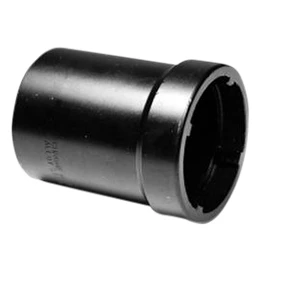
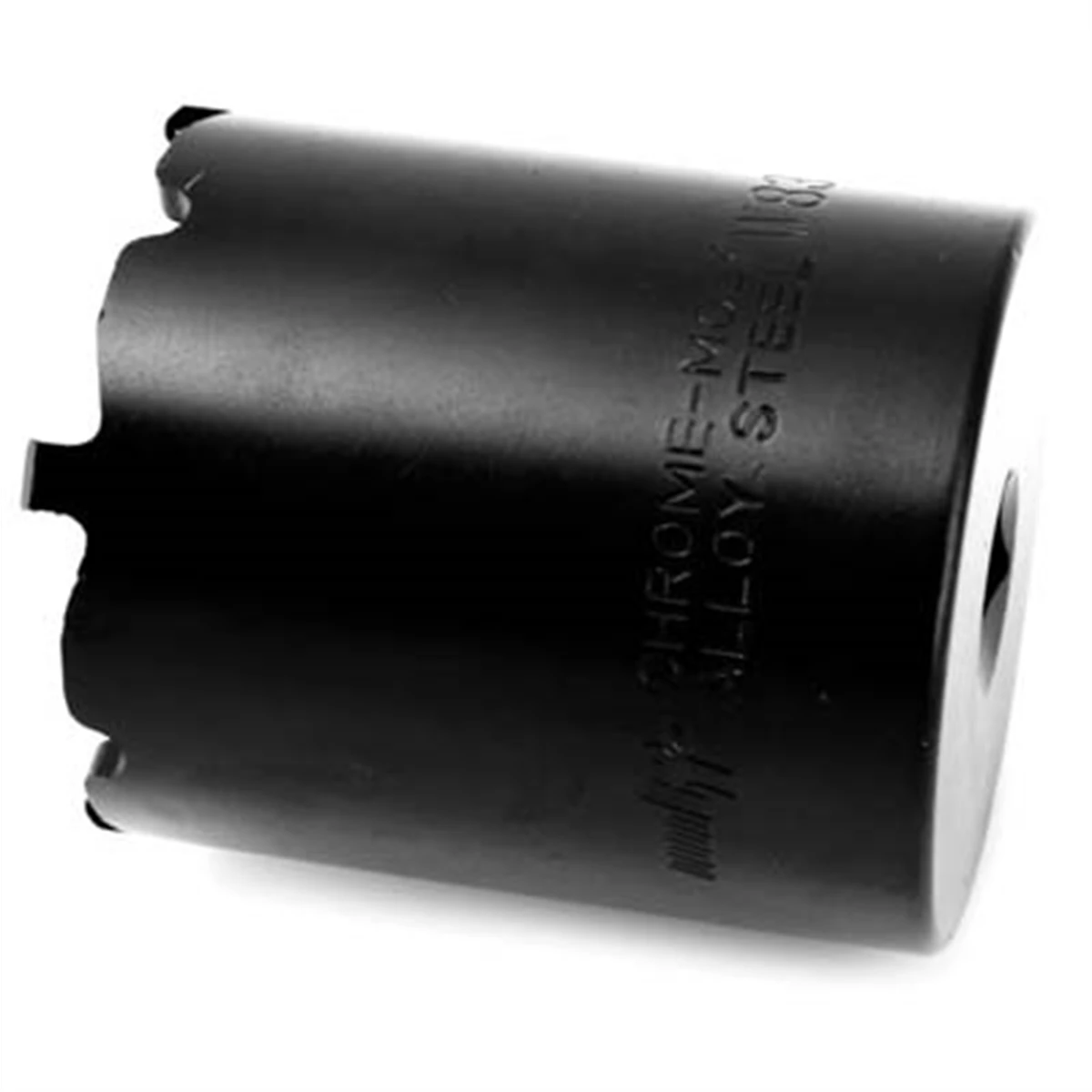
4WD Lock Nut Wrench 4-Prong Tool - Heavy Duty 4150
Mfg: CTA Manufacturing Corp.
Part #: 4150

The Toolsource Technical Team blends decades of real-world automotive service experience with up-to-date technical research. Our writers collaborate with professional mechanics, shop owners, and diagnostic specialists to deliver practical, workshop-ready guidance you can trust.


Follow us on social media