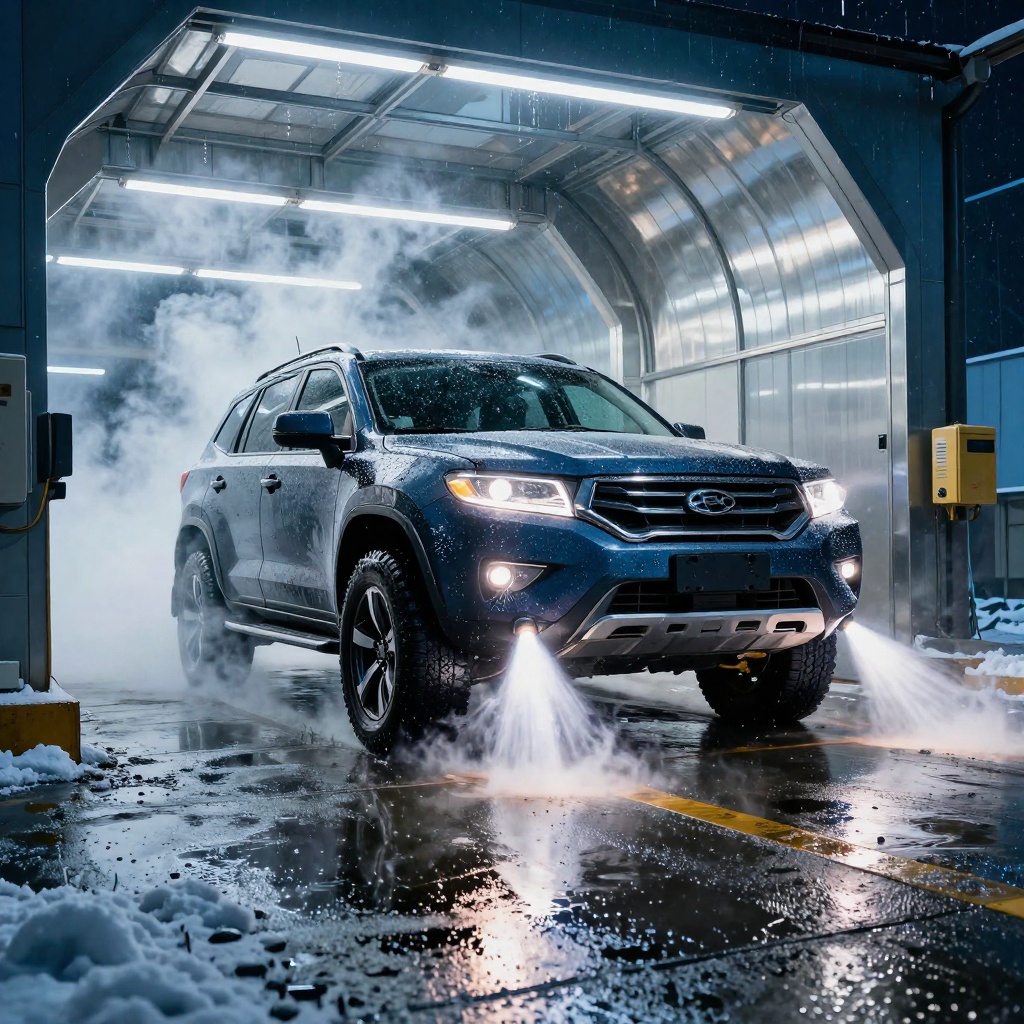
Touchless tunnels can flush loose grit and salt, but they struggle with bonded winter road film. If your car looks almost unchanged after a pass, it’s usually a chemistry and process problem, not just a bad wash. This guide explains how touchless systems work, why they plateau on baked-on soils, and the technician-grade steps, chemicals, and tools that close the gap without risky brushes or mitts in freezing weather.
How Touchless Tunnel Washes Work (and Their Limits)
Touchless systems combine heated high-pressure water with detergents—most commonly high-pH (alkaline) cleaners—to break down organic grime and traffic film. Some tunnels add a mild acid phase to target mineral deposits and salts, but many budget tunnels run a single alkaline pass. Dryers then push off water with forced air and a drying aid.
Key realities:
- Alkaline detergents excel at oils, road film, and organic soils but don’t efficiently neutralize chloride salts from brine and de-icers.
- Chloride salt residue is hygroscopic and sticky. Without an acid step or a salt-targeted pre-wash, salt remains in seams and on surfaces.
- High-pressure water won’t fully remove bonded film without either optimal chemistry or mechanical agitation. In winter we avoid contact to reduce scratching on contaminated paint.
- Variables that make or break the result: chemical type and concentration, water temperature, dwell time, impingement (pressure/flow, angle), and whether the road is wet on the drive home.
Bottom line: touchless is a rinse-and-chemistry approach. If chemistry and prep are weak, you’ll rinse the top layer and leave film behind.
Pre-Wash Strategy That Actually Works in Winter
If you must use a touchless tunnel, the most reliable improvement is a pre-wash on-site before you enter the bay. This is simple with a pump sprayer or electric sprayer and a purpose-made pre-wash chemical.
Step-by-step process
- Evaluate soil load: If the vehicle hasn’t been washed for 2+ weeks or has visible brine streaks, plan on a two-pass pre-wash (light dwell and rinse, then reapply on the worst areas).
- Pre-rinse (optional but helpful): If a self-serve pressure bay is available, do a quick pre-rinse focusing on lower panels, wheel arches, and the rear. Aim for 1200–2000 psi at 2.0–2.5 GPM, 25° nozzle, maintaining safe distance (18–24 inches) on paint.
- Apply a traffic film remover (TFR) at 2% panel dilution: Using a pump or electric sprayer, apply a proven pre-wash like Bilt Hamber Touch-Less at 2% to the entire vehicle from bottom up, then again top down for even coverage. For a 1 L sprayer, 20 mL chemical + 980 mL water. For 1.5 gal (5.7 L), ~114 mL chemical + water to fill. Warm water (100–120°F) boosts performance.
- Dwell: Let the pre-wash dwell for 3–5 minutes. Do not let it dry. In sun/wind, shorten dwell or lightly mist with water to keep it wet. Treat bugs and heavy front-end grime with a bug-specific pre-treatment if needed.
- Rinse thoroughly: Pressure rinse methodically, top to bottom, then bottoms and rear again. The goal is to evacuate loosened soils before they re-adhere.
- Proceed immediately into the touchless tunnel: Choose a program with an undercarriage rinse and strong side/rocker jets. The tunnel provides heated high-pressure rinse and forced-air drying you may not have on-site.
- Post-tunnel spot check: If bonded film remains on lower doors or hatch, do a rinseless wash in a garage within 24–48 hours to remove residual film without flooding the area.
This pre-wash sequence narrows the performance gap between touchless and a traditional contact wash while keeping risk low in cold weather.
Chemical Choices: Acid vs Alkaline vs Neutral—What to Use and What to Avoid
Choosing the right chemistry matters more than adding pressure. Use chemicals designed for automotive finishes and winter soils.
Alkaline pre-wash (primary workhorse)
- Use for: Traffic film, oils, road grime.
- Examples: Bilt Hamber Touch-Less (PIR-rated TFR), Koch Chemie Vorreiniger B (pre-cleaner), surfactant-rich pre-washes.
- Panel dilution: 2% is effective for winter film with minimal risk when used as directed.
Acidic de-salt or neutralizers (targeted use)
- Use for: Chloride-rich brine residues, mineral spots.
- Caution: Household vinegar is an inexpensive weak acid but is not a professional automotive de-salt agent. Repeated unmetered acid use risks trim, coatings, and exposed metals. Prefer purpose-built, paint-safe acidic cleaners labeled for de-salt or mineral removal. Follow manufacturer dwell limits and always rinse thoroughly.
Rinseless products with surfactants
- Use for: Follow-up cleaning indoors after a touchless pass; safe removal of light residual film when heavy grit is gone.
- Examples: ONR (Optimum No Rinse), DI/DIY detail rinseless, foaming rinseless like Ammo Frothe Anti-Salt for winter.
What to avoid
- Dishwashing liquids: High-stripping detergents that remove wax/sealants and can dry out trim. Not formulated for modern automotive clear coats.
- Unlabeled acids: Improperly diluted acids can etch aluminum trim, uncoated metals, and compromise protective layers. Use automotive-specific products with clear dilution and dwell guidance.
Protection layer matters
- Ceramic/graphene coatings reduce adhesion of winter film and make touchless results meaningfully better. Quality coatings last 1–3 years when surfaces are properly prepped and maintained.
- Maintenance: Periodic alkaline resets and compatible toppers/spray sealants keep coatings performing. Expect faster soil release and easier rinseless follow-ups.
Equipment Setup: Sprayers, Dilutions, and Hot Water Tips
Outfitting a trunk-ready winter kit simplifies consistent results.
Sprayers
- Pump sprayer (1–1.5 gal / 4–6 L): Fast coverage, accurate dilution, no PIR math. Choose chemical-resistant seals.
- Electric handheld sprayer: Even application with less fatigue; good for SUVs and trucks.
- Foam sprayer: Optional. Foaming increases dwell but consumes more product. A non-foaming sprayer at 2% panel dilution is efficient and effective for TFRs designed to work in solution.
Dilution basics
- 2% panel dilution: Add 20 mL chemical per liter of total solution. For 5 L, add 100 mL. For 5.7 L (1.5 gal), add ~114 mL.
- Foam cannons (if you insist): Panel concentration depends on the cannon’s draw rate (PIR). Because PIR varies by unit, water pressure, and orifice, achieving a specific 2% on-panel concentration requires calculation and usually a higher-in-bottle concentration. Unless you’ve measured draw, use a pump sprayer for accuracy.
Water temperature
- Warm mix (100–120°F) improves surfactant action and helps loosen waxy film. Do not exceed chemical guidelines.
- Never apply hot solution to a hot panel; in freezing weather, ensure panels are not subzero to avoid flash-freeze.
Rinse and underbody
- Pressure: 1200–2000 psi is sufficient with the right chemistry. Focus on flow (2+ GPM) and coverage angles.
- Undercarriage: Salt accumulates on frames, seams, brake lines, and pinch welds. Choose a tunnel option with an underbody flush or use an underbody wand weekly in high-salt regions.
Post-Wash: Drying, Spot-Free Rinse, and Paint Protection
After a touchless pass, finishing steps determine whether residues and waterspots remain.
- Spot-free rinse: Programs that include DI/RO water reduce spotting. If your tunnel doesn’t, consider a quick DI handheld rinse at home (if temperatures allow) or plan to blot-dry.
- Drying: Forced air removes bulk water; finish by blotting with a clean, high-GSM drying towel on glass and horizontal panels. Avoid wiping dirt into paint; if panels are still visibly soiled, skip contact and plan a rinseless session indoors.
- Rinseless follow-up (recommended): Within 24–48 hours, perform a rinseless wash in a garage using multiple plush towels to minimize marring. This safely removes residual film touchless leaves behind.
- Top up protection: Apply a compatible spray sealant or ceramic detailer after a rinseless wash. This increases hydrophobics, speeds future drying, and improves touchless effectiveness.
Troubleshooting Poor Results and When to Choose a Detail Shop
- Car looks unchanged after touchless: Increase pre-wash effectiveness—verify 2% dilution, extend dwell to 5 minutes without drying, mix with warm water, and add a second pre-wash on lower panels. Consider a tunnel with stronger side/rocker jets.
- White residue returns quickly: You may be re-contaminated by wet, salted roads on the way home. Wash when roads are dry or expect rapid re-soiling.
- Streaks or spotting: Weak dryers or no spot-free rinse. Blot dry horizontal surfaces or use a spot-free (DI) final rinse.
- Persistent film: Perform an indoor rinseless wash. Touchless removes grit and salt load so the rinseless step can safely lift remaining film.
- Recurring disappointment across multiple locations: Some tunnels run under-dosed or poorly maintained chemicals. Seek facilities with adjustable rocker/side sprays and undercarriage options. Ask for a rewash if performance is clearly inadequate.
- When to hire a pro: If you need a true deep clean without marring during winter, a reputable detailer can pre-treat, foam, and perform a safe contact wash with heated, filtered water and proper decontamination. Expect higher pricing due to overhead and consumables; schedule protection (coating or sealant) to extend intervals.
Quick Checklist: Touchless Success in Winter
- Carry a 1–1.5 gal chemical-resistant pump or electric sprayer.
- Pre-mix an alkaline TFR to 2% panel dilution (warm water if possible).
- Pre-rinse when available, focusing on lowers and rear.
- Apply pre-wash bottom-up; dwell 3–5 minutes without drying.
- Pressure rinse thoroughly; proceed into a tunnel with underbody and rocker sprays.
- Use spot-free rinse and blot-dry key panels if needed.
- Follow up within 24–48 hours with a rinseless wash indoors.
- Maintain a sealant or ceramic topper to improve next wash results.
FAQs
Do acidic pre-washes remove salt better than alkaline products?
Acids neutralize mineral scale and help release chloride salts, while alkaline products attack organic traffic film. For winter salt, a paint-safe acidic phase can help, but many technicians achieve excellent results using a robust alkaline TFR at the correct dilution followed by thorough rinsing. If you use an acid, choose an automotive de-salt product, follow dwell/rinse instructions, and avoid repeated unmetered acid exposure to sensitive trim and metals.
Is dishwashing liquid okay for winter pre-wash?
No. Household dish soaps are strong degreasers that strip wax and can dry out trim. They aren’t engineered for automotive clear coats or modern protective layers. Use an automotive pre-wash (TFR) for exterior grime and a dedicated rinseless or pH-neutral shampoo for follow-up.
How often should I wash in winter?
In high-salt regions, aim for 1–2 times per week when roads are wet with brine and after each snow event. Prioritize undercarriage flushes at least weekly. If temperatures plunge below safe washing conditions or doors freeze shut, wash during midday warm-ups or when roads dry to minimize re-soiling.
Will a ceramic or graphene coating survive frequent touchless washes?
Yes, when properly applied and maintained. Coatings improve soil release and reduce adhesion, making touchless and rinseless steps more effective. Do periodic alkaline resets to remove buildup and apply a compatible topper/sealant as needed. Outdoor parking and harsh winters shorten apparent performance, but maintenance can restore behavior.
Why did my car look worse after a touchless wash?
Common causes include inadequate chemistry dosing at the tunnel, insufficient side/rocker impingement, skipping undercarriage rinse, no spot-free rinse leading to water spots, or driving home on wet, salted roads. The solution is a proper pre-wash at 2% dilution, insistence on underbody and rocker sprays, and a rinseless follow-up in a controlled environment.
Is the undercarriage rinse worth the upcharge?
Yes. Salt accumulates under the vehicle and promotes corrosion at seams, subframes, brake and fuel lines, and pinch welds. A 60–90 second underbody flush during each winter wash is a low-cost corrosion mitigation step.
Shop Sprayers & Undercarriage Tools
For the pre-wash workflow in this guide, equip yourself with pump and electric sprayers and undercarriage rinse tools that handle alkaline TFRs and winter salt.
- Chemical-resistant pump sprayers for accurate 2% panel dilution.
- Electric handheld sprayers for even coverage on larger vehicles.
- Undercarriage wands/nozzles to flush frames, seams, and pinch welds.

The Toolsource Technical Team blends decades of real-world automotive service experience with up-to-date technical research. Our writers collaborate with professional mechanics, shop owners, and diagnostic specialists to deliver practical, workshop-ready guidance you can trust.


Follow us on social media