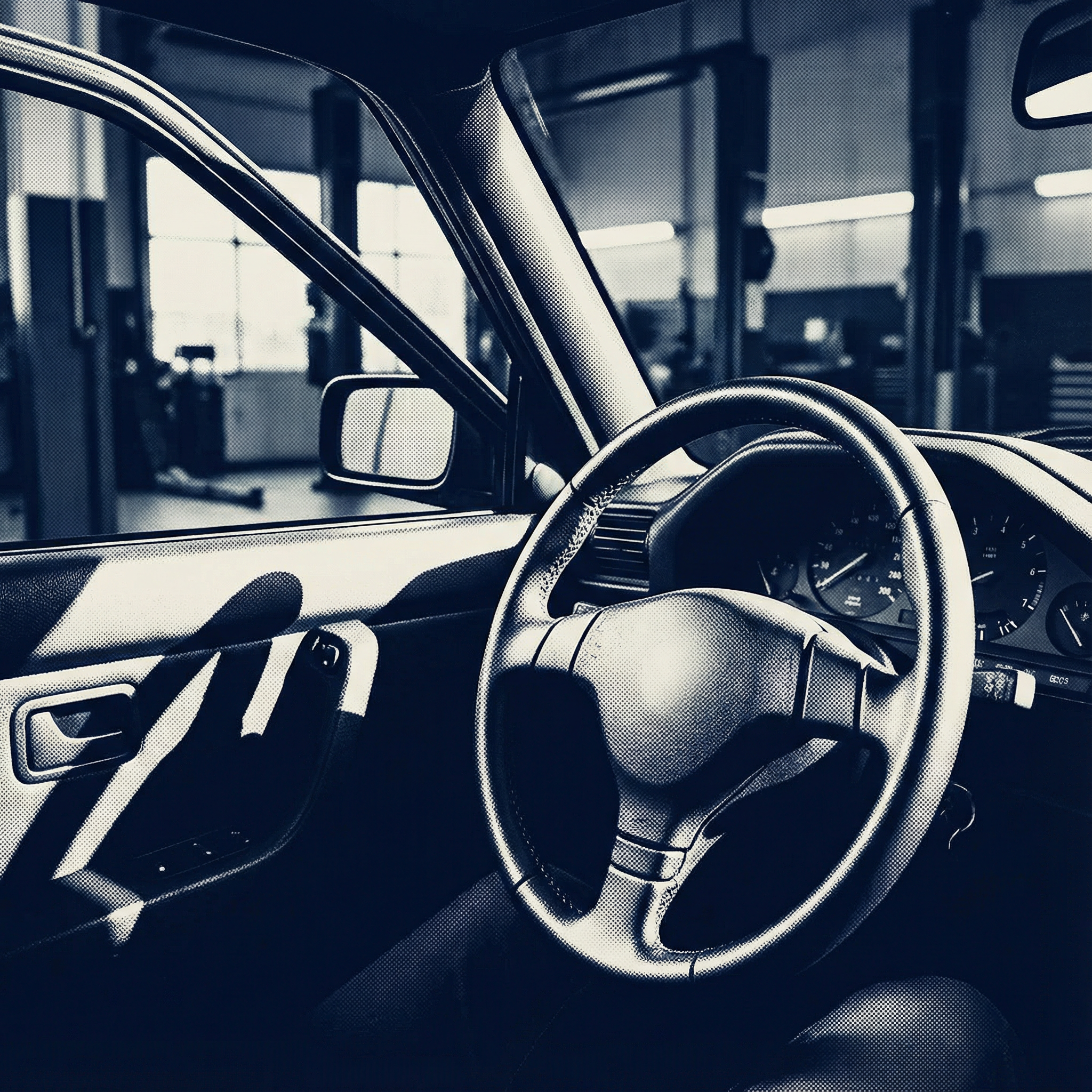
Shiny leather steering wheels aren’t “worn” by default—most of the time they’re contaminated. Skin oils, sweat, lotion, sunscreen, food residue, and dust flatten the leather’s urethane topcoat and reflect light. The cure is a consistent, mild maintenance routine that removes oils before they accumulate, plus careful deep cleaning and matte-safe protection when needed. This guide lays out practical, repeatable steps technicians can hand to customers—or use in the bay—to keep leather and Alcantara wheels factory-matte without over-cleaning or causing premature wear.

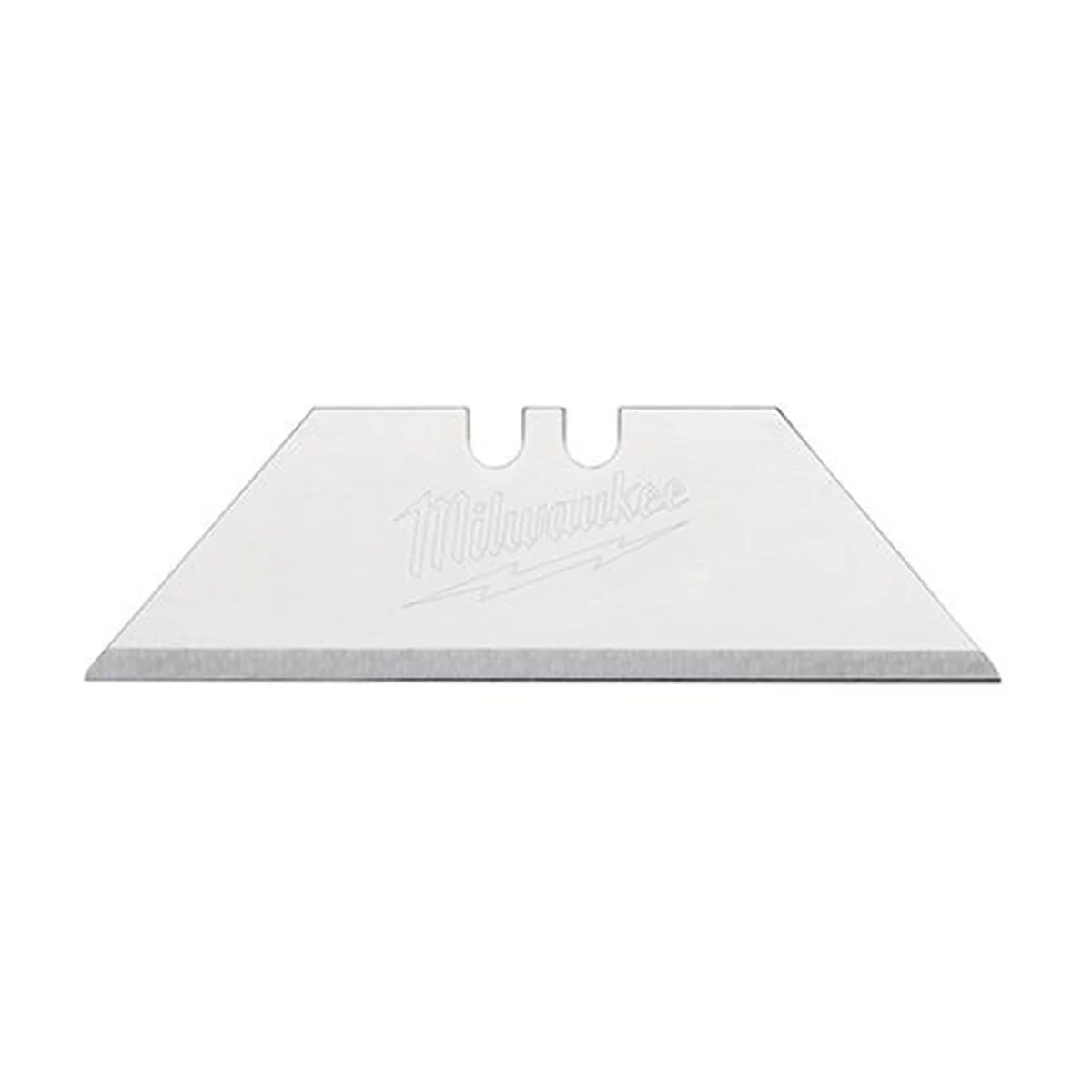
50 PC General Purpose Utility Blades w/ Dispenser
Mfg: Milwaukee Electric Tools
Part #: 48-22-1950
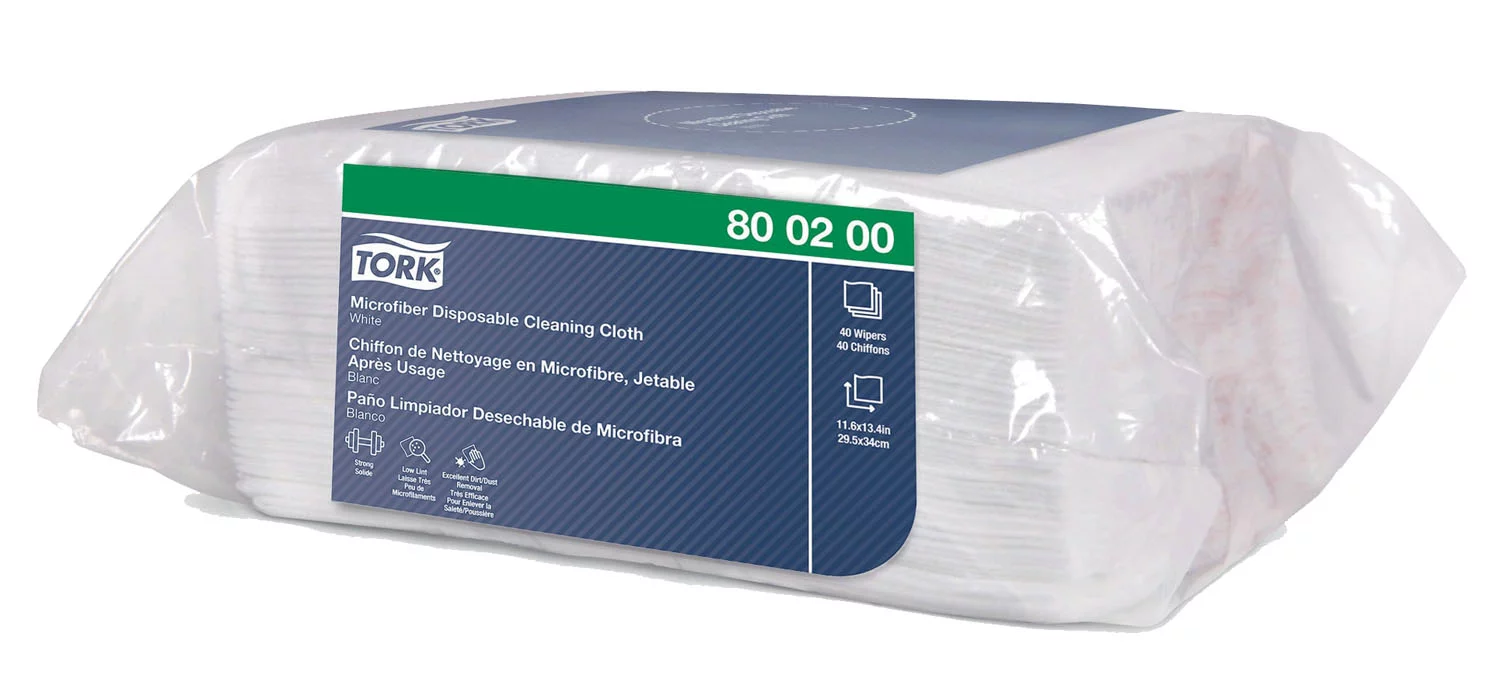
Tork Microfiber Disposable Cleaning Cloth, White
Mfg: Todd Enterprises
Part #: 800200
1) Identify the material and the starting condition
Before you pick a product, confirm what you’re working on and how far the surface has progressed.
- Material check: Most modern “leather” wheels are pigmented leather with a polyurethane topcoat. Alcantara/microsuede wheels need fabric-safe cleaners. Some wheels are vinyl or leather-wrapped with perforations or contrasting stitching that can trap liquid.
- Contamination vs. wear: A shiny, slightly tacky wheel that turns a microfiber dark is contaminated. A shiny, glassy-slick wheel that doesn’t release soil and may show color loss has topcoat wear—clean lightly and consider refurbish/rewrap.
- Perforations and stitching: Use foam and a damp towel approach; avoid flooding holes or soaking stitching (dye bleed risk).
- Test spot: Always test products on a hidden area. Look for dye transfer, finish softening, or residue. If issues appear, step milder.
Tools to stage at the vehicle for accuracy and speed:
- 8–16 oz spray bottle with a matte-safe interior cleaner (ready-to-use) or distilled water for quick wipes
- 2–3 high-quality edgeless microfiber towels (300–380 gsm)
- Soft interior brush (horsehair) or an interior scrub pad (foam-backed microfiber)
- Nitrile gloves for deep clean sessions
2) After-drive and daily-light maintenance (prevention beats correction)
Light, frequent maintenance keeps oils from crosslinking with dust and setting into the topcoat. This is the single biggest factor in maintaining a matte finish over years of use.
- Hand hygiene: If you’ve applied moisturizer/sunscreen, wash hands with soap and water before driving. If you use hand sanitizer, allow it to fully evaporate before touching leather; wet sanitizer residues can harm coatings and dyes.
- Spritz the towel, not the wheel: Lightly mist a microfiber with a matte-safe interior cleaner (e.g., P&S Xpress Interior Cleaner RTU, Gtechniq I2 Tri-Clean, CarPro InnerQD) or distilled water for very light soil.
- Wipe with minimal pressure: Work around the rim in quadrants. Rotate to a clean section of towel as it loads. Focus on the 9–3 and 10–2 areas where palms grip the most.
- Twist technique for stubborn film: Wrap the towel around the rim, grip firmly, and twist. This increases mechanical lift without scrubbing.
- Dry and inspect: Follow with a dry side of the towel to remove any remaining moisture and check sheen. Matte should return immediately.
Quick checklist:
- Wash hands; avoid fresh lotions/sunscreens on the wheel
- Mist the towel, not the wheel
- Light wipe after each drive or at least a few times a week
- Rotate clean towel sections; swap towels often
- Keep a dedicated towel and small bottle in the door pocket
- Never use glossy dressings on the wheel
3) Weekly–monthly deep clean (restore matte safely)
When routine wipes no longer remove the shine, do a controlled deep clean. Goal: emulsify and lift oils without over-wetting or abrading the topcoat.
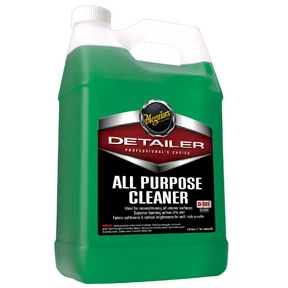
- Choose an appropriate cleaner: Use leather-safe, matte-finish products. Technician-proven options include:
- P&S Xpress Interior Cleaner (ready to use)
- Koch Chemie Pol Star diluted 1:10 for dirty, 1:20 for maintenance
- Gyeon LeatherCleaner Mild or Sonax Leather Foam for coated leather
- Gtechniq I2 Tri-Clean for cleaning plus antimicrobial benefit
- Foam first, then agitate: Apply cleaner to your brush or towel—not directly to the wheel. For leather, work small sections, creating light foam. For perforated leather, keep foam light and controlled.
- Agitation tools: Use a soft horsehair brush or a purpose-made interior scrub pad. Short, overlapping strokes; avoid aggressive scrubbing. On heavy build-up, two light passes beat one heavy pass.
- Blot, don’t smear: Lift soil with a clean, dry microfiber. Blotting prevents pushing oils into pores and seams.
- Repeat as needed: A second light cycle may be necessary for a uniform matte finish.
- Dry time: Let the wheel air-dry a few minutes before driving. Do not apply heat.
For Alcantara/microsuede: Use fabric-safe detergents (e.g., Pol Star 1:20, Gtechniq I2 Tri-Clean). Foam on a brush, gently agitate with the nap, then blot. Once dry, lightly brush to lift the pile. Avoid saturating the substrate.
Steam option (advanced): Low-moisture, low-temperature steam can help release oils without chemicals. Use a microfiber-wrapped tip and short pulses; keep distance to avoid overheating the topcoat. Always test first.
Last-resort decon: For wheels with heavy, stubborn shine, an ultra-gentle pass with a wetted, soft melamine sponge can break the glaze—but treat this as a one-time reset only, use feather-light pressure, and immediately neutralize with a leather-safe cleaner. Repeated melamine use abrades coatings.
4) Protect without adding gloss
Protection helps slow re-soiling but won’t stop oils from sitting on the surface. Choose matte-safe chemistry and apply sparingly.
- Coated leather protectants: Light, water-based protectants designed for pigmented leather keep the tactile OEM feel. Examples: Gyeon LeatherCoat, Koch Chemie Leather Star (matte), or similar. Apply a very thin layer to a microfiber, wipe evenly, and buff dry. Reapply every 3–4 months or when water no longer beads lightly.
- Interior quick detailers: Products like CarPro InnerQD or Gtechniq I2 Tri-Clean help daily cleaning and leave a dry, matte finish. They’re ideal for after-drive wipes.
- Avoid silicone/oily dressings: Glossy “wet look” interior dressings reduce grip and attract dust. They also alter factory appearance and can accelerate soil adhesion.
- Plastics vs. leather: UV protectants like 303 Aerospace are best for plastics/vinyl—not for leather topcoats you touch constantly. Keep them off high-contact leather sections to preserve dry-matte feel.
- Alcantara: Skip coatings unless they’re specifically fabric-safe and do not stiffen the pile. The best “protection” is frequent light cleaning and hand hygiene.
5) Gloves, wraps, and driver habits
Habits have a bigger impact than chemicals. Consider these practical strategies:
- Driving gloves: Quality leather or fabric driving gloves block skin oils entirely. Pros: maximum matte retention. Cons: can dry skin; ensure moisturizer is fully absorbed before donning gloves, and avoid transferring lotion into glove fingers. Wash or replace gloves regularly.
- Hand care: If you use lotion, let it absorb before driving. Wash hands after meals. Keep a small sanitizing bottle in the car, but only touch leather after sanitizer fully evaporates.
- Change hand positions: Vary grip positions to spread contact. It reduces localized wear on the 9–3/10–2 zones.
- Don’t eat in the vehicle: Food oils and sugars rapidly build shine. If unavoidable, clean hands before driving away.
- Steering wheel wraps: A high-quality sew-on leather wrap can refresh appearance and provide a replaceable surface, especially on wheels with compromised topcoat.
6) Troubleshooting and life-cycle decisions (when cleaning isn’t enough)
If shine returns quickly after proper cleaning, the topcoat may be thinned or compromised. Know when to stop chasing it with chemicals:
- Rapid re-shine: If matte returns after cleaning but gloss reappears within a few drives, switch to more frequent light wipes. If that fails, topcoat wear is likely.
- Color loss or slick, glassy feel: Indicators of coating wear-through. Avoid aggressive cleaners. Consider professional refinishing: leather re-dye/topcoat refresh or a new OEM wheel/wrap.
- Alcantara matting: If the nap remains flat after cleaning and grooming, fiber damage has occurred. Reduce abrasion, use fabric-specific methods, and consider specialist restoration.
- Heat and storage: High cabin temps amplify oil diffusion. Garaging or sunshades reduce thermal cycling and slow re-soiling.
FAQs
Do modern leather steering wheels need conditioner?
Most OEM wheels are pigmented leather with a polyurethane topcoat. Oil-based conditioners can sit on top, diminish grip, and attract dirt. Use matte-safe cleaners for maintenance and, if desired, a light water-based protectant designed for coated leather. Skip heavy conditioners on high-contact areas like wheels.
Is hand sanitizer safe for leather?
Only after it has fully evaporated. Wet sanitizer can carry alcohol and additives into the topcoat, risking staining or softening. Let hands dry completely before touching the wheel.
What dilution should I use for Koch Chemie Pol Star?
For dirty wheels, 1:10 (product:water). For routine maintenance, 1:20. Apply to a towel or brush, not directly to the wheel, and avoid saturating perforations and seams.
How often should I deep clean vs. light wipe?
Light wipe: after each drive or several times a week. Deep clean: as needed—typically every 2–6 weeks for daily drivers, depending on skin oils, climate, and habits. Frequent light maintenance reduces the need for aggressive cleaning and extends the topcoat’s life.
Can I use dish soap or a magic eraser?
Mild dish soap is not optimized for automotive leather and may leave residues or affect feel; dedicated leather/interior cleaners are recommended. A melamine sponge (magic eraser) is abrasive; if used at all, apply once very gently as a last resort to break heavy glaze, then switch to proper leather-safe cleaners only.
Will ceramic coating keep the wheel matte?
Coatings can alter feel and won’t stop oil film from forming; the film will still shine until removed. For steering wheels, prioritize frequent light cleaning with matte-safe products over hard coatings.
Shop Interior Cleaning Tools
To keep steering wheels factory-matte, equip your bay with our interior cleaning tools suited for leather and Alcantara.
- Leather-safe cleaners and interior quick detailers
- Microfiber towels, scrub pads, and soft interior brushes
- Nitrile gloves and spray bottles for controlled application

The Toolsource Technical Team blends decades of real-world automotive service experience with up-to-date technical research. Our writers collaborate with professional mechanics, shop owners, and diagnostic specialists to deliver practical, workshop-ready guidance you can trust.


Follow us on social media