Every detailer eventually runs the same experiment: buy a dressing because a video made it look good, apply it once, and then spend the next three weeks figuring out why it slung onto the rocker panels, faded in two washes, or turned brown and streaky in the sun. Tire dressing is one of the simplest products in the bay to apply and one of the easiest to get wrong. The difference between a shop that gets repeat customers for tire work and one that gets complaints usually comes down to product selection, dilution, and a consistent reapplication schedule — not the brand name on the bottle.
Match the Dressing to the Look the Customer Wants
Before touching a bottle, decide whether the job calls for a matte/satin finish or a high-gloss “wet” look, because that choice narrows the product list fast. Water-based dressings with a lower silicone or oil content tend to dry down to a satin or matte finish and read as less “painted on.” Gloss dressings, often thicker and solvent- or oil-rich, give the deep wet-tire look customers expect from show cars but are more prone to slinging if over-applied or left too thick on the tread.
Durability and finish type are usually linked. Thicker, oil-based gloss dressings generally last longer between applications — sometimes a month or more — but take longer to cure and require more careful wipe-down to avoid a greasy film. Thinner, water-based matte dressings cure faster and look cleaner, but may need reapplication every one to three weeks depending on weather exposure, washing frequency, and how much the vehicle is driven in rain.
There’s no universal “best” product here — it’s a tradeoff between longevity, finish, and how much maintenance the customer is willing to tolerate. For a daily driver that gets washed weekly, a fast-curing, easy-to-renew dressing saves labor. For a weekend car that sits more than it drives, a longer-lasting gloss product reduces how often it needs attention.
Compare Dressing Types Before You Commit to One Line
Most dressings on the market fall into a few practical categories, and techs who stock more than one tend to cover more customer requests without overstocking:
- Matte, milky, water-based formulas — low sling risk, clean satin finish, shorter durability (often 1–3 weeks), easy to dilute and reapply.
- Gel or honey-consistency gloss dressings — deeper, wetter look, longer cure time (can take hours to fully set), generally longer durability but higher risk of sling if applied heavy or buffed too soon.
- Tire-specific coatings or sealants — marketed as longer-lasting “one-and-done” products; results vary, and most still benefit from periodic light reapplication rather than a single heavy coat.
- Combination dressings sold for tires, trim, and interior plastic — convenient for stocking one product across multiple jobs, though dedicated tire formulas typically hold up better specifically on rubber.
When evaluating a new product for the shop, apply it to one wheel on a test vehicle and track how it looks over two to three wash cycles before switching your whole workflow to it. A dressing that looks great on day one but shows wear, browning, or dust-grab within a week isn’t a time-saver even if the bottle is cheap per ounce.
[PRODUCT_SEARCH: matte finish tire dressing concentrate]

Professional Silicone-Free Dressing Concentrate Spray Bottle
Mfg: Mothers Wax & Polish
Part #: 88632


Prep the Tire Before Any Dressing Goes On
Dressing applied over dirty or oxidized rubber never performs as well as it should, and this is the step that gets skipped most often under time pressure. Tires that are consistently water-spotted, faded, or grayish usually need more than a quick rinse.
- Contact-wash the tire with regular car soap first; this clears light road film without touching old dressing buildup.
- If water spots or graying persist, step up to a dedicated wheel and tire cleaner. These are typically stronger, often acidic or high-alkaline formulas, and should be used sparingly — not as a weekly habit — since repeated strong-chemical use can dry out rubber over time.
- Agitate with a stiff tire brush to work cleaner into the sidewall texture, then rinse thoroughly before any product touches the tire. Leftover cleaner residue is one of the most common causes of dressing streaking or uneven cure.
- Dry the tire, or at minimum knock down heavy water beads, before applying a water-based dressing — standing water dilutes the product unevenly right where it lands.
Dial In Dilution Instead of Guessing
Dilution ratio has more effect on sling, finish, and durability than almost any other variable, and it’s where most inconsistent results come from. A thick, undiluted dressing used as a base coat on badly faded or new rubber helps saturate the tire initially, but every coat after that typically works better cut down.
- Use the first coat on badly faded or brand-new tires closer to full strength to establish a base.
- Cut subsequent maintenance coats — many techs run somewhere in the 1:1 to 4:1 (water or dressing-specific diluent to product) range depending on the brand’s concentration and the finish wanted. Thinner mixes transfer easily through a pump or trigger spray bottle and reduce the odds of pooling in tread grooves.
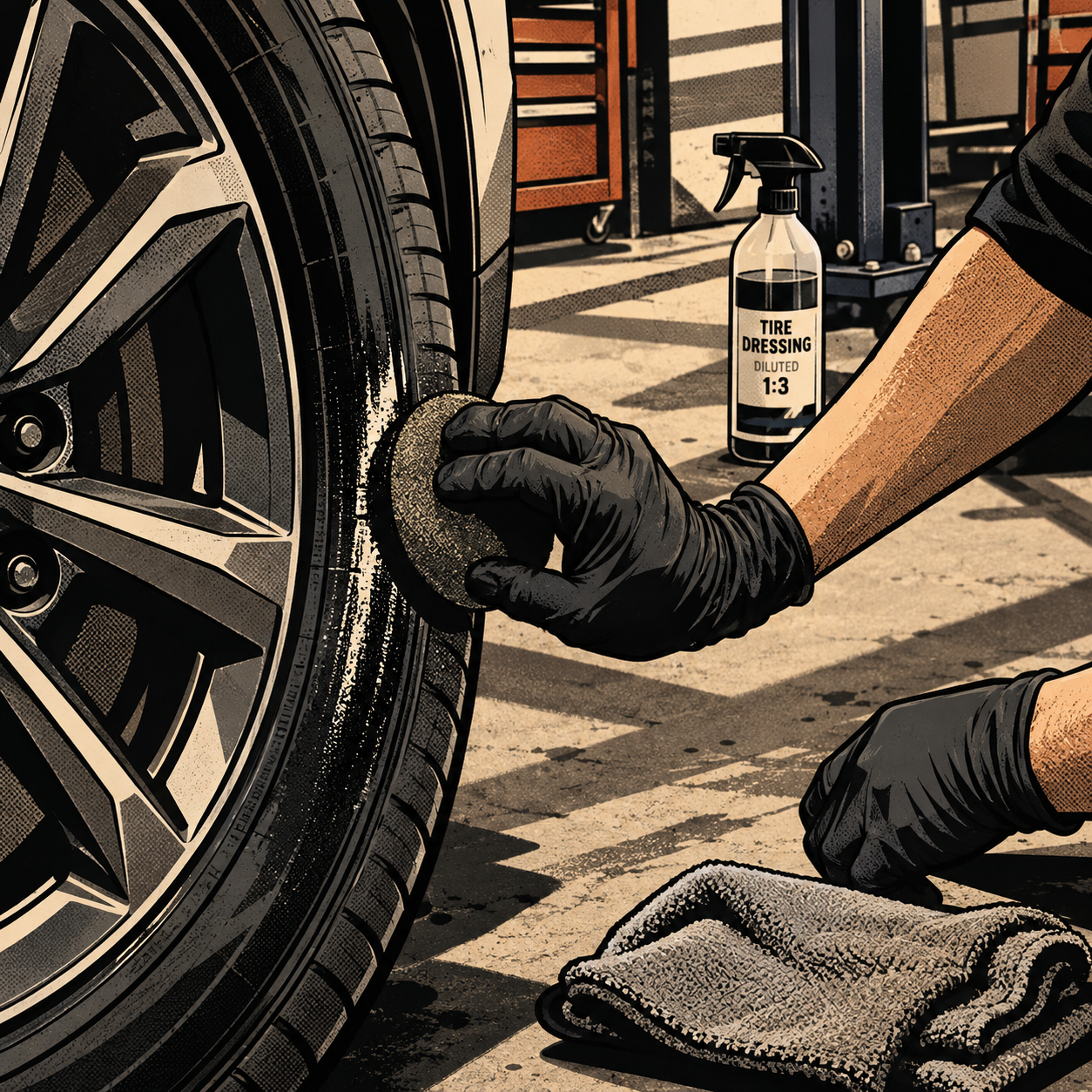
- Apply with a foam applicator or microfiber-covered pad rather than a saturated rag — this controls how much product actually lands on the tire versus how much ends up flung onto paint and wheels during the first few miles of driving.
- Let the dressing sit for several minutes to begin absorbing, then lightly wipe any excess with a clean microfiber towel before the vehicle leaves the bay. Excess product sitting on the surface, not absorbed product, is what slings.
- For thicker gel dressings, give extra cure time — sometimes a few hours — before the car is driven, since these formulas level and set more slowly than thin water-based mixes.
Build a Reapplication Routine Instead of Chasing Fade
Treat tire dressing as a maintenance item, not a one-time fix. A short, predictable cycle keeps results consistent and actually reduces total labor over time, because reapplying a light maintenance coat over an existing base is faster than fully stripping and redoing a faded tire from scratch.
- For water-based matte products, plan on refreshing every 1–3 weeks for daily drivers, sooner if the vehicle sees frequent rain or automatic washes.
- For gel/gloss dressings marketed as long-lasting, a 4–8 week cycle is common, but inspect for browning or flat spots before assuming the old coat is still doing its job.
- Keep a diluted maintenance mix on hand in a labeled spray bottle so quick touch-ups don’t require mixing a fresh batch every time.
- When a tire starts looking patchy or picking up a soot-like residue on fingertip contact, that’s a sign to fully clean the tire back to bare rubber and restart the base coat rather than layering more product on top.
Troubleshoot the Common Failure Points
Most dressing complaints trace back to one of a handful of root causes:
- Sling on paint/wheels: almost always over-application or insufficient wipe-down time before driving.
- Fast fade: usually a thin water-based dressing used without a proper base coat, or frequent washing stripping it early — expected behavior, not a defect.
- Browning or residue transfer: often buildup from repeated coats without a full strip-down, or a product reacting with UV exposure over time.
- Blotchy, uneven finish: typically from applying over a wet or unevenly dried tire, or uneven applicator pressure during application.
Quick Pre-Job Checklist
- Contact-wash tire; use dedicated tire cleaner only if water spots or graying persist
- Agitate with a tire brush and rinse fully — no cleaner residue left behind
- Knock off standing water before applying water-based dressing
- Apply first coat near full strength on faded/new tires; dilute maintenance coats
- Use a foam/microfiber applicator, not a soaked rag
- Wipe excess after a few minutes; allow full cure time before the car is driven
- Log the reapplication interval so the next service isn’t a guess
[PRODUCT_SEARCH: tire and wheel detailing kit]


FAQs
How long should tire dressing actually last?
It depends on the formula and driving conditions. Thin, water-based matte dressings often need refreshing every one to three weeks, while thicker gel or gloss formulas can hold up for four to eight weeks. Rain, automatic car washes, and high mileage all shorten the interval.
Why does my tire dressing sling onto the paint and wheels?
Sling almost always comes from applying too much product or driving before it has fully absorbed and cured. Apply with a foam applicator, wipe off visible excess, and give thicker gel products extra cure time before the vehicle is driven.
Should I dilute tire dressing every time I apply it?
Not on the first application to a faded or new tire — that initial base coat generally goes on closer to full strength. After that, diluting maintenance coats (commonly in the 1:1 to 4:1 range depending on the product) keeps the finish consistent and reduces sling risk.
Is a strong wheel and tire cleaner safe to use every wash?
No. Strong acidic or high-alkaline tire cleaners are effective for clearing stubborn water spots and oxidation but can dry out rubber with frequent use. Reserve them for occasional deep cleans and use a regular car wash soap for routine maintenance.
Why does my tire dressing look brown or leave residue on my fingers?
That’s typically product buildup from repeated coats applied without ever stripping the tire back to bare rubber, sometimes combined with UV breakdown over time. A full clean and fresh base coat usually resolves it.
Matte or gloss — which should I recommend to customers?
Ask what they’re optimizing for. Gloss finishes look deeper and often last longer per coat but carry more sling risk and need longer cure time. Matte finishes look cleaner and more natural but typically require more frequent touch-ups.
Protect Your Paint Between Services
Paint maintenance follows the same fundamentals as tire dressing: choosing the right product and applying it correctly makes the difference. Explore our car care polishes and waxes to keep your paint finish looking sharp between detail appointments.
- Paint polishes for correction and restoration
- Protective waxes and sealants for lasting shine
- Quality applicators for even, controlled application

The Toolsource Technical Team blends decades of real-world automotive service experience with up-to-date technical research. Our writers collaborate with professional mechanics, shop owners, and diagnostic specialists to deliver practical, workshop-ready guidance you can trust.


Follow us on social media