A recent story made the rounds online: a father and son drove nine hours out of state to buy a used Infiniti, trusted the seller’s verbal mileage estimate instead of pulling a vehicle history report, skipped a pre-purchase inspection entirely, and didn’t even pop the hood before handing over cash. The car turned out to have roughly 50,000 more miles than advertised. They got lucky and made it home without a breakdown, but luck isn’t a maintenance plan. For techs who get asked by friends and family to “check out” a car before a long-distance purchase, this is a useful case study in exactly what steps get skipped when buyers are moving fast and trusting sellers. Here’s the process that should happen instead, and the tools that make it possible to do a real inspection in a driveway or a gas station parking lot.
Why Long-Distance Used Car Deals Carry More Risk
Buying out of state isn’t inherently a bad idea. Regional pricing gaps are real — vehicles in the Southeast often sell for 20-30% less than the same model in the Northeast or Midwest simply because there’s less rust and more supply. The problem isn’t the distance; it’s that distance makes buyers skip steps they’d normally take on a local deal. When you can’t easily walk away and come back next weekend, there’s pressure to close the deal on the spot, which is exactly when sellers’ claims about mileage, accident history, and mechanical condition go unverified.
The fix isn’t avoiding long-distance deals — it’s front-loading the verification so the in-person visit is a confirmation step, not a leap of faith. That means a vehicle history report pulled before you leave home, a pre-purchase inspection (PPI) scheduled either with a local independent shop near the seller or done yourself with the right tools, and a hard rule that no inspection means no purchase, regardless of how far you’ve already driven.
Running a Pre-Purchase Inspection Like a Technician
A proper PPI takes 30-45 minutes and follows a repeatable order so nothing gets missed under time pressure:
- Cold start. Insist on starting the engine cold, not after the seller has had it running for 20 minutes “to warm it up for you.” Cold start reveals hard-starting conditions, blue smoke from worn rings or valve seals, and knock that disappears once oil pressure builds.
- Fluid check. Pull the dipstick and check oil condition and level, check coolant color and smell for a sweet odor (possible head gasket issue), and check transmission fluid if accessible.
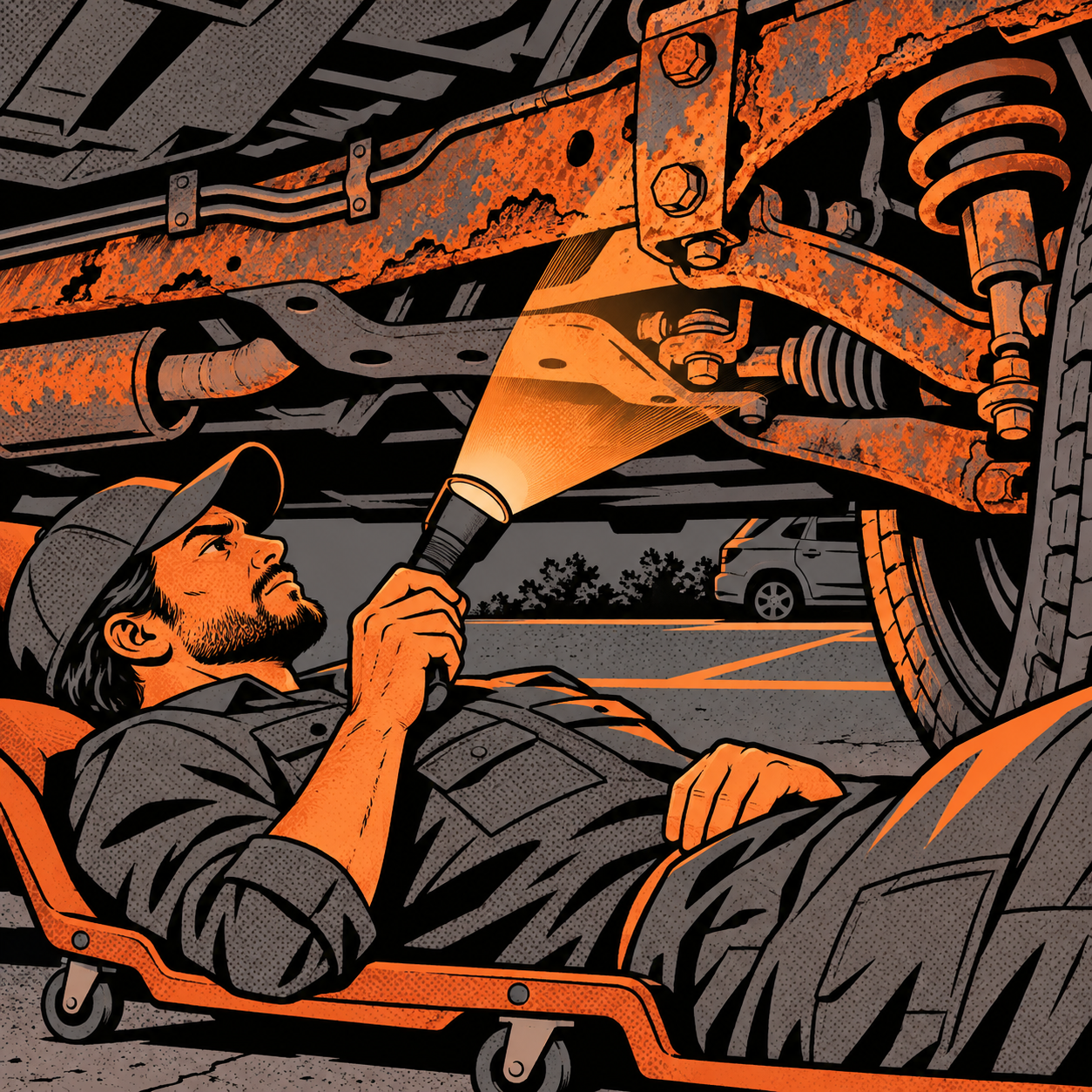
- Underneath. Get it on a jack or at minimum get a flashlight and inspection mirror underneath to check for rust-through on frame rails, subframe, and brake lines — critical if the car is coming from a salt-belt region, and a good sign (not a guarantee) if it’s coming from the South.
- Leak-down and compression. If you have any doubt about engine health on a high-mile vehicle, a compression or leak-down test takes 15 extra minutes and tells you more than any amount of visual inspection.
- Scan for codes. Plug in an OBD2 scanner before you even test drive. A seller who cleared codes right before the sale is a common tactic — a scanner will show pending codes or a recent “codes cleared” timestamp in freeze-frame data.
- Test drive. Full range of speeds, hard braking in a safe empty lot, full-lock turns to check CV joints and power steering, and highway speed to check for vibration or wander.
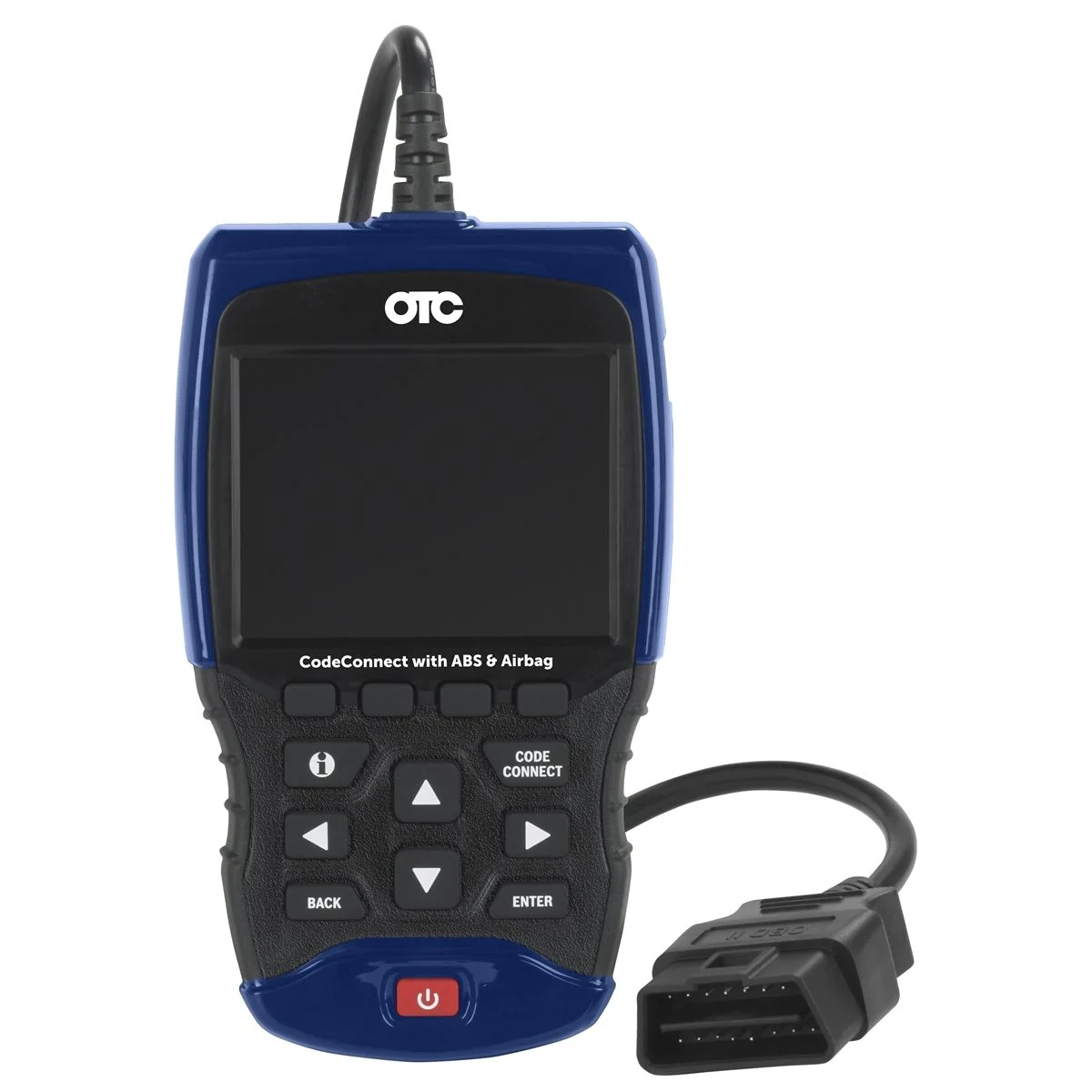
OBD2 Scanner with ABS, Airbag & CodeConnect Support
Mfg: OTC Tools and Equipment
Part #: 3210


The Diagnostic Tools That Make This Possible Anywhere
None of the steps above require a lift or a shop. A compact OBD2 scanner, a basic compression tester, a creeper or inspection mirror, and a quality flashlight fit in a trunk and let you run a legitimate inspection in any driveway or parking lot the seller allows. For higher-mileage vehicles specifically, a scanner that reads manufacturer-specific codes (not just generic OBD2) is worth the upgrade, since it can flag transmission and ABS issues that generic scanners miss entirely.
[PRODUCT_SEARCH: compact OBD2 scanner with manufacturer-specific codes]
Verifying Mileage and History Before You Ever Meet the Seller
The mileage discrepancy in the Infiniti story was avoidable with a five-minute step: run the VIN through a vehicle history service before agreeing to buy. These reports pull odometer readings from title transfers, inspections, and service records, and they’ll flag a rollback or a mismatch between what the seller tells you and what’s on record. If the numbers don’t match what the seller quotes verbally or in the listing, that’s a conversation to have before you book a hotel for the trip, not after you’ve arrived.
It’s also worth asking for maintenance records directly. A seller with service receipts, especially for timing belts, transmission fluid changes, and major services, is a different risk profile than one who says “it’s been well taken care of” with nothing to back it up. No records isn’t automatically disqualifying on an older vehicle, but it should shift how much weight you put on the mechanical inspection versus the seller’s word.
What to Check Before You Drive It Home
Once you’ve decided to buy, there’s a second, shorter checklist specific to the drive home, especially if it’s hours long:
- Tire tread depth and age (sidewall DOT code) — old tires can look fine and still be unsafe at highway speed.
- Battery terminals and charge — a marginal battery that starts fine in a driveway can fail after a few hours of highway driving with accessories running.
- Belt and hose condition — cracking or glazing on serpentine belts is a quick visual check that prevents a roadside breakdown.
- Brake pad thickness, visible through the wheel if you can’t pull them.
- A spare tire or inflator kit and a basic tool roll in the trunk, since you’re about to put hundreds of miles on an unfamiliar vehicle.
If any of these come back marginal, that’s a negotiating point for price or a reason to have the work done locally before starting the drive, not something to defer until you’re home.
Red Flags That Should Pause the Sale
Certain findings should stop the transaction outright, or at minimum reset the price conversation: a mileage figure that doesn’t match the title or history report, a seller who won’t allow a cold start or won’t let you check underneath the vehicle, fresh undercoating or fresh paint in isolated spots suggesting rust or collision repair being masked, fluids that smell burnt or show metal flakes on the dipstick, and any refusal to let you scan for codes. None of these mean the car is worthless, but they mean the price and terms need to reflect the real condition, not the seller’s description of it.
Quick Pre-Purchase Checklist
- Vehicle history report pulled and mileage cross-checked before travel
- Cold engine start witnessed in person
- Fluids checked: oil, coolant, transmission
- Underneath inspected for rust and leaks
- OBD2 scan for active and pending codes
- Compression or leak-down test on high-mile engines
- Full test drive including hard braking and full-lock turns
- Tires, battery, belts, and brakes checked before the drive home
[PRODUCT_SEARCH: automotive pre-purchase inspection tool kit]
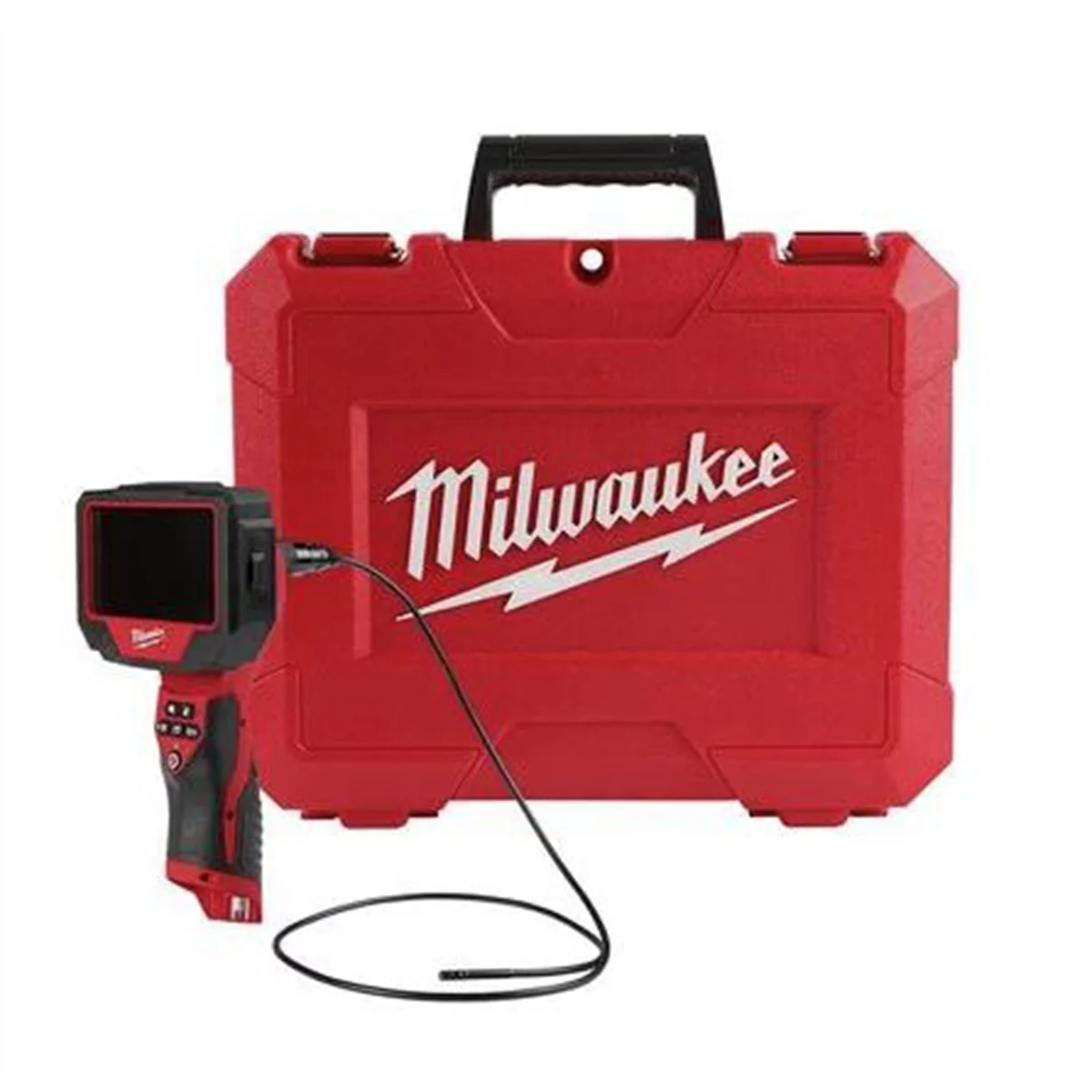
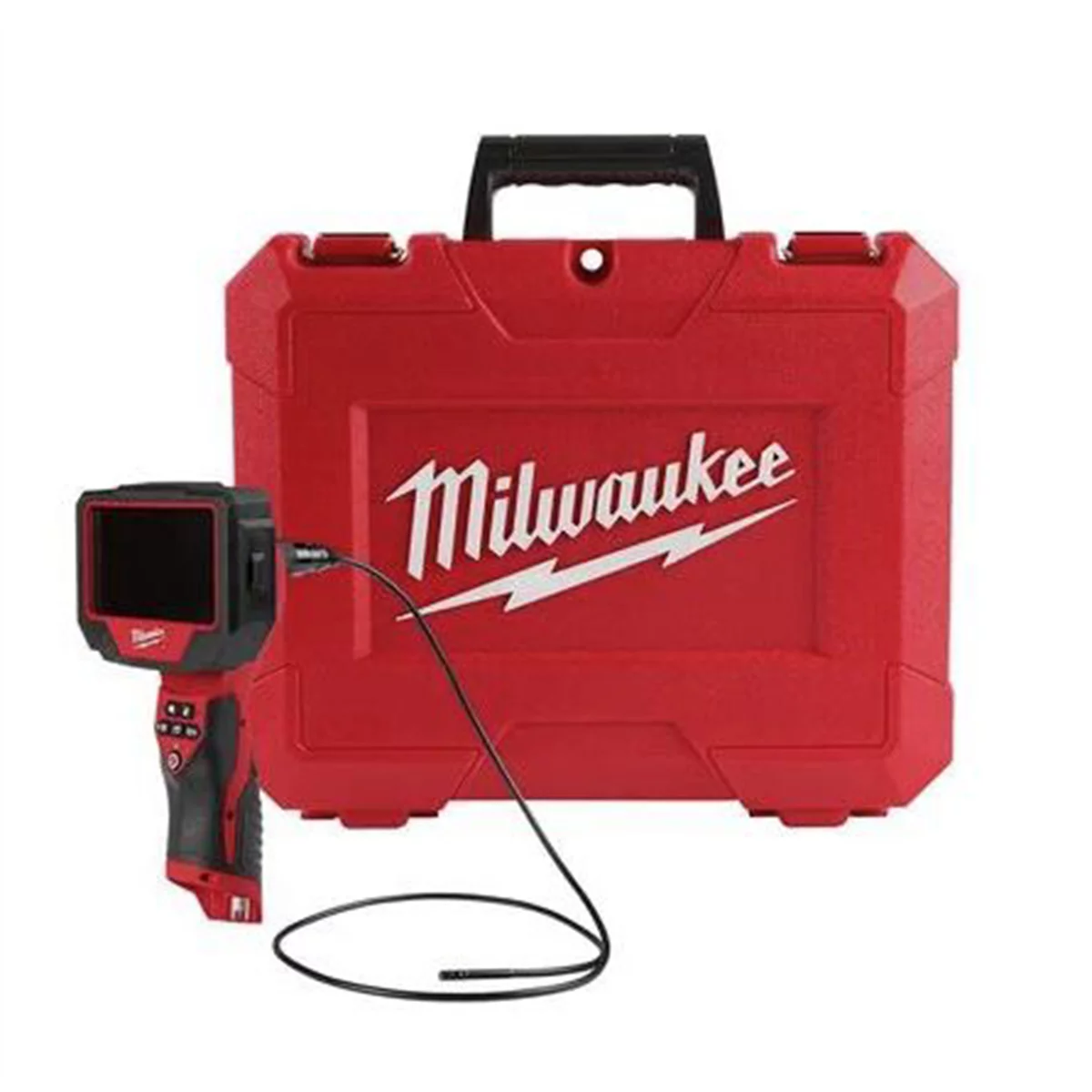
Milwaukee Tool M12 Auto Technician Borescope with 2.0 Starter Ki
Mfg: Milwaukee Electric Tools
Part #: TECHBORESCOPEKIT
FAQs
Is it worth paying for an independent PPI if I’m buying out of state?
Yes. Many independent shops near the seller’s location will do a PPI for $100-150, which is cheap insurance against a multi-thousand-dollar engine or transmission problem on a car you’re about to drive hundreds of miles.
Can a vehicle history report catch a rolled-back odometer?
Often, yes. Reports compile odometer readings from title transfers, state inspections, and service records, so a sudden drop or inconsistency in reported mileage is usually visible even if the current reading has been altered.
What’s the single most important tool to bring to a used car inspection?
An OBD2 scanner. It’s the fastest way to catch a seller who cleared codes before the sale and to see what the vehicle’s computer has actually logged, independent of what you’re told verbally.
Should high mileage alone be a dealbreaker?
Not necessarily. A well-maintained vehicle with 200,000+ miles and documented service history can be more reliable than a neglected vehicle with half the mileage. The maintenance record and inspection results matter more than the odometer number alone.
What if the seller won’t let me do any inspection at all?
Walk away. A seller unwilling to allow a cold start, a look underneath, or an OBD2 scan is giving you the clearest red flag available, regardless of how far you’ve traveled to see the car.
Is buying from a different region actually cheaper after accounting for travel?
Often yes for rust-prone climates — a rust-free Southern vehicle can be meaningfully cheaper and more durable long-term than a local equivalent, but the savings only hold up if the mechanical inspection is done properly before the trip, not skipped because of it.
Recommended Tools for Pre-Purchase Inspections
A proper inspection needs just a few portable tools—an OBD2 scanner, a compression tester, and good lighting. Browse our Automotive Diagnostic Tools to find the equipment for inspecting anywhere.
- OBD2 scanners for reading engine codes and freeze-frame data
- Compression and leak-down testers for assessing engine condition
- Flashlights and inspection mirrors for undercarriage and tight spaces

The Toolsource Technical Team blends decades of real-world automotive service experience with up-to-date technical research. Our writers collaborate with professional mechanics, shop owners, and diagnostic specialists to deliver practical, workshop-ready guidance you can trust.


Follow us on social media