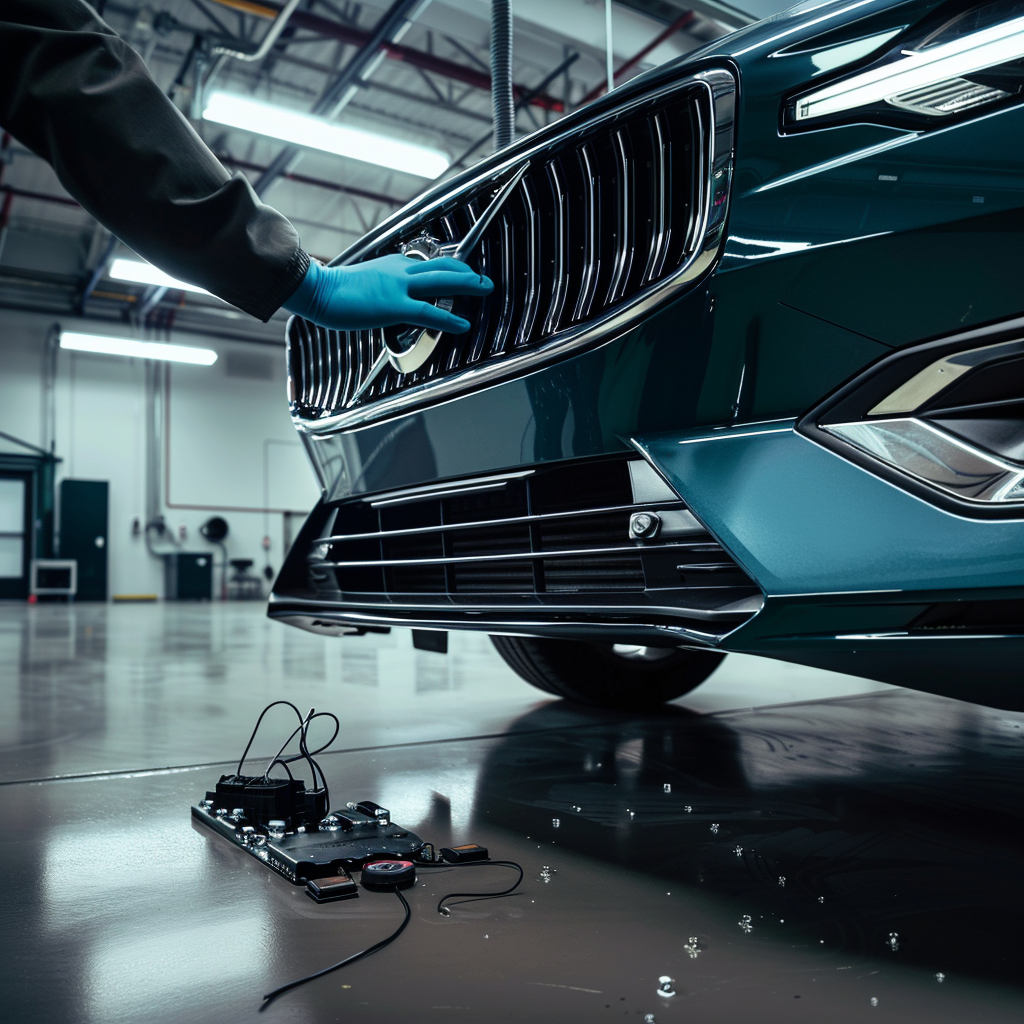
Modern vehicles rely on multiple Controller Area Network (CAN) buses to coordinate ECUs. That connectivity improves performance, diagnostics, and advanced lighting/ADAS features, but also expands the attack surface. Thieves increasingly target exterior modules and harnesses—most commonly front lighting or radar/ADAS components—to reach the CAN and push messages the car mistakenly trusts. This article explains the risk at a high level and focuses on what technicians can do: how to inspect a vehicle after a suspected attempt, how to harden vulnerable points, what tools to deploy, and how to set customer expectations. No exploit procedures are provided; this is strictly defensive guidance for legitimate service.
[ts-search queries=”obd ii code reader” limit=”6″
1) CAN Injection 101 (High-Level, No How-To)
CAN is a real-time broadcast network designed in the 1980s to move small packets of data quickly among ECUs. It prioritizes speed and determinism over security. On many platforms, the bus itself does not authenticate the source of a message; devices rely on message IDs, timing, and gateway logic to accept or ignore data. In practice, if an attacker gains physical access to a branch of the bus and the target platform lacks robust message validation or gateway rules, crafted traffic may influence vehicle behavior.
Key points technicians should understand:
- Broadcast and trust model: Most CAN frames are accepted by any node that is configured to listen for that ID. Without strong ECU-to-ECU authentication, a forged message can be acted upon.
- Multiple buses and gateways: Modern vehicles often use separate high-speed and low-speed CAN segments with a gateway module regulating traffic. Some OEMs also keep immobilizer or key authentication on a separate, non-CAN link. Gateway design and ECU policies vary widely by brand and model year.
- Security is maturing: Many manufacturers added security gateway modules (SGW), rolling code exchanges, and write-blocking for non-authorized diagnostic tools in roughly the last decade. Older vehicles and some architectures still leave room for message injection if the physical network is exposed.
- Not all brands are the same: Some platforms isolate immobilizer functions from the main CAN or require cryptographic handshakes before enabling powertrain components. Others historically trusted messages from any node on a shared segment. Always check OEM documentation and bulletins.
The takeaway: CAN itself isn’t “broken,” but when authentication and segmentation are incomplete, physical bus access becomes an attack vector. Defensive service is about limiting that access, hardening likely entry points, and ensuring ECUs require proper authentication before allowing critical functions.
2) Where Attacks Tend to Start (and What to Look For)
Because attackers seek a quick, quiet entry point, exterior modules are attractive. The goal is to reach a CAN branch without opening doors or the hood. Technicians should focus on these areas during inspections:
- Front radar/ADAS sensor area: Adaptive cruise/brake support radars and cameras reside near the lower grille or behind the emblem. Their harness stubs and connectors are targets due to proximity and relative accessibility from the bumper area.
- Front lighting harnesses: Headlamp, DRL, and fog lamp circuits often live near the wheel liners and bumper corners. Many lighting modules are intelligent (bulb-out detection, leveling, adaptive/matrix functions) and sit on a CAN line or LIN-to-CAN bridge.
- Front wheel liners and lower valance: These panels often hide service cutouts. Fastener tampering or misaligned trim here is a red flag.
- OBD-II port: Still a common entry, especially for key programming and basic diagnostics. An unsecured OBD port is low-effort to access once the cabin is compromised.
- Door mirror/handle harnesses: Some models route networked components for passive entry or blind spot monitoring through these areas.
Red flags of a CAN-focused theft attempt include: disturbed bumper/liner fasteners, pry marks near lighting or radar housings, missing push pins, displaced harness clips, non-OEM tape or ties, scuffs around module mounts, previously undetected DTC bursts across unrelated modules, and intermittent CAN errors (error frames, bus-off events) in freeze-frame data aligned with the time of the incident.
3) Post-Incident Inspection and Documentation
When a customer reports suspicious activity, an attempted theft, or a recovered vehicle with unexplained behavior, follow a documented process that preserves evidence and identifies vulnerabilities:
- Visual survey without disassembly: Photograph front bumper, grille openings, emblem area, fog/DRL surrounds, wheel liners, headlamp edges, and undertrays. Look for tool marks, cracked mounts, missing push rivets, and disturbed sealant.
- Harness and connector check: Using a borescope and inspection mirror, verify the condition of exposed harness runs to front modules. Look for non-OEM splices, bent pins, cut jacket, or added devices. Do not cut loom unless authorized; document first.
- Comprehensive scan: Use a compliant diagnostic tool to read DTCs from all ECUs, not only powertrain. Save a complete report with timestamps. Note burst errors, CAN communication codes, and modules with unexpected resets.
- Freeze-frame and counters: Where supported, review network error counters and voltage stability around the event. Unusual bus-off recoveries or repeated reset counters can correlate to tampering.
- Key/immobilizer audit: Check key counts, last programmed key date, and immobilizer status where accessible. If unknown keys may have been enrolled, recommend reprogramming and rolling key updates per OEM guidance.
- Telematics and camera logs: If the customer’s vehicle supports trip/event logs or has a dash camera, archive relevant data with customer consent for insurer or law enforcement.
- Report and advise: Provide a written summary of findings, risk areas, and recommended hardening measures with parts and labor estimates.
Maintain chain-of-custody practices for photos and logs in case the customer pursues insurance or legal action. Avoid altering or erasing data until documentation is complete.
4) Hardening Strategy: Layered Defense for Real-World Use
There is no single device that makes a vehicle “unstealable.” The best approach combines OEM updates, physical barriers, network-aware safeguards, and visible deterrents. Prioritize steps based on the customer’s vehicle, usage, and local theft patterns.
Software and configuration:
- OEM updates: Apply ECU and gateway updates, especially those addressing security gateway (SGW) behavior, immobilizer improvements, and ADAS module firmware. Review TSBs and campaigns for theft-related fixes.
- Key management: Re-enroll keys after an incident; delete unknown keys. If supported, disable passive entry or reduce key wake range in vehicle settings. Advise customers to store fobs in RF-shielded pouches at home.
- Telematics: Ensure the vehicle’s connectivity services and theft-alert features are active, with owner credentials updated.
Physical protection:
- ADAS/radar shields: Install model-specific anti-removal shields or brackets that require interior access to remove. Verify they do not obstruct sensor field-of-view and recalibrate ADAS if required.
- Lighting harness guards: Add abrasion-resistant conduit, secure loom routing with additional P-clamps, and apply tamper-evident fastener paint on critical connectors and module screws.
- OBD-II port locks: Fit a locking enclosure or relocation kit approved for the platform to prevent unauthorized tool access.
- Hood and steering locks: A visible steering wheel lock and a mechanical hood lock increase effort and time for attackers and act as deterrents.
- Alarm sensors: Add battery-backed siren, tilt/motion, and glass-break sensors tied to the OEM alarm where supported.
Electrical/network mitigation:
- Security gateway enablement: Where applicable, ensure SGW is present and functioning. For older platforms, consider vetted aftermarket gateways that restrict write messages unless authenticated through an approved service tool.
- CAN intrusion detection: On select platforms, aftermarket devices monitor for abnormal traffic and trigger alarms. Choose solutions that do not degrade bus reliability and are validated for the vehicle family.
- Hidden interrupt (immobilization): Install a discreet, professionally wired interrupt on a non-safety-critical enable circuit (for example, a starter control or an enable line) using automotive-grade components. Avoid cutting primary high-current feeds; ensure any modification complies with local regulations and does not interfere with safety systems.
Visible deterrence matters. Opportunistic criminals often move on when they see layered security and anticipate lengthy effort, noise, or uncertainty. Communicate to customers that no solution is perfect; the goal is to raise the time, tools, and risk required beyond what thieves are willing to accept.
5) Service Workflow and Tools You’ll Use
A repeatable workflow saves bay time and helps customers understand what they’re paying for. Organize around inspect, secure, document, and educate:
- Inspection tools: Panel clip pliers, trim tools, a borescope, inspection mirror, flashlight, torque drivers (Torx/hex), and a calibrated DMM. Where authorized, a lab scope and CAN breakout harness help confirm bus health (voltage levels, error frames) without disturbing OEM wiring.
- Security installations: Model-specific radar/ADAS shields, OBD port locks, steering wheel locks, hood locks, RF key pouches/boxes, tamper-proof fasteners (where permitted), and battery-backed sirens with tilt and glass-break sensors.
- Wiring protection: Split-loom conduit, high-temp tape, braided sleeve, grommets, adhesive mounts, P-clamps, and stainless cable ties. Tamper-evident paint or labels for critical fasteners.
- Documentation: Digital vehicle inspection (DVI) photos, full-module scan reports, key/immobilizer status, and a written hardening checklist signed by the customer.
- Post-install verification: Confirm ADAS sensor alignment and perform required calibrations after fitting shields or moving harness paths. Validate alarm triggers and verify no DTCs are introduced by added hardware.
Stocking these parts and tools lets your shop offer a standardized “CAN risk assessment and hardening” package with clear deliverables.
6) Customer Education, Policy, and Expectations
Set realistic expectations: You’re reducing risk, not guaranteeing prevention. Explain the nature of CAN-based attacks at a high level and why your layered approach is effective without oversharing technical exploit details.
- Parking and key habits: Recommend well-lit parking, avoiding curbside overnight spots where the front bumper is easily accessed, and storing spare fobs in RF-shielded enclosures. Advise customers to disable passive entry if they don’t need it.
- Visible deterrents: Steering locks and OBD locks signal added effort to thieves. Combined with alarm enhancements, these reduce opportunistic targeting.
- After an attempt: Don’t drive if critical safety warnings appear. Call the shop, document visible damage, and involve insurance/law enforcement as appropriate.
- Maintenance: Encourage periodic inspections of front harness routes, shield fasteners, and alarm sensors. Ensure any software updates affecting gateways/immobilizers are performed promptly.
- Myths: Manual transmissions and pulling random fuses are not robust solutions. A professional, integrated approach is safer and more reliable.
Quick Hardening Checklist (Service Bay Use)
- Full visual and borescope inspection of front bumper, lighting, and ADAS harness routes
- All-module scan with report, note any CAN comm/error DTCs
- Apply OEM updates (ECU, SGW, ADAS) and audit immobilizer/key list
- Install ADAS/radar shield and protect lighting harness with conduit and securement
- Fit OBD-II lock and verify alignment with service procedures
- Add steering wheel lock and, if agreed, a discreet electrical interrupt
- Enhance alarm (tilt/motion, glass-break, battery-backed siren) and test triggers
- Provide RF key pouches and customer education sheet
- Document work with photos, calibration certificates, and scan reports
FAQs
Do headlights really need to be on the CAN bus?
In many modern vehicles, yes. Regulations require bulb-out detection, and advanced lighting (auto-leveling, adaptive beam steering, matrix high beams) relies on networked control. That connectivity also means a headlamp area may be near a bus branch. Hardening is about protecting access to the wiring, not removing functionality.
Isn’t encryption on the CAN bus the fix?
Encryption on raw CAN frames is uncommon due to bandwidth and legacy constraints. Effective protection typically happens at higher layers: ECU-to-ECU authentication, rolling codes, secure gateways that filter unauthenticated write commands, and isolating immobilizer logic on separate links. OEM updates and security gateways can significantly reduce risk even without encrypting every frame.
Will a “ghost” or aftermarket immobilizer stop CAN injection?
Some aftermarket immobilizers add an extra enable step before the vehicle will run, which can defeat basic message injection. However, no device is absolute. Choose solutions that are compatible with the platform, professionally installed, and do not interfere with safety systems. Combine with physical protections, gateway controls, and good key hygiene.
Are certain brands immune to this attack?
No platform is entirely immune. Some OEMs isolate immobilizers from main CAN segments or enforce robust authentication between modules, which greatly increases attacker effort. Others have retrofitted security gateways on newer model years. Always check the model-specific architecture and bulletin history.
Is a manual transmission a theft deterrent?
It may deter unskilled opportunists, but it does not stop a determined theft crew. Security should not rely on transmission type. Layer mechanical, electronic, and procedural controls.
Can I just pull a fuse as a DIY immobilizer?
Randomly removing fuses can create safety issues, disable diagnostics, and strand the driver. If an interrupt is desired, use a professionally installed, discreet solution on an appropriate low-current control line with proper circuit protection and documentation.
Shop Inspection Tools
To carry out the checks described above, see our selection of borescopes and inspection tools for non-invasive bumper, lighting, and ADAS harness inspections.
- Flexible borescopes for behind-liner and connector views
- Inspection mirrors and work lights for tight spaces
- Trim-safe clip and panel access tools

The Toolsource Technical Team blends decades of real-world automotive service experience with up-to-date technical research. Our writers collaborate with professional mechanics, shop owners, and diagnostic specialists to deliver practical, workshop-ready guidance you can trust.


Follow us on social media