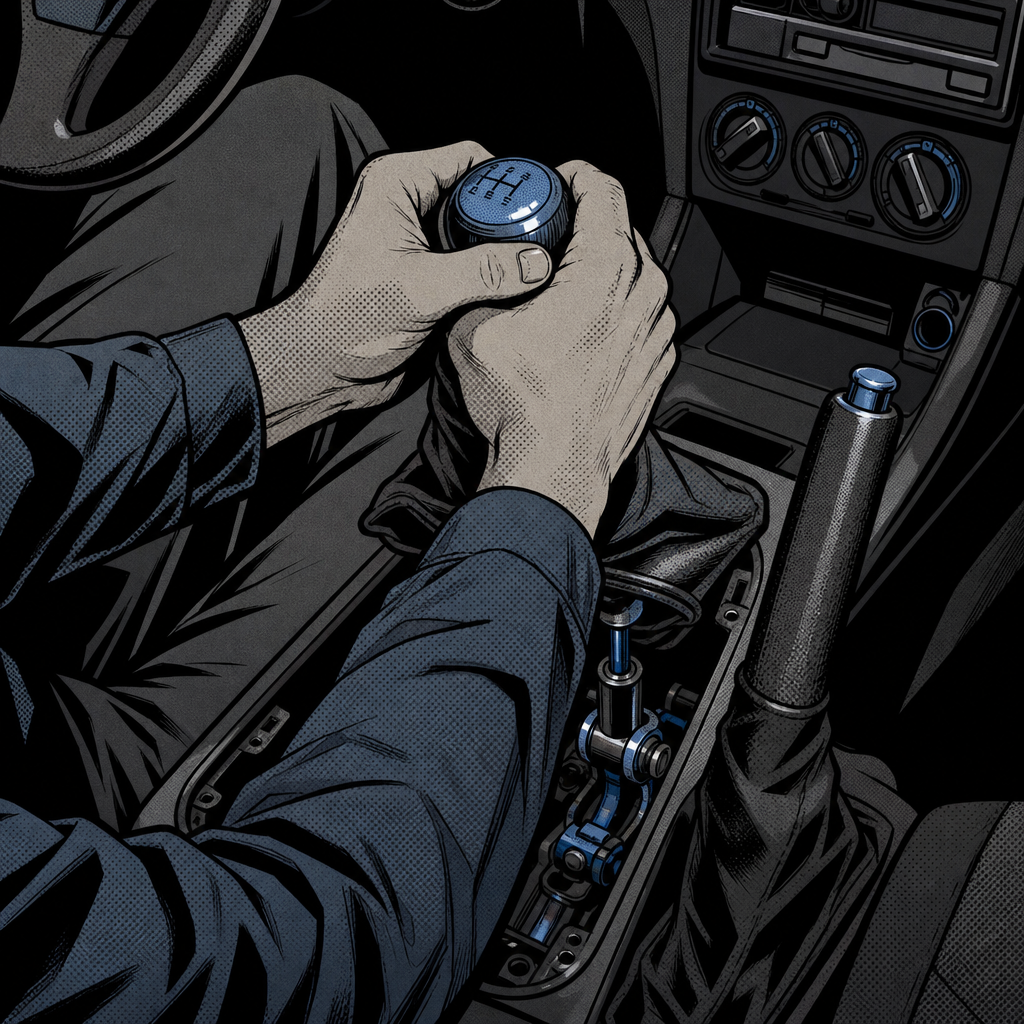
Every shop eventually has a new hire, an apprentice, or a customer’s kid who needs to learn a manual transmission — and almost every one of them starts by staring down at the shifter instead of the road. That habit is the single biggest thing slowing down the learning curve. Shifting a manual gearbox is a tactile skill, not a visual one, and it can be taught systematically with a handful of drills that build muscle memory before the vehicle ever leaves the lot. This guide lays out the practical steps technicians can use to train someone on stick shift fundamentals, from engine-off gear drills to hill starts, plus a few shifter myths worth clearing up before someone reaches for a trim panel.
Why Looking at the Shifter Is the Wrong Approach
New drivers want visual confirmation of what gear they’re in, but glancing down at the console while moving is a genuine hazard — it takes eyes off the road exactly when reaction time matters most. More importantly, it’s unnecessary. A shift lever communicates gear position through hand position, spring tension, and travel distance. A driver who learns to read those cues will shift faster and more accurately than one relying on sight, and they’ll do it without ever taking attention off traffic.
The fix isn’t willpower, it’s repetition. Once a driver has rehearsed the shift pattern enough times, the hand finds first gear the same way it finds a light switch in a dark room — without conscious thought. That’s the target state, and it’s reachable in a single practice session if the drills are structured correctly.
Start With Engine-Off Gear Drills
Before the key ever turns, have the driver sit in the seat, set the parking brake, press the clutch pedal to the floor, and run through the gears by hand. Call out gears at random — “second,” “fifth,” “first,” “neutral” — and have them find each one without looking down. This isolates the shifting skill from the coordination challenge of clutch/throttle work, so the driver can focus entirely on hand position and gate location.
Run this drill for 15–20 minutes if possible. It feels tedious, but it’s the fastest way to build the spatial map of the gearbox. Add a second pass where the driver presses and releases the clutch between every shift to simulate the rhythm of actual driving. By the end, most drivers can find any gear on command without hesitation.


Use the Neutral Detent as an Anchor Point
Every H-pattern gearbox has a spring-loaded center position in neutral, and that center point is the single most useful reference a new driver can learn. From neutral, the stick sits in the middle column by default. Push left for first and second, leave it centered for third and fourth, and push right for fifth and sixth (and reverse, depending on the layout).
Teach drivers to trust the return spring rather than fight it. When shifting from second to third, for example, there’s no need to trace a rigid Z-shaped path — a gentle push forward out of second lets the spring recenter the lever automatically, and pushing forward again from that centered position drops it straight into third. Death-gripping the shifter and forcing it through a mental diagram is what causes missed gears and grinding. Let the detent do the work.
This is also how experienced drivers “check” their gear without looking: pop the lever to neutral and feel which way it springs. If it jumps left, they were in first or second; if it stays centered, third or fourth; if it springs right, fifth or sixth. It’s a diagnostic habit worth teaching early, since it replaces the urge to glance down entirely.
Practice Hill Starts Before They’re Needed on the Road
Stalling at a light on flat ground is embarrassing; stalling on an incline with traffic behind is a real risk. Hill starts deserve dedicated practice time, ideally in an empty lot with a mild grade before moving to steeper streets.
Cover both techniques:
- Clutch-and-throttle method: On a shallow incline, bring the clutch to the friction point, add light throttle, and release the brake as the clutch continues to engage — the car should hold or creep forward without rolling back.
- Parking-brake method: On a steeper grade, hold the parking brake while bringing the clutch to the friction point and adding throttle, then release the brake once the car wants to move forward. This removes the rollback risk entirely and is the safer default for beginners.
Drivers should practice getting the car rolling from a dead stop without touching the throttle at all, just easing off the clutch, since it teaches finesse with the friction point better than any amount of gas-pedal coaching.
Clear Up Shifter Hardware Myths
New drivers occasionally get the idea that pulling the shift boot off will reveal a visible gate showing exactly what gear they’re in, like the open-gate shifters seen on some performance and exotic cars. On the vast majority of production vehicles, that’s not the case — underneath the boot is just a pivoting lever and linkage, not a labeled gate. Removing it exposes hardware (and whatever has fallen into the console over the years), not a gear indicator.
True gated shifters exist on some performance trims and aftermarket setups, but they generally require tighter linkage tolerances than a typical shifter has, and retrofitting one rarely improves shift feel on a car that wasn’t designed for it. If a driver genuinely wants a visual gear reference, an aftermarket gear-position indicator that reads off the vehicle’s sensors is a more realistic option than modifying the shifter itself. For most learners, though, the better investment is time in the seat, not hardware.
Avoid the Classic Mis-Shift Mistakes
Two mistakes account for most manual transmission mishaps among new drivers: shifting from fourth directly to first (or second to first) at speed, and downshifting into second when reaching for fourth. Both are avoidable once a driver trusts the neutral-centering technique rather than muscling the lever through a memorized path.
A “money shift” — over-revving the engine by selecting too low a gear at speed — can cause real mechanical damage, so it’s worth calling out explicitly during training rather than assuming it won’t happen. Emphasize that if a driver isn’t sure which gear the car will land in, easing off and checking is always cheaper than guessing.
Quick Practice Checklist
- Engine off, parking brake set: cycle through all gears by feel, called out at random
- Repeat with clutch press/release between each shift
- Locate and practice the neutral center-spring detent
- Practice clutch-and-throttle hill starts on a shallow grade
- Practice parking-brake hill starts on a steeper grade
- Roll the car from a stop using only clutch release, no throttle
- Review the risk of money shifts and mis-shifts into first/second

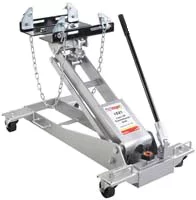
1,000 Lb Capacity Low-Lift Transmission Jack
Mfg: OTC Tools and Equipment
Part #: 1521A
Frequently Asked Questions
How long does it take to shift without looking?
Most drivers stop needing to glance at the shifter within a few weeks of regular driving, and many get there in a single dedicated practice session using engine-off drills.
Do all manual cars have the same shift pattern?
The general H-pattern logic is consistent, but exact gear counts and reverse-gear location vary by vehicle. Always check the pattern diagram on the shift knob before assuming a layout.
Is the clutch on the left side in right-hand-drive cars?
Yes. Pedal order (clutch, brake, throttle from left to right) and shift-hand assignment stay consistent regardless of which side the steering wheel is on — only the seating position mirrors.
What’s the safest way to learn hill starts?
Start with the parking-brake method on a moderate incline in a low-traffic area before attempting the clutch-and-throttle method on steeper real-world hills.
Will removing the shift boot help a new driver see the gears?
No, on nearly all production vehicles it only exposes the linkage hardware, not a visible gate. It won’t provide the visual reference a new driver is hoping for.
What happens if a driver accidentally shifts into the wrong gear at speed?
If it’s an over-rev (money shift), it can cause serious engine damage; if it’s simply a rough or missed shift, easing off the clutch and reselecting the correct gear is usually enough. Teach drivers to hesitate and check rather than force a shift they’re unsure of.
Recommended Tools
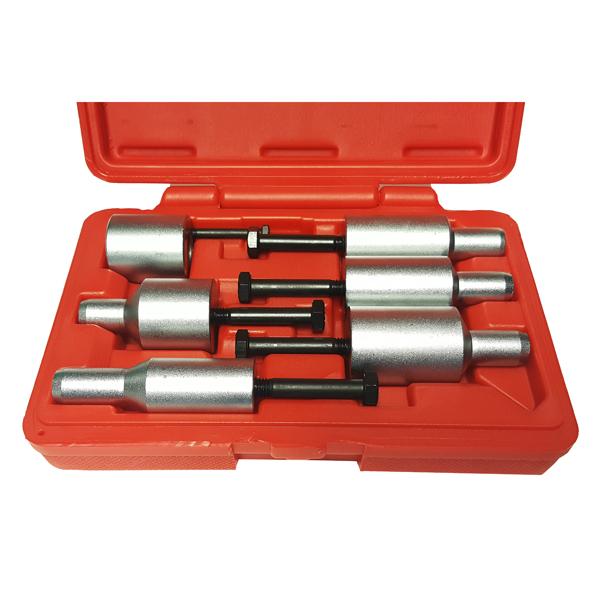
Manual transmission training and maintenance require specific tools for shifter work and clutch service. Browse our Drive Train – Transmission Tools category for shift kits, removal tools, and transmission service equipment.
- Shift boots, knobs, and shifter kits
- Clutch and transmission removal tools
- Diagnostic and maintenance equipment

The Toolsource Technical Team blends decades of real-world automotive service experience with up-to-date technical research. Our writers collaborate with professional mechanics, shop owners, and diagnostic specialists to deliver practical, workshop-ready guidance you can trust.


Follow us on social media