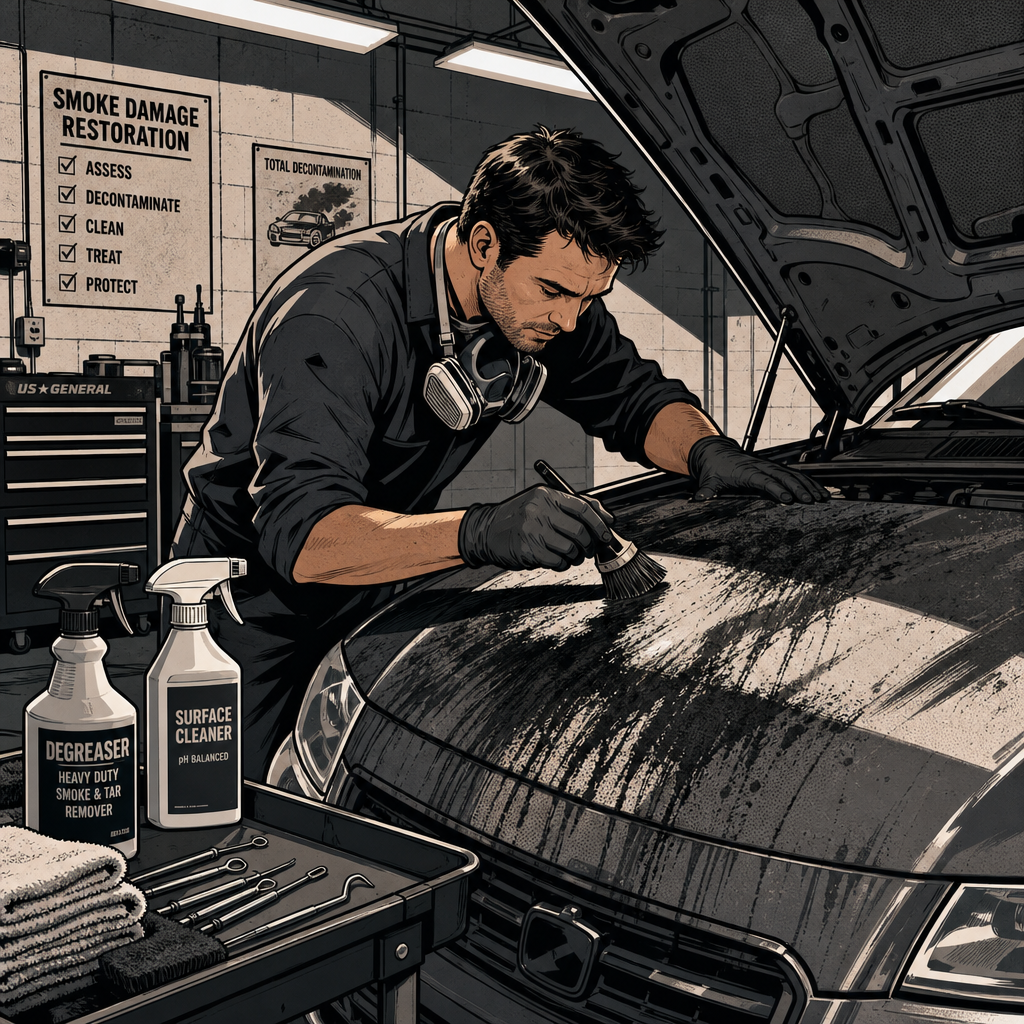
When a vehicle suffers smoke damage from a garage fire or similar incident, the restoration process presents unique challenges that go beyond standard detailing work. Smoke penetrates every porous surface, leaving behind toxic residues and persistent odors that can render an otherwise salvageable vehicle nearly worthless. Whether you’re working on a high-value truck or a daily driver, understanding the proper assessment and restoration techniques is critical for both vehicle recovery and your own health and safety. This guide covers the complete process from initial damage assessment through final restoration, helping you determine when to tackle the work in-house and when to refer clients to specialized remediation companies.
Initial Assessment and Safety Considerations
Before beginning any work on a smoke-damaged vehicle, conduct a thorough assessment to determine the extent of damage and whether the restoration is economically viable. Start by documenting everything with detailed photographs from multiple angles, capturing both obvious damage and subtle discoloration. Check for soot accumulation on all exterior surfaces, paying special attention to chrome trim, badges, and textured surfaces where residue tends to collect.
Examine the clear coat carefully for heat damage, which can appear as hazing, blistering, or complete failure in severe cases. If the clear coat has been compromised by heat, paint correction alone won’t restore the finish—the vehicle may require professional repainting. Open all doors, the hood, and trunk to assess interior damage and get an immediate sense of odor severity. Strong, persistent smoke odors indicate deep penetration into upholstery, carpeting, and headliner materials.
Safety must be your first priority when working with smoke-damaged vehicles. Smoke residue contains toxic compounds including carbon monoxide, formaldehyde, and numerous carcinogens. Never breathe these fumes for extended periods, even if you’re being paid well for the work. Ensure your workspace has adequate ventilation, and wear appropriate respiratory protection—not just a dust mask, but a properly fitted respirator with organic vapor cartridges. Nitrile gloves and eye protection are also essential, as smoke residue can irritate skin and eyes.
Many experienced detailers choose to refer smoke damage work to specialized remediation companies like Servpro rather than handling it in-house. These companies have industrial-grade equipment, proper safety protocols, and experience with toxic residue removal. For a few hundred dollars in referral fees versus the health risks and specialized equipment required, outsourcing often makes better business sense, particularly for severe damage cases.
Exterior Surface Cleaning and Decontamination
If you’ve decided to proceed with the restoration work, begin with the exterior surfaces. Smoke damage creates a film of soot and tar-like residue that adheres to paint, glass, and trim. Standard washing won’t remove this contamination—you’ll need a systematic decontamination process.
Start with a pre-rinse to remove loose soot particles, then use a dedicated degreaser or all-purpose cleaner diluted according to manufacturer specifications for heavy contamination. Work in small sections, applying the cleaner with a foam applicator or microfiber towel rather than spraying directly onto hot or damaged surfaces. Let the product dwell for the recommended time to break down the smoke residue, but don’t allow it to dry on the surface.
Use a soft-bristle brush for textured surfaces and trim pieces where soot accumulates in crevices. Chrome trim requires special attention—smoke residue often leaves stubborn staining that requires multiple cleaning passes with appropriate chrome cleaners. Avoid abrasive methods that could damage the chrome finish. For heavily soiled areas, clay bar treatment after washing helps remove embedded contaminants that survived the initial cleaning.
Rinse thoroughly between sections to prevent cross-contamination. You may need to repeat the entire process two or three times before the vehicle is truly clean. After decontamination, assess the paint condition. Minor smoke exposure may only require polishing to restore clarity, while heat-affected clear coat will show permanent damage that polishing cannot correct.
Interior Odor Elimination and Deep Cleaning
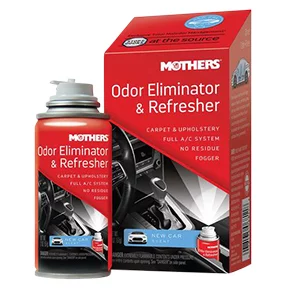
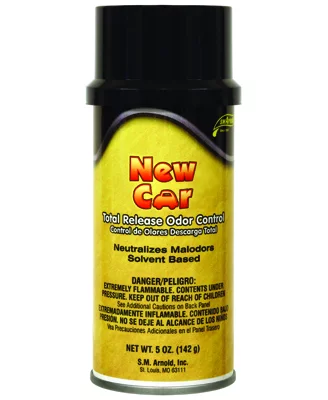
Interior smoke odor removal is the most challenging aspect of fire damage restoration. Smoke molecules penetrate fabric, foam, carpeting, and even hard plastics, creating persistent odors that can last indefinitely without proper treatment. Surface cleaning alone will never eliminate the smell—you need a comprehensive approach that addresses contamination at every level.
Begin by removing all floor mats, seat covers, and any other easily removable fabric items. These should be professionally cleaned or replaced entirely if heavily contaminated. Vacuum thoroughly to remove loose soot and debris, using a shop vacuum with HEPA filtration to avoid redistributing particles into the air. Pay special attention to seat tracks, under-seat areas, and door pockets where soot accumulates.
For hard surfaces—dashboard, door panels, center console—use an interior cleaner specifically designed for smoke and odor removal. Steam cleaning can be highly effective on hard surfaces and helps sanitize without harsh chemicals, but use caution around electrical components and sensitive materials. Wipe all surfaces multiple times, changing to fresh microfiber towels frequently to avoid redistributing contamination.
Fabric surfaces present the biggest challenge. Upholstery and carpeting need deep extraction cleaning with hot water and appropriate cleaning solutions. A heated extractor will pull contamination from deep within the foam padding, but understand that severely damaged materials may never fully recover. The headliner is particularly problematic—it’s difficult to clean without causing sagging or staining, and replacement is often the only viable solution for heavy smoke exposure.
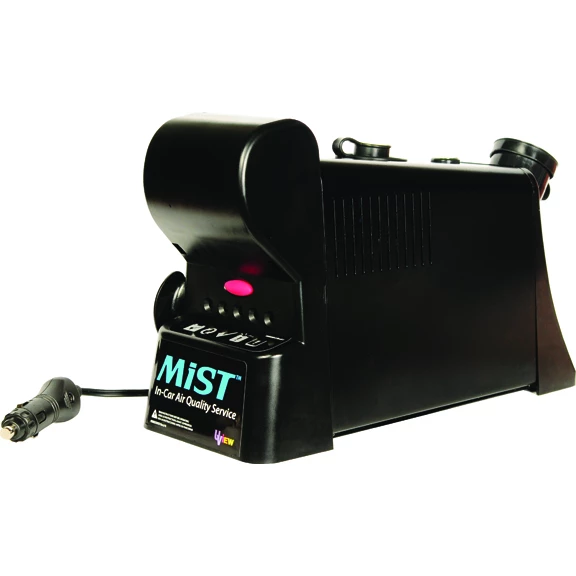
After cleaning, treat all surfaces with an odor encapsulation product or enzymatic odor eliminator designed for smoke damage. These products don’t just mask odors—they chemically neutralize or encapsulate odor molecules. Some professionals also use ozone generators or hydroxyl generators for final odor treatment, though these should only be operated in unoccupied vehicles with proper training, as ozone can damage rubber and plastic components if overused.
When to Recommend Replacement Rather Than Restoration
Not every smoke-damaged vehicle is worth restoring, and part of your professional responsibility is advising clients honestly about their options. Vehicles with severe smoke damage essentially become “junk cars” regardless of their pre-incident value. A $140,000 Raptor R that’s been heavily smoke-damaged may cost more to properly restore than it’s worth post-restoration, even with insurance coverage.
Several factors indicate that replacement is more practical than restoration. If the smoke odor remains strong after thorough cleaning and treatment, the contamination has penetrated too deeply into the vehicle’s materials. If heat damage has compromised the clear coat across large areas, the vehicle will require complete repainting to look right. If interior materials show visible heat damage, staining, or melting, replacement of entire interior components may be necessary—an expensive proposition on modern vehicles with complex trim pieces and integrated electronics.
Consider the vehicle’s total value versus restoration costs. Insurance companies will make this calculation, often totaling vehicles when restoration costs exceed a certain percentage of pre-loss value. For high-value vehicles like performance trucks, the owner may choose to pursue restoration despite high costs, but they should understand that resale value will be permanently affected even after professional restoration.
Be transparent with clients about limitations. Even excellent detailing work cannot always return a smoke-damaged vehicle to pre-incident condition. Residual odor may persist indefinitely, particularly in hot weather when heat releases trapped odor molecules from materials. Some buyers will never accept a fire-damaged vehicle regardless of restoration quality, affecting long-term value.
Insurance Claims and Documentation Best Practices
When working on smoke-damaged vehicles, proper documentation and insurance coordination can make the difference between a profitable job and a payment dispute. Most smoke damage work is insurance-covered, meaning you’ll interact with adjusters, estimators, and possibly third-party administrators throughout the process.
Document everything before you begin work. Take comprehensive photographs of all damage from multiple angles, capturing both overall condition and specific problem areas. Photograph odor sources, soot accumulation, damaged trim, and any heat-affected surfaces. These images establish baseline conditions and support your repair estimates.
Communicate with the insurance company before starting extensive work. Some insurers prefer to have smoke-damaged vehicles towed directly to your shop for assessment rather than having the owner drive them. Others may require estimates from multiple shops or insist on their own inspection before authorizing work. Understanding these requirements upfront prevents payment issues later.
Provide detailed estimates that break down labor and materials by category: exterior decontamination, interior cleaning, odor treatment, protective coatings, and any parts replacement. Be realistic about time requirements—smoke damage restoration takes significantly longer than standard detailing. A thorough smoke damage restoration might require 15-30 hours or more depending on severity, and your estimate should reflect that reality.
Keep detailed records of all work performed, including products used, time spent on each phase, and any complications encountered. If additional work becomes necessary during the restoration process, document the reasons and get authorization before proceeding. Insurance companies appreciate transparency and are generally willing to pay for necessary work when it’s properly justified.
Professional Detailing Techniques for Maximum Results
Once the vehicle is clean and deodorized, final detailing work brings everything together. This phase separates adequate restoration from truly professional results that justify premium pricing.
For exterior surfaces, assess whether paint correction is needed. Light smoke exposure may leave the clear coat intact but hazy, requiring polishing to restore clarity and gloss. Use a dual-action polisher with appropriate cutting compounds and pads, working systematically across all painted surfaces. Follow with a finishing polish to remove any haze from the cutting step. If the clear coat shows heat damage—haziness that doesn’t improve with polishing, or actual blistering and failure—paint correction won’t help. These areas need professional repainting.
Apply a quality sealant or ceramic coating after paint correction to protect the restored finish. These products also add depth and gloss that makes the restoration more impressive. Don’t neglect glass—smoke film on windows requires specific glass cleaners and may need clay bar treatment for embedded contamination. Polish glass thoroughly inside and out for maximum clarity.
Chrome and metal trim should be treated with appropriate metal polish or protectant after cleaning. Smoke damage can leave permanent staining on chrome, but proper polishing minimizes its visibility. Replace severely damaged trim pieces if the client’s budget allows—trying to restore hopelessly damaged trim wastes time and delivers poor results.
For interiors, consider applying a protective dressing to all hard surfaces after cleaning. This creates a barrier against residual odor migration and makes the interior look refreshed. Use products appropriate for each surface type—vinyl dressings for door panels and dashboard, leather conditioner for leather surfaces. Don’t over-apply products, as this creates a greasy appearance and attracts dust.
Final odor control may include placing activated charcoal bags or other odor absorbers in the vehicle for several days after completion. Brief the client that some residual odor may return during the first few hot days as heat releases trapped odor molecules, and this is normal even after professional restoration. Set realistic expectations to avoid comeback complaints.
Quick Reference Checklist: Smoke Damage Restoration Process
- Document all damage with detailed photographs before beginning work
- Assess clear coat condition and interior contamination severity
- Ensure adequate ventilation and wear proper respiratory protection
- Coordinate with insurance company and obtain authorization before starting
- Remove and clean or replace floor mats and removable fabric items
- Decontaminate exterior surfaces with appropriate degreasers and cleaners
- Perform clay bar treatment on paint and glass to remove embedded contaminants
- Deep clean interior hard surfaces with steam or chemical cleaners
- Extract upholstery and carpeting with hot water and smoke damage cleaners
- Apply odor encapsulation or enzymatic treatment to all surfaces
- Assess need for paint correction and perform as necessary
- Apply protective coatings to exterior and interior surfaces
- Consider ozone or hydroxyl treatment for persistent odors (with proper training)
- Provide realistic expectations about residual odor potential


Frequently Asked Questions
Can smoke odor ever be completely eliminated from a vehicle?
In cases of light smoke exposure with prompt treatment, yes—odors can be eliminated completely. However, severe smoke damage often leaves permanent odor that can only be minimized, not fully removed. Heat and humidity will reactivate trapped odor molecules even after thorough cleaning, which is why heavily damaged vehicles retain some smell indefinitely.
Should I handle smoke damage restoration in-house or refer it to specialists?
For light to moderate damage on vehicles where the client specifically requests your services, in-house restoration can be profitable. However, severe damage cases are better referred to fire and smoke remediation specialists who have industrial equipment, proper safety protocols, and experience with toxic residue. Consider your shop’s capabilities, equipment, and the health risks involved before committing to extensive smoke damage work.
How long does professional smoke damage restoration typically take?
Plan on 15-30 hours minimum for thorough smoke damage restoration, depending on severity. Light cases might be completed in 10-15 hours, while severe damage can require 40+ hours for proper decontamination, cleaning, odor treatment, and detailing. Don’t underestimate the time required—smoke damage restoration takes significantly longer than standard detailing work.
What safety equipment is essential for smoke damage work?
At minimum, you need a properly fitted respirator with organic vapor cartridges (not just a dust mask), nitrile gloves, and eye protection. Work in a well-ventilated area and take regular breaks in fresh air. The toxic compounds in smoke residue pose serious health risks with prolonged exposure, so proper protection is not optional.
Will insurance cover smoke damage restoration costs?
Most comprehensive auto insurance policies cover smoke damage from garage fires and similar incidents, subject to the policy’s deductible. However, insurers will total the vehicle if restoration costs exceed a certain percentage of its value. Always coordinate with the insurance company before beginning work to ensure coverage and authorization.
Does smoke damage permanently affect a vehicle’s resale value?
Yes, even after professional restoration, smoke damage history negatively impacts resale value. Buyers are often reluctant to purchase fire-damaged vehicles regardless of restoration quality, and residual odors may persist long-term. A vehicle history report will typically show the insurance claim, further affecting marketability and value.
Shop Equipment for Smoke Damage Restoration
Proper smoke damage restoration requires specialized equipment and supplies—from respiratory protection and decontamination products to extraction tools and odor treatment solutions. Our Shop Equipment and Supplies category carries the essentials you need to handle this work safely and effectively.
- Respiratory protection, gloves, and safety gear for toxic residue handling
- Decontamination cleaners, degreasers, and odor elimination products
- Extraction equipment, steam cleaners, and detailing tools for deep cleaning

The Toolsource Technical Team blends decades of real-world automotive service experience with up-to-date technical research. Our writers collaborate with professional mechanics, shop owners, and diagnostic specialists to deliver practical, workshop-ready guidance you can trust.


Follow us on social media