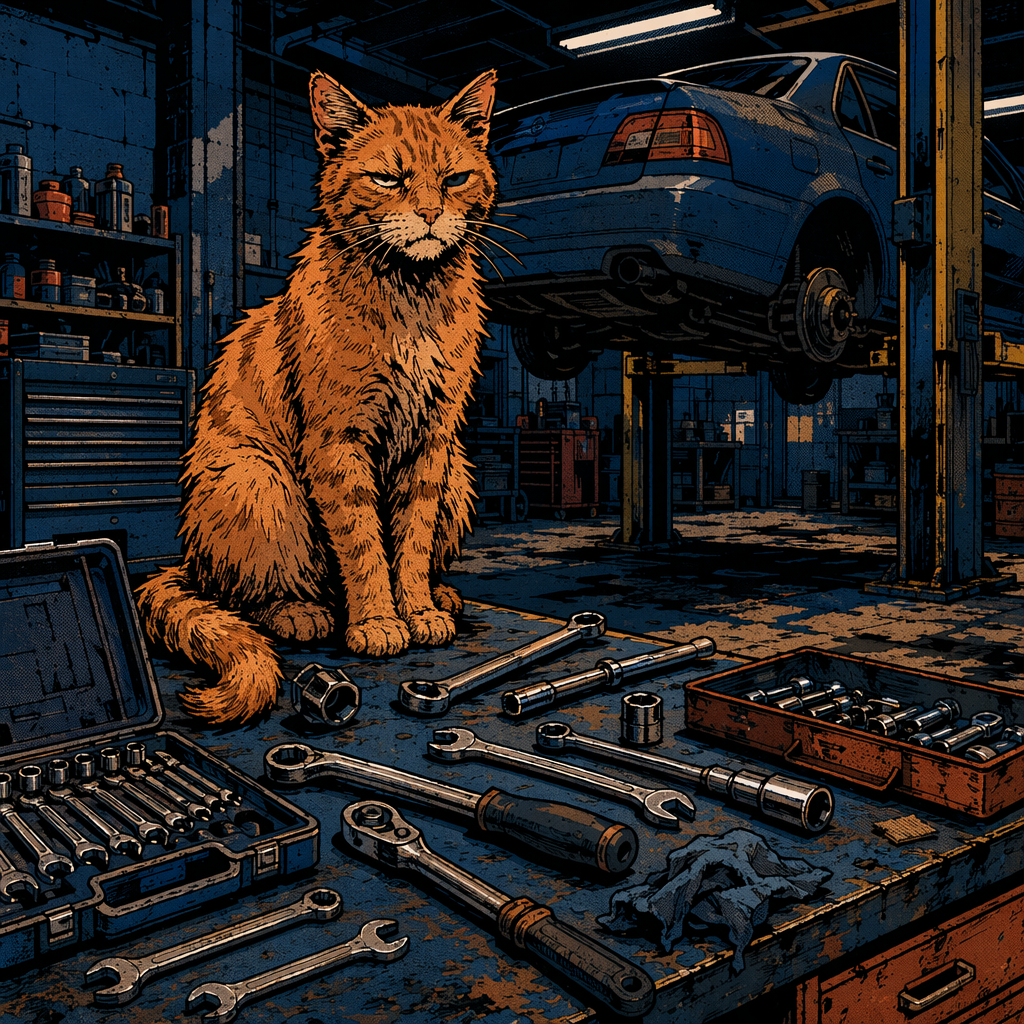
Every technician knows the drill: you’re halfway through an oil change when you hear meowing from the service bay. A stray cat has wandered into your shop, probably attracted by the warmth of the equipment or the promise of shelter. Before you know it, the little furball has claimed your toolbox as home base and become the unofficial shop mascot. Now comes the hard part—naming your new coworker. Forget the typical pet names; your shop cat deserves something that reflects where it was found and the work you do every day. This guide provides a systematic approach to choosing automotive-inspired names that actually make sense in a professional garage environment, from simple component names to brand-specific references that honor the vehicle you found them near.
Understanding the Shop Cat Naming Tradition
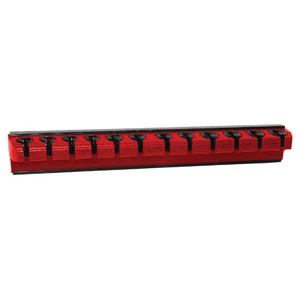
Mechanic's Time Savers Red Lock-A-Wrench Organizer LAW12R
Mfg: Mechanics Time Saver
Part #: LAW12R
The practice of naming shop cats after automotive parts isn’t just mechanic humor—it’s a longstanding tradition that serves multiple purposes. First, it immediately identifies the cat as part of the garage culture rather than a random pet. When a customer asks about “Dipstick” curled up on the counter, it opens conversation and humanizes your business. Second, automotive names tend to be short, punchy, and easy to call across a noisy shop floor. Try yelling “Mr. Whiskers” over an impact wrench versus “Turbo”—you’ll see the difference immediately.
These names also reflect the diagnostic mindset technicians use daily. Just as you identify vehicles by their key components or symptoms, naming a cat after a specific part creates an instant association. A black and white cat might become “Piston” for its contrasting colors. A particularly loud one? “Catback” works on multiple levels. The key is matching the name to either the cat’s characteristics or the circumstances of its discovery.
From a practical standpoint, part-based names age better than trendy human names. “Sprocket” will still make sense in ten years when the cat is still prowling your alignment rack. The name becomes part of your shop’s identity, appearing in social media posts, customer conversations, and even informal business branding. Some shops have gained local recognition specifically because of their well-named mascot cats.
Component-Based Naming: Starting with the Basics
The most straightforward approach is selecting a common automotive component and using it directly. This method works best when the part name has two syllables or fewer and doesn’t require explanation. “Axle” is immediately clear. “Electronic Throttle Control Module” is not. Here’s how to evaluate component names for cat-naming potential:
Single-syllable options work well for quick commands: Cam, Lug, Cat (ironically perfect for catalytic converter), Hose, Bolt, or Valve. These names are easy to shout when the cat is about to knock over your brake fluid. The downside is they can feel generic—half the shops in your area might have a cat named Bolt.
Two-syllable names offer the sweet spot between clarity and character. Sprocket, Piston, Dipstick, Rotor, Brembo, Hubcap, and Lugnut all fit this category. They’re distinctive enough to feel personalized while remaining simple enough for daily use. “Dipstick” particularly resonates because it suggests both the tool and a playful personality—useful when the cat inevitably does something stupid like climb into an engine bay.
Shortened versions give you flexibility. Catalytic Converter becomes “Cat” (obviously). Distributor morphs into “Distribunator” for humor or stays as “Dizzy” for simplicity. Carburetor shortens to “Carb.” This approach lets you start formal and go casual as the cat’s personality emerges. You might introduce them to customers as “Carburetor” but call them “Carby” during daily shop operations.
Consider the cat’s physical characteristics when selecting component names. A small, compact cat might suit “Spark Plug” or “Sparky.” A larger, more substantial animal could be “Big Block” or simply “Hemi.” Orange cats naturally fit “Rust” or “Copper,” while sleek black cats work as “Silvia” (Nissan reference) or “Shadow.” The name should feel appropriate when you’re explaining it to customers who ask.
Brand and Model-Specific Names: When You Know the Source Vehicle
If you found your cat near a specific vehicle, brand-based naming creates a memorable origin story. This approach works especially well when the vehicle brand has cultural cachet in the automotive community. A cat found in a Honda becomes an opportunity for marque-specific references that other enthusiasts will immediately recognize.
For Honda discoveries, the options are extensive. “Hector” references the character from The Fast and the Furious franchise, instantly recognizable to anyone familiar with import culture. “Mugen” (or “Meowgen” for the pun-inclined) refers to the legendary tuning company. “Spoon” honors Spoon Sports, another iconic Honda tuner. “VTEC” or just “V” works for the brand’s famous variable valve timing system. “Turbo” applies broadly but fits well with turbocharged Honda builds. “Odyssey” obviously works if found specifically in that minivan model.
Other brands offer equally strong options. A cat from a Dodge could be “Hemi” (the classic engine) or “Hellcat” if it has an aggressive personality. Ford discoveries might yield “Shelby,” “Pinto,” or “Enzo” (for Ferrari, if you’re lucky enough to work on exotics). German vehicles suggest “Brembo” (brake manufacturer), “Porsche” (or the punny “Purrsche”), or specific model names like “Jetta” or “Golf.”
The advantage of brand-specific naming is the built-in conversation starter. When customers ask about the name, you can tell the story: “Found him sleeping on the intake manifold of a ’98 Civic, so Hector seemed appropriate.” This creates a narrative that makes your shop more memorable and positions the cat as part of your business identity rather than just a random animal that wandered in.
Japanese vehicle names offer particular flexibility because they often sound good as pet names without modification. “Silvia” (Nissan) works perfectly for female cats. “Supra,” “Miata,” or “Skyline” all function as distinctive names. Domestic nameplates can work too—”Mustang” shortens to “Stang,” “Camaro” becomes “Maro,” and “Challenger” reduces to “Chal” if needed.
Functional and System Names: For the Detail-Oriented Technician
Some technicians prefer names that reference automotive systems or functions rather than individual parts. This approach often yields more creative options and allows for personality-based matching. A cat that constantly gets into tight spaces might be “Mudflap” or “Skidmark.” One that moves silently could be “Silvia” (both a car model and suggesting silence).
“Pushrod” works for a cat that’s always pushing things off counters. “Torque” fits a strong, stocky build. “Overdrive” suits hyperactive kittens that never stop moving. “Neutral” might describe a laid-back cat that just observes shop activities without interfering. The key is matching observed behavior to automotive terminology in a way that makes intuitive sense.
Aftermarket and performance parts provide another naming avenue. “Catback” is too perfect to ignore—it’s both a cat and an exhaust system component. “Headers” could work for a cat with distinctive markings on its head. “Intake” fits a cat that eats aggressively. “Nitrous” or “NOS” works for sudden bursts of energy followed by calm periods. These names appeal particularly to performance-oriented shops and create alignment between your business focus and your mascot’s identity.
Technical system names offer sophistication: “OBD” (On-Board Diagnostics) for a cat that seems to observe everything, “ABS” for one with great balance, “Traction Control” (shortened to “Trac”) for a sure-footed climber. These names work best when you’re prepared to explain the reference, as they’re less immediately obvious than “Wrench” or “Socket.”
Practical Naming Considerations for Shop Environments
Beyond creativity, certain practical factors should influence your naming decision. The name needs to function in a professional environment where customers are present, meet safety communication requirements, and remain appropriate as the cat ages from kitten to senior shop veteran.
Professional appropriateness: While humor is fine, avoid names that could offend customers or create awkward explanations. “Dipstick” rides the line but stays acceptable. Anything referencing fluids or bodily functions probably crosses it. Test the name by imagining yourself introducing it to your most conservative customer—if you’d hesitate, choose something else.
Auditory clarity: The name must be easily heard over shop noise. Hard consonants (K, T, D, P) carry better than soft sounds. “Turbo” cuts through compressor noise better than “Silvia.” Short names with distinct syllables work best: “Lugnut” is clearer than “Alternator.” Consider how the name sounds when shouted—you’ll be doing that when the cat wanders toward a running vehicle.
Uniqueness within your environment: If the shop already has a cat named “Socket,” don’t name the new one “Wrench”—the similarity causes confusion. Similarly, avoid names that sound like common shop commands. “Brake” sounds too much like “Break.” “Start” could be confused during engine work. Choose names distinct from your regular vocabulary.
Longevity considerations: Cute kitten names sometimes age poorly. “Tiny” makes no sense when the cat weighs fifteen pounds. “Turbo” works regardless of age. “Sprocket” remains accurate whether the cat is young and active or old and slow. Pick something that will fit the cat’s entire lifespan, not just its current state.
Nickname potential: Longer names should shorten naturally. “Carburetor” becomes “Carb.” “Catalytic Converter” becomes “Cat.” If the formal name doesn’t abbreviate well, you’ll end up using something else anyway, defeating the purpose of your original choice. Test the nickname version before committing to the full name.
Making the Final Decision: A Systematic Approach
When you’ve narrowed down options, use a systematic evaluation to make the final call. First, live with the name for a few days before announcing it officially. Use it around the shop and see how it feels. Does it come naturally when calling the cat? Do other technicians pick it up easily? If the name feels forced after three days, it’s probably not the right choice.
Get input from your team. The cat belongs to the entire shop, and buy-in from other technicians ensures everyone uses the same name consistently. Present your top three choices and let the crew vote. This democratic approach prevents the awkward situation where you call the cat “Piston” but everyone else calls it “Fluffy” because they never agreed to your selection.
Consider the origin story you’ll tell customers. The best shop cat names come with a narrative: “We found him in the wheel well of a Subaru, so we named him Boxer” (after the engine type). “He kept sleeping on the catalytic converter for warmth, so Cat seemed obvious.” These stories make the name meaningful beyond just a random automotive reference. If you can’t construct a simple origin story, the name might not have enough connection to warrant using it.
Test the name with a few trusted customers before going all-in. Their reactions will tell you if the name is too inside-baseball or if it resonates with regular people. A name that only makes sense to ASE-certified technicians might not be the best choice for a shop that relies on retail customer relationships. Balance your desire for technical accuracy with broader accessibility.
Here’s a quick decision checklist:
- Name is two syllables or fewer
- Hard consonants for clarity over shop noise
- Professional enough for customer interactions
- Connects to how/where you found the cat
- Shortens naturally to a nickname
- Team consensus on the choice
- Works for the cat’s entire potential lifespan
- Distinct from existing shop pets or common commands
Tork Advanced ShopMax Wiper 450, Centerfeed Refill for 192140 2/Pk White
Mfg: SCA Tissue
Part #: 192141
ID: 132043

Frequently Asked Questions
Should I name my shop cat after the specific part I was working on when I found it?
This creates an authentic origin story but can backfire if the part name doesn’t work well as a pet name. “Oxygen Sensor” is too cumbersome, but “O2” could work. If the specific part name is awkward, broaden to the vehicle brand or a related component that sounds better while maintaining the connection.
Is it okay to use a competitor brand name for my shop cat?
Generally yes, unless your shop is a dedicated single-brand facility. An independent shop can name a cat “Shelby” without issue. A Ford dealership doing the same makes perfect sense. A Chevy dealership naming their cat “Shelby” sends mixed messages. Know your business positioning before choosing brand-specific names.
What if the cat doesn’t respond to the automotive name I chose?
Cats respond to tone and consistency more than specific sounds. Any name works if you use it consistently with the same inflection. That said, some names are naturally easier for cats to distinguish—those with high-pitched vowel sounds (ee, i) at the end tend to get better responses. “Brembo” works better than “Cam” from this perspective.
Can I change a shop cat’s name if the original choice isn’t working?
Within the first month, absolutely. After that, it becomes harder because the cat has started associating the sound with attention/food, and customers have learned the name. If you must change it later, choose something phonetically similar to ease the transition—”Piston” to “Biston” is easier than “Piston” to “Wrench.”
Should I avoid common pet names even if they’re auto-related?
Names like “Turbo” or “Diesel” are common precisely because they work well—they’re short, clear, and appropriately themed. Don’t avoid them just because other shops use them. The origin story and your specific cat’s personality make the name unique to your situation. That said, if you want maximum distinctiveness, dig deeper into technical terminology or brand-specific references.
How do I handle a shop cat that came with a name from a previous owner?
If the cat clearly responds to its existing name and it’s not problematic, keeping it shows respect for the animal’s history. However, if the name doesn’t fit your shop environment or the cat is young enough to adapt easily (under one year), transitioning to an automotive name over two to three weeks is feasible. Use both names together initially, then phase out the old one gradually.
Shop Equipment for Your Feline Coworker

Once you’ve named your shop cat, you’ll want to make sure your workspace is set up properly for both your team and your new mascot. Our Shop Equipment and Supplies selection includes everything needed to maintain a safe, organized garage environment where cats and technicians can coexist productively.
- Tool storage and organization systems to keep small items secure
- Shop flooring and matting that’s easy to clean
- Workbenches and shelving for equipment and parts storage
Essential Shop Equipment for Your Workspace
Whether you’re naming your shop cat or outfitting your workspace, having the right equipment and supplies is essential for any technician. Check out our complete selection of shop equipment to keep your workspace organized and efficient.
- Shop Organization Systems – Keep your tools and supplies neatly arranged
- Safety Gear and Protective Equipment – Protect yourself while working on vehicles
- Workbenches and Storage Solutions – Create the perfect workspace for any project

The Toolsource Technical Team blends decades of real-world automotive service experience with up-to-date technical research. Our writers collaborate with professional mechanics, shop owners, and diagnostic specialists to deliver practical, workshop-ready guidance you can trust.


Follow us on social media