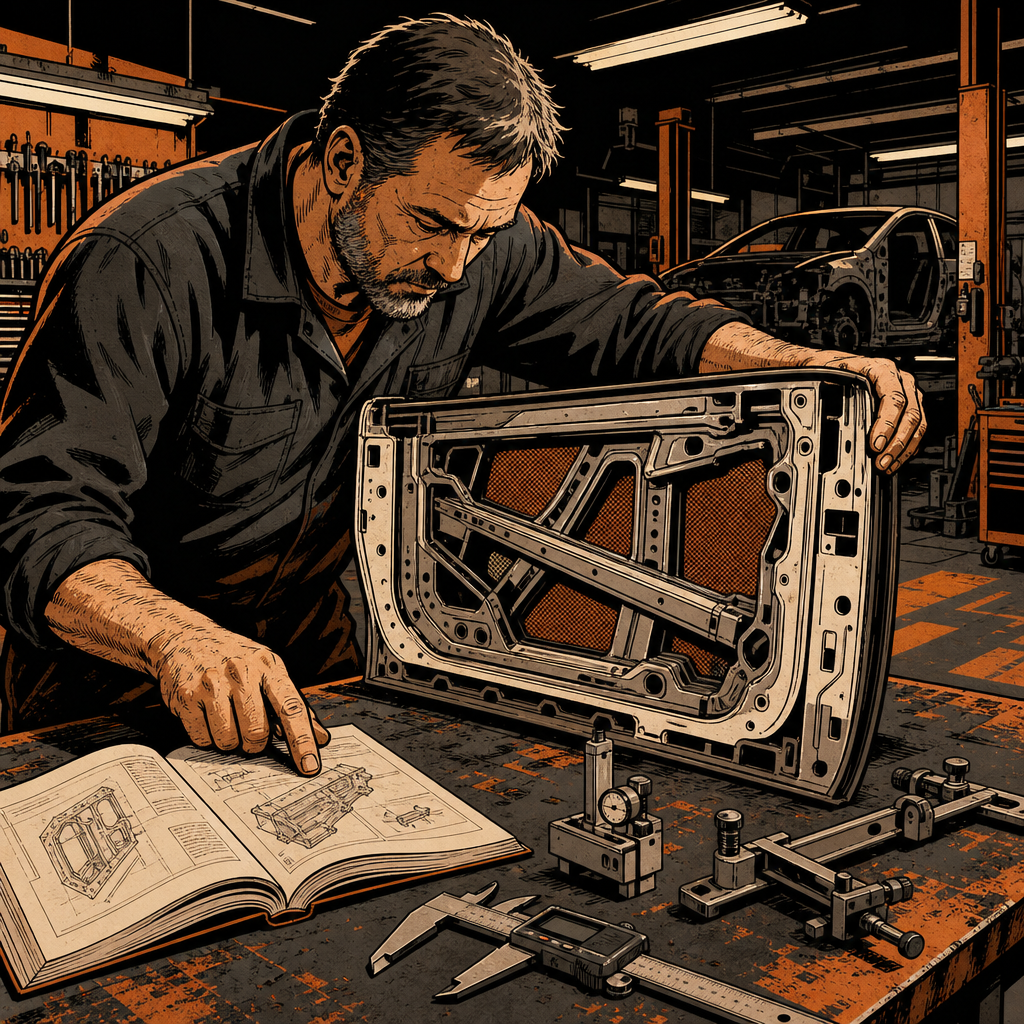
Tesla’s aggressive expansion into in-house collision repair is forcing body technicians across the country to reconsider their career trajectories. As the EV manufacturer opens company-owned collision centers in major markets, independent certified shops are losing volume, and technicians face a fundamental question: should you jump to a Tesla facility, or stick with your current shop? The answer isn’t straightforward. While Tesla offers competitive hourly wages and comprehensive benefits, the transition from flat-rate earnings at a busy independent shop often represents a significant pay cut—even when factoring in health insurance and stock options. This guide breaks down the real numbers, examines what happens to certified shops when Tesla opens nearby, and provides practical guidance for technicians navigating this market shift.
Understanding the Pay Structure: Flat Rate vs. Tesla Hourly
The most immediate concern for any technician considering a Tesla body shop position is total compensation. At independent shops, experienced technicians on flat rate can generate substantial weekly earnings. A technician turning 140 hours per week at $29 per hour—a realistic scenario at a high-volume certified shop—brings home approximately $4,060 weekly, or roughly $211,000 annually before overtime. Even at shops paying $25 per flag hour, a productive technician clearing 120-130 hours weekly still exceeds $150,000 annually.
Tesla’s hourly model operates differently. Current market data shows Tesla body shop technicians earning between $40 and $60 per hour as straight hourly employees. At $40 per hour over a standard 40-hour week, annual gross income lands around $83,200. Even at the higher $60 per hour rate, annual earnings reach only $124,800—a meaningful gap compared to high-volume flat-rate performance. For technicians accustomed to grinding out 140+ flag hours weekly, the transition to Tesla’s hourly model can feel like leaving $60,000 to $80,000 on the table annually.
However, the hourly structure eliminates the pressure inherent in flat-rate environments. You’re compensated for every hour worked, regardless of estimate accuracy, parts delays, or diagnostic time. For technicians experiencing burnout from the constant pressure to turn hours, Tesla’s model offers genuine work-life balance. The question becomes whether that balance is worth the substantial income reduction.
Breaking Down Tesla’s Benefits Package
Tesla’s benefits significantly offset the base pay differential, though they rarely close the gap entirely. The company provides 100% employer-paid health insurance—a benefit that can be worth $15,000 to $20,000 annually for technicians with families. By comparison, many independent shops require employee contributions of $200 to $500 monthly for family coverage, or offer less comprehensive plans.
The 401(k) structure at Tesla provides a 50% match up to 6% of salary. On a $40-per-hour salary ($83,200 annually), that’s a $2,496 annual employer contribution. Many independent shops offer superior matches—100% up to 6% is common at established facilities—but some offer no retirement benefits whatsoever. For technicians currently receiving no 401(k) match, Tesla’s contribution represents new money. For those leaving shops with 100% matches, it’s a step backward.
Employee Stock Purchase Plans (ESPP) allow Tesla employees to buy company stock at a discount, typically 15% below market price. While this sounds attractive, the actual value depends entirely on Tesla’s stock performance and your ability to hold the position long-term. Financially, contributing equivalent dollars to a diversified S&P 500 index fund in a Roth IRA often produces better risk-adjusted returns with more liquidity. The ESPP should be viewed as a potential bonus, not a core compensation component that closes pay gaps.
Additional benefits typically include paid time off (starting around 15-20 days annually), paid holidays, and access to Tesla’s internal service infrastructure. Some locations offer sign-on bonuses, relocation assistance, or continuing education stipends, though these vary by market and facility.


What Happens When Tesla Opens in Your Market
The business impact on independent Tesla-certified shops is measurable and often severe. Shops that previously derived 50% to 75% of revenue from Tesla repairs commonly see that volume drop to 25% to 30% within 12 to 18 months of a Tesla-owned facility opening nearby. This contraction forces independent shops to either diversify their customer base rapidly or accept significantly reduced revenue.
Tesla’s competitive advantages are structural. Company-owned shops can price parts competitively, absorb costs that independent shops cannot, and offer seamless loaner vehicle programs at rates comparable to economy rentals from airport locations. When insurance companies push back on OEM parts, Tesla facilities can eat the cost difference and still provide all-OEM repairs—a luxury independent shops cannot afford. Customers quickly learn that Tesla’s owned facilities offer a more integrated experience, particularly for insurance claims.
Regional variations exist. In major metro areas with populations exceeding 1.5 million and only a handful of certified shops, independent facilities often maintain sufficient volume through word-of-mouth referrals and established customer relationships. In smaller markets or areas where Tesla opens multiple facilities, the impact can be existential. One notable example: when a consolidator purchased multiple certified shops in a single market, all lost their Tesla certifications simultaneously, leaving only two certified independents to compete against Tesla’s owned facilities.
For technicians, this market shift creates uncertainty. Shops that were booked solid for months may suddenly have open bay space. Flat-rate technicians depend on consistent workflow to maintain high flag hours; when volume drops 40% to 50%, weekly earnings collapse proportionally. This is the scenario that drives technicians to consider Tesla employment—not because Tesla’s compensation is superior, but because the volume at their current shop becomes unsustainable.
The Tesla Factory Body Shop Option
Beyond Tesla’s customer-facing collision centers, the company operates factory body shops at manufacturing facilities. These positions focus on pre-delivery repairs, quality control rework, and manufacturing defect correction rather than collision repair. Pay structures and working conditions differ from customer service locations.
Factory body shop roles typically offer similar hourly rates ($40-60 per hour depending on location and experience) with the same comprehensive benefits package. The work environment tends to be more predictable—fewer customer interactions, more repetitive repair processes, and higher volume of similar repairs. For technicians who prefer production-style work over the variety of collision repair, factory positions can be attractive.
However, factory body shops also face periods of reduced production during manufacturing slowdowns or model transitions. When vehicle production slows, body shop hours may be cut accordingly. Customer-facing collision centers maintain more consistent workflow since they’re driven by accident frequency rather than production schedules.
Evaluating Your Current Shop’s Stability
Before making any move, assess your current shop’s position realistically. Key indicators of stability include:
- Current booking schedule: Shops booked 6-8 weeks out with consistent workflow are in strong positions. If your shop’s schedule has tightened from 8 weeks to 2 weeks over the past year, that’s a warning sign.
- Tesla volume percentage: Shops deriving more than 50% of revenue from Tesla repairs face higher risk. Diversified shops with multiple revenue streams (other luxury brands, DRP agreements, general collision work) weather Tesla’s market entry better.
- DRP relationships: Direct Repair Program agreements with major insurers provide workflow stability. Shops adding DRP relationships after losing Tesla volume are adapting; shops with established DRP networks pre-Tesla have cushioning.
- Management response: Have conversations with ownership and management about their business plan if Tesla opens nearby. Shops with clear diversification strategies (adding other EV certifications, expanding services, improving cycle times) demonstrate forward thinking.
- Quality of work environment: If you’re currently turning 140 hours weekly at $29 per flag hour in a well-managed shop with good equipment and supportive management, you’re in a strong position—at least until market conditions change.
Making the Decision: A Practical Framework
For technicians facing this decision, several scenarios warrant different approaches:
Scenario 1: High Earner at Stable Shop
If you’re currently earning $180,000+ annually through flat-rate production at a shop with diversified revenue and no immediate Tesla facility threat, stay put. Monitor the market, maintain your skills, but don’t leave $60,000+ on the table for theoretical job security. Tesla will still be hiring when and if market conditions change.
Scenario 2: Moderate Earner Experiencing Burnout
If you’re earning $100,000-$130,000 annually but working 60+ hour weeks with high stress, Tesla’s hourly model may suit your life stage better. The pay cut is modest, and benefits may be superior. Request facility tours, speak with current Tesla technicians, and negotiate for the higher end of the pay range ($50-60/hour) before accepting.
Scenario 3: Shop Losing Tesla Volume
If your shop’s Tesla work has already declined significantly and your weekly flag hours are suffering, you’re likely facing a pay cut regardless of what you do. In this scenario, Tesla employment offers stability and benefits that may exceed what your struggling shop can provide. Move quickly—Tesla facilities prioritize hiring experienced technicians who already know their repair procedures.
Scenario 4: Early Career Technician
If you’re within your first 5 years as a technician, Tesla offers excellent training, exposure to cutting-edge repair procedures, and a resume credential that will serve you throughout your career. The hourly pay is competitive for early-career techs, and the benefits exceed what most independents offer entry-level employees. This is likely your best career move.
Negotiation Strategies: When discussing Tesla employment, ask for $50 per hour minimum and be prepared to settle between $45-55 depending on your market and experience. Document your current total compensation (including employer-paid benefits, 401k match, and any bonuses) and present this during negotiations. Tesla has some flexibility, particularly for experienced technicians with strong production records and Tesla-specific certifications already in place.
The Long-Term Career Perspective
Looking beyond immediate compensation, consider the 5-10 year trajectory. Tesla’s owned facilities are expanding rapidly, and the company is investing heavily in its service infrastructure. For technicians willing to grow into leadership roles, opportunities exist to advance into shop supervision, training positions, or regional management—roles that often come with salaries in the $100,000-$150,000 range plus bonuses and stock compensation.
However, Tesla’s corporate culture demands alignment with company goals and tolerates less independence than most collision shops. Technicians who value autonomy, prefer varied work, or want to eventually open their own shops may find Tesla’s environment restrictive long-term. The company also has a reputation for rapid operational changes—facilities can be restructured, processes overhauled, and expectations shifted with little notice.
Independent shops, particularly those that successfully diversify beyond Tesla work, continue to offer paths to ownership, profit-sharing, and potentially higher lifetime earnings for top performers. The collision repair industry isn’t disappearing—it’s evolving. Shops that adapt to EV repair broadly (not just Tesla) and maintain strong customer service will continue to thrive.
Quick Decision Checklist
- Calculate your actual annual compensation including all benefits at your current shop
- Research Tesla’s current pay range for body technicians in your specific market
- Assess your current shop’s Tesla volume percentage and trend over the past 12 months
- Determine whether Tesla has announced plans to open facilities in your area
- Evaluate your personal priorities: maximum earnings vs. work-life balance vs. career stability
- Request a facility tour and speak with current Tesla body shop employees before deciding
- Review your current 401k, health insurance, and other benefits to understand true switching costs
- Consider your career stage and whether Tesla experience adds long-term value to your resume

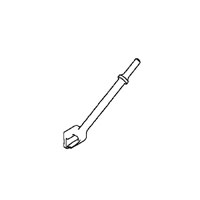
Ford Door Hem Flange Opening Tool - Left Hand 501-078/2
Mfg: OTC Tools and Equipment
Part #: 501-078/2
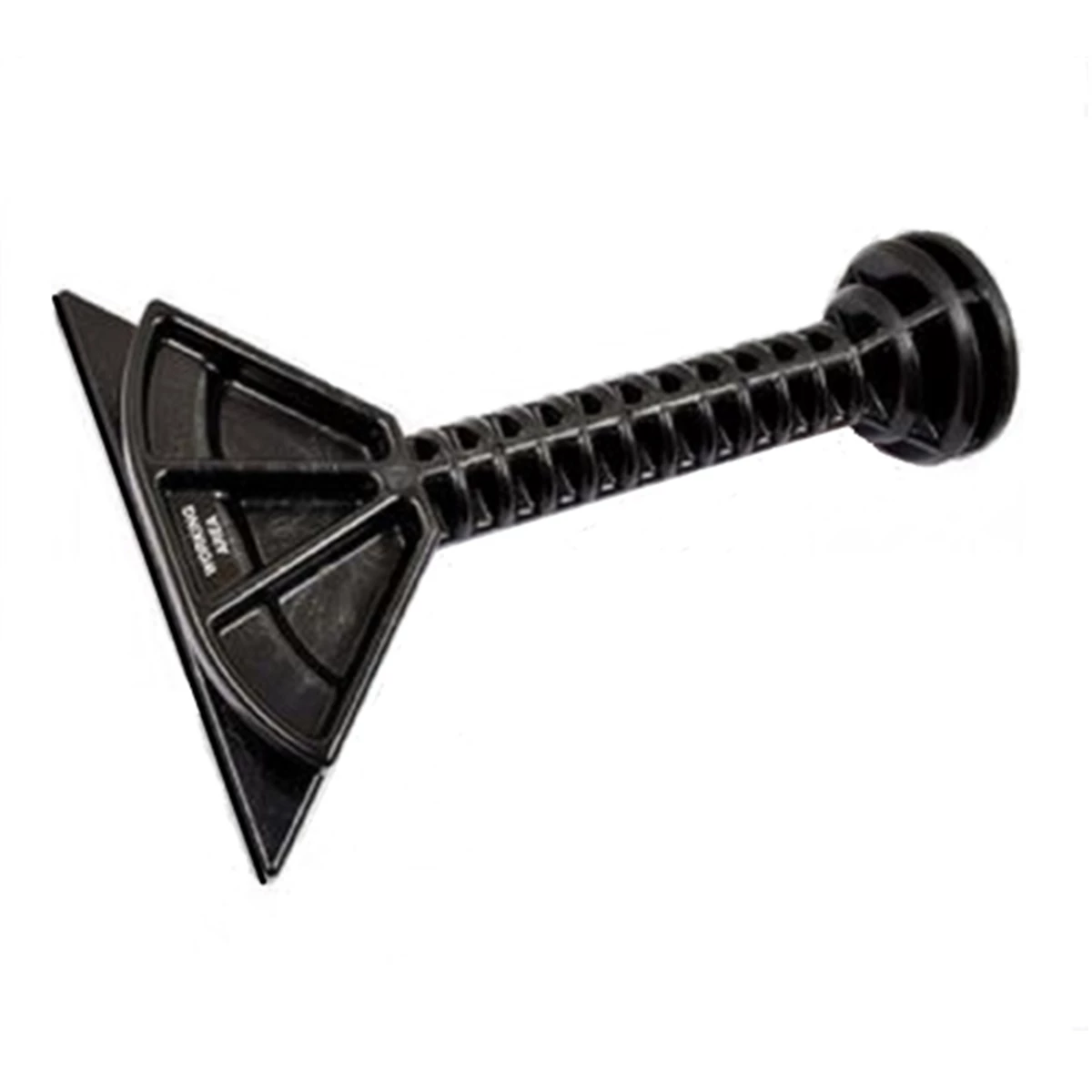
Door Hem Flange Crimping Tool for Econoline & F-Series Trucks
Mfg: OTC Tools and Equipment
Part #: 501-080
Frequently Asked Questions
Do Tesla body shop technicians make good money?
Tesla technicians earn competitive hourly wages ($40-60/hour) with comprehensive benefits, totaling $85,000-$130,000 annually. However, high-performing flat-rate technicians at independent shops often earn $150,000-$210,000+, making Tesla’s compensation lower for top producers but more stable for average performers.
What happens to Tesla-certified shops when Tesla opens their own facility?
Independent certified shops typically see Tesla repair volume drop from 50-75% to 25-30% of revenue within 12-18 months. The impact varies by market size and competition, but most independent shops must diversify or accept significantly reduced revenue.
Are Tesla’s benefits worth a pay cut?
Tesla provides 100% employer-paid health insurance (worth $15,000-$20,000 annually), 50% 401k match to 6%, and stock purchase options. These benefits are excellent but rarely offset a $50,000+ pay differential for high-earning flat-rate technicians. For mid-level earners, benefits can make the total compensation comparable.
How many hours per week do Tesla body shop technicians work?
Tesla technicians work standard 40-hour weeks as hourly employees, occasionally with overtime opportunities. This contrasts sharply with flat-rate environments where technicians often work 50-60+ hours weekly to maximize flag hour production.
Can you go from Tesla back to an independent shop?
Yes, Tesla experience is valuable and transferable. Technicians who leave Tesla for independent shops often command premium flat-rate pay due to their factory training and EV expertise. However, readjusting to flat-rate pressure after hourly employment can be challenging.
Do Tesla technicians get stock options?
Tesla offers Employee Stock Purchase Plans (ESPP) allowing employees to buy stock at a 15% discount, not traditional stock options. While potentially valuable, ESPP benefits depend on stock performance and shouldn’t be viewed as guaranteed compensation when comparing job offers.
Recommended Tools for Body Shop Technicians
Whether you’re evaluating a move to Tesla or staying at your current shop, having the right equipment matters. Our Automotive Specialty Tools selection supports technicians working on modern vehicles, including EV-specific repair tasks and traditional collision work.
- Diagnostic and measurement tools for frame alignment and structural verification
- Specialty equipment for composite and modern material repairs
- Safety and lifting equipment for working on battery-equipped vehicles

The Toolsource Technical Team blends decades of real-world automotive service experience with up-to-date technical research. Our writers collaborate with professional mechanics, shop owners, and diagnostic specialists to deliver practical, workshop-ready guidance you can trust.


Follow us on social media