Every automotive forum has two recurring posts: “How do I become a mechanic?” followed shortly by “How do I get out of being a mechanic?” This pattern reveals a fundamental disconnect between expectations and reality in the trade. The truth isn’t that automotive repair is universally terrible or universally great—it’s that success depends entirely on the path you choose. Dealership flat-rate positions that leave techs broke and broken exist alongside independent specialists clearing six figures with reasonable hours. Understanding these distinctions before you invest thousands in tools and training separates those who thrive from those who burn out.
Why Most People Get It Wrong From the Start
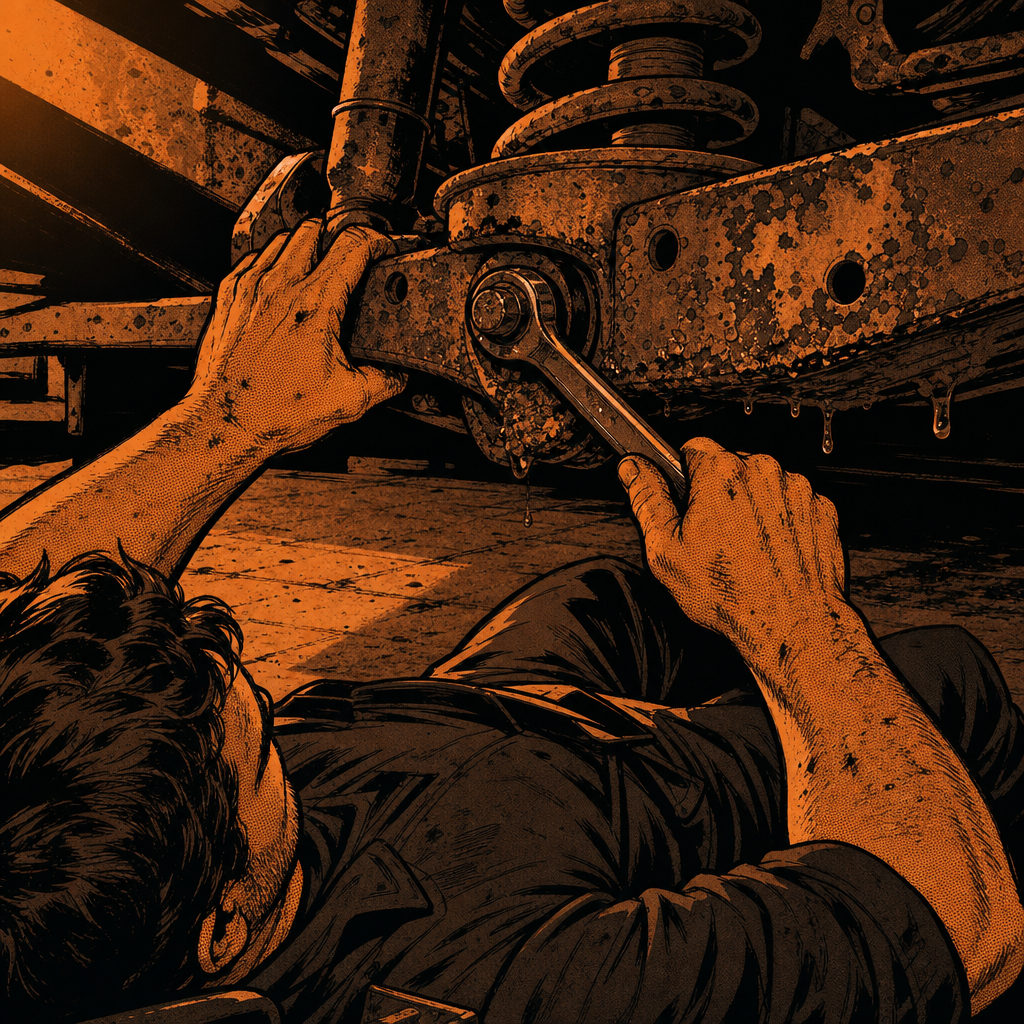
The biggest mistake aspiring techs make is entering the field because they “like working on cars.” This is comparable to becoming a veterinarian because you “love animals”—the romantic notion has little to do with the daily reality. Loving cars means you enjoy the occasional weekend project on your own vehicle at your own pace. Professional repair means diagnosing a corroded spring perch with seized bolts on a rusted frame while a customer complains about the estimate, then immediately pivoting to chase electrical gremlins on a 15-year-old German vehicle with NLA parts.
The Fast and Furious fantasy of building race cars evaporates quickly. Reality involves rotted suspension components, customers who trust parts-store clerks over certified diagnostics, and endless debates over labor rates. When customers see $150 per hour on their invoice, they assume you’re pocketing most of it. The gap between shop labor rates and actual technician wages has become staggering, creating resentment on both sides of the service counter.
New techs also underestimate the validation-seeking behavior that prevents learning. People asking for career advice often aren’t seeking honest assessment—they want someone to confirm what they’ve already decided. This explains why hundreds of warning posts go unread before the next wave of questions appears. Breaking this cycle requires honest self-assessment: are you prepared for the actual job, or chasing a romanticized version?
The Compensation Model Makes or Breaks Your Career
Flat-rate compensation remains the single biggest factor separating miserable techs from successful ones. Under flat rate, you’re paid for billed hours regardless of actual time spent. A job that books four hours pays four hours whether it takes you two hours or eight. This sounds great until you’re at a slow dealership with empty bays, effectively earning nothing while physically present. Veterans describe starving at slow flat-rate shops despite being highly skilled.
Hourly compensation provides stability and fundamentally changes the job’s stress level. You’re not racing against the clock or fighting for jobs. Union diesel positions offer particularly strong models: guaranteed $90k+ within two years, state pensions, 40-hour weeks with voluntary overtime, and minimal tool investment. One second-year apprentice reported spending under $2k on tools with most needs covered, a stark contrast to automotive techs drowning in five-figure tool debt at predatory interest rates.
The hourly versus flat-rate distinction often correlates with shop type. Small independent shops—the faded-calendar, two-bay operations with maybe two employees—frequently offer hourly pay with reasonable expectations. These environments allow diagnostic Mondays, wrenching Tuesday through Thursday, and Fridays off. The work gets done without the artificial time pressure that destroys both quality and technician health.
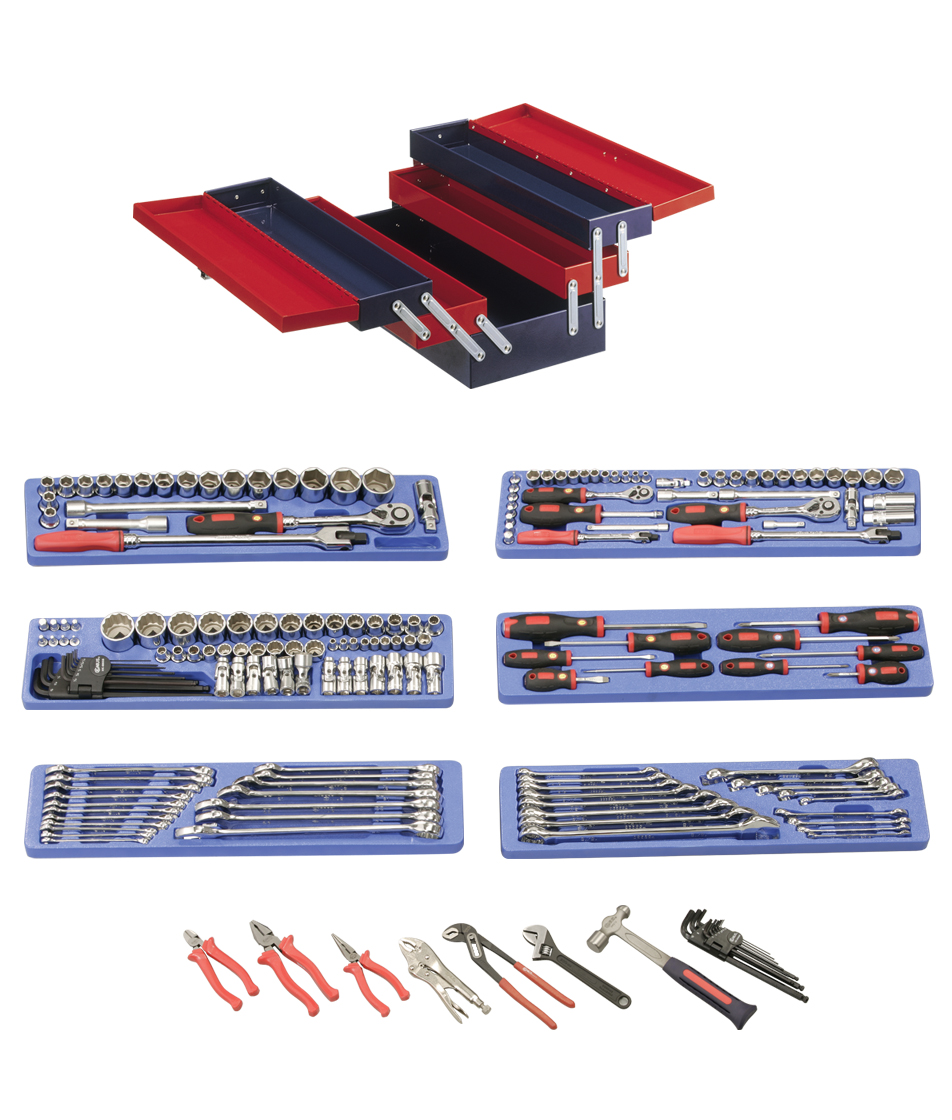
190PC Metric & SAE Mechanics Tool Set with Tool Ch
Mfg: Genius Tools
Part #: MS-190TS
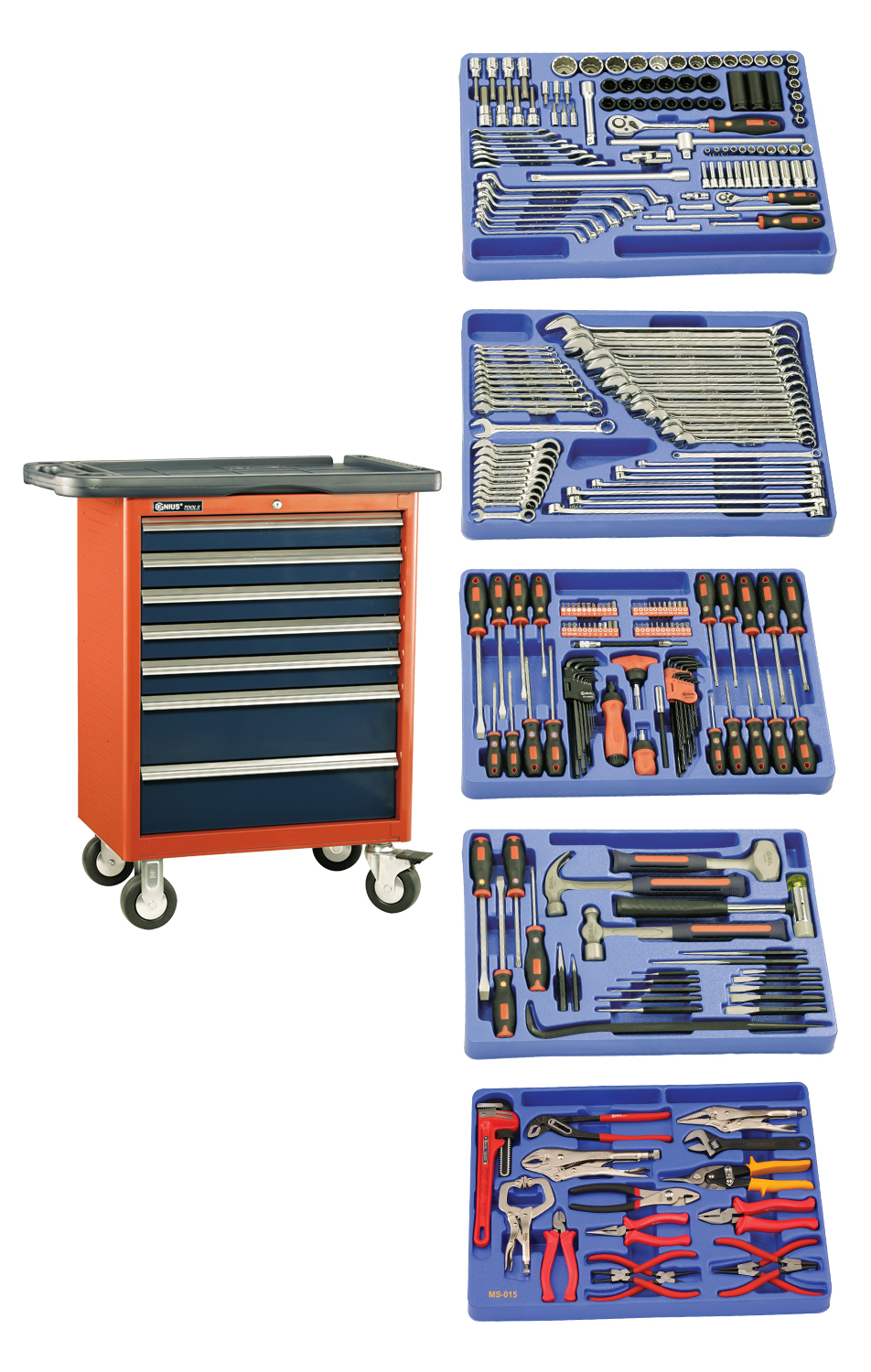
266PC Metric Mechanics Tool Set with Roller cabine
Mfg: Genius Tools
Part #: MS-266TS
Specialization: Your Path to Actual Money
Generalist automotive techs face the worst economics: steep tool investment, constant training demands for expanding vehicle systems, and competition from every quick-lube operation for basic services. Specialists write their own tickets. The principle is simple—find what others won’t or can’t do, become the absolute best at it, and customers will seek you out.
Historical examples illuminate this strategy. When nobody wanted to touch E-350s with 6.0L engines, mastering that specific problem created a dedicated customer base. Today’s equivalents might be Sprinters, Promasters, or specific European marques. Performance and European specialists consistently report strong earnings—one performance Euro tech hit $110k in their 26th month. Diesel mechanics, particularly in heavy equipment and truck/transport sectors, access better pay structures and working conditions than automotive counterparts.
Specialization also means choosing your brand carefully. Techs who specialize in brands they genuinely understand and enjoy report sustained satisfaction over decades. This isn’t about loving cars generally—it’s about deep systems knowledge of specific platforms that makes you invaluable. One 30-year veteran switched from automotive to heavy equipment after 20 years and hasn’t made less than $100k annually in 15 years, reaching $158k last year.
The niche you choose may not align with your passion, but it needs to align with market demand. Nobody dreams of becoming the transmission specialist for commercial fleet vehicles, but that specialization pays mortgages. Fill the gap between what needs fixing and who’s willing to fix it, and compensation follows.
Tool Investment: The Hidden Barrier to Entry
Tool debt destroys more automotive careers than any other single factor. The stereotype of the 19-year-old owing $20k to the tool truck at 19.99% interest exists because it’s common. One tech admitted to once carrying $25k at 27.99% interest. The joke about grandpa dying with one payment left on a screwdriver set bought in 1951 isn’t entirely a joke—these debts follow people.
Successful long-term techs tell a different story. One 20-year veteran reports never spending more than $20k total on tools while still having fun and making great money. Another points out that specialized diesel work requires minimal personal investment compared to automotive—under $2k can get you most of what you need when employers provide shop tools. The difference isn’t luck; it’s strategic purchasing and avoiding the tool-truck trap.
Smart tool investment means buying what you need when you need it, not what the truck salesman pushes. Pawn shops, estate sales, and used markets offer professional-quality tools at fractions of retail cost. The technician who mentioned buying tools at a “dubious pawn shop” highlights an important reality—the value is in the tool’s function, not its shine or financing plan. A $50 pawn-shop torque wrench works identically to a $400 tool-truck version.
Different sectors also have vastly different tool expectations. Heavy duty truck and transport mechanics often work in environments where the shop provides most tools. European and performance specialists need specific diagnostic equipment, but can often justify it through higher labor rates. Understanding your sector’s tool requirements before committing prevents the debt spiral that traps so many techs.
The Physical Reality: Your Body Is Your Career Limit
Multiple veteran techs describe the same trajectory: years of strong earnings and job satisfaction, followed by a body that simply won’t cooperate anymore. One service manager under 40 can’t stand longer than 20 minutes and has fingers that don’t respond to commands. Every morning feels like being hit by a bus. Another who took early retirement specifically cites the standing requirements and physical damage as career-ending factors.
This physical degradation isn’t a possibility—it’s a timeline. The question isn’t whether automotive work damages your body, but when and how severely. Techs in their 50s and 60s still wrenching often don’t look like they’re enjoying it, according to those who escaped the bays. The transition from technician to service management or shop ownership often stems from physical necessity rather than ambition.
Protecting your body from day one matters more than any other single factor for career longevity. This means proper lifting technique without exception, using equipment instead of force whenever possible, and refusing jobs that require destructive positioning. The 25-year-old who skips the creeper to save 30 seconds becomes the 40-year-old with a destroyed back. Veterans emphasize that you’ll get hurt even when careful—limiting that damage through consistent practices separates 30-year careers from 10-year burnouts.
Recognition of physical limits should also inform your specialization choices. Diagnostic-heavy specializations preserve your body better than suspension and steering work. Diesel and heavy equipment often provide better access and tooling than cramped automotive engine bays. Planning your career arc to reduce physical demands as you age—moving toward diagnostics, supervision, or ownership—keeps you in the industry when your body inevitably protests.
Alternative Paths: Beyond the Bay
Technical knowledge opens doors beyond turning wrenches. Service management positions leverage your expertise while reducing physical demands, though they introduce different stresses. Shop ownership allows you to set policies, choose compensation models, and build the environment you wanted as a tech. Mobile operations minimize overhead while maximizing schedule control. Some techs have built successful careers as YouTube content creators or social media educators, monetizing knowledge without the physical toll.
These transitions typically require deliberate skill-building beyond technical competence. Moving into management means developing people skills, learning business operations, and understanding shop economics. Ownership adds marketing, accounting, insurance, and regulatory compliance to the mix. Content creation requires video production, editing, and audience building. None of these transitions happen automatically—they require the same commitment to learning that built your technical skills.
The common thread among successful transitions is recognizing that your technician knowledge has value beyond direct service. Teaching at technical schools, becoming a factory trainer, moving into parts management, or working as a service writer all leverage automotive expertise in lower-impact roles. Some techs transition into claims adjustment for insurance companies, combining technical knowledge with investigation skills. Others move into fleet management for companies, optimizing maintenance programs rather than executing them.
Geographic and cultural factors also matter significantly. Techs outside the United States report vastly different experiences, often with employer-provided tools, stronger labor protections, and compensation models that don’t punish slow periods. If you’re locked into a U.S.-based automotive position, researching regional differences in shop culture, union presence, and prevailing wage rates can reveal better opportunities within driving distance.
Quick Reference: Evaluating Your Shop Situation
- Hourly pay (not flat-rate) – Provides income stability regardless of shop volume
- Reasonable tool expectations – Shop provides major equipment; your investment under $5k to start
- Clear specialization – Shop focuses on specific makes, systems, or vehicle types
- Owner/management with tech background – Leadership understands the actual work
- No predatory tool-truck financing – Access to tools without high-interest debt
- Diagnostic time respected – You’re not punished for thorough troubleshooting
- Established customer base – Consistent work without feast-or-famine cycles
- Training opportunities – Ongoing education supported and compensated
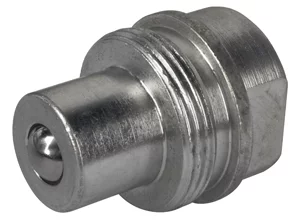
OTC 9798 Half Coupler for Automotive Tools & Equipment
Mfg: OTC Tools and Equipment
Part #: 9798
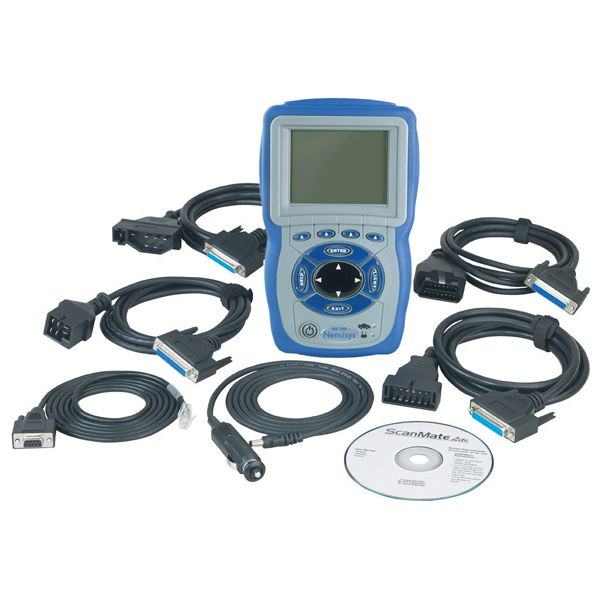
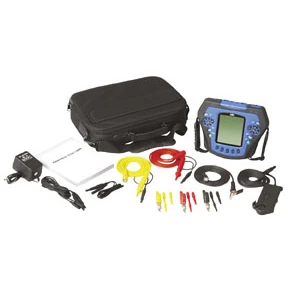
OTC 3797M07 Nemisys USA 07 Domestic Scan Kit
Mfg: OTC Tools and Equipment
Part #: 3797M07
Frequently Asked Questions
Is automotive repair being replaced by AI or automation?
No. While diagnostic software improves constantly, the physical manipulation, problem-solving in uncontrolled conditions, and adaptation required for repair work remains firmly beyond automation capabilities. If anything, increasing vehicle complexity creates more demand for skilled diagnosticians.
How much should I realistically expect to earn as a mechanic?
This varies wildly by sector, location, and compensation model. Flat-rate automotive techs at slow dealerships might struggle to hit $35k. Hourly union diesel mechanics can reach $90k within two years. Specialized performance or European techs report $100k+ with experience. Heavy equipment specialists with 15+ years experience report $150k+. The range is enormous, making your specific path crucial.
What’s the real difference between dealership and independent shop work?
Dealerships typically offer factory training and warranty work volume but often use flat-rate pay and pressure high throughput. Independent shops vary dramatically—from one-person operations to sophisticated multi-bay facilities. The best independent situations offer hourly pay, specialization opportunities, and owner-operators who understand the work. The worst combine low pay with poor equipment and unrealistic customer promises.
Can I succeed in this trade without going into major tool debt?
Yes, but it requires strategic choices. Prioritize sectors where employers provide tools (diesel, heavy equipment, some fleet operations). Buy used tools from pawn shops, estate sales, and retiring techs. Avoid tool-truck financing entirely—if you can’t pay cash, you can’t afford it yet. Start with essential tools only and expand as specific jobs require. Multiple successful long-term techs report total lifetime tool investments under $20k.
How do I protect my body while working as a tech?
Use proper lifting technique without exception, even for “quick” tasks. Invest in quality knee pads, back support, and safety equipment before fancy tools. Use mechanical assistance (jacks, lifts, pullers) instead of force whenever possible. Refuse jobs requiring sustained awkward positioning—there’s always another way or another job. Recognize that injury is cumulative; every shortcut adds up over years.
Should I specialize immediately or start as a generalist?
Build broad foundational knowledge first—understanding how systems interact across different vehicles makes you a better specialist later. Most successful specialists report 3-5 years of general work before focusing. However, if you have clear access to a specialization path (performance shop willing to train, diesel apprenticeship, specific brand focus), taking that opportunity early can accelerate your timeline significantly.
Recommended Tools for Your Specialization
Becoming a successful technician depends on strategic tool investment and choosing the right specialization. Whether you’re focusing on diesel work, European platforms, or heavy equipment, having quality diagnostic and specialty tools makes the difference between struggling and thriving. Explore our Automotive Specialty Tools to find the equipment that matches your chosen path without the predatory financing trap.
- Diagnostic equipment for your specialization area
- Quality used and professional-grade tools at reasonable costs
- Sector-specific specialty tools for diesel, performance, and European work

The Toolsource Technical Team blends decades of real-world automotive service experience with up-to-date technical research. Our writers collaborate with professional mechanics, shop owners, and diagnostic specialists to deliver practical, workshop-ready guidance you can trust.


Follow us on social media