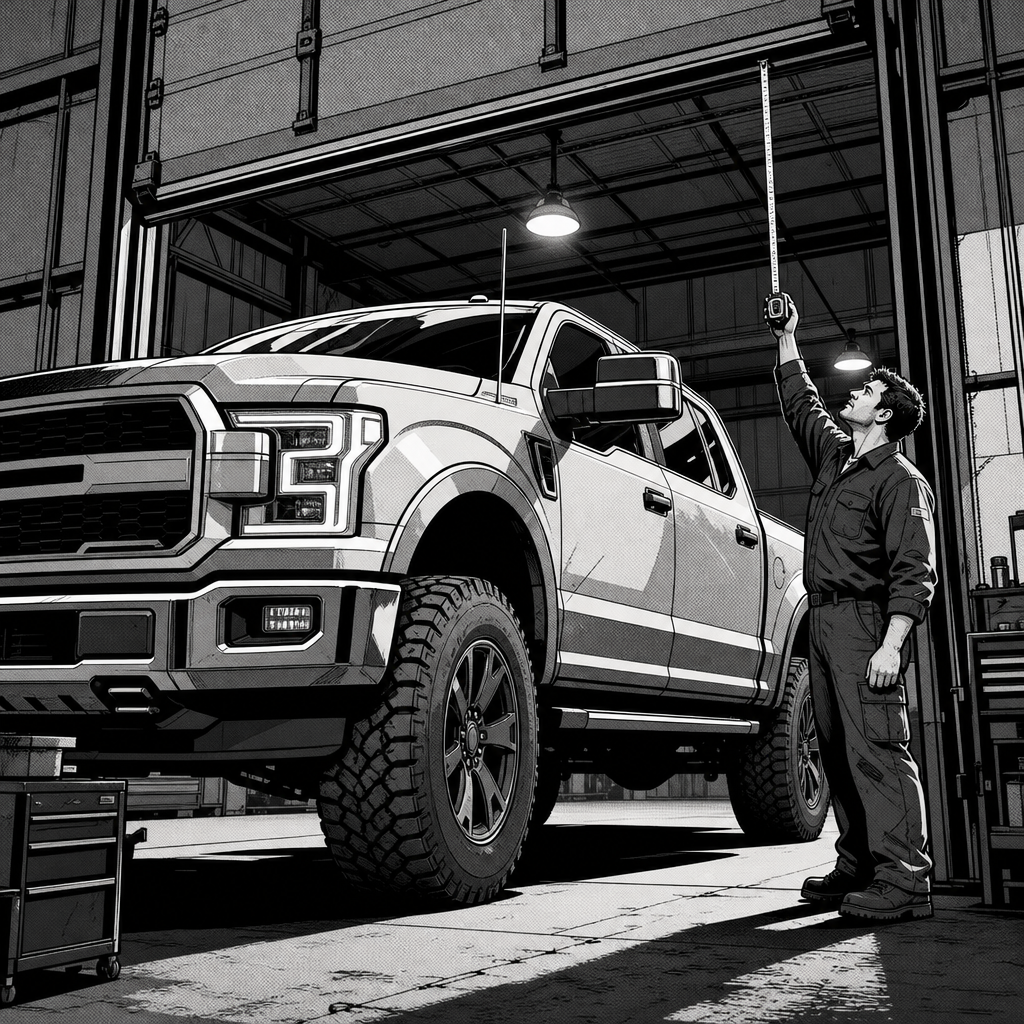
Park a 2025 half-ton next to a 2005 model and the growth is obvious — taller hoods, wider tracks, longer wheelbases, and cabs that sit noticeably higher off the ground. That size creep isn’t just a styling trend technicians grumble about in the parking lot; it has real consequences in the shop. Lift pad spacing, door swing clearance, ADAS calibration space, and even the length of your ratchet extensions were all specced around trucks that no longer match what’s rolling through the bay door. If your shop hasn’t reassessed its setup in the last several years, there’s a good chance you’re working around problems instead of solving them.
Why Trucks Keep Getting Bigger
A lot of the size growth traces back to fuel economy regulation, not customer demand alone. CAFE standards calculate a vehicle’s required fuel economy based on its “footprint” — wheelbase multiplied by track width. A larger footprint gets a more lenient mpg target. That creates a built-in incentive for manufacturers to grow a truck’s dimensions rather than invest in smaller, more aerodynamic designs, because a bigger footprint can mean an easier compliance number without touching the powertrain. Add in competitive pressure (nobody wants their truck to look smaller than the one next to it at the dealership) and the result is three decades of steady inflation in height, width, and wheelbase — to the point where a loaded 3/4-ton crew cab from the early 2000s is now closer in size to a half-ton, and today’s half-tons dwarf what used to be considered full-size.
For technicians, the practical upshot is that “full-size pickup” is no longer a fixed set of dimensions you can plan around. Hood height alone has grown enough that it affects visibility checks, grille/condenser access, and even how you approach an engine bay inspection. Treat every incoming truck as its own clearance problem until you’ve measured it.
Lift and Bay Clearance Checks Before You Drive One In
Before a tall crew cab or dually goes on a lift, confirm three things rather than assuming the truck fits the way last year’s model did:
- Overall height with mirrors and antenna. Overhead doors and low bay ceilings are the most common collision point with oversized trucks, especially 4×4 models with aftermarket lift kits.
- Lift rated capacity vs. actual curb weight. HD trucks and duallies routinely exceed the capacity of older two-post lifts rated for passenger cars and light trucks. Check the lift’s data plate, not just its reputation.
- Pickup point compatibility. Frame rails on modern trucks sit in different locations than older platforms, and factory-recommended lift points have shifted generation to generation. Pulling the OEM lift point diagram for the specific model year avoids pinching a fuel line or body panel.
Wider track widths also matter on four-post and alignment lifts — some newer half-tons are wide enough that techs report less margin on runway-style lifts than they expect. Measure once, don’t eyeball it.
[PRODUCT_SEARCH: heavy-duty two-post lift adapters for trucks]

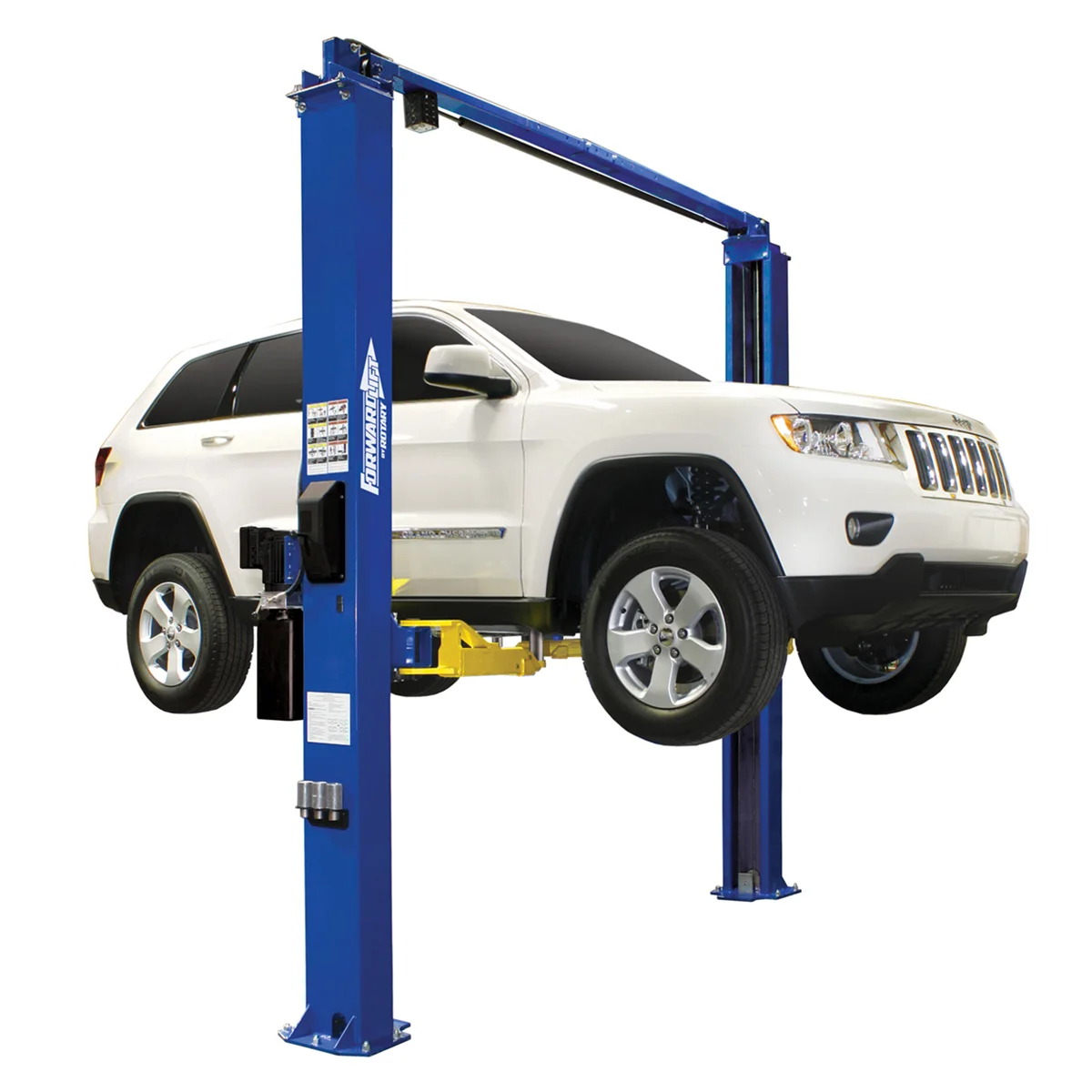
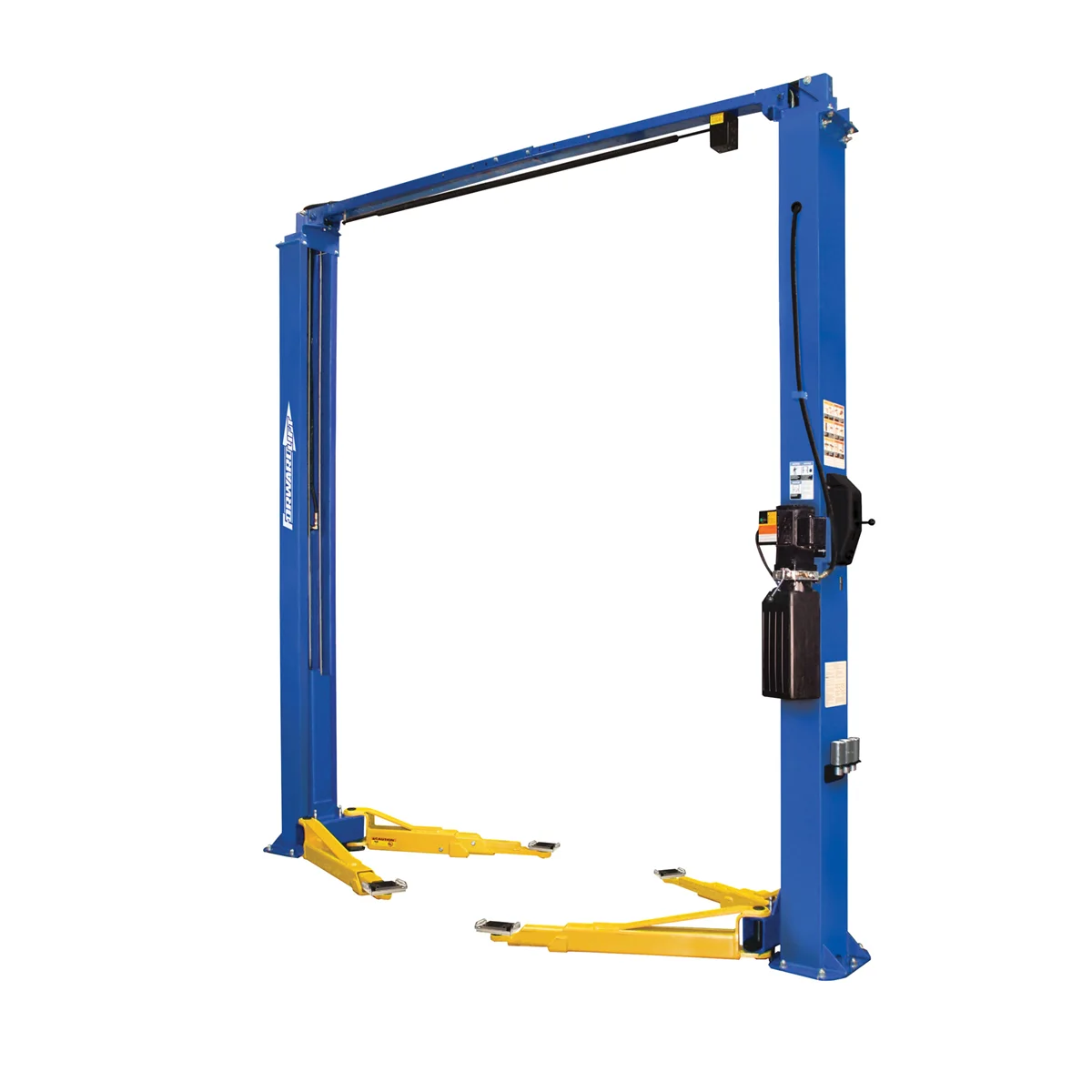
10,000 Lb 2 Post Symmetric Lift With Spot-Rite Arm Technolog
Mfg: Rotary Lift
Part #: I10N500MBL
Tool and Ergonomics Adjustments for Taller Trucks
A taller hood and higher frame rail change what reaches what. A few adjustments that save time and backs:
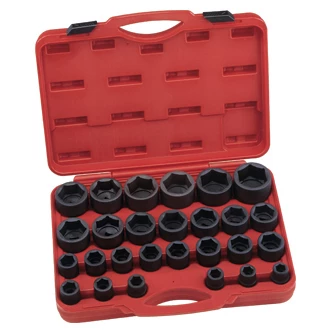
- Extended-reach ratchets and swivel-head extensions for batteries, washer fluid reservoirs, and upper radiator hoses that now sit higher than a standard arm’s reach from ground level.
- Rolling step stools or shop ladders rated for the bay floor — climbing on a tire or bumper to reach an underhood component is a liability and a slip risk on taller 4×4 trucks.
- Longer fluid-fill funnels and drain pans sized for the increased ground clearance on lifted or HD trim trucks, where standard pans no longer sit flush under the drain plug.
- Bed-access aids for inspection or accessory work — composite bed heights on some trucks now exceed what a tech can comfortably reach into without a step.
None of this is exotic equipment, but it’s easy to keep running old tool carts sized for trucks that no longer match what’s coming through the door.
ADAS Calibration Needs More Room Than You Think
Larger trucks almost universally carry more driver-assist hardware — forward cameras, radar modules, blind-spot sensors — and calibrating that hardware after a windshield, bumper, or alignment job requires precise target placement relative to the vehicle’s centerline and specific floor distances. A bay that was adequate for calibrating sedans or older, smaller trucks may not have the clear floor space, flat flooring, or lighting consistency that current OEM calibration procedures demand for a longer-wheelbase truck. Before taking on calibration work on newer full-size or HD trucks, confirm:
- You have the floor space the OEM procedure specifies, measured from the actual vehicle, not an assumed “truck-sized” footprint.
- Flooring is level and free of the texture/contrast variations that confuse camera-based static calibrations.
- Lighting is uniform — both too much glare and uneven shop lighting can throw off camera calibration targets.
Static calibration failures are frequently a space-and-lighting problem, not a hardware problem — worth ruling out before chasing phantom fault codes.
Matching Diagnostics to Actual Use, Not Just Trim Level
Because today’s half-tons are sized closer to yesterday’s heavy-duty trucks, and HD trucks now dwarf what used to be considered one-ton capability, trim level is a poor proxy for how a truck is actually used. A crew-cab 2500 that’s never towed anything heavier than a jet ski wears differently than the same truck used for daily 10,000-lb trailer pulls. When a truck comes in for brakes, suspension, or drivetrain work, ask about actual towing and payload habits rather than assuming based on badge or size. Frame flex, hitch-area corrosion, and control arm wear patterns differ significantly between trucks driven empty and those routinely loaded near GVWR — and that history should guide what you inspect closely, not just the mileage on the odometer.
Shop Prep Checklist
- Measure incoming vehicle height (including mirrors/antenna) against bay door and ceiling clearance
- Confirm lift rated capacity against actual curb weight, not nameplate class
- Pull current-year OEM lift points before raising the vehicle
- Stage extended-reach tools and a rated step stool for underhood work
- Verify ADAS calibration floor space and lighting against the OEM spec for that model
- Ask about real-world towing/payload use before suspension or frame inspections
[PRODUCT_SEARCH: shop equipment for servicing full-size pickup trucks]


Frequently Asked Questions
Why do new half-ton trucks feel as big as old heavy-duty trucks?
Fuel economy rules tied to vehicle footprint, combined with market demand for larger-looking trucks, have pushed dimensions up across every trim level. A current half-ton’s footprint is often close to what a 3/4-ton carried quarter-century ago.
Will my existing two-post lift handle a modern full-size truck?
Check the lift’s rated capacity against the truck’s actual curb weight plus any aftermarket additions (toolboxes, bed accessories, lift kits), not just its “light truck” classification. Many older lifts were specced before current curb weights became common.
Do lift kits change where I should place lift arms?
Yes. Aftermarket suspension changes can shift frame rail access and ground clearance from factory spec. Always confirm current lift points against the OEM diagram for that model year rather than relying on muscle memory from a similar-looking truck.
Why does ADAS calibration keep failing on larger trucks even after a correct repair?
It’s frequently a space or lighting issue rather than a hardware fault — longer wheelbases need more precise target distances, and uneven floor contrast or lighting can throw off static calibration. Verify the bay meets the OEM’s floor space and lighting requirements for that specific model before troubleshooting the sensor itself.
Should I inspect a truck differently based on how it’s actually used?
Yes. Trucks routinely loaded near GVWR or used for heavy towing show different wear patterns in the frame, hitch area, and suspension than trucks that are rarely loaded, regardless of trim level. Ask about actual use before assuming inspection priorities from badge alone.
What’s the single most common clearance mistake shops make with today’s trucks?
Assuming overall height matches a previous model year or a visually similar trim. Mirror height, antenna placement, and lift kits can all push a truck past a bay door’s clearance even when the body style looks familiar — always measure the specific vehicle in front of you.
Recommended Lifting Equipment
As highlighted in this guide, proper lift capacity and setup are critical for today’s larger trucks. Shop our Lifting Equipment for lifts, adapters, and accessories rated for modern pickup truck specifications.
- Two-post and four-post lifts with capacity ratings for current truck models
- Lift adapters and spreader plates for modern frame rail configurations
- Lifting accessories and safety equipment for your shop

The Toolsource Technical Team blends decades of real-world automotive service experience with up-to-date technical research. Our writers collaborate with professional mechanics, shop owners, and diagnostic specialists to deliver practical, workshop-ready guidance you can trust.


Follow us on social media