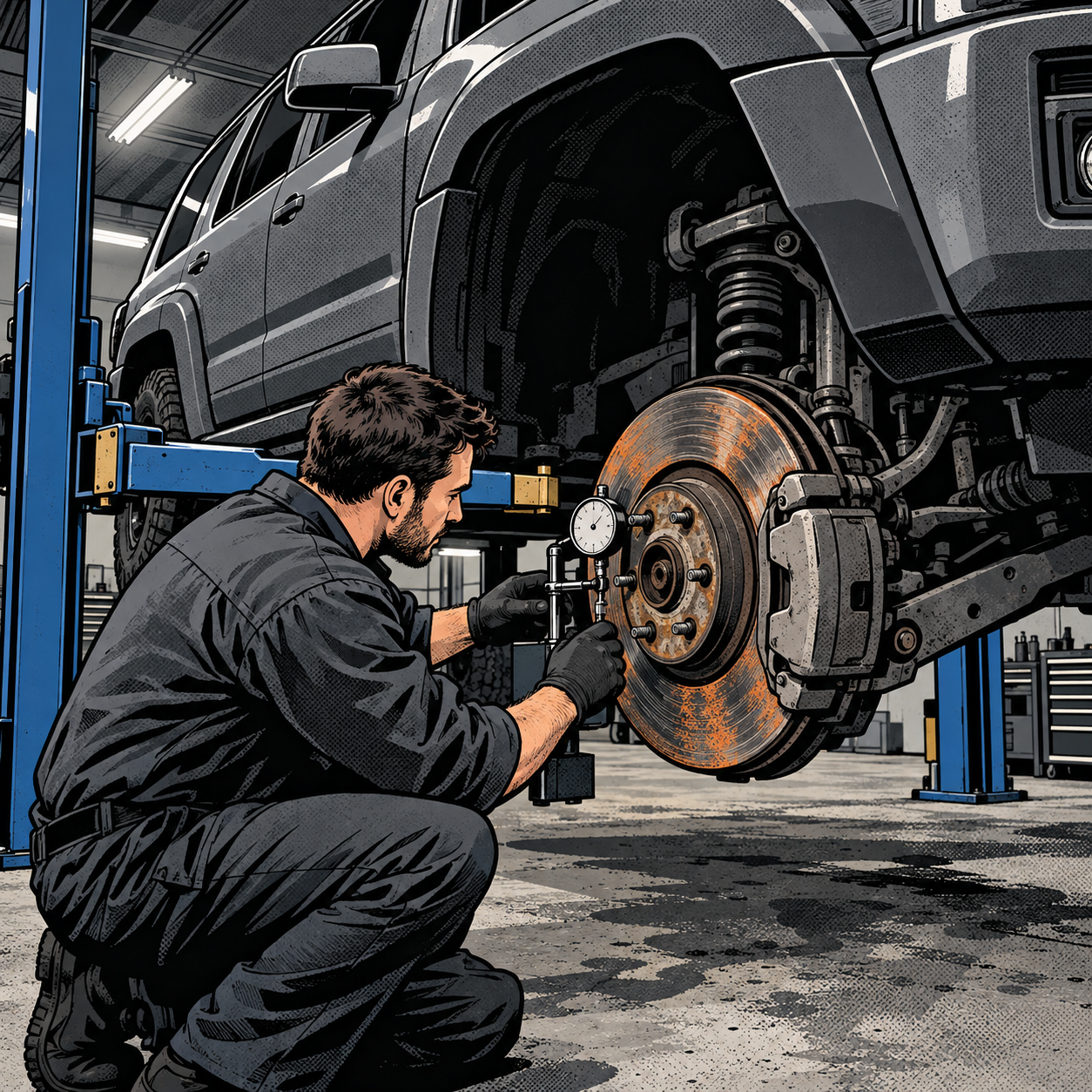
Online debates about old sports cars versus modern SUVs always circle back to the same point: vehicles have gotten dramatically larger and heavier over the past few decades, and that shift isn’t just a design trend — it has real consequences in the bay. A technician who learned their trade on compact sedans and mid-size trucks is now routinely lifting, braking, and calibrating vehicles that weigh thousands of pounds more and carry sensor suites that didn’t exist ten years ago. This post walks through the practical equipment and procedure checks that matter most when a full-size SUV, three-row crossover, or heavy-duty pickup rolls into the shop.
Why Today’s Vehicles Are Bigger and Heavier
Curb weights have climbed steadily across nearly every segment. Mid-size “family” SUVs now routinely weigh what a full-size SUV weighed fifteen years ago, and that’s before you add the mass of hybrid or EV battery packs. Several factors drive this: larger crumple zones and reinforced structures required for modern crash standards, added sound insulation and comfort features, bigger wheels and tires, and the sheer market shift toward SUVs and trucks over sedans. The safety data is clear that heavier vehicles generally fare better in vehicle-to-vehicle collisions, which is part of why manufacturers keep building bigger — but it’s also why every piece of shop equipment rated for “average” passenger cars a decade ago may now be working closer to its limit on an everyday customer vehicle.
For a shop, the takeaway isn’t about the safety debate — it’s that the baseline vehicle on your lift today is simply heavier, wider, and taller than the baseline vehicle five or ten years ago. Equipment and procedures that weren’t on the edge of their ratings a decade ago might be now.
Lift and Jack Capacity: Check Before You Hoist
This is the most direct, literal impact of rising vehicle weight. A two-post lift rated for 9,000 lbs that was comfortable margin for sedans and compact SUVs can be much closer to capacity with a loaded full-size SUV, a crew-cab pickup, or an EV with a battery pack. Before hoisting any unfamiliar or newer model:
- Confirm the vehicle’s actual curb weight (not just GVWR) against your lift’s rated capacity, and don’t assume older capacity charts in the shop reflect current model years.
- Check weight distribution — many heavier SUVs and trucks carry more mass rearward or low in the chassis (especially EVs), which affects lift arm placement and pad contact points.
- Inspect arm pads and adapters for correct frame contact; wider vehicles often require different pad extensions than the lift’s default set.
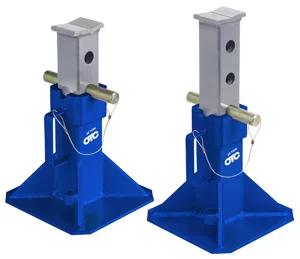
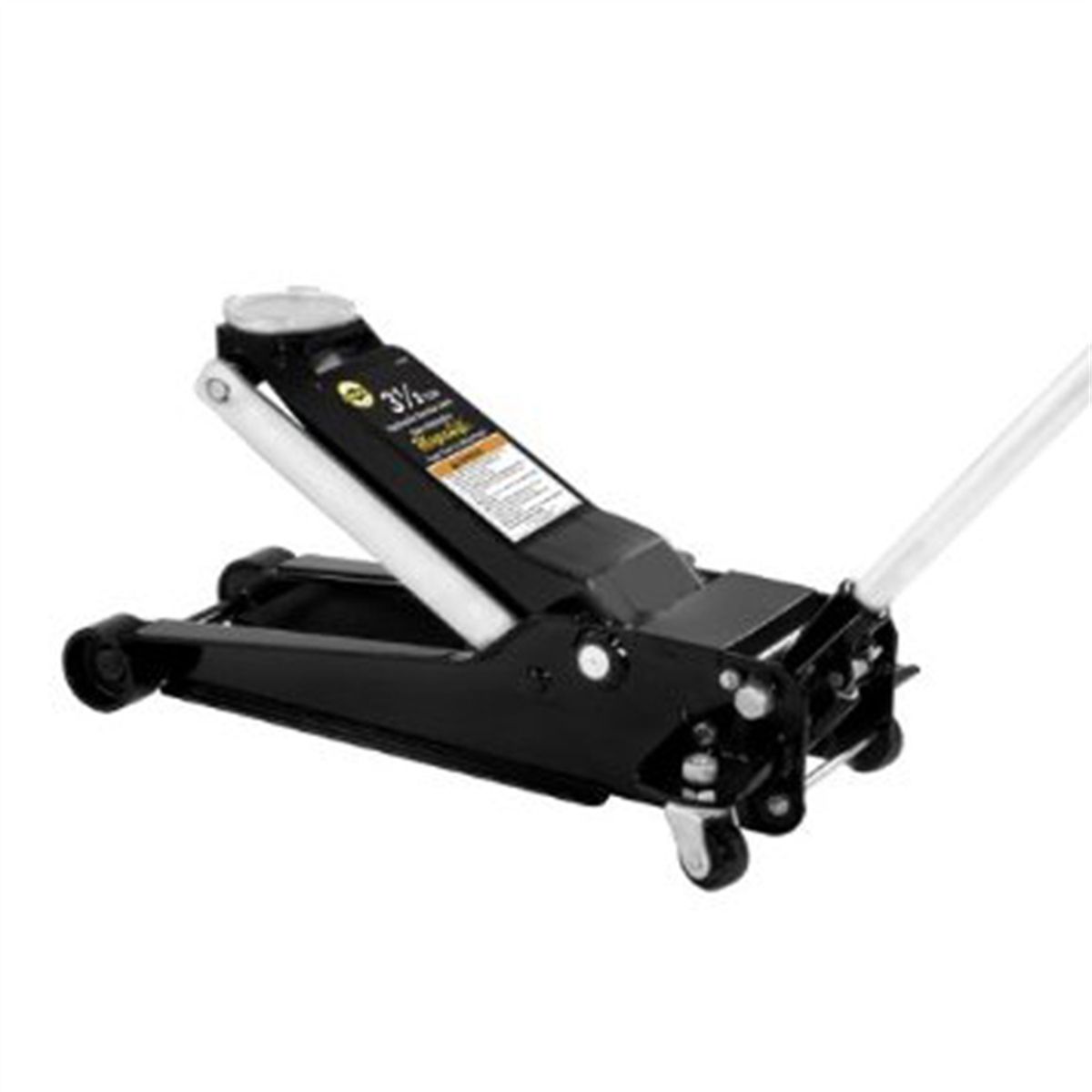
- For floor jacks and jack stands, verify duty rating against the vehicle’s actual weight at the jacking point, not an assumed “average car” rating — a 2-ton jack is not a safe margin on a heavy truck or loaded SUV.
If your shop services a mix of older compacts and newer heavy platforms, it’s worth re-auditing lift and jack capacity ratings annually rather than assuming the equipment that worked fine in the past still has adequate margin for what’s coming through the door now.
[PRODUCT_SEARCH: heavy-duty two-post lift 12000 lb capacity]

BASEPLATE 12000 LBS. CAPACITY 2 POST LIFT
Mfg: Atlas Automotive
Part #: ATTD-BP12000X

12000 LB. 4-Post Lift and RJ6 Combo (WILL CALL)
Mfg: Atlas Automotive
Part #: PRO12K-COMBO

12000 LB. 4-Post Lift w/ Alignment Kit and RJ6 Combo (WILL C
Mfg: Atlas Automotive
Part #: PRO12KA-COMBO
Brake and Suspension Service for Higher Curb Weights
Added mass changes wear patterns and service intervals, not just lift math. Heavier vehicles put more load through brake rotors, pads, and calipers, which means faster pad wear and a higher likelihood of rotor warping under hard stops — something worth flagging to customers who haven’t adjusted their service expectations from a smaller previous vehicle. Suspension components see similar effects: bushings, control arms, and struts rated for a given vehicle class are engineered around that vehicle’s weight, but aftermarket or reused parts across trim levels can be a mismatch if not verified against the correct parts catalog entry.
When servicing brakes or suspension on a heavier SUV or truck:
- Torque wheel fasteners to spec with a verified torque wrench — the higher the vehicle weight, the more a slightly under- or over-torqued fastener matters for clamping force consistency.
- Inspect rotors and pads at shorter intervals than you might default to on lighter vehicles, especially for owners who tow or carry heavy cargo regularly.
- Check that replacement parts match the specific trim’s weight rating — many platforms share a body shell across multiple curb weights (base trim vs. heavier AWD or three-row variant), and brake/suspension parts aren’t always interchangeable despite looking similar.
ADAS and Crash-Safety Systems: Calibration After Repairs
Larger vehicles are also carrying more active safety hardware than ever — forward-facing cameras, radar modules, blind-spot sensors — all tied into automatic braking, lane-keeping, and adaptive cruise systems. Any collision repair, windshield replacement, bumper work, or even a wheel alignment on these vehicles can knock sensor calibration out of spec. A system that looks fine on a visual inspection may still be misaligned enough to misjudge following distance or fail to detect a pedestrian.
After any front-end, glass, or suspension-related repair on an ADAS-equipped vehicle:
- Run a full pre- and post-repair scan to document fault codes before work begins and confirm a clean scan afterward.
- Perform static or dynamic calibration per OEM procedure — don’t assume a dynamic drive cycle alone satisfies every manufacturer’s calibration requirement; some systems require target-board static calibration regardless.
- Verify ride height and alignment are within spec before calibrating cameras or radar, since calibration targets and sensor aim angles assume correct ride height.
- Document calibration results for the customer file — this is increasingly a liability and insurance documentation requirement, not just a best practice.
Shop Floor Safety Around Larger Vehicles
Beyond the vehicle itself, bigger platforms change the physical safety margins in the bay. Wider vehicles reduce clearance between bays, taller vehicles change sightlines for backing and spotting, and heavier vehicles increase the consequences of any equipment failure or rollback. A few habits worth reinforcing with staff:
- Increase clearance spacing when parking or lifting wider SUVs and trucks next to other vehicles or equipment.
- Use wheel chocks rated for the vehicle’s weight class any time a vehicle is on a jack or partial lift, not just on an incline.
- Reconfirm lift locking mechanisms are engaged before working underneath — heavier loads make any lift malfunction more severe.
- Train on blind spots specific to larger vehicles when moving them in and out of bays; taller beltlines and bigger pillars reduce visibility more than techs expect coming from smaller vehicles.
Quick Reference Checklist
- Verify lift/jack capacity against actual curb weight, not assumed averages
- Check pad and arm placement for wider frames and EV battery packs
- Inspect brakes/suspension more frequently on heavier trims
- Confirm torque specs with a calibrated wrench on every wheel service
- Run pre- and post-repair ADAS scans on any front-end, glass, or suspension work
- Perform OEM-specified static/dynamic calibration — don’t skip steps
- Use weight-rated wheel chocks and double-check lift locks before working underneath
[PRODUCT_SEARCH: automotive lifts jacks and brake service tools]

FAQs
Is it true that heavier vehicles are safer in a crash?
In vehicle-to-vehicle collisions, heavier vehicles statistically have lower occupant fatality rates, largely due to mass advantage. But modern safety standards (crumple zones, airbags, structural design) account for most of the safety gains across all vehicle sizes — it’s not weight alone, and larger vehicles raise risks for pedestrians and smaller-vehicle occupants in the process.
How do I know if my shop’s lift is still rated high enough for current vehicles?
Check your lift’s data plate rating against the actual curb weight (not GVWR) of the heaviest vehicles you regularly service, including fully equipped trims and EVs. If your customer mix has shifted toward larger SUVs or trucks since the lift was installed, it’s worth a capacity re-check rather than assuming the original rating still has comfortable margin.
Do all ADAS-equipped vehicles need calibration after a wheel alignment?
Not universally, but many do — particularly if ride height or suspension geometry changed as part of the alignment work. Always check the OEM repair procedure for that specific make, model, and model year rather than assuming calibration is optional.
Why do EVs need different jack or lift point attention than gas vehicles?
EV battery packs are typically mounted low and spread across the floor pan, shifting weight distribution and sometimes restricting standard jacking points. Always use the OEM-specified lift points and pad adapters for EVs to avoid contacting the battery enclosure.
Are brake pads and rotors interchangeable across trims of the same model?
Not always. Heavier AWD, three-row, or towing-package trims often spec larger or different-duty brake components than base trims sharing the same body. Always verify by VIN or trim-specific parts lookup rather than visual match.
What’s the biggest safety blind spot shops have with larger vehicles?
Equipment capacity creep — lifts, jacks, and chocks that were purchased years ago for a lighter average vehicle mix are often never re-audited as the vehicle fleet on the road gets heavier. Regularly revisiting rated capacities against current vehicle weights is the single easiest gap to close.
Lifting Equipment for Heavier Vehicles
Capacity verification isn’t one-time work — as your customer mix shifts toward heavier platforms, it’s worth regularly confirming that your lifts, jacks, and stands still provide safe working margins. Our lifting equipment selection includes two-post lifts, floor jacks, and jack stands across a range of capacity ratings and specifications.
- Two-post lifts rated for heavier SUVs, trucks, and EVs
- Floor jacks and jack stands with weight ratings matched to modern vehicle classes
- Lift adapters and accessories for wider frames and battery pack clearance

The Toolsource Technical Team blends decades of real-world automotive service experience with up-to-date technical research. Our writers collaborate with professional mechanics, shop owners, and diagnostic specialists to deliver practical, workshop-ready guidance you can trust.


Follow us on social media