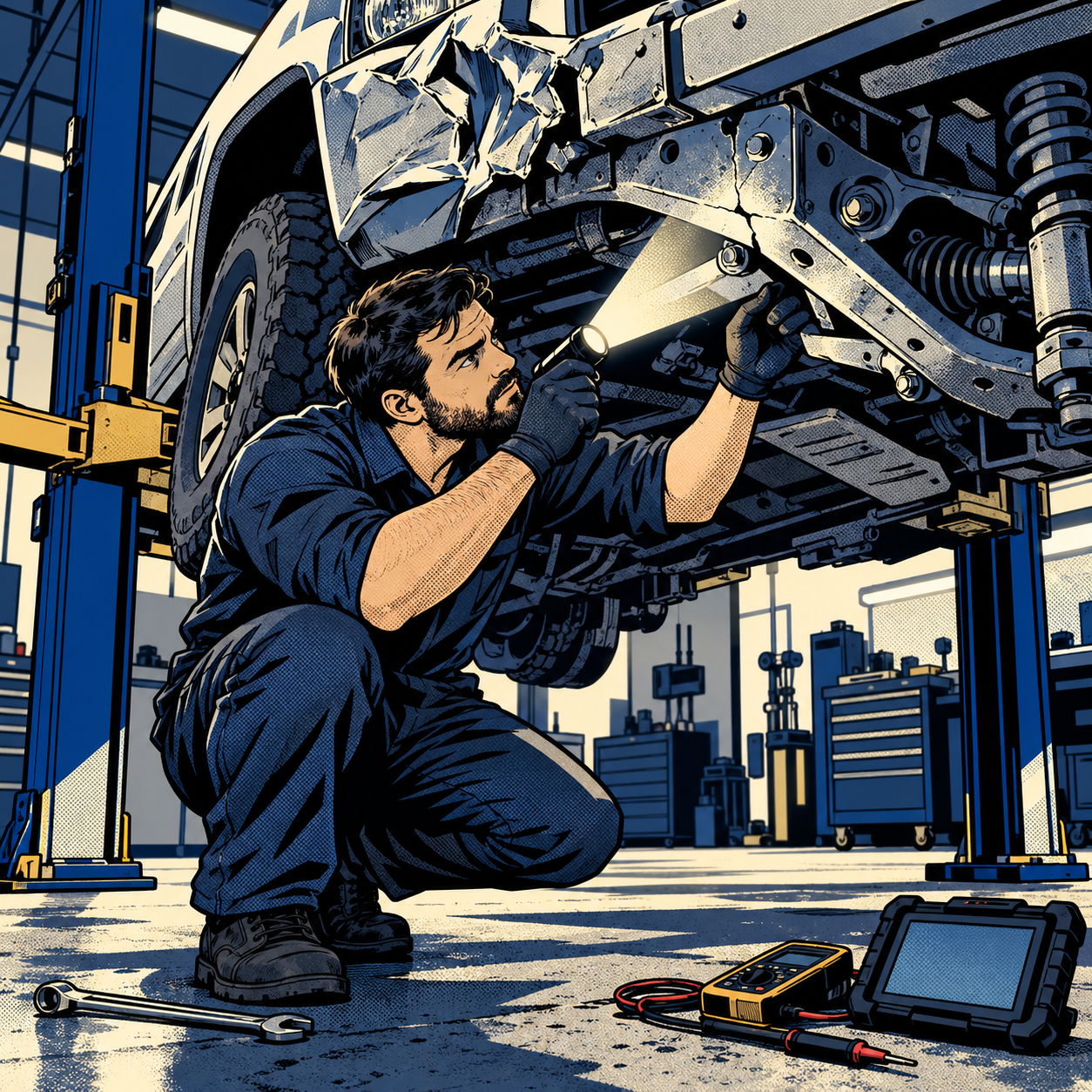
Every shop has heard some version of the same story: a customer gets rear-ended or clips a curb, the responding officer tells them the car is “safe to drive,” and three days later it rolls into your bay with a wheel rubbing the fender liner, a cracked EVAP canister, and a trunk lid held shut with a ratchet strap. That one offhand comment from law enforcement gets repeated to insurance adjusters, body shops, and anyone else who will listen, and it almost never means what the customer thinks it means. As a technician, you’re the one who actually has to answer the question — is this vehicle safe to operate, and for how long, and under what conditions. Here’s a practical framework for making that call and explaining it clearly.
What “Safe to Drive” at the Scene Actually Means
When a patrol officer says a wrecked car is “safe to drive,” they are making a narrow, situational judgment: the vehicle can be moved off the roadway or driven a short distance without creating an immediate hazard to the driver or other traffic. They are not a mechanic, not an appraiser, and not certifying the vehicle for daily use, highway speeds, or even a week of commuting. Officers are checking for the obvious stuff — does it track straight, are the lights working, is anything dragging on the pavement, is a tire about to blow. That’s it. It’s worth saying this plainly to customers up front, because a lot of the confusion that lands in your service bay starts with someone taking a roadside comment as a professional sign-off.
Make clear to customers that there’s a real difference between “driveable to get home or to a shop” and “safe for regular use.” A car can clear the first bar and fail the second badly. Setting that expectation during intake saves you an argument later when you tell them the car needs to sit until parts arrive.
The Walkaround: What to Check Before the Car Leaves Your Lot Again
If a customer wants to drive a damaged vehicle away from your shop — to get a second estimate, go home overnight, or just because insurance is dragging — you need a fast, repeatable walkaround that covers the items that actually cause failures or hazards, not just the ones that are visually dramatic. A crumpled fender looks scary but may be mechanically irrelevant; a hairline crack in a brake line is invisible and can kill someone.
- Confirm all exterior lighting functions: headlights, taillights, brake lights, turn signals, and reverse lights. A non-functioning brake or tail lamp is both a safety issue and a ticket waiting to happen.
- Check for fluid leaks under the vehicle — brake fluid, coolant, fuel, or oil. Any active leak means the car does not move under its own power until it’s addressed.
- Verify tire clearance through full steering lock and over a speed bump or ramp if you have one. Bodywork pushed into the tire path will shred a tire or lock the wheel.
- Inspect the hood and trunk latches. A hood that pops open at speed is one of the more common secondary accidents after a collision.
- Test the horn and wipers — minor, but both are legally required and often get overlooked after a frontal hit.
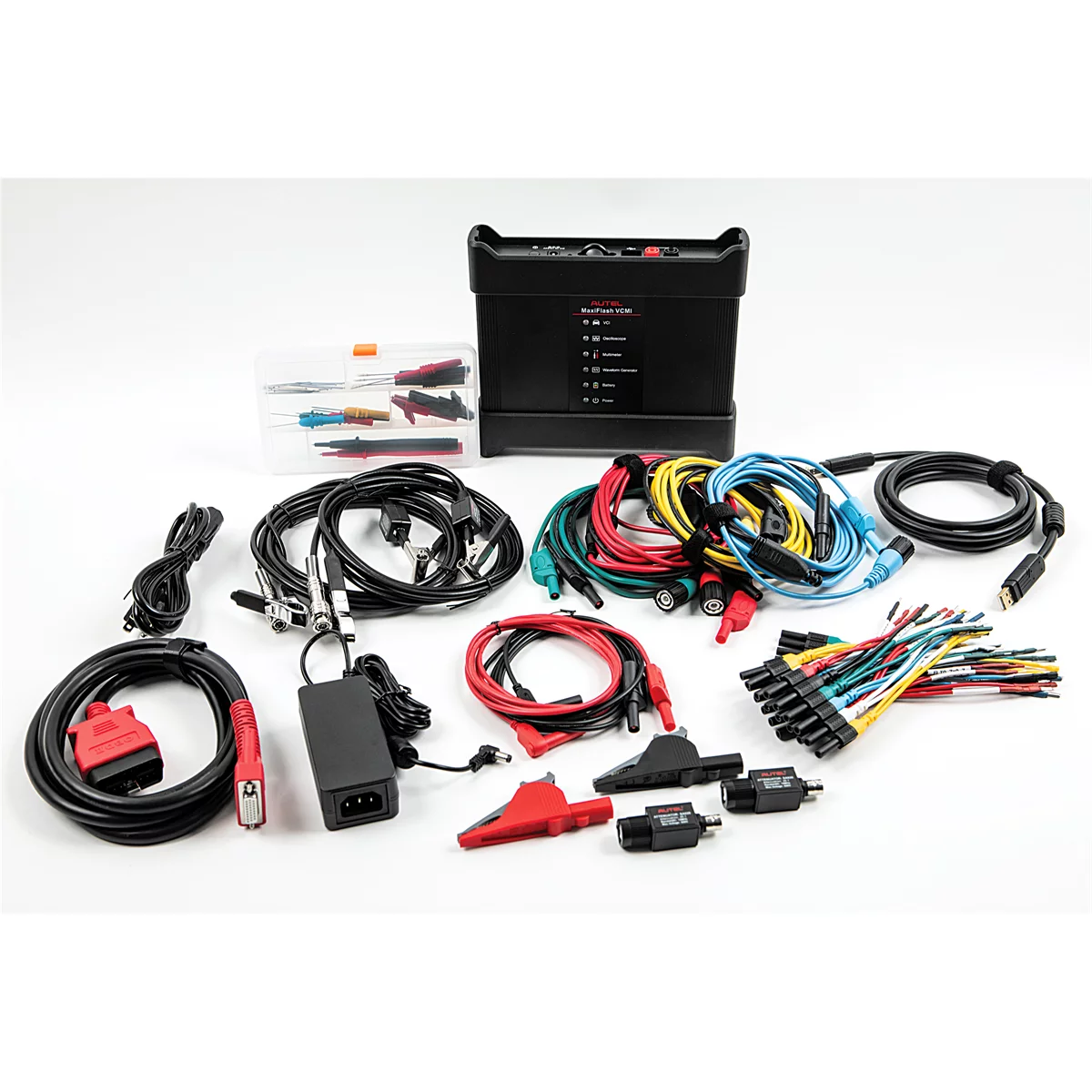
Autel MaxiFLASH VCMI Kit with Power Supply & Probes
Mfg: Autel.us
Part #: MFVCMIKIT
Lighting, Electrical, and EVAP System Integrity
Modern collisions, even low-speed ones, frequently damage components that aren’t visible from a glance at the bumper. The charcoal canister and EVAP lines sit low and forward on many platforms and are a common casualty in front and side impacts — crack one open and you’ve got a fuel vapor leak that will also throw a check engine light and fail emissions testing in states that require it. Walk the EVAP system with a smoke test if you suspect damage; don’t just eyeball the canister and call it good, since hairline cracks in the plastic housing are easy to miss under a work light.
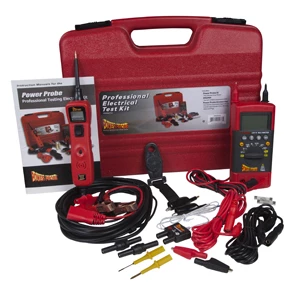
Electrical systems deserve the same scrutiny. Wiring harnesses routed near crumple zones, headlight connectors, and rear lamp assemblies can be pinched, partially disconnected, or corroding from exposure if a panel seal was breached. Pull codes with a scan tool even if the dash shows no warning lights — some body control module faults won’t trigger an indicator until a specific condition is met, like braking at night. A basic circuit tester and a multimeter will get you through most of this without pulling the whole harness.
PRODUCT_SEARCH_PLACEHOLDER_1
Suspension, Steering, and Frame Clearance
This is where “it drives fine” and “it’s actually safe” diverge the most. A vehicle can track straight in a parking lot and still have a bent control arm, a tweaked subframe, or a strut tower that’s been pushed out of alignment by a fraction of an inch — enough to cause unpredictable handling at speed or under hard braking. Put the car on a lift and check:
- Control arms, tie rods, and sway bar links for bending, not just looseness
- Strut towers and frame rails for visible kinks, paint cracking (a sign of stress), or fresh gaps in seam sealer
- Wheel alignment specs against factory tolerances — even if the numbers are close, a frame pull may be needed if the thrust angle is off
- Subframe mounting bolts and bushings for shear damage, especially after any impact that involved a curb or wheel-first collision
If you don’t have frame measuring equipment in-house, this is the point to refer out to a body shop with a frame machine rather than guess. Customers pushing back on cost here are the same ones who’ll be back after the car pulls hard under braking two weeks later.
Body Panels Aren’t Just Cosmetic
There’s a persistent myth that body panels are purely aesthetic and that as long as the frame and suspension are intact, a car with crumpled sheet metal is just as safe as one that’s pristine. That’s not accurate. Modern vehicle bodies are engineered as a single energy-management system — crumple zones, reinforced pillars, and panel-to-panel load paths are designed to work together in a subsequent impact. A fender or quarter panel that’s already deformed, or missing structural adhesive and spot welds from a rushed prior repair, won’t manage a second collision the way the engineers intended. The vehicle might look driveable and still perform badly in a crash it would have otherwise survived without serious injury.
The practical takeaway for customers: driving a cosmetically damaged car to get groceries or to a repair estimate is a reasonable, common-sense risk. Treating it as a long-term daily driver, especially on the highway, is a different risk calculation entirely — and it’s one they should be making with full information, not a half-remembered comment from the scene of the accident.
When to Recommend a Tow vs. a Drive-In
Give customers a clear decision rule instead of a vague “it depends.” Recommend a tow if any of the following are true: a wheel doesn’t track straight, there’s an active fluid leak, any lamp required for road legality is non-functional, a tire is rubbing or visibly damaged, or the hood/trunk won’t latch securely. Everything else — cosmetic panel damage, a cracked bumper cover, non-functional trim — generally falls into “drive it carefully, direct route, no highway” territory, provided your walkaround didn’t turn up anything in the first list.
Document your findings either way, with photos and a written note of what you checked. Insurance claims and liability disputes move slower than repairs, and a dated inspection note from your shop carries more weight than “the officer said it was fine.”
PRODUCT_SEARCH_PLACEHOLDER_2
Quick Reference Checklist
- All exterior lights and turn signals functional
- No active fluid leaks (brake, fuel, coolant, oil)
- Full tire clearance through steering lock, no rubbing
- Hood and trunk latch securely
- Scan for stored codes even with no dash warning
- Suspension and frame checked on a lift, not just by eye
- EVAP/canister integrity verified if impact was frontal
- Findings documented with photos for insurance purposes


Frequently Asked Questions
Does a police officer’s “safe to drive” comment hold any legal weight for insurance purposes?
No. It’s an informal, on-scene judgment about moving the vehicle off the roadway, not a certification. Insurance adjusters and shops make their own determination based on inspection, not a verbal comment from the scene.
Can a car with a cracked charcoal canister be driven at all?
Short distances at low speed are generally low-risk, but a cracked canister means raw fuel vapor can escape, which is both an emissions failure and, in some cases, a fire-risk concern if the crack is severe. Get it inspected and replaced promptly rather than deferring it.
How do I tell a customer their “fine to drive” car actually needs a tow without a fight?
Walk them through the specific failed item — a dragging tire, a dead brake light, a fluid leak — rather than a general “it’s not safe.” Specific, observable facts are much harder to argue with than a judgment call.
Is bodywork really part of occupant safety, or just cosmetic?
It’s structural in most modern unibody vehicles. Panels and reinforcements are engineered to manage crash energy together; damaged or improperly repaired panels can compromise that system in a subsequent impact even if the car looks driveable.
What’s the fastest way to check for hidden suspension damage after a collision?
A lift inspection combined with an alignment check is the quickest reliable method. Visual inspection alone catches gross bending but misses subtler subframe shifts that show up in alignment numbers.
Should I recommend a frame machine inspection even for minor-looking damage?
If the impact involved the wheel, suspension mounting points, or front/rear structural rails, yes — minor-looking exterior damage can hide disproportionate frame stress, and it’s cheaper to catch early than after a failed alignment attempt.
Recommended Diagnostic Tools
A systematic collision inspection depends on having the right diagnostic equipment on hand. To properly scan for codes, test electrical circuits, and verify EVAP integrity, add quality automotive diagnostic tools to your shop inventory.
- Code scanners and readers for identifying module faults not visible on the dash
- Multimeters and circuit testers for electrical system integrity checks
- Smoke testing equipment to detect fuel vapor leaks in EVAP systems

The Toolsource Technical Team blends decades of real-world automotive service experience with up-to-date technical research. Our writers collaborate with professional mechanics, shop owners, and diagnostic specialists to deliver practical, workshop-ready guidance you can trust.


Follow us on social media