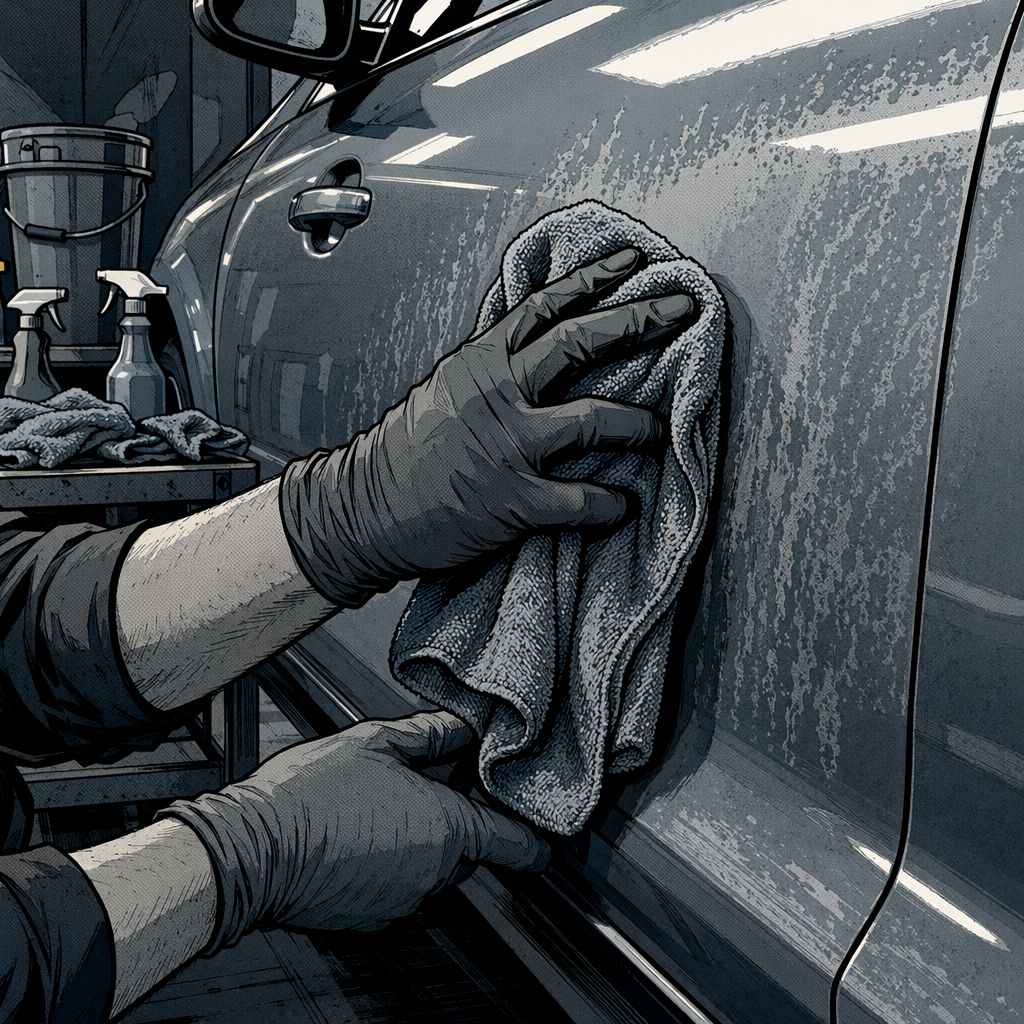
Rinseless washing has become a go-to method for professional detailers and technicians working in water-restricted environments, mobile operations, or situations where traditional hose-and-bucket washing isn’t practical. The promise is simple: clean vehicles effectively without rinsing, using specialized chemical formulas that encapsulate dirt and provide lubrication for safe wiping. But in real-world conditions, we don’t always get ideal circumstances. Panels dry before we reach them. Product sits longer than intended. A distraction pulls us away mid-wash. The question technicians actually face isn’t whether rinseless washes work under perfect conditions—it’s what happens when they don’t. Specifically, what occurs when rinseless wash solution dries on paint before removal, and how difficult is that residue to eliminate? A controlled test comparing multiple popular rinseless wash products provides practical answers.
Understanding Rinseless Wash Chemistry and Residue Formation
Rinseless wash products function through a combination of surfactants, polymers, and conditioning agents designed to encapsulate dirt particles and provide a lubricated surface for safe towel contact. Unlike traditional car wash soaps that rely on water volume to carry away contaminants, rinseless formulas chemically isolate particles so they can be lifted away with microfiber towels. This chemistry works exceptionally well when the product remains wet and is promptly removed according to manufacturer instructions.
The problem arises when the product dries on the surface. As water evaporates, the remaining chemical components concentrate and bond to the paint surface. Depending on formulation, this can leave visible residue ranging from slight haziness to distinct streaking or spotting. The composition of your water supply matters significantly—minerals in tap water will also concentrate during evaporation, potentially compounding the issue. Products designed with higher concentrations of polymers and gloss enhancers may leave more visible residue when dried, while simpler formulations might leave less.
Most manufacturer instructions specify to “keep the surface wet” and rewash any areas that begin to dry. This isn’t just cautious advice—it reflects the reality that these products are engineered for wet application and immediate removal, not for drying on surfaces. The test results demonstrate why this instruction exists and what you’re actually dealing with when you violate it.
Test Methodology: Simulating Real-World Drying Conditions
The test used clean automotive panels with multiple rinseless wash products applied at manufacturer-specified dilution ratios. Each product was applied to a designated section of panel, allowed to sit briefly, then permitted to fully air dry without removal—simulating what happens when a technician gets delayed or works too slowly on a large vehicle in warm conditions. Products tested included Optimum No Rinse (ONR), McKee’s N914 Rinseless Wash, Wolfgang Uber Rinseless Wash, P&S Absolute Rinseless, Griot’s Garage Rinseless Wash, and several others representing different price points and formulation approaches.
After complete drying, the dried residue was visually documented. Then each section underwent a standardized removal attempt: the panel was rinsed under cool running water and the dried section was scrubbed ten times with a clean microfiber cloth, then fully dried. This simulates a technician discovering dried product and attempting to remove it with the most readily available method—water and a towel. The results revealed significant differences between formulations in both the appearance of dried residue and the difficulty of removal.
Water quality presents an important variable. This test used moderately soft tap water, which means results in hard water areas could be more severe. The mineral content in hard water will contribute additional spotting and residue beyond what the rinseless product itself leaves. For technicians working in hard water regions, this compounds the importance of preventing product from drying on surfaces.
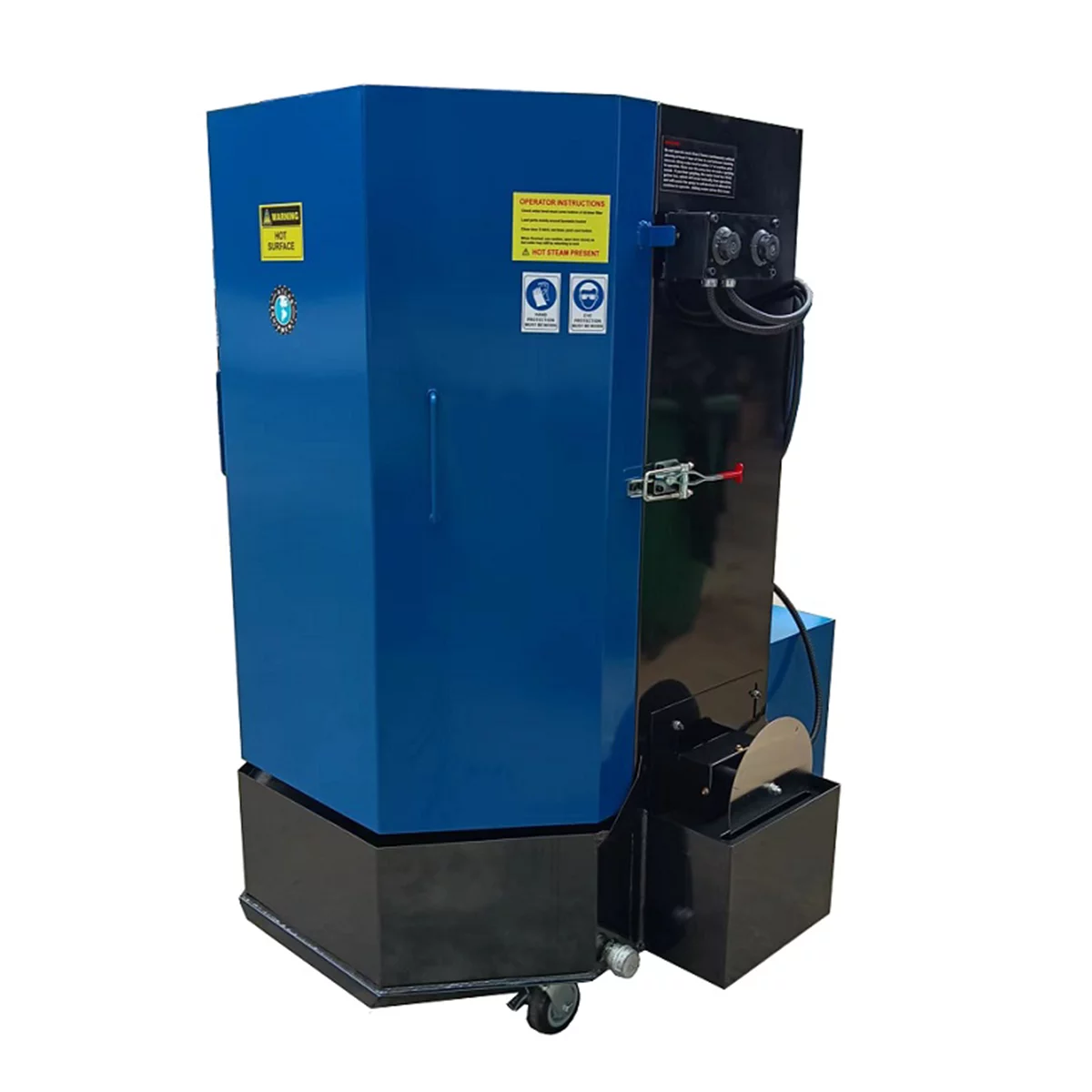
Atlas Automotive Equipment Spray Wash Cabinet
Mfg: Atlas Automotive
Part #: STW-500 SPRAY WASH CABINET
Product-by-Product Results: What Actually Dries on Your Paint
ONR demonstrated why it remains the industry standard and most widely recommended rinseless wash. When dried, it left minimal visible residue—a slight haze rather than distinct spots or streaking. More importantly, the residue removed relatively easily with water and microfiber wiping, leaving little to no lasting mark. This forgiving behavior explains why detailers consistently recommend ONR for beginners and why it performs reliably across various conditions and water qualities.
McKee’s N914 Rinseless Wash showed similar behavior to ONR, with minimal dried residue that removed without significant effort. Wolfgang Uber Rinseless Wash left slightly more visible residue when dried but still removed reasonably well. These results suggest products formulated with simpler chemistry and fewer gloss-enhancing additives tend to leave less problematic residue when drying occurs.
Products formulated with higher concentrations of polymers and gloss enhancers—designed to leave a protective layer and enhanced shine—predictably left more visible residue when allowed to dry. Some showed distinct streaking or spotting patterns that required more aggressive removal efforts. This doesn’t make them inferior products; it means they’re optimized for proper application technique where the product never fully dries on the surface. For experienced technicians who can maintain proper wet times, these products may deliver superior gloss and protection. For situations where drying might occur, simpler formulations prove more forgiving.
Specialty products like Phat Neut (in “Dry Mode” concentration) are specifically designed for different application methods—in this case, application followed by intentional drying, then pressure washer removal before traditional rinseless washing. These products shouldn’t be judged by the same drying criteria as traditional rinseless washes since drying is part of their intended process.
Removal Techniques: Getting Dried Rinseless Wash Off Paint
When you discover dried rinseless wash residue on a vehicle, you have several removal options beyond simple water and towel wiping. The most straightforward approach, suggested by multiple manufacturer instructions, is rewashing the affected area with the same rinseless product. The principle of “like dissolves like” means the fresh rinseless solution can reactivate and remove the dried residue more effectively than water alone. Apply fresh diluted product to the dried area, allow brief dwell time, then wipe and dry normally with clean microfiber towels.
For stubborn residue that resists the same-product approach, a dedicated quick detailer spray can work effectively. Many technicians keep a spray bottle of rinseless wash diluted for quick detailer use (typically a stronger concentration than wash dilution, such as 1:16 or 1:32 depending on product). This provides a convenient tool for spot correction without mixing a full wash bucket. Using distilled water for the dilution eliminates any mineral contribution to residue formation.
In more severe cases, particularly with hard water spotting combined with dried rinseless residue, a diluted waterless wash product or dedicated water spot remover may be necessary. These products include stronger solvents and chelating agents designed to break down mineral deposits. Apply according to product instructions, typically with light agitation using a microfiber applicator, then buff clean with a separate towel. This represents a more aggressive approach and shouldn’t be necessary if the original rinseless wash is applied correctly, but it provides a solution when facing heavily contaminated or neglected surfaces.
The key principle across all removal methods is avoiding abrasion. Even when dealing with stubborn dried residue, maintain adequate lubrication and use proper microfiber technique—light pressure with multiple clean towels rather than heavy scrubbing with a single towel. The goal is chemical removal, not mechanical abrasion that could create surface marring.
Preventing Residue Formation: Practical Workflow Adjustments
Prevention beats correction in every detailing scenario. For rinseless washing, this means workflow design that prevents product from drying on surfaces. Work in sections small enough to complete before evaporation begins—in warm conditions or direct sunlight, this might mean working one door or half a panel at a time rather than an entire vehicle side. Many experienced technicians adopt a two-bucket approach even with rinseless washing: one bucket with wash solution and another with clean water or diluted product for a final wipe-down immediately after washing each section.
Environmental awareness matters significantly. Avoid rinseless washing in direct sunlight or on hot surfaces whenever possible. If you must work in these conditions, adjust your section size accordingly and consider using a spray bottle to keep recently washed areas damp while you complete adjacent sections. Some technicians run a damp microfiber over completed sections periodically to prevent any residue from fully drying while they finish the vehicle.
Product selection should match your working conditions. If you regularly work in challenging environments where quick drying is inevitable, choose products that demonstrated minimal dried residue in testing—primarily ONR and similar simple formulations. Save high-gloss, polymer-heavy products for ideal conditions where you can maintain proper wet times. This isn’t about product quality; it’s about matching chemistry to application reality.
Microfiber management plays an underappreciated role. Use enough towels to avoid spreading concentrated product around as it begins to dry. Many technicians use a wash towel for initial cleaning and a separate drying towel for the final pass, ensuring the drying towel contacts only clean, wet surface rather than partially dried solution. This two-towel approach prevents redistribution of drying product and helps achieve streak-free results.
Water Quality Considerations for Rinseless Washing
Water hardness significantly impacts rinseless washing outcomes. Hard water contains dissolved minerals—primarily calcium and magnesium—that concentrate as water evaporates, leaving visible spots independent of the rinseless product itself. When combined with dried rinseless residue, hard water creates a double problem: both mineral deposits and product residue requiring removal. Technicians working in hard water areas face a fundamental disadvantage that no product selection alone can overcome.
For mobile detailers or shop operations in hard water regions, water treatment becomes a practical necessity rather than a luxury. A simple deionization or reverse osmosis system can provide spot-free water for final wipes or diluting rinseless products. Many technicians maintain two water sources: tap water for initial washing (where volume matters more than purity) and treated water for final wipes and drying. This dual approach balances practicality with results.
An alternative approach involves using distilled water for diluting rinseless products when mixing quick detailer concentrations. While mixing full wash buckets with distilled water isn’t cost-effective for most operations, using distilled water for spray bottle applications (quick detailer, waterless wash, final wipes) provides spot-free results at manageable cost. A gallon of distilled water costs roughly one dollar and will dilute multiple spray bottles.
Testing your local water hardness provides useful baseline information. Inexpensive test strips available through pool supply or aquarium retailers will indicate your water’s mineral content. If results show moderate to high hardness, factor this into your product selection and workflow planning. Some rinseless products include water-softening agents in their formulation, though none can completely compensate for severely hard water.
Quick Reference: Rinseless Wash Best Practices Checklist
- Work in small sections that can be completed before product begins drying (adjust section size based on temperature and sunlight)
- Avoid washing in direct sunlight or on hot surfaces whenever possible
- Keep adequate clean microfiber towels available—use separate towels for washing and final drying
- Monitor panels as you work; rewash any area that begins to dry before you can wipe it
- If product dries on surface, rewet with the same rinseless solution or water and wipe clean immediately
- Consider water hardness in your area; use treated or distilled water for final wipes if working with hard water
- Match product selection to working conditions—simpler formulations for challenging environments, enhanced products for ideal conditions
- Maintain proper dilution ratios; don’t assume “stronger is better”
- Keep a spray bottle of quick detailer dilution available for spot corrections
- Follow manufacturer instructions for application and removal timing
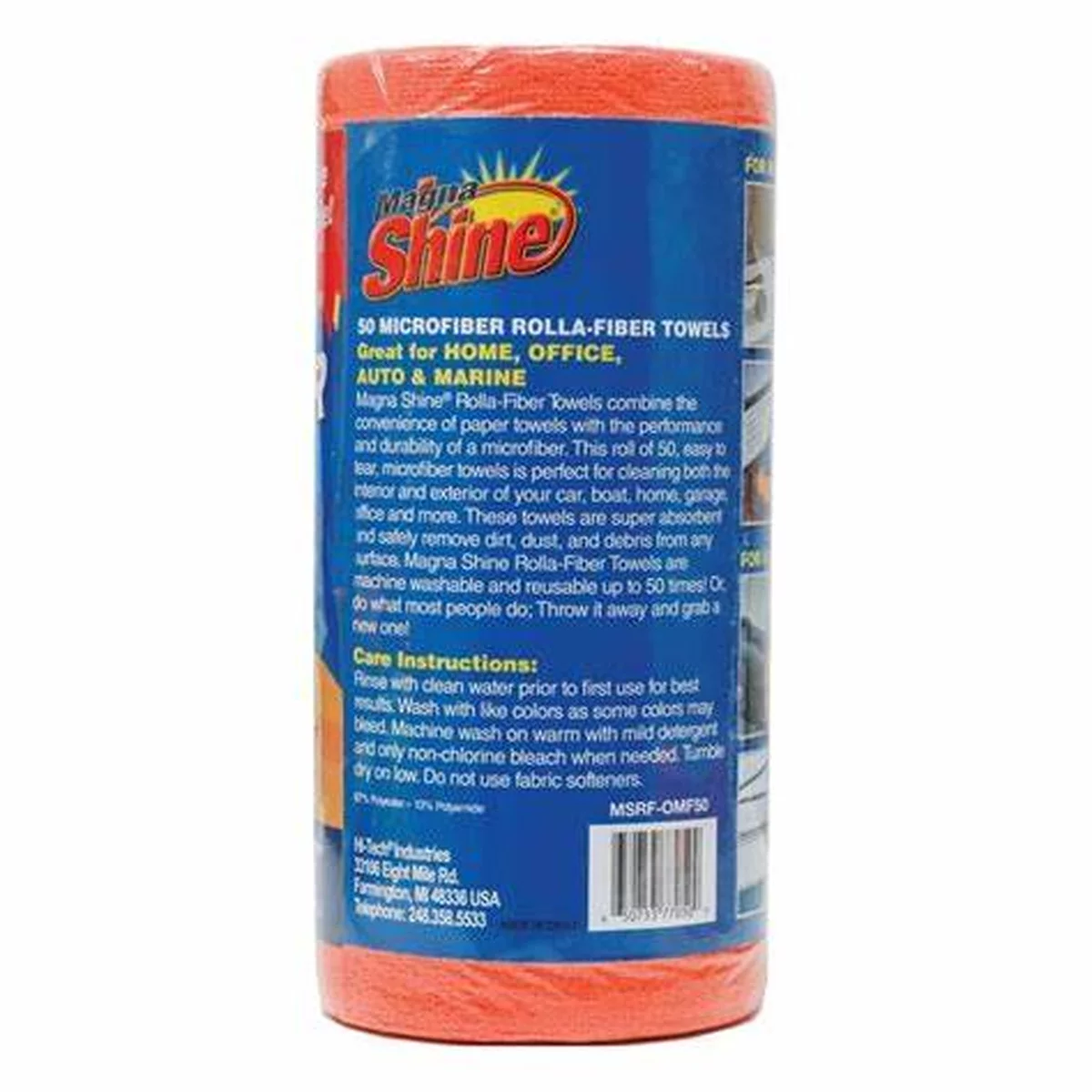
RBL Products (6) MAGNA SHINE MICROFIBER TOWELS
Mfg: RBL Products
Part #: RBL.MSRF-OMF50
Frequently Asked Questions
Will dried rinseless wash damage my paint or clear coat?
Dried rinseless wash residue itself won’t permanently damage properly maintained automotive paint or clear coat. The residue is a surface deposit that can be removed with appropriate techniques. However, aggressive mechanical scrubbing to remove dried residue could cause fine surface marring, so always use chemical removal methods with adequate lubrication rather than dry buffing or heavy abrasion.
Can I use distilled water instead of tap water for mixing rinseless wash?
Yes, and this can improve results in hard water areas. Distilled or deionized water eliminates mineral content that contributes to spotting when water evaporates. However, for full-vehicle washing at standard dilution ratios (256:1 or similar), the cost of distilled water may be impractical. It’s most useful for stronger dilutions in spray bottles used as quick detailers or final wipes.
Why do some rinseless products leave more residue than others?
Formulation differences explain residue variation. Products containing higher concentrations of polymers, gloss enhancers, and protective additives leave more visible residue when dried because these ingredients are designed to bond to the surface. Simpler formulations focused primarily on cleaning with minimal additives leave less residue. Neither approach is inherently superior—it depends on application technique and working conditions.
Should I rewash dried residue with the same rinseless product or just use water?
Rewashing with the same rinseless product is generally more effective because the fresh solution can chemically reactivate and dissolve the dried residue more easily than water alone. The “like dissolves like” principle applies here. Apply fresh diluted product to the affected area, let it sit briefly, then wipe and dry with clean microfiber towels. Water works in many cases but may require more mechanical agitation.
Is ONR actually better than other rinseless washes, or just more popular?
Testing supports ONR’s reputation beyond just popularity. It consistently leaves minimal dried residue and that residue removes easily compared to many alternatives. Its forgiving behavior under non-ideal conditions (like accidental drying) makes it reliable for varying skill levels and working environments. Other products may offer enhanced gloss or protection under ideal application, but ONR’s consistency and ease of use explain its widespread professional adoption.
Can I prevent water spots with rinseless washing in hard water areas?
Complete prevention is difficult with hard water unless you treat the water. Rinseless products do include some water-softening agents, but they can’t fully eliminate spotting from severely hard water, especially if product dries on the surface. Practical solutions include using treated/distilled water for final wipes, working in smaller sections to minimize drying time, or finishing with a quick detailer made with distilled water. Some technicians apply a spray sealant or detail spray as a final step to mask minor spotting.
Protect Your Paint After Rinseless Washing
Once you’ve completed your rinseless wash and avoided dried residue, the next step is protecting that clean paint. Our selection of polishes and waxes provides the finishing touch for any wash workflow, helping you maintain gloss, protection, and water beading between services.
- Protective waxes and sealants to follow rinseless washing
- Polishes for addressing swirl marks or minor imperfections
- Gloss enhancers and detail sprays for final finishing
Browse our Car Care – Polishes and Waxes selection to find the right protection for your vehicles.

The Toolsource Technical Team blends decades of real-world automotive service experience with up-to-date technical research. Our writers collaborate with professional mechanics, shop owners, and diagnostic specialists to deliver practical, workshop-ready guidance you can trust.


Follow us on social media