Every few months a new head-to-head video comparing ceramic coatings and paint sealants makes the rounds, and every time it does, the same argument breaks out in the comments: half the products in the test aren’t ceramic coatings at all, application instructions got skipped to fit a filming schedule, and the “winner” depends entirely on what the tester was measuring. None of that makes the testing useless — it just means you need to know how to read it. This guide breaks down what independent testing is actually good for, where it falls short, and how to apply what you learn so you don’t waste a product’s potential or your customer’s money.
Know What You’re Actually Comparing
The single biggest source of confusion in paint protection testing is that “ceramic coating” gets used as a marketing term for two very different product categories:
- True ceramic/SiO2 coatings (Gyeon Mohs/Cure, Gtechniq Crystal Serum, CarPro Cquartz, etc.) chemically bond to the clear coat, require a multi-step prep (decontamination, clay, polish, IPA panel wipe), and cure over 24 hours to several weeks depending on the product.
- Spray sealants and hybrid “ceramic-infused” waxes (Griot’s 3-in-1, most spray-and-wipe products) sit on top of the clear coat, apply in minutes with no cure period, and typically last weeks to a few months rather than years.
When a comparison video puts both categories in the same chart, the true coatings will almost always outperform the sealants on hydrophobicity, chemical resistance, and durability — because they’re a fundamentally different product, not because the sealant is poorly made. If you’re advising a customer or stocking a shop, the first question isn’t “which product wins” — it’s “which category does this job actually call for.” A daily-driver customer who wants an easy 20-minute refresh every few months should not be sold a true ceramic coating, and a customer who wants two years of protection on a garage-kept car shouldn’t be sold a spray sealant.
Reading Third-Party Test Results Correctly
Channels that run controlled, repeatable tests (water beading angle, sheeting speed, chemical etch resistance, UV exposure boxes) are genuinely useful because they strip out marketing claims and give you comparable numbers. But a few caveats apply to almost every test video you’ll find:
- Mainstream bias: testers generally source products that are easy to buy at retail or on Amazon. Niche or specialty brands with strong reputations in enthusiast and professional circles are often left out simply because they’re harder to source for a video, not because they underperform.
- Category mixing: as above, sealants and true coatings frequently get tested side by side and ranked on the same chart.
- Compressed timelines: a product rated for a 2-week cure tested at 48 hours will underperform its actual spec. That’s not the product failing — that’s the test not following the manufacturer’s process.
- Single-environment results: a coating tested in a lab doesn’t account for garage-kept vs. street-parked, sun exposure, or regional climate, all of which materially change real-world longevity.
None of this means ignore the data — it means treat it as a starting shortlist, not a final verdict. Use the results to narrow ten options down to two or three, then cross-check against manufacturer application specs and, where possible, feedback from technicians using the product under conditions similar to your customer’s.



Application Mistakes That Skew Performance
Whether you’re replicating a test result or just installing a coating for a customer, the most common way a good product underperforms is a rushed or incorrect install:
- Skipping decontamination. Clay bar or chemical decon before coating is non-negotiable — any bonded contamination sits between the coating and the clear coat and becomes a failure point.
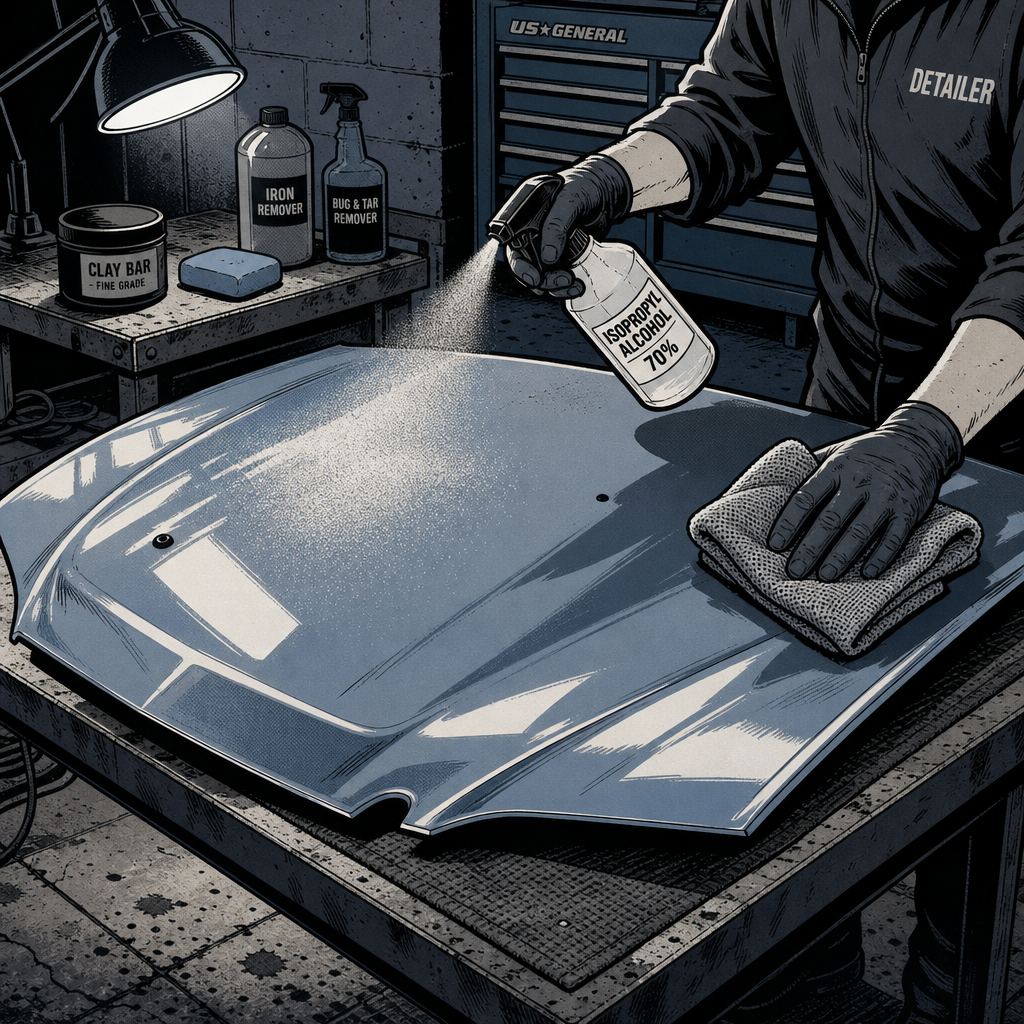
- Not stripping the panel before application. An isopropyl alcohol (diluted appropriately per product spec) panel wipe removes polish oils and residue so the coating bonds to bare clear coat, not a film of filler.
- Ignoring cure time. True ceramic coatings need a specified cure window — commonly 24 hours to two weeks depending on the product — before they reach rated hardness and chemical resistance. Getting the car wet, washed, or driven in that window is the single most common reason a coating “doesn’t perform like advertised.”
- Wrong environmental conditions during application. Direct sun, high humidity, or temperatures outside the product’s application range cause high spots, streaking, or improper flash-off.
- Over-application. More product is not more protection. Excess coating that isn’t buffed off in the working time causes high spots and streaking that show up weeks later as hazing.
If you’re benchmarking a product against a published test, or explaining to a customer why their results differ from a video they watched, application error is the first thing to rule out — before blaming the product.
Real-World Longevity Depends on Environment, Not Just the Product
Longevity claims on the bottle assume ideal conditions. In the field, the same product can perform very differently car to car:
- Garage-kept vs. street-parked is the single biggest variable. A coating that lasts close to two years in a garaged car in a mild climate may only hold up three to six months on a daily driver parked outside.
- UV exposure breaks down coating polymers over time even without contamination — cars in sunny climates need more frequent maintenance or reapplication regardless of product tier.
- Wash frequency and method matter — automatic car washes with brushes strip sealants and coatings faster than hand washing or touchless washes.
- Maintenance products (proper pH-neutral shampoo, coating-safe drying aids) extend the life of both sealants and true coatings; harsh degreasers or dish soap strip them prematurely.
When quoting a customer on expected longevity, give a range tied to how and where the car is kept, not a single number pulled from a bottle or a review video.
Matching Product Tier to the Job
Use this rough framework when a customer or shop is deciding what to stock or install:
- Daily driver, budget-conscious, DIY maintenance: spray sealant or hybrid ceramic wax. Fast, forgiving, no cure time, good value.
- Enthusiast or garage-kept vehicle, wants noticeable gloss and beading for 1-2 years: mid-tier true ceramic coating, professionally or carefully self-applied with full prep.
- New or high-value vehicle, long-term protection priority: professional-grade multi-year coating (Gtechniq Crystal Serum tier, Gyeon Mohs/Cure tier) installed by a trained applicator with correct cure conditions.
- Shop upsell after a correction or new-car prep: pair a true coating on paint with a separate wheel/trim/glass coating line rather than one product for everything — most true coating lines are formulated per-surface.
Quick Checklist Before You Buy or Apply
- Confirm whether the product is a true ceramic/SiO2 coating or a sealant/hybrid wax — check the manufacturer’s own description, not just the marketing name.
- Read the required cure time and don’t shortcut it, even under a deadline.
- Decontaminate and IPA-wipe the panel before any coating application.
- Match expected longevity to the vehicle’s actual storage and driving conditions, not the bottle’s headline number.
- Cross-check any single review or test video against manufacturer specs and at least one other independent source before committing a shop’s stock order.

3 Pk 16"x16" Exterior Microfiber Cloth Professional with Preprin
Mfg: SM Arnold
Part #: 85-862


FAQs
Is a ceramic-infused spray wax the same as a ceramic coating?
No. Products like Griot’s 3-in-1 are sealants with ceramic additives — they sit on the clear coat and last weeks to months. True ceramic coatings chemically bond and are rated in years.
How long should I wait before washing a car after applying a true ceramic coating?
Follow the manufacturer’s cure schedule exactly — commonly 24-48 hours minimum before any water contact and up to two weeks before the coating reaches full rated hardness and chemical resistance.
Why did my coating not last as long as the reviewer claimed?
Check application (decon, IPA wipe, cure time honored) first, then environment — street parking, high UV exposure, and brush car washes all shorten real-world life versus a garaged, hand-washed test vehicle.
Are budget or “alphabet soup” Amazon coatings worth using?
They can work for short-term protection at low cost, but independent testing consistently shows a performance gap versus established coating brands on chemical resistance and durability. Fine for a quick refresh, not for long-term protection claims.
Should I trust a single YouTube comparison video to choose a product?
Use it to build a shortlist, not a final decision. Watch for category mixing (sealants vs. true coatings), confirm the tester followed manufacturer cure/application instructions, and check the product against its own spec sheet.
What’s the biggest mistake technicians make when installing a coating for a customer?
Skipping or rushing decontamination and cure time under schedule pressure. It’s the most common reason a correctly chosen, quality product underperforms in the field.
Shop Coating and Sealant Products
Whether you’re choosing a true ceramic coating, a spray sealant, or a hybrid wax, the right product depends on your application timeline, durability requirements, and maintenance plan. Our Car Care – Polishes and Waxes selection covers the full range of protection options to match any job.
- Ceramic coatings and true SiO2 coatings for long-term paint protection
- Spray sealants and ceramic-infused waxes for quick, easy maintenance
- Supporting products including clay bars, IPA prep, and application accessories

The Toolsource Technical Team blends decades of real-world automotive service experience with up-to-date technical research. Our writers collaborate with professional mechanics, shop owners, and diagnostic specialists to deliver practical, workshop-ready guidance you can trust.


Follow us on social media