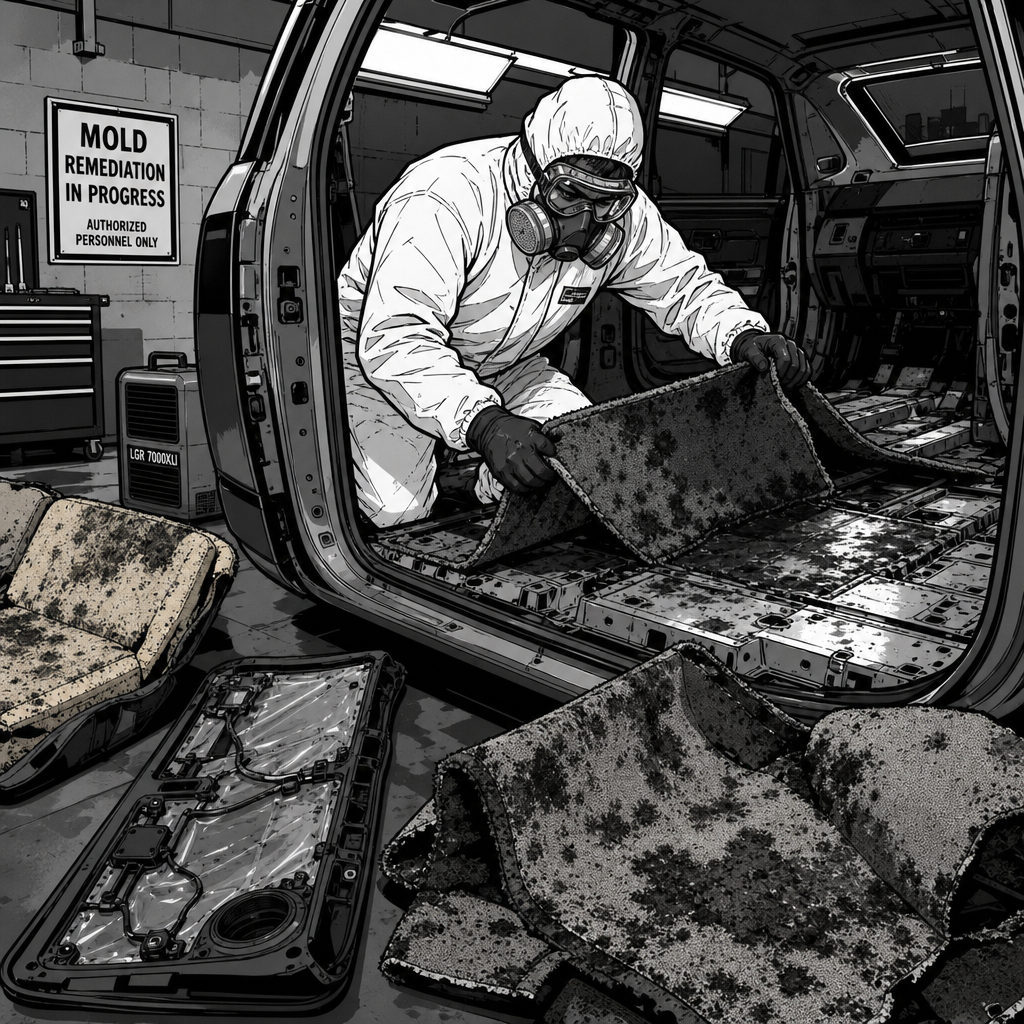
A mold-infested interior is one of the nastier jobs that lands on a shop floor—usually from a flood car, a cracked windshield seal, a sunroof drain that’s been clogged for a year, or a vehicle that sat with wet carpet after a spill nobody dried out. Customers and even some techs underestimate what’s involved. Cleaning the visible surfaces and calling it done isn’t remediation—it’s cosmetic work that leaves spores embedded in places nobody thinks to check. This guide walks through what a proper mold removal job actually requires, from PPE to HVAC decontamination, and where to draw the line on a vehicle that isn’t salvageable.
Why Mold Takes Over a Vehicle Interior
Mold needs three things: moisture, a food source, and time. Cabin air filters, carpet padding, seat foam, and headliner backing are all organic enough to sustain growth once they stay damp for 24-48 hours. Common entry points include failed door and window seals, clogged sunroof drains, a heater core or evaporator leak, a windshield that wasn’t properly re-sealed after a crack repair, or simply a vehicle stored with wet floor mats. Once moisture gets trapped under carpet or inside seat foam, it has nowhere to evaporate to, and mold colonizes fast—often before there’s any visible staining.
The tricky part is that mold isn’t confined to what you can see. By the time there’s visible growth on a headliner or dash pad, spores have almost certainly spread through the HVAC system every time the blower ran. That’s the detail that separates a real remediation job from a wipe-down.
Safety Gear and Prep Before You Start
Do not start this job without proper PPE. Disturbing mold colonies—scrubbing, vacuuming, pulling carpet—causes spores to aerosolize, and that’s when they do the most damage to your lungs. Minimum protection for a tech doing this work:
- A properly fitted respirator rated for mold spores (an N95 is the bare minimum; a half-face respirator with P100 cartridges is better for extended exposure)
- Sealed eye protection, not open safety glasses
- Nitrile gloves, changed frequently as they get contaminated
- Long sleeves and pants, ideally disposable coveralls you can bag and toss
Work with doors and windows open or in a ventilated bay, and if possible, work outdoors for the initial teardown and vacuuming stages. Anyone with asthma, allergies, or a compromised immune system should not be doing this job at all—symptoms can flare from spore exposure even with good technique. If a customer or a coworker wants to watch the process up close, keep them out of the bay until the worst of the disturbance is over.
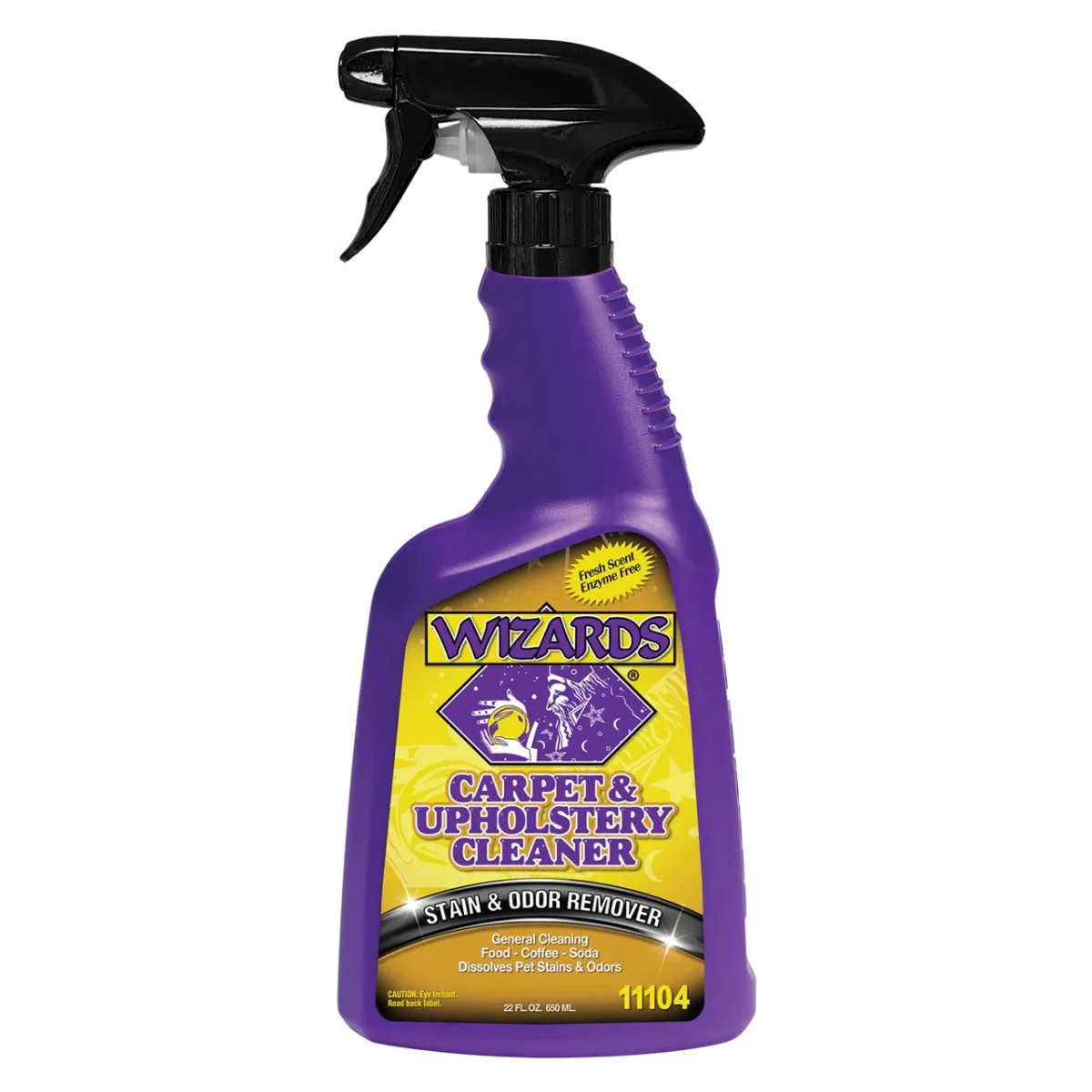
11104 Carpet and Upholstery Cleaner, 22 oz Spray Bottle
Mfg: Wizard Industries
Part #: 11104
Interior Teardown: What Actually Needs to Come Out
Surface cleaning without removing components is the single biggest reason mold jobs fail and come back. To do this correctly:
- Pull the seats, not just clean them in place. Mold hides in the foam, in the springs, and underneath where the seat frame meets the carpet.
- Remove the carpet entirely if there’s any sign of water intrusion. Carpet padding holds moisture and mold longer than the carpet fiber itself, and it’s often impossible to fully dry or treat in place.
- Pull the headliner if there’s visible staining or if the vehicle had standing water at any point. Headliner backing is a foam-and-fabric sandwich that traps spores deep inside.
- Remove interior door panels and check the door bottoms and vapor barriers—water intrusion from failed window seals collects here constantly.
Each component should be cleaned separately, away from the vehicle, so spores aren’t just getting redistributed around the cabin. Expect to clean each piece more than once—two to four passes with different methods (enzymatic cleaner, then a mold-specific antimicrobial, then a final rinse and dry cycle) is realistic for a heavily contaminated interior. This is not a one-afternoon job; a thorough teardown-clean-reassemble cycle commonly runs into a full week or more of labor spread over several days to allow proper drying between passes.
Product search: antimicrobial mold and mildew cleaner for automotive upholstery and carpet
Cleaning the HVAC System and Air Ducts
This is the step most detailing jobs skip, and it’s the reason mold comes back after a car looks spotless. Every time the blower motor runs, it pulls cabin air through the evaporator housing and pushes it back out through the vents and ducting. If that system has been circulating moldy air, the ductwork, evaporator core, and blower housing are contaminated regardless of how clean the visible cabin looks.
Practical steps for HVAC decontamination:
- Replace the cabin air filter first—it’s cheap and it’s almost certainly saturated with spores.
- Use an EPA-registered antimicrobial fogging or foaming treatment designed for automotive HVAC systems, applied through the intake and blower housing per the product’s instructions.
- If the evaporator housing is accessible without excessive labor, pull it and clean it directly rather than relying on foam-and-hope.
- Run the blower on high with the treatment product for the recommended dwell time, then flush according to the manufacturer’s directions.
- Re-check the cabin filter after a week of normal driving—if it’s damp or shows regrowth, there’s still a moisture source feeding the system.
Skipping this step and just cleaning the visible interior is why some “restored” vehicles smell moldy again within a month—the HVAC system just reseeds everything it just cleaned.
Odor Control and Ozone Treatment
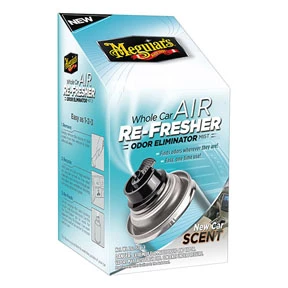
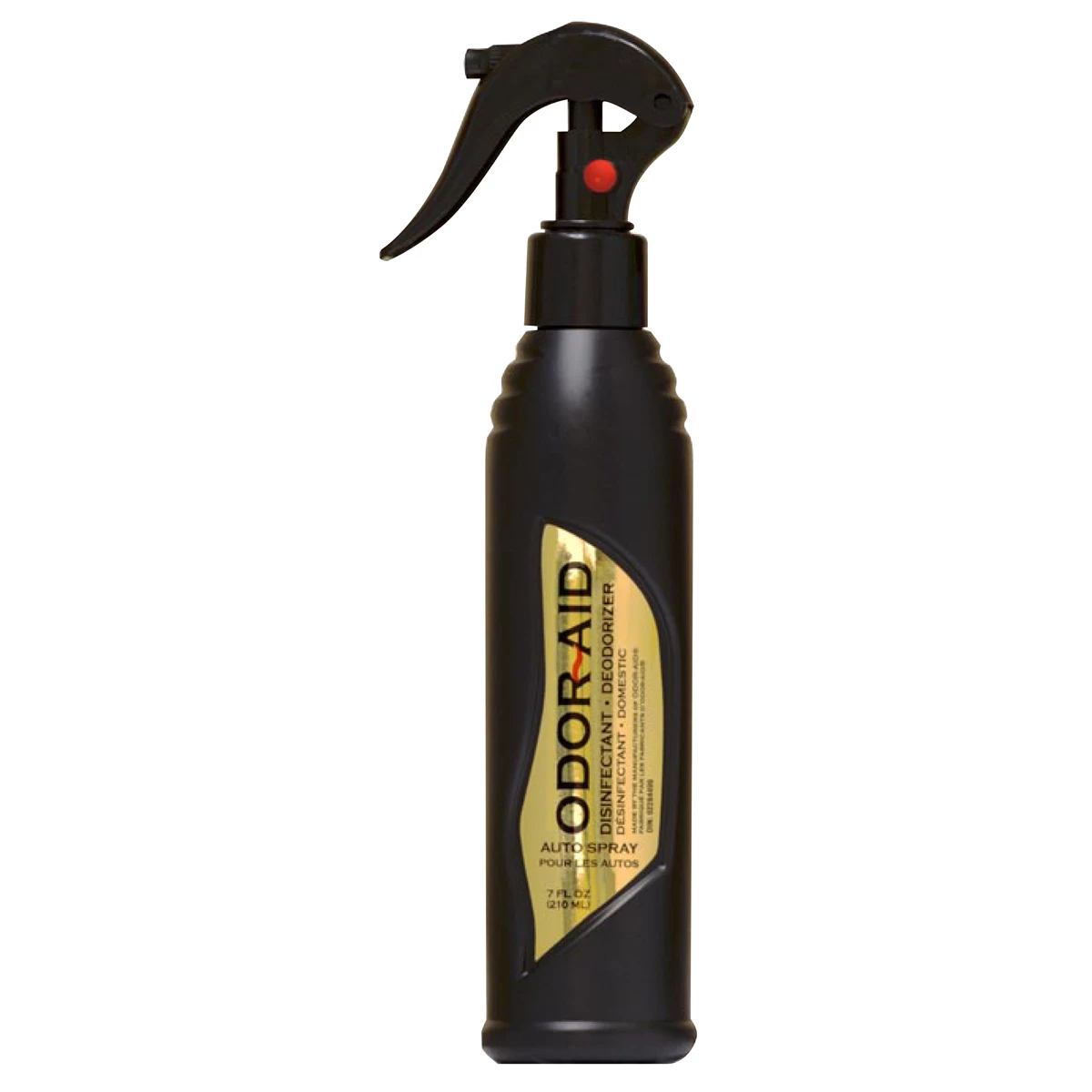
Ozone treatment has a place in this process, but it’s a finishing step, not a substitute for physical remediation. Ozone breaks down odor-causing organic compounds and can help knock down airborne spore counts, but it does nothing for mold embedded in foam, carpet padding, or seams that weren’t physically cleaned. Run ozone treatment only after the teardown-clean-dry cycle is complete, in an unoccupied, sealed vehicle, following the equipment manufacturer’s exposure time and ventilation instructions—ozone at treatment concentrations is itself a respiratory hazard and the vehicle needs to be fully aired out before anyone gets back in without a respirator.
For lingering musty smell after cleaning, check for a moisture source that’s still active before assuming the smell is residual and cosmetic. A clogged sunroof drain or a door seal that’s still letting water in will undo weeks of remediation work.
Product search: automotive ozone generator odor eliminator
When to Walk Away From the Job
Not every moldy interior is worth saving, and it’s worth being honest with a customer about that. If mold has been established for an extended period—months, not days—and has penetrated structural components like seat foam, door vapor barriers, and headliner substrate throughout the vehicle, full remediation may cost more in labor than the car is worth. There’s also a liability angle: if the vehicle is later sold, a buyer who discovers hidden mold contamination that wasn’t disclosed has a legitimate complaint, cleaned-up appearance or not. Document the work thoroughly with photos and a written description of what was removed, treated, and replaced, and be straightforward with customers about the limits of remediation versus a full interior gut.
Quick Checklist
- Respirator, sealed eye protection, nitrile gloves, and disposable coveralls before touching anything
- Work in a ventilated bay or outdoors, especially during teardown and vacuuming
- Pull seats, carpet, padding, and headliner rather than cleaning in place
- Clean each component separately, multiple passes, full dry time between passes
- Replace cabin air filter and decontaminate the HVAC system and ducting, not just the cabin
- Identify and fix the moisture source (seals, drains, leaks) before calling the job done
- Use ozone treatment only as a final step in an unoccupied, ventilated vehicle
- Document everything and be honest about vehicles that aren’t worth the labor
FAQs
Can mold in a car actually make you sick?
Yes. Mold exposure can trigger asthma attacks, allergic reactions, and respiratory irritation, and some species produce mycotoxins with more serious health effects. Anyone with existing respiratory conditions should avoid doing this work without proper respiratory protection.
Is it enough to just clean the carpet and seats and skip the HVAC system?
No. If the blower motor circulated moldy cabin air at any point, the ductwork and evaporator housing are contaminated and will keep reseeding the cabin with spores after the visible surfaces are cleaned.
How long does a full mold remediation job take?
A heavily contaminated interior with full teardown, multiple cleaning passes, and proper drying time between passes commonly takes a week or more of labor spread across several days—it’s not a same-day detail job.
Does vinegar or a household cleaner work on automotive mold?
Household cleaners can help with surface staining but generally aren’t formulated to fully kill mold in porous materials like foam and carpet padding. An automotive-grade antimicrobial cleaner designed for mold and mildew gives more reliable results.
Do I need an ozone machine, or is deep cleaning enough?
Ozone treatment is a useful final step for odor and airborne spore reduction but doesn’t replace physical removal and cleaning of contaminated materials. Use it after remediation, not instead of it.
Should a mold-remediated vehicle be disclosed to a buyer?
Yes. Even a thorough cleanup doesn’t guarantee every trace of mold is gone, and a buyer who later discovers undisclosed mold contamination has grounds for a complaint. Document the remediation work and disclose it.
Recommended Shop Supplies
Proper mold remediation requires specialized PPE and automotive-grade products. Our shop equipment and supplies section carries the respiratory protection, cleaners, and HVAC treatments this work demands.
- Respiratory protection and sealed eye protection rated for mold spore exposure
- Antimicrobial cleaners and foaming treatments designed for automotive upholstery and HVAC systems
- Ozone generators and accessories for final odor elimination and contamination control

The Toolsource Technical Team blends decades of real-world automotive service experience with up-to-date technical research. Our writers collaborate with professional mechanics, shop owners, and diagnostic specialists to deliver practical, workshop-ready guidance you can trust.


Follow us on social media