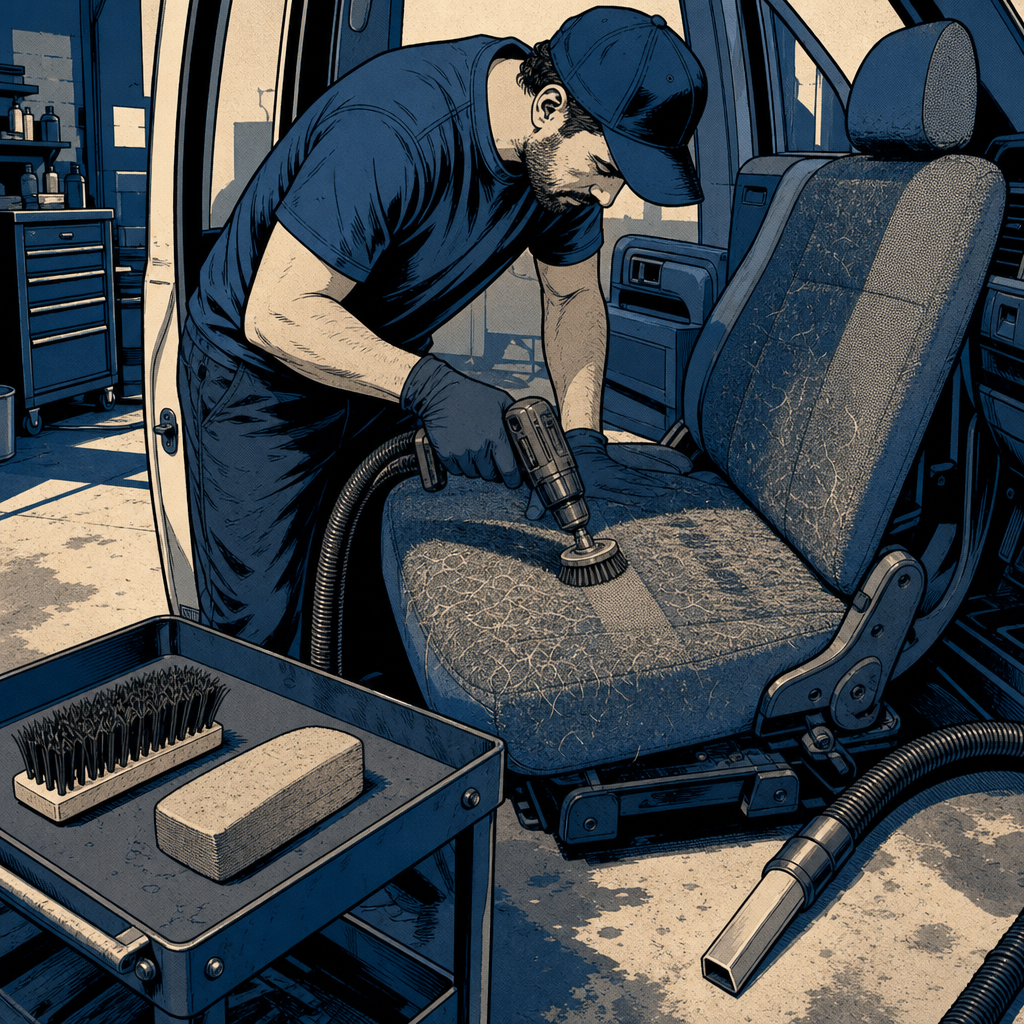
Vehicle interiors with extreme pet hair accumulation represent some of the most labor-intensive detailing challenges in the automotive service industry. When multiple large-breed dogs spend extended periods in a vehicle—particularly in work trucks used by pilot car drivers or field service technicians—the hair embeds itself into every fabric surface, creating layers that standard vacuuming cannot address. Professional detailers who tackle these jobs successfully rely on specific tool combinations and systematic approaches rather than single-solution methods. Understanding the proper sequence of operations and which tools address different hair embedding depths separates a mediocre result from a complete restoration.
Understanding Why Extreme Pet Hair Requires Specialized Approaches
Pet hair doesn’t simply rest on fabric surfaces—it weaves itself into the material structure through static electricity, mechanical agitation from movement, and moisture that causes fibers to swell and grip the hair. In vehicles where dogs travel regularly, this process repeats thousands of times, creating hair accumulation that penetrates deep into seat cushions, carpet backing, and even headliner materials. The hair also traps dirt, dander, oils, and moisture, creating compacted layers that traditional vacuum suction cannot dislodge.
Multiple-dog households or work vehicles that transport animals five to six days weekly accelerate this accumulation exponentially. The combination of different coat types—undercoat versus guard hairs—creates varying challenges within the same vehicle. Undercoat sheds in fine, dense mats that felt together, while guard hairs are stiffer and penetrate deeper into fabric weave. This requires detailers to adapt their approach section by section rather than applying one universal method.
The time investment for these jobs typically ranges from six to twelve hours depending on vehicle size and hair severity. Detailers who regularly accept these jobs implement “condition-based pricing” that accounts for the actual labor required rather than standard package rates. In the Australian market, jobs of this severity command $1,500 AUD or more, reflecting both the physical labor and specialized equipment requirements.
Essential Tool Kit for Extreme Pet Hair Removal
No single tool removes all pet hair effectively—successful detailing requires a complementary toolkit where each implement addresses specific hair types or embedding depths. The Lilly brush remains the industry standard for initial surface hair removal, using rubber bristles that create static attraction while the angled head reaches into seam lines. The brush works through mechanical agitation rather than suction, lifting hair from fabric without requiring power sources.
Pet hair removal stones, made from pumice-like synthetic materials, excel at mid-layer hair that the Lilly brush misses. The stone’s porous surface grabs hair through friction while being gentle enough not to damage most automotive fabrics. Detailers use circular motions with moderate pressure, allowing the stone to ball up the hair for easy collection. These stones work particularly well on carpet and floor mats where hair has partially embedded into the backing material.
Drill brushes fitted with stiff nylon or brass bristles agitate deeply embedded hair, breaking the static bond and mechanical grip that holds hair in place. Different bristle stiffnesses suit different materials—softer brushes for delicate seat fabrics, stiffer versions for heavy-duty floor carpets. The rotary action combined with vacuum extraction creates the most effective deep-cleaning combination, though operators must control pressure to avoid fabric damage.
Tornador air tools inject compressed air deep into fabric while simultaneously vacuuming, creating an oscillating effect that dislodges hair from depths that other tools cannot reach. The combination of air injection and extraction works especially well in areas where hair has compacted over time. However, tornadors require proper air pressure regulation—excessive pressure can damage foam backing or loosen fabric adhesives in older vehicles.
Manual tools including tweezers and razor blades become necessary for final detailing work, particularly around seatbelt anchors, seat tracks, and trim pieces where mechanical tools cannot reach. Razor blades scraped at shallow angles lift matted hair from tight spaces without scratching plastic or metal surfaces. This hand-finishing work often consumes 20-30% of total project time despite covering minimal surface area.


Step-by-Step Process for Complete Hair Extraction
Begin with a thorough dry vacuuming using a shop vacuum with strong suction and a wide nozzle attachment. This removes loose surface hair and debris, preventing it from redistributing during subsequent steps. Many detailers make the mistake of starting with chemical treatments or steam before removing loose material, which creates muddy residue that complicates the job.
Apply the Lilly brush systematically across all fabric surfaces using overlapping strokes in multiple directions. Work in two-foot square sections, collecting the balled-up hair with each pass before moving forward. Pay special attention to seat seams, bolster edges, and the junction between seat bottom and backrest where hair accumulates in concentrated bands. This initial pass typically removes 40-50% of visible hair in extreme cases.
Follow with the pet hair removal stone on the same sections, using firm circular motions. The stone captures mid-layer hair that the brush lifted but didn’t fully extract. Periodically clean the stone by rubbing it against itself or using a wire brush to remove collected hair from its porous surface. This step reveals the true extent of remaining embedded hair that requires power tool intervention.
Deploy drill brushes with vacuum extraction working in small sections with overlapping passes. Maintain consistent pressure and movement speed to avoid fabric burnishing or uneven cleaning patterns. For severely impacted areas, multiple passes with progressively stiffer brushes may be necessary. Monitor fabric temperature—excessive friction generates heat that can damage synthetic materials or loosen adhesive bonds in composite seat structures.
Apply appropriate cleaning chemicals and steam to loosen remaining hair and associated oils. Pre-treatment with diluted all-purpose cleaner or dedicated fabric pre-spray breaks down the oils and organic matter binding hair to fabric. Steam application causes fabric fibers to relax and release their grip on embedded hair while sanitizing the surface. Follow steam treatment immediately with drill brush agitation and extraction before materials cool and re-bond.
Use the tornador for final deep extraction, working systematically across all surfaces with particular focus on areas where previous steps revealed stubborn accumulation. The air pulsation reaches into foam backing and fabric base layers that surface tools cannot access. Empty the collection container frequently—clogs dramatically reduce effectiveness and can damage the tool.
Complete the job with hand tools for final detail work. Tweezers remove individual hairs from visible locations like dashboard vents, door panel stitching, and center console crevices. Razor blade work along seat tracks, under seat adjustment levers, and around seatbelt hardware addresses the last visible evidence of pet presence. This finishing work determines whether the result looks professionally detailed or merely “cleaned.”
Quick Reference Checklist for Pet Hair Detailing Jobs
- Initial dry vacuum with wide nozzle attachment to remove loose surface material
- Lilly brush application in overlapping two-foot sections across all fabric surfaces
- Pet hair removal stone treatment with circular motions on all carpeted areas
- Drill brush with vacuum extraction in systematic passes across seats and carpets
- Chemical pre-treatment application to break down oils and organic binding agents
- Steam application followed immediately by brush agitation while surfaces are hot
- Tornador deep extraction focused on previously stubborn accumulation areas
- Hand tool finishing with tweezers and razor blades for final detail work
- Final vacuum and inspection under multiple lighting angles to identify missed spots
- Protective treatment application to inhibit future hair embedding if requested
Pricing Strategies for Extreme Condition Vehicles
Standard package pricing fails for vehicles in extreme condition because the labor variance between a moderately dirty interior and a severely hair-impacted one can represent 8-10 additional hours of work. Detailers who maintain profitability on these jobs implement condition-based pricing that begins with in-person or photo-based assessment before quoting. Charging hourly rates for extreme conditions protects against underestimating job scope while remaining fair to clients.
The “fuck you price” mentioned in detailing communities refers to quoting high enough that you’re compensated if the client accepts, but you’re not disappointed if they decline. For extreme pet hair jobs, this typically means 150-200% of standard interior detail rates, translating to $800-1,500 USD depending on vehicle size and regional markets. Australian detailers report successful jobs in the $1,500 AUD range for work vehicles with multiple-dog buildup.
Interestingly, clients with vehicles in extreme condition often prove more appreciative and better tippers than those with minor cleaning needs. People dealing with overwhelming situations—whether due to work demands, health issues, or life circumstances—frequently recognize the value of restoration work and compensate accordingly. The detailers who approach these jobs without judgment and deliver thorough results build loyal client relationships that generate repeat business and referrals.
Setting clear expectations during quoting prevents disputes over final pricing. Provide time range estimates rather than fixed completion times, explain that some conditions may require additional steps discovered during work, and offer photo documentation at key stages for clients who want visibility into the process. This communication framework justifies premium pricing while building client confidence in your professionalism.
Preventing Repeat Extreme Buildup
Many detailers report that clients whose vehicles required extreme restoration return within 12 months in similar or worse condition. This pattern reflects the underlying circumstances that created the initial problem rather than client negligence. Work vehicles that transport dogs as part of business operations will continue accumulating hair, and clients dealing with multiple pets or demanding schedules struggle to maintain regular cleaning routines.
Offering maintenance detail packages at reduced rates encourages clients to schedule quarterly or semi-annual services before conditions become extreme. A vehicle detailed every three months never develops the deeply embedded accumulation that requires full restoration processes. This approach provides steadier revenue streams for detailers while saving clients money compared to annual extreme-condition detailing.
Recommend practical interim measures that clients can implement themselves: weekly vacuuming with pet-specific attachments, washable seat covers designed for dogs, and cargo area barriers that contain shedding to limited zones. While many clients won’t follow through consistently, those who implement even partial measures extend the interval between professional details and reduce the severity when service is needed.
For clients whose vehicles serve as mobile workspaces with unavoidable pet presence, suggest designating a “beater vehicle” specifically for animal transport while maintaining a separate vehicle for general use. This approach, mentioned by detailing professionals who deal with similar challenges, prevents the nice vehicle from deteriorating while accepting that the work vehicle will require regular intensive cleaning.

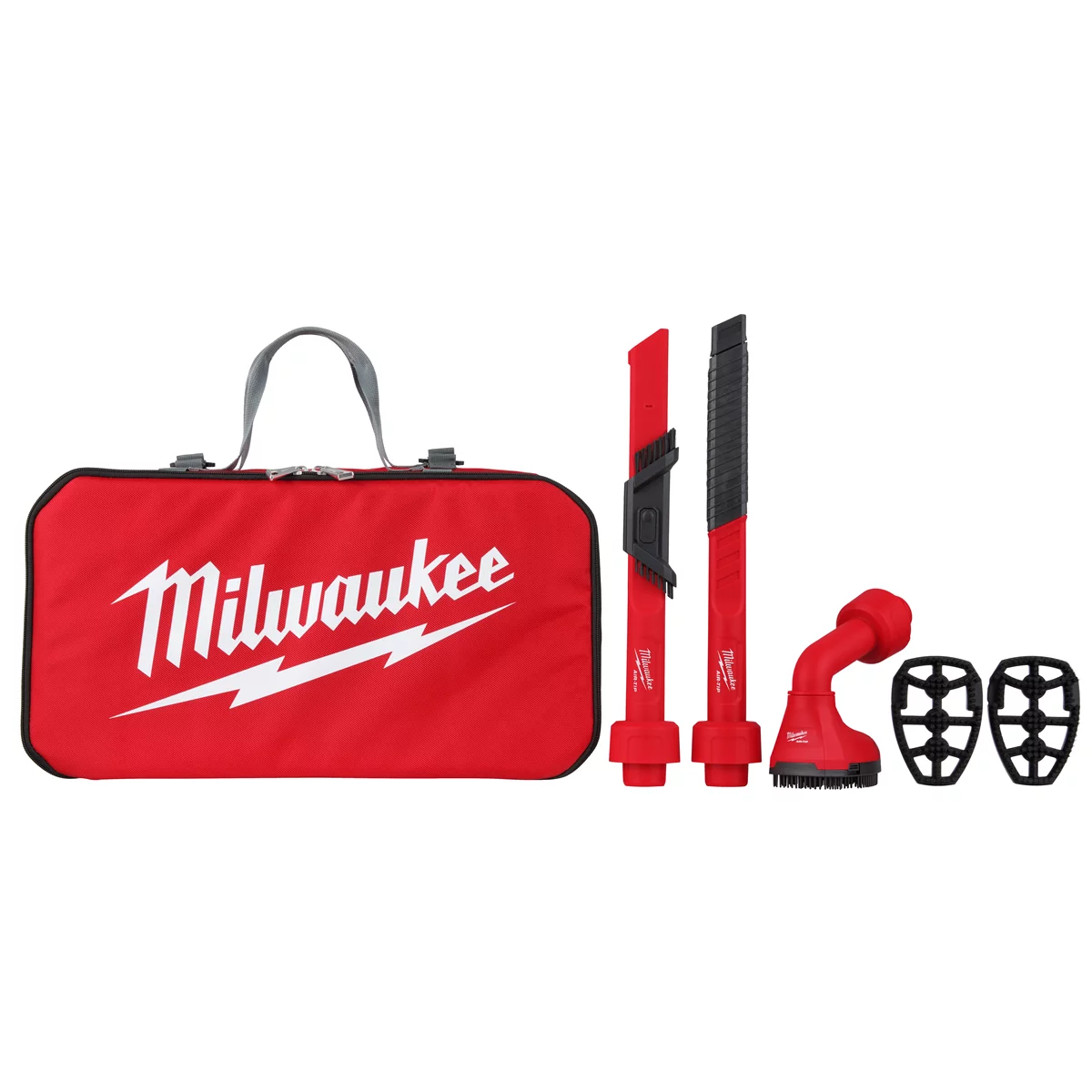
AIR-TIP(TM) 3-Piece Automotive Vacuum Tool Kit
Mfg: Milwaukee Electric Tools
Part #: 49-90-2019A
Frequently Asked Questions
What single tool works best for removing extreme pet hair from car interiors?
No single tool handles all pet hair effectively. Professional results require combining Lilly brushes for surface hair, pet hair removal stones for mid-layer extraction, drill brushes with vacuum for deep embedded hair, tornador air tools for final deep cleaning, and hand tools for detail work. Each tool addresses different hair embedding depths and fabric types.
How much should detailers charge for vehicles with extreme pet hair buildup?
Extreme pet hair jobs typically command 150-200% of standard interior detail rates, ranging from $800-1,500 USD depending on vehicle size and hair severity. Australian market rates run approximately $1,500 AUD for work vehicles with multiple-dog accumulation. Time-based or condition-based pricing works better than package rates for these jobs.
Why do some vehicles develop extreme pet hair accumulation while others don’t?
Vehicles that transport multiple large-breed dogs regularly—particularly work trucks used five to six days weekly—accumulate hair exponentially faster than occasional pet transport. The combination of different coat types, extended exposure time, and mechanical agitation from movement causes hair to embed deeply into fabric structures rather than remaining removable by standard vacuuming.
Can steam cleaning alone remove deeply embedded pet hair?
Steam loosens the oils and causes fabric fibers to relax, making hair removal easier, but it doesn’t extract hair by itself. Steam must be followed immediately by mechanical agitation with drill brushes and vacuum extraction while surfaces remain hot. Using steam without proper follow-up tools leaves most embedded hair in place.
How long does professional pet hair removal take for extreme cases?
Vehicles with severe multi-dog buildup typically require six to twelve hours of labor depending on vehicle size and hair penetration depth. The hand-finishing work alone often consumes 20-30% of total project time despite covering minimal surface area, as detailers address hair in seat tracks, trim crevices, and other areas mechanical tools cannot reach.
Do clients whose vehicles required extreme restoration usually maintain them better afterward?
Professional detailers report that many extreme-condition vehicles return within 12 months in similar or worse condition. This pattern typically reflects ongoing circumstances—work vehicles transporting dogs regularly, demanding schedules preventing regular maintenance—rather than client negligence. Offering quarterly maintenance packages helps prevent repeat extreme buildup while providing steadier revenue.
Tools for Pet Hair Detailing
Professional pet hair removal requires specialized equipment designed for deep extraction. Our Shop Equipment and Supplies selection includes the brushes, stones, and extraction tools that handle embedded hair across multiple fabric depths.
- Lilly brushes and pet hair removal stones for surface and mid-layer extraction
- Drill brushes with stiff nylon and brass bristles for deep agitation
- Vacuum accessories and tornador air tools for complete hair removal

The Toolsource Technical Team blends decades of real-world automotive service experience with up-to-date technical research. Our writers collaborate with professional mechanics, shop owners, and diagnostic specialists to deliver practical, workshop-ready guidance you can trust.


Follow us on social media