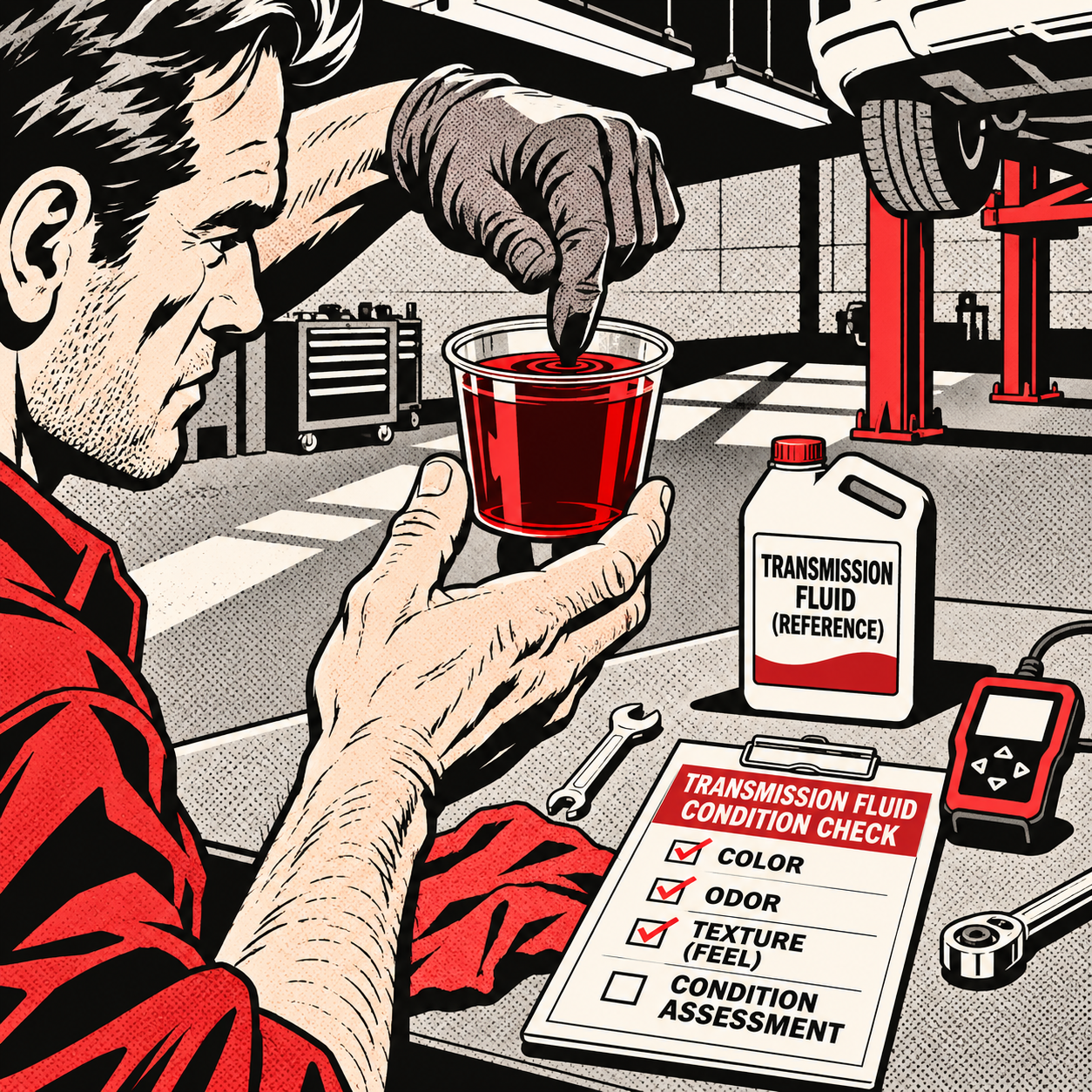
A quick glance at a dipstick or drain pan tells an experienced tech a lot, but transmission fluid color alone is an unreliable diagnostic if you don’t know what you’re looking at or how to confirm it. Customers and even other techs often misjudge fluid condition based on color photos alone, mixing up normal darkening with actual degradation, or missing contamination that color can’t fully reveal. This guide walks through a repeatable process for evaluating automatic transmission fluid (ATF) condition in the bay, covering what healthy fluid looks and smells like, how to catch fuel or coolant contamination, and how mileage and time factor into the change-or-keep decision.
What Healthy ATF Should Look and Smell Like
Fresh ATF is typically a clear red or pink color, depending on the fluid spec (Dexron, Mercon, CVT fluids, and some synthetics vary slightly). As fluid ages in service, heat and friction material cause it to darken progressively through amber, brown, and eventually black or near-black as additives deplete and fine clutch material suspends in it. There’s no single hard rule tying color to a specific mileage, because driving conditions, heat cycles, and towing load all accelerate the process differently. A fluid that’s still reddish at one year old with very low annual mileage is plausible and not automatically a red flag — but the same color on a vehicle with normal commuter miles over the same period is worth a second look, since it suggests the fluid may not have seen enough thermal cycling to show wear, or the sample was pulled from a low-use vehicle.
Smell is just as important as color and often gets skipped. Healthy ATF has a mild, slightly sweet petroleum smell. Burnt fluid smells distinctly scorched or like varnish — that’s a sign of clutch pack slippage or overheating, not just normal aging. Train yourself to smell every sample pulled, not just look at it under shop lighting, since lighting color temperature can shift how red or amber a fluid appears on camera or under LED work lights.
Step-by-Step Fluid Inspection Procedure
Use a consistent process so you’re comparing apples to apples across vehicles:
- Warm the vehicle to normal operating temperature before pulling a sample — cold fluid reads darker and thicker than it will at operating temp, which skews the visual check.
- Pull the sample from the dipstick, fill plug, or a drain into a clean, white or clear container. Dark pans and dirty rags make color judgment worthless.
- Check color against a known-fresh reference sample of the same fluid spec if you have one on hand — side-by-side comparison beats guessing from memory.
- Smell the sample directly from the container, not from vapor in the shop air.
- Rub a small amount between two fingers (nitrile gloves on) to feel for grit, metal fines, or a gummy/varnish texture.
- Note any unusual odor that suggests fuel, coolant, or water contamination (see below) before making a service recommendation.
Document the result with a photo and a written note in the work order — color descriptions alone (“looks dark”) are vague and don’t hold up if a customer questions the recommendation later.
===PRODUCT_SEARCH_1===


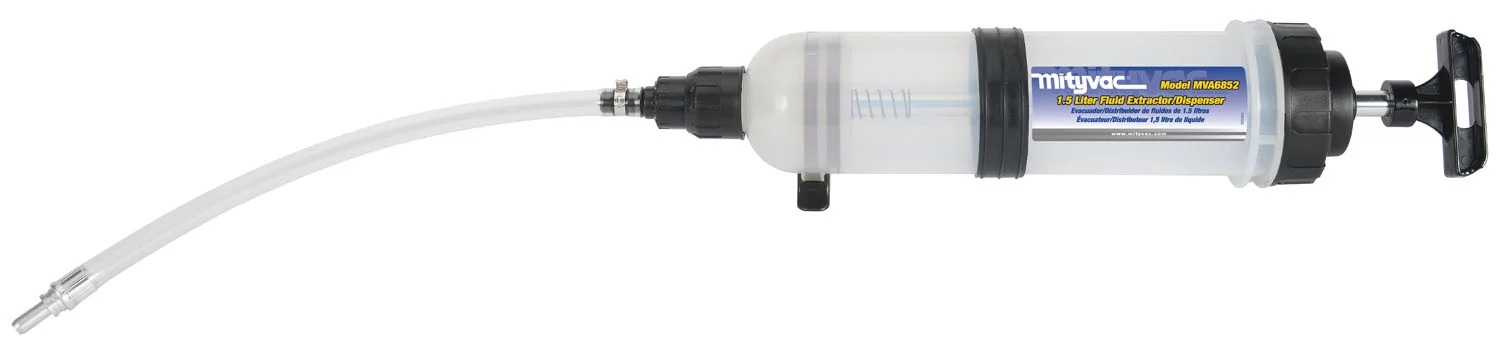
1.6-Gallon Manual Extractor and Discharge Pump
Mfg: John Dow Industries
Part #: JDI-150DE
Spotting Contamination: Fuel, Coolant, and Water
Color changes from normal wear are gradual and uniform. Contamination usually shows up differently and should be treated as a separate, more urgent issue than a routine fluid service:
- Fuel dilution: ATF that smells sharply of gasoline or diesel, feels unusually thin, or has a noticeably lighter, almost washed-out color despite high mileage may be diluted with fuel. This points to a failing vacuum modulator (on older hydraulic-controlled transmissions), a leaking injector, or in some cases a failed TCC solenoid allowing fuel vapor/liquid into the system on certain designs. This is not a “just change the fluid” fix — trace the source before returning the vehicle.
- Coolant/water contamination: A milky, pink, or strawberry-milkshake appearance usually indicates coolant intrusion through a failed transmission cooler inside the radiator. This fluid should never go back in the transmission — flush the cooler lines and radiator tank thoroughly, verify no further coolant transfer, and replace the cooler or radiator as needed before refilling.
- Metal content: Fine metallic glitter or visible flakes, especially combined with a burnt smell, point to internal clutch or bearing wear rather than simple fluid aging. A fluid change won’t resolve the root cause here — flag for a more complete transmission inspection.
Any of these findings should shift the conversation with the customer from “fluid service” to “diagnostic needed,” since swapping fluid without addressing the source just delays a bigger failure.
Mileage and Time-Based Change Guidelines
In the absence of a contamination issue, most techs work from a baseline of roughly every 30,000–60,000 miles or 2–3 years for conventional ATF under normal use, though severe-duty vehicles (towing, stop-and-go, high heat) warrant shorter intervals — some shops recommend checking annually or every 10,000 miles on vehicles used hard, even if the OEM interval is longer. Always check the specific vehicle’s severe-service schedule rather than defaulting to a single number across makes, since interval specs vary widely between manufacturers and fluid types (lifetime-fill CVT and dual-clutch fluids in particular have their own, often shorter, real-world recommendations despite “lifetime” marketing).
Color and smell checks are a good interim gauge between scheduled services, especially on vehicles with unknown maintenance history. A fluid that still looks and smells close to fresh at the interval mark on a low-mileage vehicle can reasonably be extended with a documented recheck; one that’s dark or burnt well before the interval should be changed early regardless of what the mileage sticker says.
Communicating Findings to the Customer
Photos help, but context matters more than the photo alone. A single image of fluid in a cup, without a reference sample, mileage, and vehicle age noted alongside it, is close to meaningless — this is a common mistake in online “is this fluid bad” threads where color alone drives wildly different guesses. When presenting findings to a customer, pair the visual with the smell/texture observations, the vehicle’s mileage and last known service date, and a clear recommendation (service now, monitor, or diagnose further). This keeps the conversation grounded in evidence rather than a subjective color call.
Quick Inspection Checklist
- Sample pulled at operating temperature, in a clean clear container
- Color compared against a fresh reference sample of the correct spec
- Smell checked directly — sweet/mild normal vs. burnt/varnish vs. fuel odor
- Texture checked for grit, metal fines, or gumminess
- Milky or pink/strawberry appearance ruled out (coolant intrusion)
- Mileage and last service date logged against OEM interval
- Findings documented with photo + written notes before quoting service
===PRODUCT_SEARCH_2===


FAQs
Can transmission fluid still be good if it looks dark?
Not necessarily bad, but color alone isn’t conclusive. Check smell and texture too — dark fluid that still smells mild and feels smooth may just reflect normal aging within a reasonable service window, while dark fluid with a burnt smell signals real degradation.
Is red transmission fluid always a sign it’s fresh or recently changed?
Usually, but not always — some fluids are formulated with a red or pink dye and resist darkening longer than others, and a low-mileage, low-use vehicle may retain color much longer than a daily driver. Pair the color observation with mileage and smell before concluding it’s recently serviced.
How do I tell transmission fluid apart from fuel-diluted fluid just by smell?
Fuel-contaminated ATF smells sharply of gasoline or diesel rather than the mild petroleum smell of normal fluid, and it typically feels thinner and runs off your fingers faster than fluid at the correct viscosity.
What does it mean if transmission fluid looks milky or pink like a milkshake?
That almost always indicates coolant has entered the transmission through a failed internal cooler in the radiator. Treat this as an urgent repair, not a routine fluid change — the transmission needs to be flushed and the cooling system fault repaired.
Should I go strictly by mileage or by fluid condition when deciding on a change?
Use both. Mileage and OEM severe-service intervals set the baseline, but a visual/smell/texture check at or before that interval tells you whether the vehicle’s actual use justifies changing early or allows a documented extension.
Does a one-year-old vehicle with low mileage need its transmission fluid checked?
It’s worth a quick look, especially if the vehicle sees mixed conditions. Low annual mileage can keep fluid looking closer to fresh for longer, but it’s not a substitute for checking against the manufacturer’s time-based interval, since some fluids degrade with time and heat cycles even without high mileage.
Shop Transmission Service Tools
Proper fluid inspection and service require reliable equipment. Browse our transmission tools and specialty equipment to find everything you need for clean, efficient fluid checks and changes.
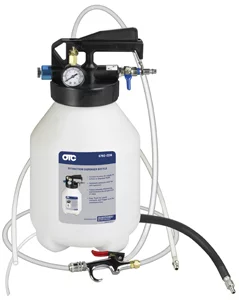
- Fluid extractors and transfer pumps for controlled, mess-free service
- Drain pans and catch containers in multiple sizes
- Specialty gauges and diagnostic tools for accurate condition checks

The Toolsource Technical Team blends decades of real-world automotive service experience with up-to-date technical research. Our writers collaborate with professional mechanics, shop owners, and diagnostic specialists to deliver practical, workshop-ready guidance you can trust.


Follow us on social media