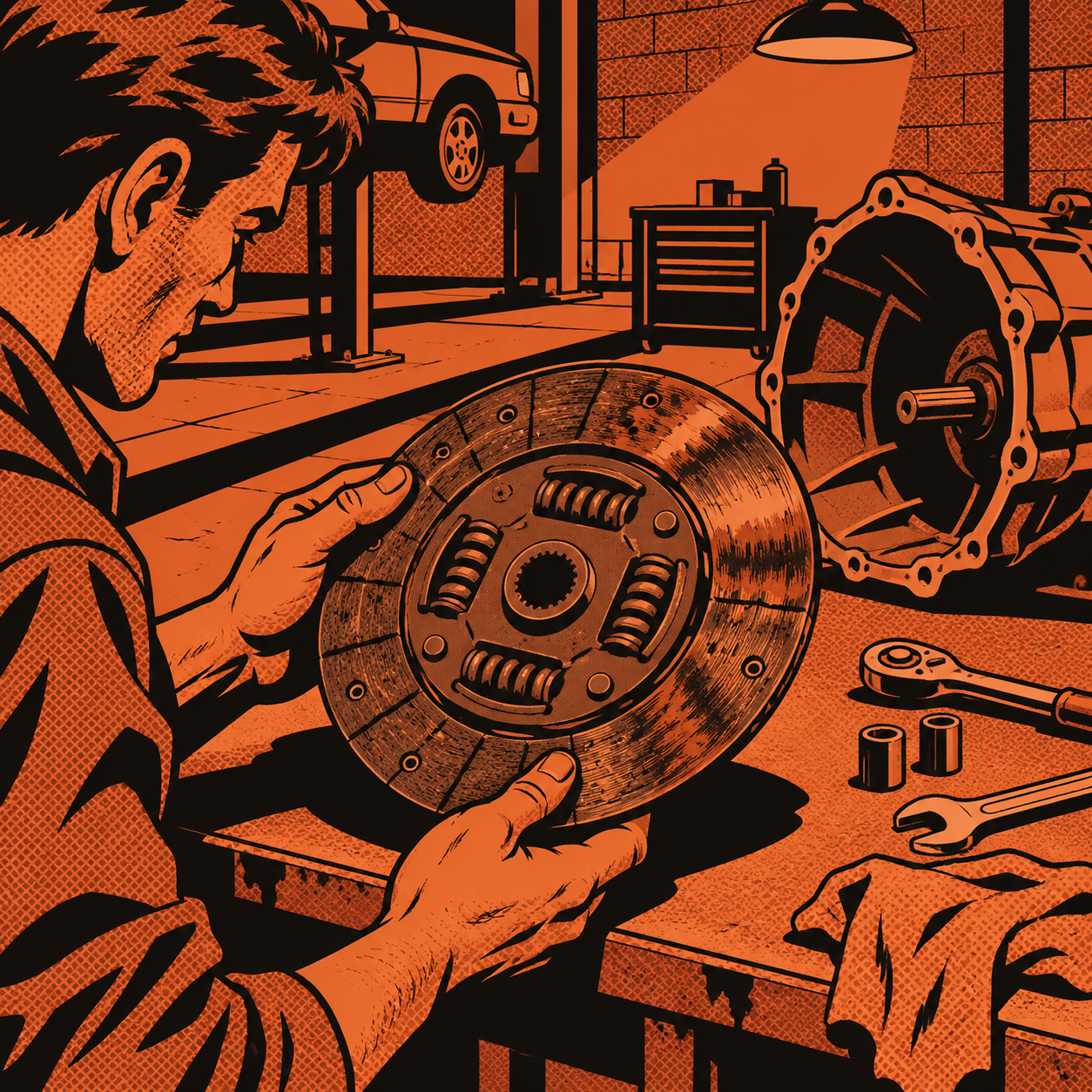
Every shop has heard some version of the manual-vs-automatic-vs-CVT argument, usually from a customer defending their own choice. The internet treats it as a personality test, but on the lift it’s a diagnostic question: different drivetrains fail in different ways depending on how and where the car is driven. A manual that’s “accordioned” through stop-and-go traffic wears differently than one driven aggressively on backroads. A CVT that never leaves city driving develops different symptoms than one that spends its life on the highway. Understanding those patterns lets you diagnose faster, set accurate service intervals, and give customers maintenance advice that actually matches their commute — not a generic schedule pulled from the owner’s manual.
Clutch Wear From Stop-and-Go Driving: What to Look For
A lot of manual-transmission owners swear that heavy traffic isn’t actually hard on a clutch if you drive it right — easing off the clutch pedal just enough to “crawl” with the flow of traffic instead of constantly disengaging and re-engaging. That technique reduces shift cycles, but it increases the time the clutch disc spends partially engaged, which is exactly the condition that generates heat and accelerates friction material wear. When you get one of these cars in the bay, don’t assume low mileage means low clutch wear — ask about commute conditions first.
- Inspect the friction disc for glazing or uneven wear patterns, which point to prolonged slipping rather than clean engagement/disengagement cycles.
- Check the release bearing and pilot bearing for noise under partial clutch engagement, since “crawling” technique puts sustained load on both.
- Look at flywheel surface temper marks (bluing) as a sign of chronic heat exposure from slow urban commuting rather than hard launches.
- Test hydraulic clutch systems for pedal creep — slave and master cylinder wear shows up faster in cars driven with extended partial-engagement habits.
- Ask about driving style directly. A customer who commutes in heavy traffic using engine braking and gradual clutch release has a very different wear profile than one who daily-drives backroads.
CVT Reliability: Separating Design Limitations From Neglect
CVTs get criticized across nearly every corner of the car community, and while some of that reputation is earned, a lot of CVT failures diagnosed in shops trace back to missed fluid service rather than a fundamental design flaw. CVTs rely on steel belt or chain tension against variable-diameter pulleys, and that system is far less tolerant of degraded fluid than a traditional planetary automatic. Where a conventional automatic might limp along past its service interval, a neglected CVT tends to fail outright — shuddering, slipping, or triggering a limp-home mode.
For small-displacement engines, CVTs are often the better engineering choice over a cheap 4- or 5-speed automatic, since they keep the engine in an efficient RPM band without hunting for gears. But that efficiency advantage disappears fast if the fluid isn’t serviced on schedule, especially in vehicles that spend most of their life in stop-and-go city driving where the transmission cycles through ratio changes constantly and generates more heat than steady highway cruising.
- Follow the CVT-specific fluid interval, not the generic automatic transmission interval — CVT fluid degrades faster under heat cycling.
- Pull codes for ratio control and belt/chain slip faults before condemning a “shuddering” complaint as a belt failure; a fluid or TCM software issue can mimic mechanical wear.
- Check for OEM-specific CVT fluid requirements — using a generic ATF substitute is a common root cause of premature belt and pulley wear.
- For high-mileage city-driven CVTs, inspect for pulley surface scoring during any teardown, since repeated heat cycling accelerates surface wear faster than mileage alone suggests.

VW/Audi CVT Drive Line Filler Adapter
Mfg: Assenmacher Specialty Tools
Part #: ATF17CVT
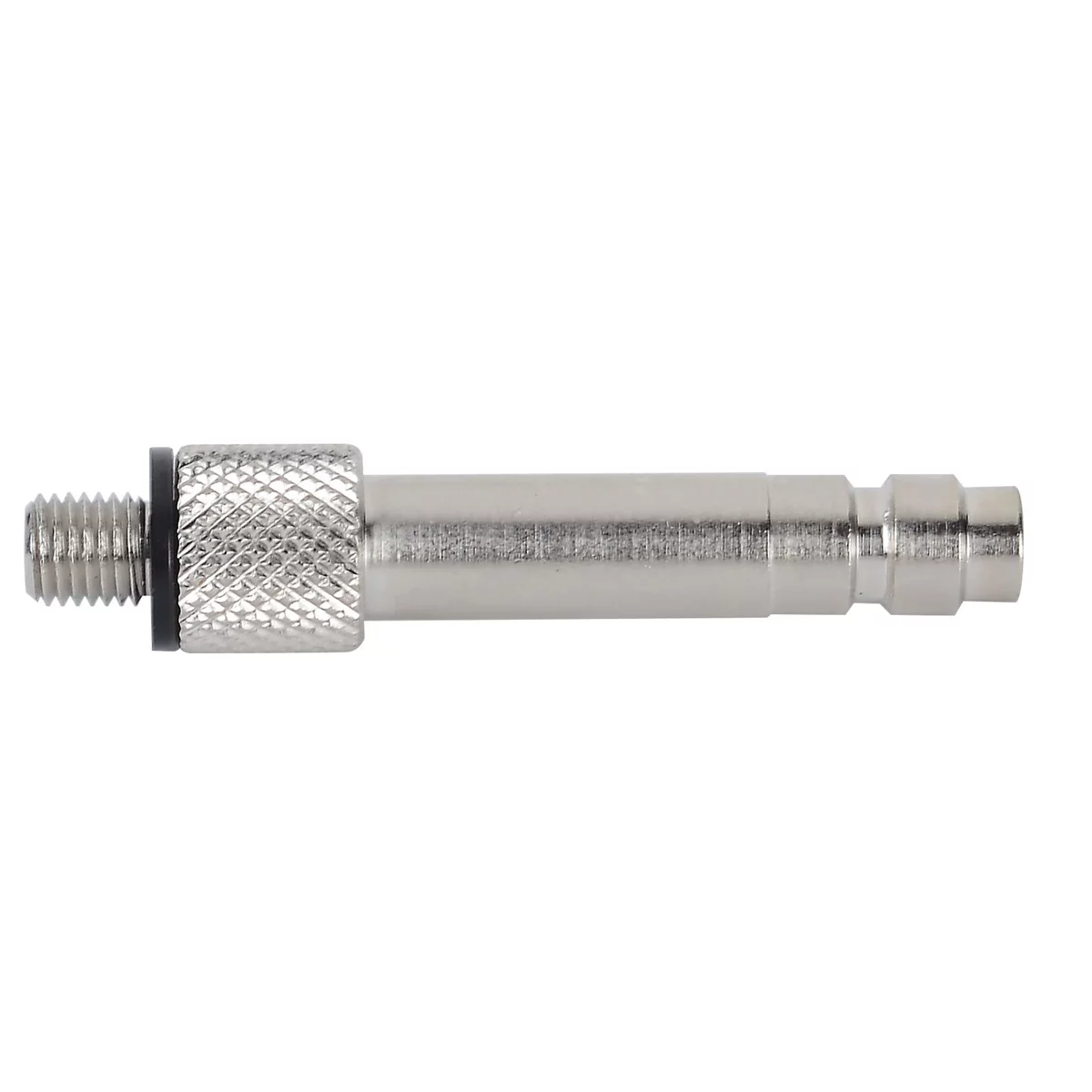

Nissan Transmission Filling Adapter - Flexible ATF Tool
Mfg: Assenmacher Specialty Tools
Part #: ATF125NIS
Adaptive Cruise and Radar Systems: Calibration After Front-End Work
Adaptive cruise control has become a non-negotiable feature for a lot of daily drivers, especially those doing long highway commutes in heavy traffic. That popularity means more radar- and camera-based ADAS components are showing up in bays that previously only serviced engines and transmissions. Any front bumper, windshield, or radar bracket work — even a simple bumper cover replacement after a minor fender-bender — can throw the system out of calibration even when the radar unit itself tests fine electrically.
- Always check for static or dynamic calibration requirements after any front fascia, windshield, or radar mount service, per OEM procedure.
- Verify ride height is within spec before calibration — radar aim angle is height-sensitive, and worn suspension components can cause calibration to fail repeatedly.
- Scan for ADAS-specific fault codes separately from powertrain codes; many shops miss radar misalignment codes because they’re stored in a different module than the one typically scanned.
- Confirm the customer understands adaptive cruise is a driver-assist feature, not autonomous driving — this matters for liability conversations as much as for diagnostics.
Reading Driving Style Into the Service Ticket
The clearest signal for predicting drivetrain wear isn’t the car — it’s the commute. Customers who describe quiet, low-traffic roads tend to show less clutch and CVT stress regardless of mileage. Customers who describe heavy urban gridlock, especially if they mention “creeping” or riding the clutch to avoid full stops, are candidates for earlier clutch and transmission inspection intervals. Building a quick set of intake questions into your write-up process pays off in diagnostic accuracy.
- Ask about typical commute: highway, city stop-and-go, or rural backroads.
- Ask whether the driver uses engine braking regularly, which affects both clutch wear (manuals) and brake pad life (all drivetrains).
- Note multi-vehicle households — customers who split mileage across several cars often have lower per-vehicle wear but may defer maintenance longer since symptoms develop more slowly.
Matching Maintenance Intervals to Drivetrain Type
Generic maintenance schedules are a starting point, not a final answer. Manuals driven primarily in heavy traffic warrant earlier clutch hydraulic inspections. CVTs in city-commuter vehicles warrant tighter fluid service intervals than the same transmission in a highway-mile-heavy vehicle. Conventional automatics are more forgiving of mixed conditions but still benefit from fluid and filter service tied to heat cycling rather than mileage alone in extreme stop-and-go use.
Quick Shop Checklist: Drivetrain Wear by Driving Style
- Manual + heavy traffic commute → inspect clutch disc, release bearing, and hydraulic system at shorter intervals; check for glazing and pedal creep.
- CVT + city/stop-and-go commute → verify fluid service interval compliance; scan for ratio/slip codes before mechanical teardown.
- Any vehicle with adaptive cruise + recent front-end work → confirm ADAS calibration status and ride height before clearing the ticket.
- Multi-vehicle household → ask which car gets the highway miles vs. city miles; don’t assume uniform wear across the fleet.
- Any drivetrain + customer-described “creeping” technique in traffic → flag for earlier clutch or CVT inspection regardless of odometer reading.
Shops that stock the right diagnostic and service tools for clutch hydraulics, CVT fluid service, and ADAS calibration catch these wear patterns earlier and spend less time chasing ambiguous shudder or slip complaints.


FAQs
Does driving a manual in heavy traffic actually damage the clutch faster?
It depends on technique. Full disengagement at every stop causes more cycles but less heat; partial “crawling” engagement reduces cycles but increases friction material heat exposure. Both approaches show up differently on inspection — glazing versus general wear.
Is CVT fluid really different from regular automatic transmission fluid?
Yes. Most CVTs require a fluid formulated specifically for belt/pulley friction characteristics. Using a generic ATF substitute is a common cause of premature slip and wear complaints.
Why would adaptive cruise control need calibration after a bumper repair?
The radar unit’s physical aim angle is critical to accurate distance sensing. Even a cosmetically correct bumper reinstall can shift the radar’s angle enough to require static or dynamic recalibration per OEM procedure.
Can a CVT be reliable in stop-and-go city driving?
Yes, if fluid service intervals are followed closely. CVTs are efficient for small engines but are less tolerant of extended fluid neglect than conventional automatics, especially under frequent heat cycling.
Should I recommend different clutch inspection intervals based on commute type?
Yes. A customer with a daily heavy-traffic commute benefits from earlier hydraulic clutch and friction disc checks than one with a mostly highway or rural commute, even at similar mileage.
What’s the most overlooked cause of CVT shudder complaints?
Degraded or incorrect fluid, followed by software-related ratio control faults. Mechanical belt/pulley wear should be checked after ruling out fluid and calibration issues, not before.
Recommended Tools for Drivetrain Inspection & Service
Diagnosing wear patterns across manual, CVT, and automatic transmissions requires hands-on inspection and proper fluid service techniques. The right tools make the difference between accurate diagnostics and costly guesswork — especially when checking clutch hydraulics, CVT fluid conditions, and front-end components tied to ADAS calibration. Stock the appropriate Drive Train – Transmission Tools to support the inspection and service strategies covered in this article.
- Clutch hydraulic testers and bleeding kits for diagnosing pedal creep and system wear.
- CVT fluid sampling and service equipment to verify proper fluid condition and temperature control.
- ADAS and suspension diagnostic tools to support front-end work and calibration verification.

The Toolsource Technical Team blends decades of real-world automotive service experience with up-to-date technical research. Our writers collaborate with professional mechanics, shop owners, and diagnostic specialists to deliver practical, workshop-ready guidance you can trust.


Follow us on social media