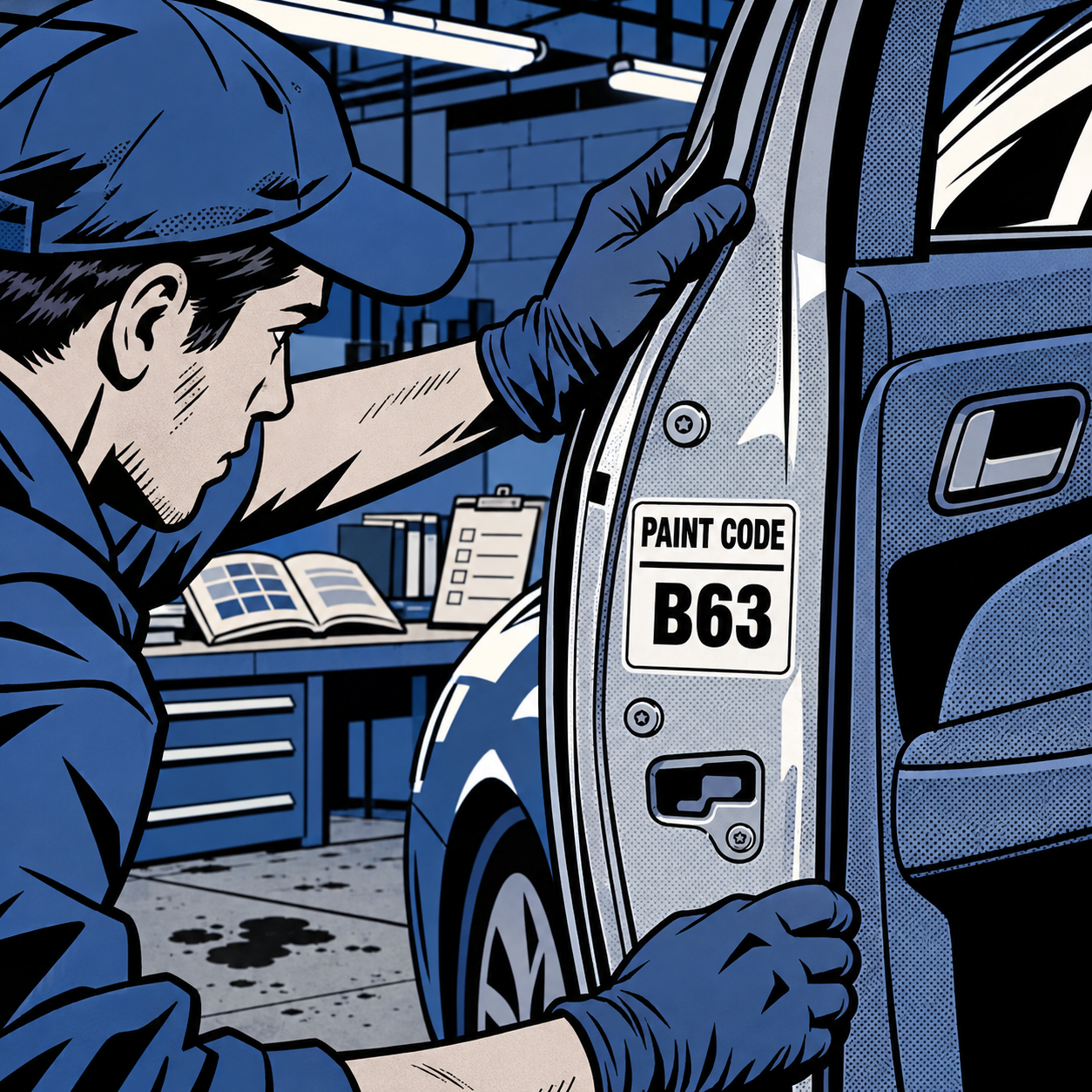
Every shop eventually gets the car that stops the conversation — an unusual color nobody on the floor can name, a clear coat that’s gone chalky in the sun, and a customer who wants it brought back without a repaint. Before any buffer touches the panel, the job starts with paperwork: finding the real factory code, confirming it against cross-reference data, and reading the clear coat correctly so you don’t burn through it chasing a shine. The steps below are the same ones experienced detailers and painters use when a color isn’t in the shop’s usual rotation.
Find the Factory Paint Code First
Don’t eyeball a match, even on a color you think you recognize. Manufacturers reuse similar-looking hues under different names and formulas across model years, and lighting shifts a color’s appearance enough to fool a trained eye. Start with the official sources:
- Door jamb sticker (driver’s side, most common location on modern vehicles)
- Trunk floor or spare tire well sticker — common on European makes
- Glovebox or engine bay VIN/paint plate
- Owner’s manual, which often lists the paint code and name printed together
Write down everything on the sticker, not just what looks like the paint code — trim codes and interior codes sit right next to it and are easy to confuse. If the sticker is gone or illegible, the VIN can usually be decoded through the manufacturer or a paint supplier’s lookup service to pull the original build sheet.
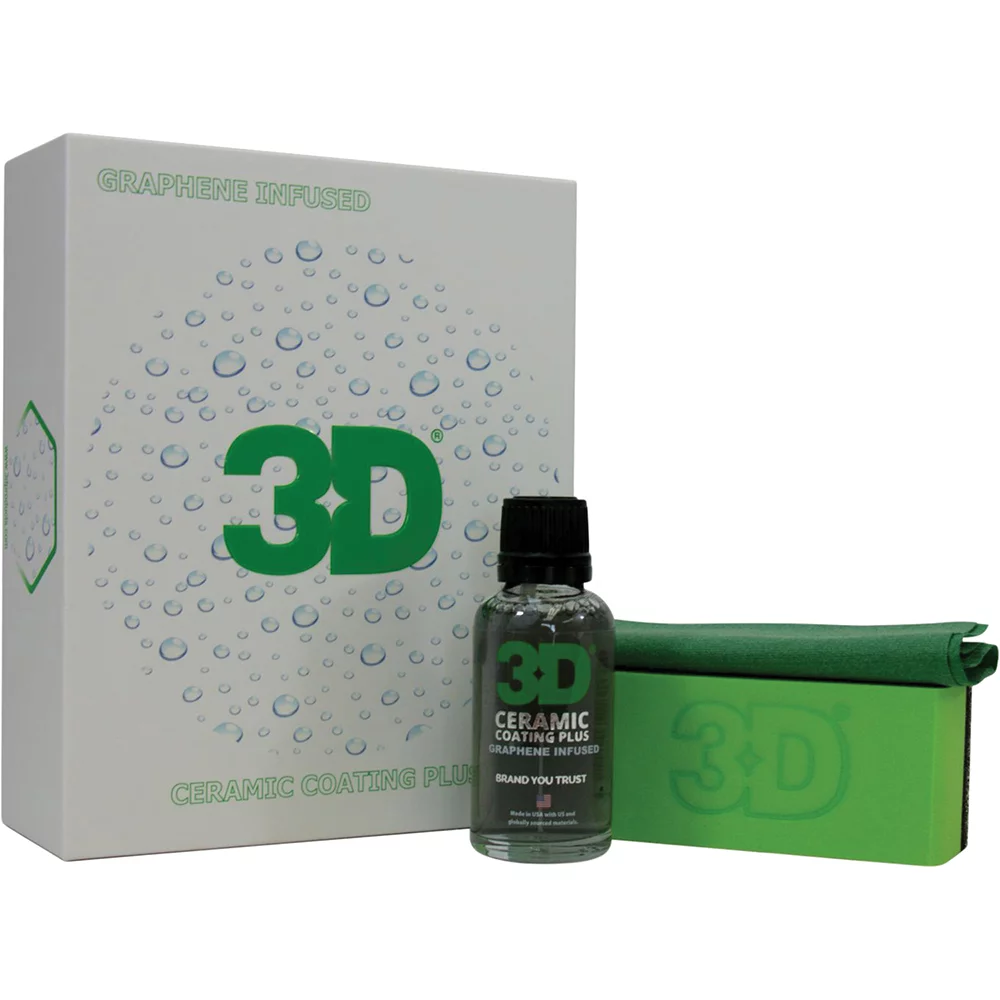
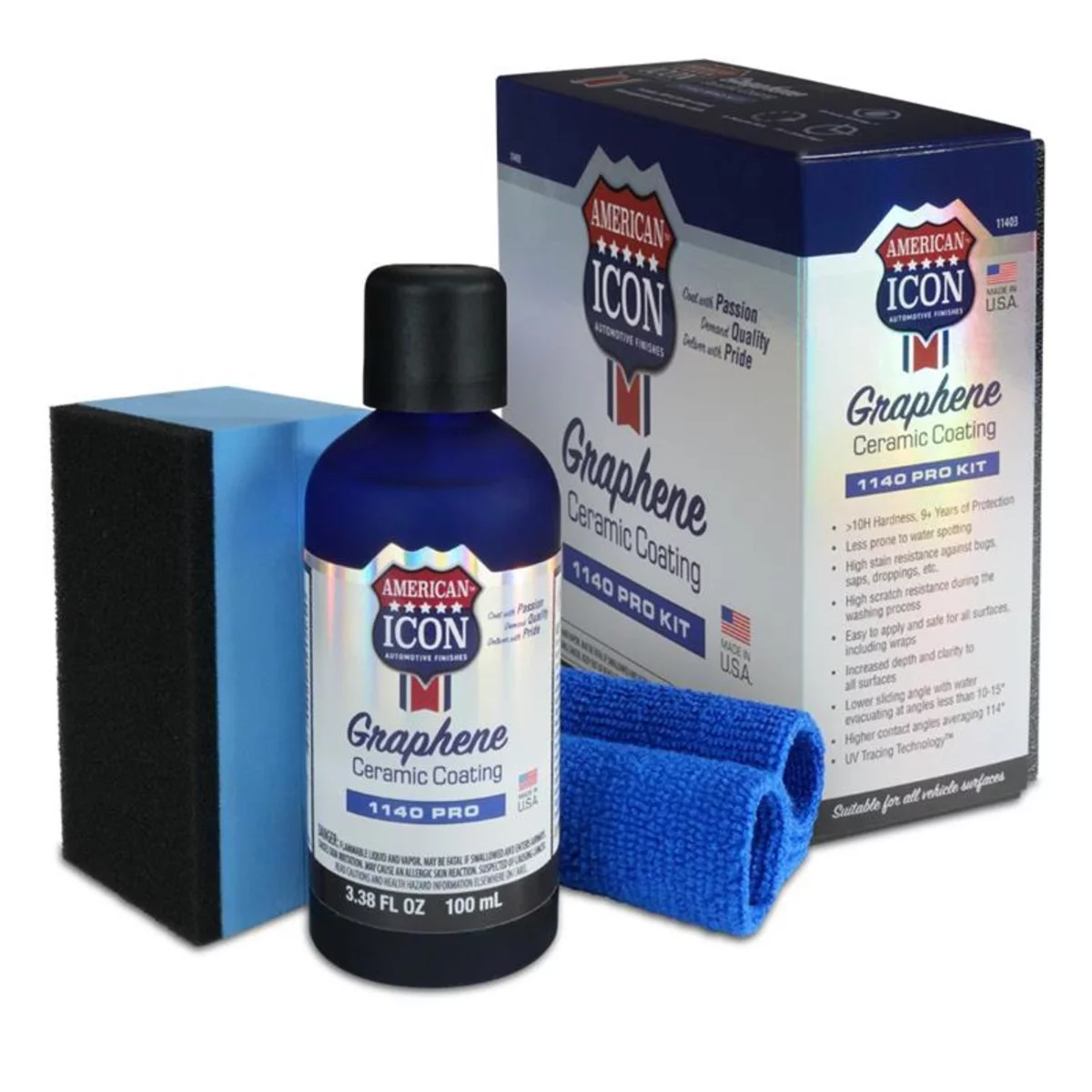
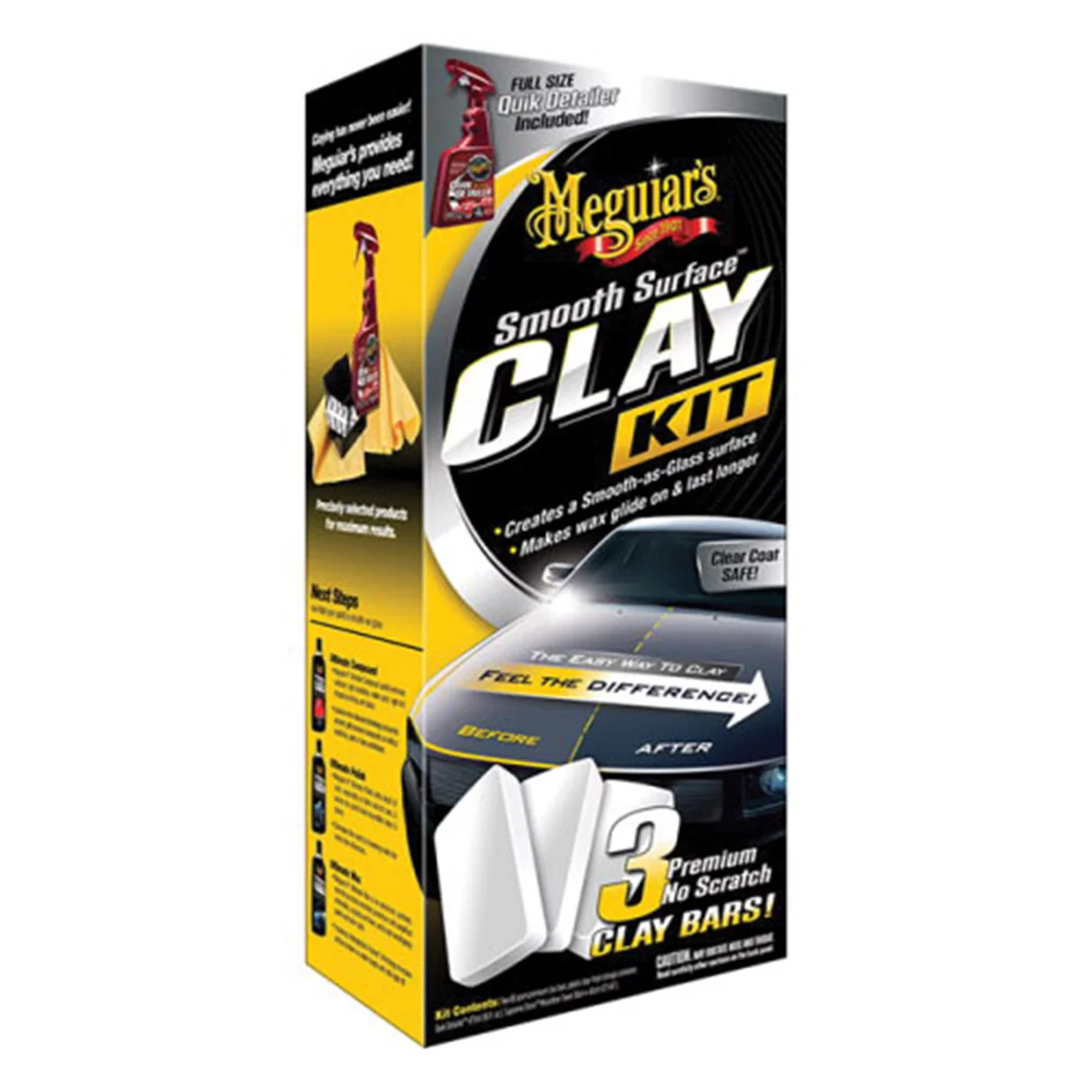
Smooth Surface G191700 Clay Kit, 60 g Clay Bar, 16 oz Quik Detai
Mfg: Meguiars
Part #: G191700
Cross-Reference the Code Across Databases
A factory code only gets you so far if the color was low-production, regional, or has since been discontinued. This is where a lot of techs get stuck matching by eye instead of by data. Treat it like parts sourcing, not guesswork:
- Run the manufacturer code through your paint supplier’s formula database (PPG, Sherwin-Williams/Finish Master, etc.) — most rare colors still have a cross-reference entry even if they’re not stocked pre-mixed.
- Check for regional naming differences. The same base formula is sometimes sold under a different name and code in another market — European- or Australian-market vehicles in particular often carry codes that don’t show up in a North American lookup.
- If the digital database comes up empty, call the paint jobber directly. Many have access to archived formula books that aren’t digitized.
- Pull a small sample from a low-visibility panel (inside a door jamb, under a trim piece) if you need to spectrophotometer-match a formula from scratch.
Document the confirmed code and cross-reference number in the work order. If this color comes back in six months on a second vehicle, you don’t want to redo this research.
Paint & Body Supplies for the Job
Once you’ve confirmed the factory code and cross-referenced the formula, you’ll need the right supplies on hand. Stock your shop with quality Paint & Body supplies for mixing rare formulas, buffing, and protecting that finish.
- Base coats and clear coat materials for formula mixing
- Buffers, pads, and polishing compounds for finish work
- Primers and protective products for color preservation

The Toolsource Technical Team blends decades of real-world automotive service experience with up-to-date technical research. Our writers collaborate with professional mechanics, shop owners, and diagnostic specialists to deliver practical, workshop-ready guidance you can trust.


Follow us on social media