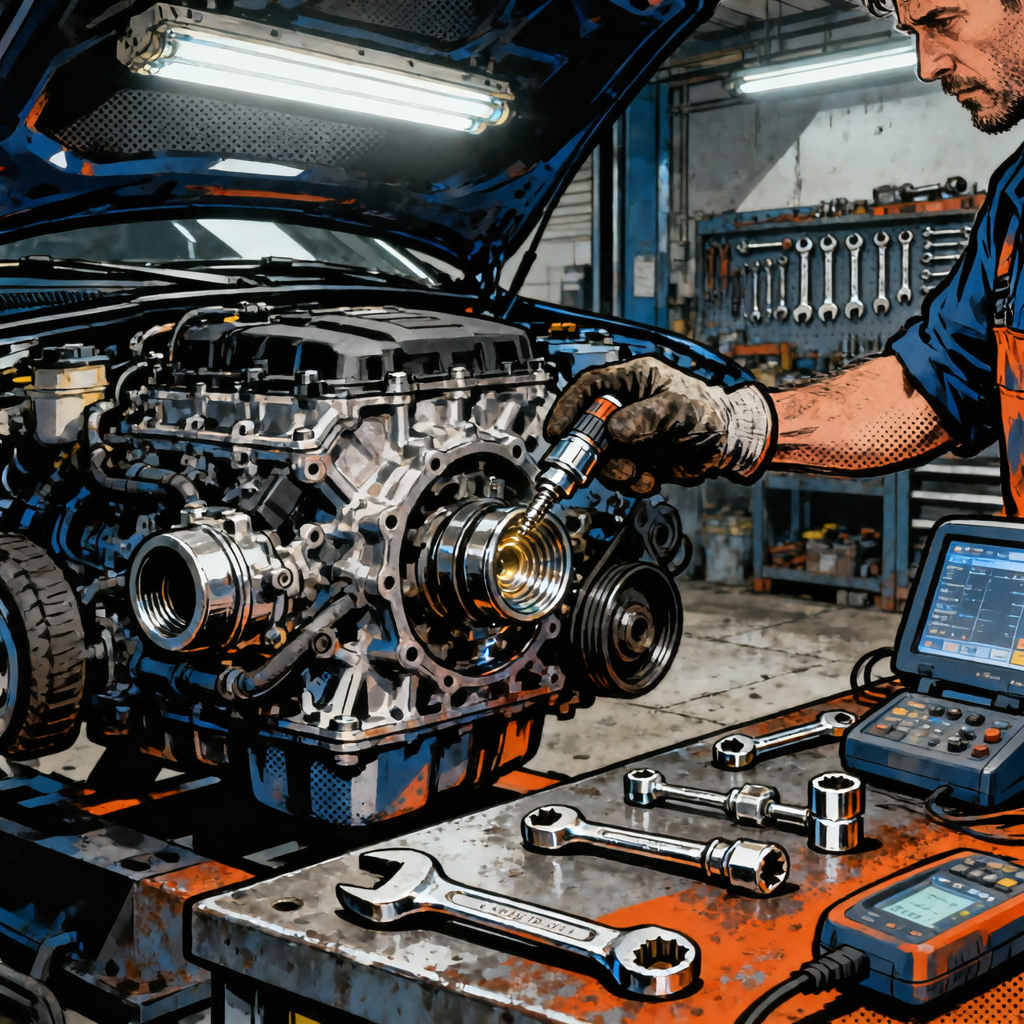
When your oil pressure warning light comes on, you face sticker shock at the dealership—quotes range from $300 to $2,500+. The sensor itself costs $11–$30, but labor and accessibility vary wildly. This guide reveals real costs, shows you DIY replacement when feasible, and helps you spot overcharging.
Oil Pressure Sensor Replacement Cost: Dealer vs DIY
Why dealership quotes exceed $2,500
Quotes over $2,500 are usually inflated. Some vehicles (like the Hyundai Genesis 3.8L V6) genuinely require intake manifold removal, but most don’t. Common tricks include wrong job codes or quoting labor for unrelated work like oil pan removal. Anything over $1,500 deserves verification: ask for detailed breakdown of parts removed and labor hours, then cross-check against YouTube mechanics doing the actual work.
Parts cost: $11-$30 sensors, $50-$100 tools
OEM sensors cost $25–$60; quality aftermarket sensors run $11–$30. The hidden expense is tools. Standard sockets round off the soft brass/aluminum hex—you need a thin-wall sensor socket ($15–$40 in the right size: 1-1/16″, 24mm, or 27mm). Add extensions, universal joint, and thread sealant: expect $50–$100 total for a complete kit.
Labor time: Reality vs dealer claims
Factory manuals show 0.5–1.5 hours on easy cars (Silverados, F-150s, Accords). Even with paperwork, that’s 2 billable hours at $100–$150/hr = $250–$300 total. Difficult access (Audis, BMWs) legitimately needs 3–4 hours. But 8, 10, or 14 hours means wrong job code or dishonesty. Request the labor code and verify independently.
| Option | Parts | Labor | Total | Time |
|---|---|---|---|---|
| DIY (Easy) | $15–$30 | $0 | $15–$30 | 30–60 min |
| Independent (Standard) | $30–$50 | $150–$300 | $180–$350 | 1–2 hr |
| Independent (Difficult) | $30–$50 | $400–$650 | $430–$700 | 3–4 hr |
| Dealer (Honest) | $50–$80 | $300–$800 | $350–$880 | 2–5 hr |
| Dealer (Inflated) | $50–$80 | $1,500–$2,500+ | $1,550–$2,580+ | 8–14 hr claimed |
Diagnose Before You Replace
Quick diagnosis saves hundreds
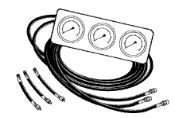
Check oil level first with cold dipstick. If low, top it off and retest. For real confirmation, install a mechanical oil pressure gauge ($30–$60) into the sensor port. Normal: 10–20 PSI idle, 30–60 PSI at 2,000 RPM. If the gauge reads normal but your warning light stays on, the sensor is bad. If it reads low too, you have a real engine problem requiring professional diagnosis.
Post-oil-change warnings?
Before replacing the sensor, inspect the recent oil change. Common mistakes: old filter gasket sticking to engine (creating double seal and leak), center core left in cartridge filters (blocking flow), or filter installed too tight/loose. Any of these triggers low-pressure warnings. Fix the installation error first—sensor replacement may be unnecessary.
Warning light alone isn’t urgent
If oil level is normal, filter install is correct, and the engine runs smoothly, a warning light might just be a dead sensor (corroded contacts, failed switch). Use the mechanical gauge to confirm good pressure, then fix it whenever suits your schedule. Emergency rates aren’t needed.
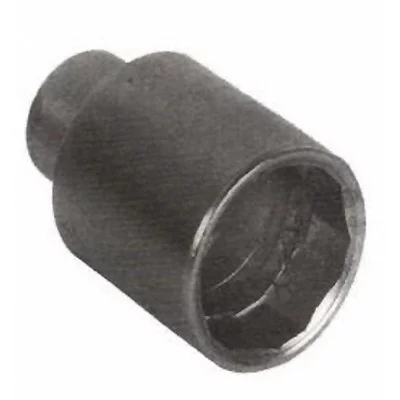
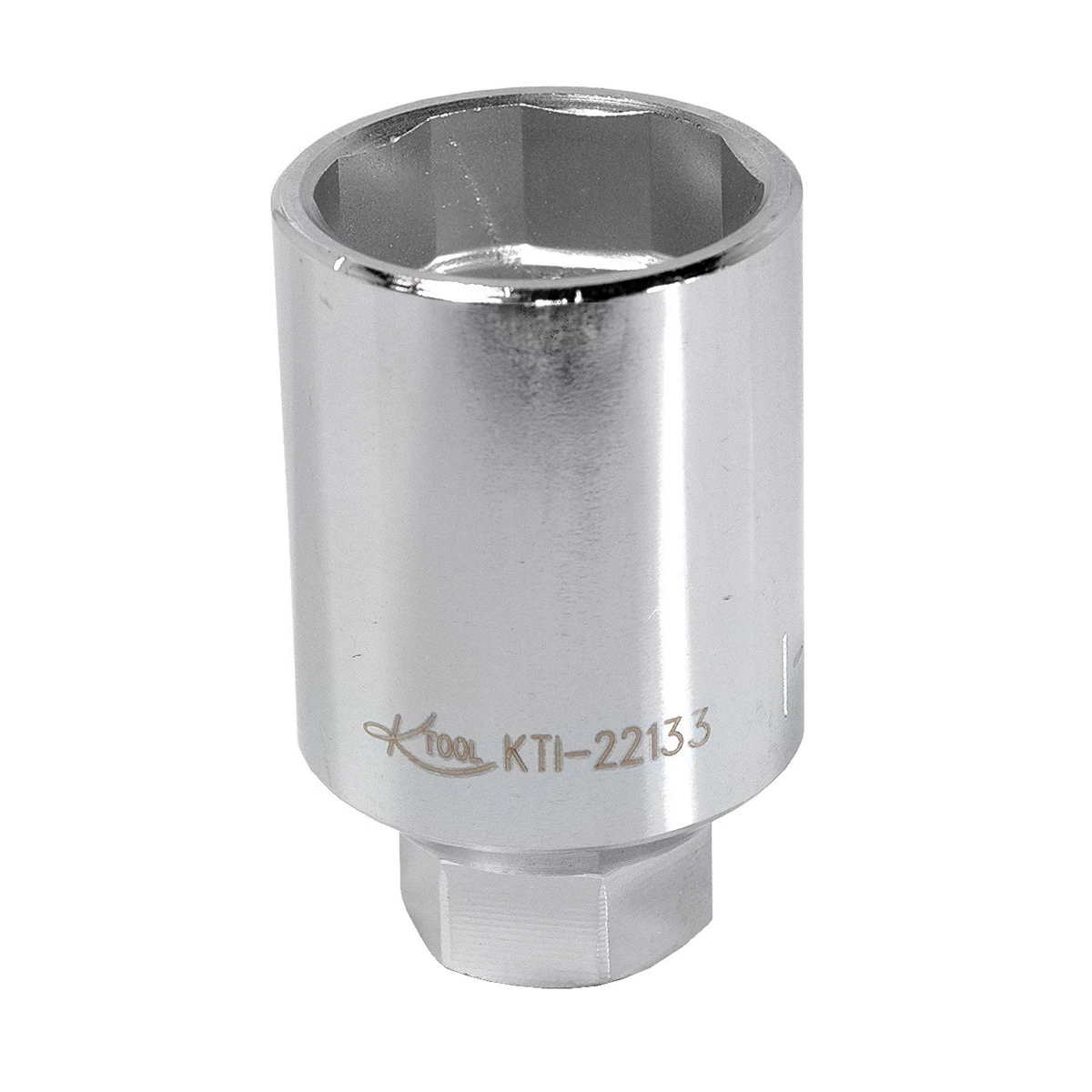
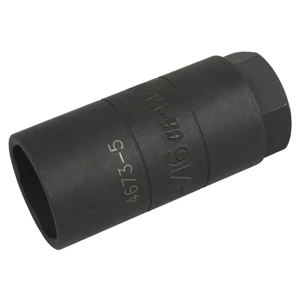
1 INCH & 1-1/16 INCH OIL PRESSURE SENDING UNIT SOCKET
Mfg: OTC Tools and Equipment
Part #: 4673-5
DIY Oil Pressure Sensor Replacement
Locate your sensor
Chevy LS V8s: near intake manifold or above filter boss. Ford modular V8s (4.6L, 5.4L): up front near timing cover. Honda/Toyota four-cylinders: side of block, access from underneath or wheel well. Check your service manual or YouTube guides for exact location before starting.
Essential tools
Thin-wall sensor socket (spreads load evenly on soft brass/aluminum hex), 3/8″ or 1/2″ ratchet, 6–12″ extension, universal joint for tight angles, oil-rated thread sealant. Skip Teflon tape—it contaminates oil. Optional: mechanical gauge and torque wrench.
Installation steps
Let engine cool. Disconnect negative battery cable. Unplug sensor connector (check for corrosion—cleaning sometimes fixes the light). Use steady counterclockwise pressure on ratchet; stop if it won’t turn in a quarter-turn. Apply penetrating oil if seized (wait 15 min). Remove old sensor, clean block threads, apply oil-rated sealant to new sensor threads, hand-thread until seated, torque to spec (usually 10–20 ft-lbs—verify). Reconnect, start engine, check for leaks.
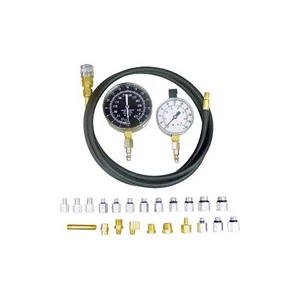
Automatic Transmission Oil, Pressure Gauge Kit, Universal
Mfg: Kent-Moore
Part #: J-34301C

Vehicle Accessibility
Easy DIY: Chevy trucks, Ford F-150s, Honda/Toyota four-cylinders
GMT800/GMT900 Silverados, Sierras, Suburbans with Vortec V8s: sensor visible on top, 30–60 min. 2004–2010 F-150s with 5.4L: same. Hondas and Toyotas: underneath access but DIY-friendly in 60–90 min with jack stands and good lighting.
Difficult: Hyundai Genesis 3.8L, luxury imports
Genesis 3.8L requires intake manifold, plenum, throttle body removal—4–6 hours even for skilled DIYers. Audi, BMW, Mercedes often hide sensors behind unrelated parts. Labor costs ($400–$800) often justify shop work here.
Know your skill level
You can handle this if you’ve done oil changes and air filter swaps. Complex disassembly requires experience, service manual comfort, and proper workspace (jack stands, lighting). No safe lift method or freezing weather? Shop work is cheaper than accidents.
Warranty & Overcharging Red Flags
Warranty coverage
Most manufacturers cover oil pressure sensors under powertrain warranty (5 yr/60k mi domestic, 5 yr/100k mi imports). If within coverage, replacement should be free except diagnostic fees. Verify before paying—service advisors sometimes omit warranty checks for big labor dollars. Read extended/CPO contract fine print; many exclude sensors as “wear items.”
Get second opinions
Call 2–3 independent shops specializing in your brand. Ask for itemized breakdown: parts, labor hours, hourly rate. Specialists typically charge $80–$120/hr vs dealership $140–$180/hr and have streamlined experience with your engine.
Red flags in estimates
Estimates over $500? Request labor operation code and verify it against manufacturer guides independently. Mismatched codes mean incompetence or dishonesty. Avoid shops refusing itemized estimates, pressuring immediate repair, or bundling unwanted work. Reputable shops provide written estimates and only do approved work.
Oil Pressure Sensor Replacement Checklist
- ☐ Check oil level and top off if needed
- ☐ Verify recent oil change didn’t cause the problem (double gasket, wrong filter install)
- ☐ Install mechanical gauge to confirm actual vs sensor readings
- ☐ Research sensor location for your vehicle
- ☐ Acquire thin-wall sensor socket and extensions
- ☐ Disconnect battery negative cable
- ☐ Photograph wiring before disconnection
- ☐ Apply penetrating oil if seized (wait 15 min)
- ☐ Use oil-rated thread sealant (not Teflon tape)
- ☐ Torque to spec (typically 10–20 ft-lbs)
- ☐ Check for leaks after starting
- ☐ Clear diagnostic codes if light remains
- ☐ Save receipts for warranty documentation
1 INCH & 1-1/16 INCH OIL PRESSURE SENDING UNIT SOCKET
Mfg: OTC Tools and Equipment
Part #: 4673-5
FAQ: Oil Pressure Sensor Replacement
Can I ignore the warning light?
Not without diagnosis. Check oil level and use a mechanical gauge to confirm pressure. If both are normal, the sensor is bad and you can wait. If either is abnormal, get professional diagnosis before ignoring—running dry on oil destroys engines.
Why did the sensor fail right after an oil change?
Usually installation error: old filter gasket stuck (double seal leak), center core left in cartridge filter (flow restriction), or filter too tight/loose. Check these first. Less often: technician damaged wiring or sensor was already dying.
Sensor failure vs. actual pressure problem?
Sensor failure = electronics die but lubrication works fine. Real pressure problems = low oil, dead pump, clogged screens, worn bearings. Test with mechanical gauge: if it reads 10–20 PSI idle and 30–60 PSI at 2k RPM while light stays on, it’s the sensor. If gauge reads low too, get professional diagnosis.
How much should replacement cost?
DIY: $15–$30. Independent shops: $180–$350 (easy) or $430–$700 (difficult). Dealers: $350–$880 honest, $1,550–$2,580+ inflated. Any quote over $1,000 needs itemized breakdown and independent verification.
What tools do I need?
Thin-wall sensor socket (right size: 1-1/16″, 24mm, 27mm), ratchet, extension, universal joint, oil-rated sealant. Optional: mechanical gauge ($30–$60), torque wrench, breaker bar. Total: $50–$150 for complete kit if buying new.
Replace sensor or install aftermarket gauge?
Simple on/off pressure switch? Aftermarket analog gauge ($40–$120) upgrades you from a light to actual PSI readings, screws into same hole. Variable sender powering dashboard gauge? Replace the sender to stay factory. Warning-light-only cars benefit most from aftermarket gauges at comparable cost.
While replacing your oil pressure sensor, you may need other fuel system components for a complete maintenance overhaul. Browse our full selection of fuel system tools and parts to ensure you have everything needed for the job.

The Toolsource Technical Team blends decades of real-world automotive service experience with up-to-date technical research. Our writers collaborate with professional mechanics, shop owners, and diagnostic specialists to deliver practical, workshop-ready guidance you can trust.


Follow us on social media