A customer rolls in with a car that won’t start, or worse, a battery that’s only three weeks old and already dead after sitting for two weeks. The instinct is to blame the battery and move on, but that’s the fast way to sell three batteries instead of fixing one problem. A proper no-start diagnosis follows a sequence: check voltage, check connections, jump it correctly, load test, and if the battery and charging system both check out clean, run a parasitic draw test. Skip a step and you’re guessing. Here’s the order that actually finds the root cause.
Step 1: Read the Voltage Before You Touch Anything Else
Before cables, chargers, or tow trucks, put a digital multimeter across the battery posts. A fully charged, healthy battery reads 12.6V at rest. 12.2V means it’s partially discharged. Anything under 12V means it’s significantly depleted and won’t reliably crank the engine, even if accessories still light up.
This single reading tells you which branch of the diagnostic tree you’re on. If voltage is in range and the vehicle still won’t crank, you’re looking at a connection or starter circuit problem, not a dead battery. If voltage is low, you need to determine whether it’s low because the battery is weak, or low because something drained it while the car sat. Write the number down — you’ll compare it again after charging and after the vehicle runs.
One symptom worth flagging specifically: dash lights flickering on then going completely dark during a crank attempt. That’s a classic sign of severe voltage drop at a bad connection, not a starter motor failure. A failing starter usually produces a slow or clicking crank with dash lights holding steady; a connection problem causes the whole electrical system to collapse the instant current demand spikes.
Step 2: Inspect Terminals and Ground Connections
Corroded or loose terminals are the single most common reason a jump start fails or a car won’t crank despite an apparently good battery. Grip each terminal clamp by hand — you should not be able to twist or rock it. If it moves, that’s your problem right there.
Don’t stop at the battery posts. Follow the negative cable all the way to where it bolts to the chassis and to the engine block. These ground straps corrode and loosen just as often as the battery terminals themselves, and a bad ground produces the exact same symptoms as a dead battery: slow crank, no crank, or accessories that work but won’t sustain a crank attempt.
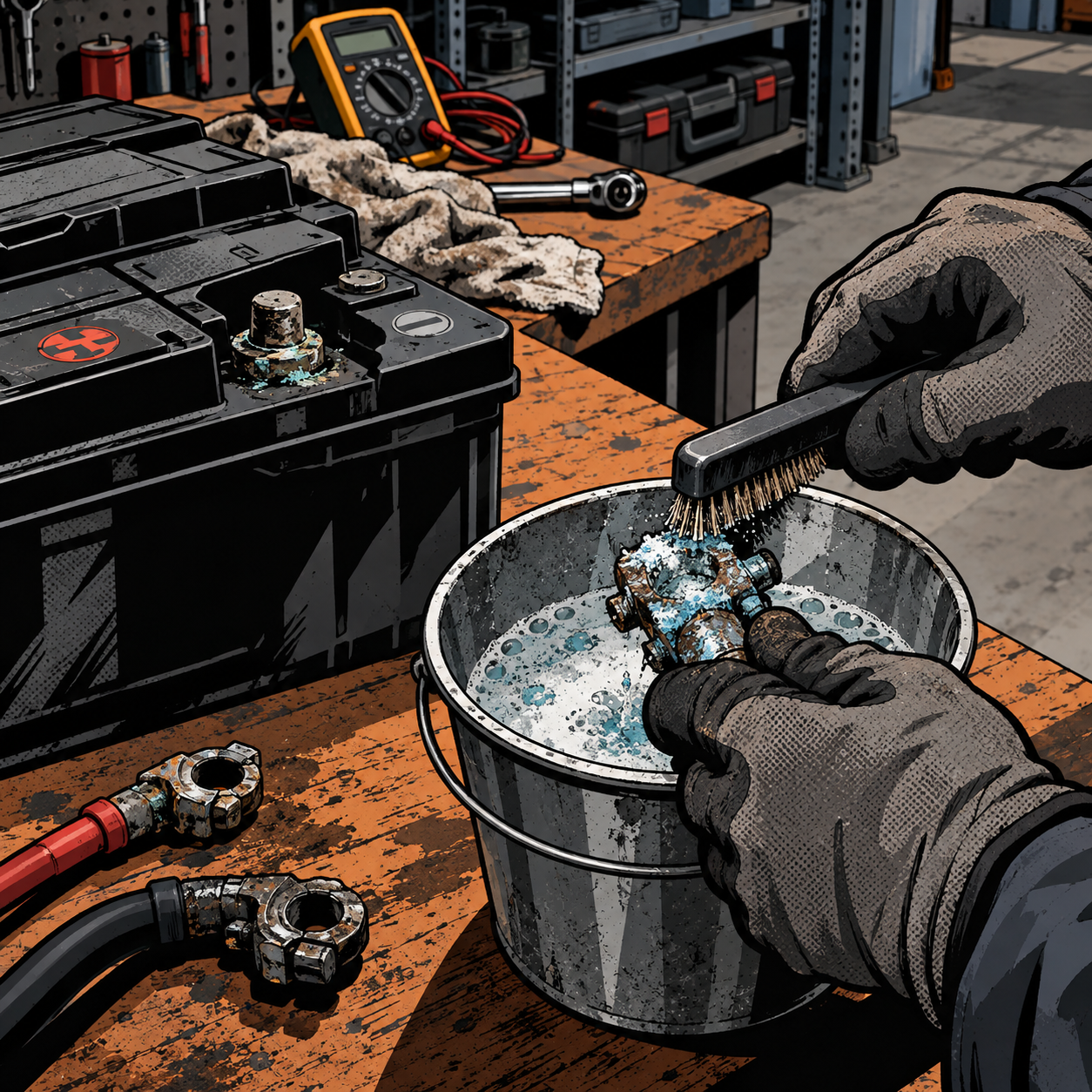
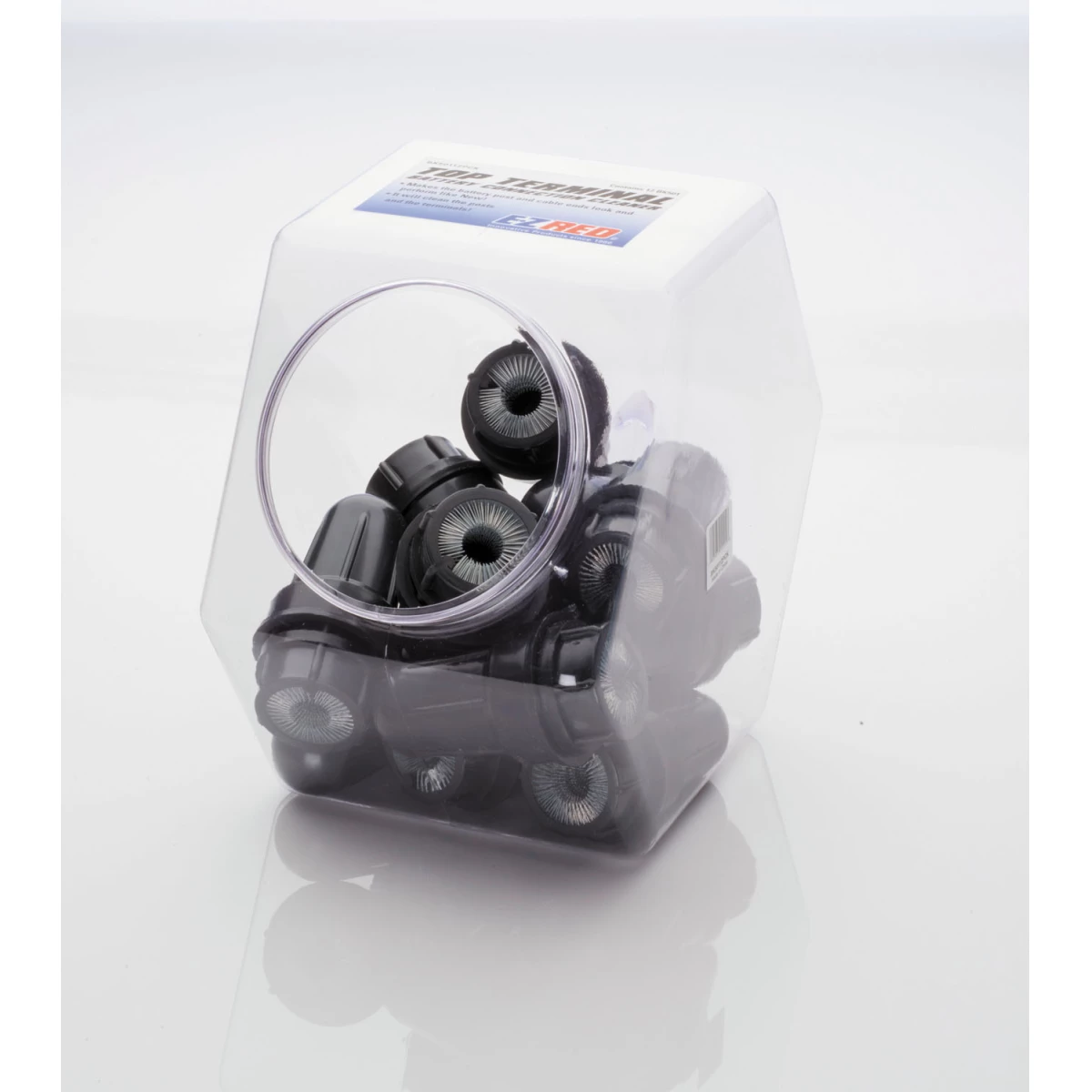
Clean corrosion with a baking-soda-and-water mixture and a wire brush, working it into the clamp and post contact surfaces. Rinse and dry thoroughly before reconnecting — moisture left in the connection accelerates corrosion right back. Torque the clamps back down snug; overtightening can crack the clamp casting on some batteries, so stop at “cannot be moved by hand,” not “as tight as the ratchet allows.”


Step 3: Jump-Start It the Right Way
A botched jump start wastes time and can mask the real reading you need. Use good-quality cables and a donor vehicle that’s actually running, or a standalone jump starter pack if a donor isn’t available — packs deliver a cleaner, more consistent connection than a second vehicle’s cables half the time.
Connection order matters: positive to positive first, then negative to a solid ground point on the dead vehicle’s engine or chassis — not directly to the dead battery’s negative post. Grounding away from the battery reduces spark risk near battery gases.
If the battery is deeply discharged, don’t just connect and crank immediately. Leave the cables connected for 10 minutes, ideally with the donor vehicle running, to let some charge build before you ask the starter to draw a heavy load. Attempting to crank a near-dead battery the instant cables go on is the most common reason a “jump” appears to fail — the battery simply hasn’t had a chance to absorb any charge yet.
Once it starts, don’t disconnect and drive off assuming the problem is solved. Check charging voltage at the battery with the engine running — you want roughly 13.5V to 14.8V. If it’s reading low or not climbing above resting voltage, the alternator isn’t replenishing the battery, and you’ll be back here in a day or two.
Step 4: Load Test the Battery, Don’t Just Trust That It Starts
A car starting after a jump proves the battery can deliver current at that moment — it does not prove the battery is healthy or that it got fully recharged. Driving around over a weekend is not a substitute for a load test; alternators are sized to maintain charge during normal driving, not to fully recover a deeply discharged battery in a short trip.
Any parts store or shop with a battery tester can run a load test in a few minutes, and most retailers will test a battery under warranty for free. If a battery is only a few weeks old and already failed, that’s worth a warranty claim conversation, but get the load test result in hand first — a battery that tests fine and died anyway points squarely at the charging system or a drain, not a defective unit.
Also worth noting: a battery that’s been run all the way down to near-zero voltage can suffer permanent capacity loss even if it “tests okay” afterward on a basic check. If a customer’s battery has been fully dead more than once, factor that history into whether it’s worth replacing versus continuing to diagnose.
Step 5: If the Battery and Charging System Check Out, Run a Parasitic Draw Test
Two weeks parked should never kill a healthy, fully charged battery with a sound charging system. If voltage checks, terminal connections check, and alternator output checks, the next logical step is a key-off parasitic draw test — not a second new battery.
The basic procedure: let the vehicle sit with everything off for at least 30 minutes so modules go to sleep, then connect an ammeter in series with the negative battery cable (or use a clamp-on meter across the negative cable for a non-invasive read). A normal resting draw is typically in the 20-50 milliamp range, varying by vehicle and how many modules it has. Anything significantly higher means something is staying awake — a trunk or glovebox light, a stuck relay, an aftermarket alarm or stereo installation, or a module that isn’t going to sleep properly.
Isolate the draw by pulling fuses one at a time (with the meter still connected) and watching for the reading to drop. Whichever circuit kills the draw when its fuse is pulled is your culprit circuit — now you’re troubleshooting a specific component instead of guessing at the whole electrical system.
Quick Diagnostic Checklist
- Meter on the battery: record resting voltage before doing anything else
- Terminals and ground straps: clean, tight, no movement by hand
- Jump correctly: positive-to-positive, negative-to-ground, wait 10 minutes before cranking a deeply discharged battery
- Running voltage at the battery: should read 13.5-14.8V
- Load test the battery rather than assuming a successful start means it’s healthy
- If everything above checks out, run a key-off parasitic draw test before replacing another part


Midtronics Battery and Electrical System Analyzer- MDX-AI- 30 fo
Mfg: Midtronics
Part #: MVT-200

Midtronics Battery and Electrical System Analyzer MDX-AI- In
Mfg: Midtronics
Part #: MVT-100P
Frequently Asked Questions
What voltage should a healthy car battery read at rest?
A fully charged battery reads about 12.6V at rest. 12.2V indicates partial discharge, and anything below 12V is significantly depleted and likely won’t reliably crank the engine.
Why did my dash lights flash on and then go completely dark when I tried to start it?
That pattern points to a severe voltage drop at a bad connection — corroded terminals, a loose ground strap, or a damaged cable — rather than a failing starter motor. Check and clean all terminal and ground connections before assuming the starter is bad.
Why would a brand-new battery die after the car sat for only two weeks?
A healthy, fully charged battery with a sound charging system should not die from two weeks of sitting. The likely causes are a parasitic draw (something staying on and slowly draining it), a bad alternator not fully recharging it during use, or a battery that was damaged by being run fully dead previously and never properly load tested before being called “fine.”
How long should I leave jumper cables connected before trying to start a dead car?
For a deeply discharged battery, leave the cables connected for about 10 minutes, ideally with the donor vehicle running, before attempting to crank. Trying to start it immediately after connecting cables is a common reason jump attempts appear to fail.
What’s a normal parasitic (key-off) draw on a modern car?
Typically in the 20-50 milliamp range, depending on the vehicle and how many onboard modules it has, measured after letting the car sit for at least 30 minutes so systems go to sleep. Readings well above that range indicate a circuit that isn’t shutting off properly.
Should I just replace the battery again if it keeps dying?
Not without diagnosing why the previous batteries died. Replacing a battery without finding the underlying cause — bad connection, failing alternator, or parasitic draw — usually just means the next battery dies on the same schedule.
Recommended Tools
Diagnosing battery and charging issues properly requires the right equipment. Our battery diagnostics and charging tools include load testers, multimeters, chargers, and everything needed to isolate root causes.
- Battery load testers and monitors for capacity testing
- Digital multimeters and voltage checkers
- Parasitic draw testers and clamp meters

The Toolsource Technical Team blends decades of real-world automotive service experience with up-to-date technical research. Our writers collaborate with professional mechanics, shop owners, and diagnostic specialists to deliver practical, workshop-ready guidance you can trust.


Follow us on social media