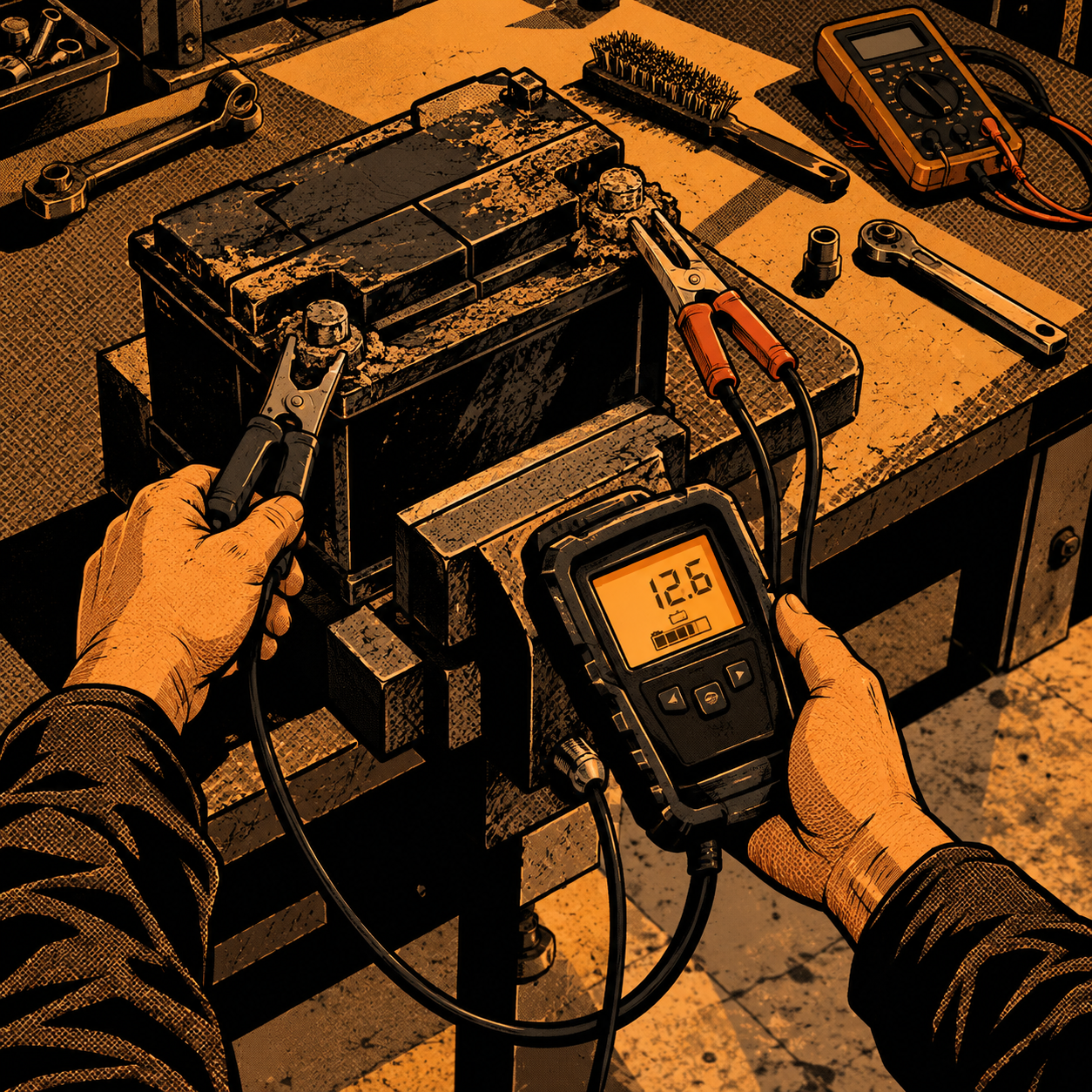
A red battery symbol on the dash gets misread as “the battery is dead” more often than almost any other warning light, and that misunderstanding drives a lot of needless parts-cannon repairs. In reality, that light is a charging system warning, not a battery health report, and treating it as the latter is how shops end up replacing a battery, then an alternator, then both again before anyone pulls a meter out. The same undisciplined approach shows up on no-code comebacks too — a rough idle or a tap that gets waved off because the scan tool came back clean, until the valve cover comes off and three cam lobes are ground to nothing. Both problems share a fix: slow down, follow a diagnostic sequence, and confirm before you replace.
What the Battery Warning Light Is Actually Telling You
The charge warning light illuminates when the system detects the battery isn’t receiving adequate charging voltage — it says nothing about the battery’s actual condition. A perfectly good battery will trigger this light if the alternator stops producing output, and a bad battery can sit there fine as long as the alternator is compensating. Don’t let the customer’s description (“my battery light is on, so I need a battery”) set your diagnostic path. Start from the symptom, not the assumption, and explain to the customer up front that the light points at the charging system as a whole, not a single part.
Also rule out the obvious before diagnostics: if the vehicle is losing charge, a no-start or stall while driving is a real safety issue. If a customer describes dimming lights, warning chimes, or accessories dropping out at speed, get the vehicle off the road and towed in rather than diagnosing it curbside.
Test the Battery First — For Free, Before You Touch Anything Else
Most parts stores will load-test a battery at no charge, and that test should be your starting point even in-house, since it’s quick and it either clears the battery as a suspect or confirms it as one. A conductance or load tester gives you cold-cranking amps versus rated spec and flags a battery that’s sulfated or has a dead cell. Keep in mind these testers are less reliable on a deeply discharged battery, so if the reading is ambiguous, charge it fully and retest rather than trusting a single borderline result.
If the battery tests good, move on — don’t replace it “just in case.” If it tests bad, replace it, but still check the charging system afterward, because a battery rarely dies on its own without something upstream cooking it or starving it.
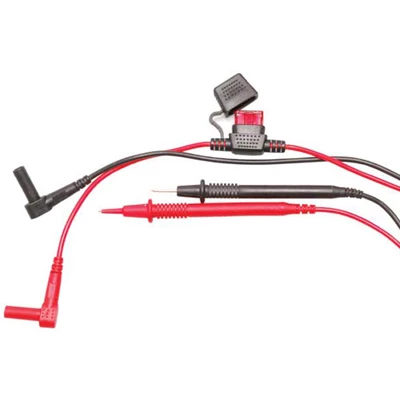
Automotive Digital Multimeter Test Leads with Fuse Protection
Mfg: Electronic Specialties
Part #: 134
Alternator and Belt: The Most Common Root Cause
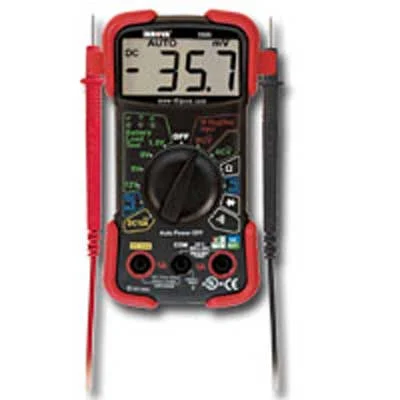
Once the battery is cleared, the alternator is the next and most frequent culprit. Check belt tension and condition first — a glazed, cracked, or slipping serpentine belt will cause intermittent charging faults that look electrical but are mechanical. With the belt confirmed good, test alternator output directly with a multimeter at the battery terminals: engine running, no-load voltage should sit around 13.8–14.6V on most systems. Load the system (headlights, blower motor, rear defrost) and watch for voltage sag below spec, which points to a failing alternator even when idle voltage looks acceptable.
Many parts stores will bench-test or in-car test an alternator for free as well, which is a reasonable second opinion if your meter readings are borderline. Don’t skip the diode ripple test if you have a scope or a meter with AC ripple capability — a bad diode can produce enough AC ripple to cook a battery prematurely while DC voltage output still looks close to normal.
Chasing Grounds and Fusible Links When Parts Test Fine
This is where a lot of diagnoses go sideways: the battery tests good, the alternator tests good, and the charging complaint persists anyway. At that point stop testing components and start testing the path between them. Engine-to-frame and engine-to-body ground straps corrode and break internally without looking obviously damaged from the outside — a voltage drop test across the strap (key on, load applied) will expose high resistance that a visual inspection misses. Wiggle-test connectors and grounds while watching a meter for intermittent drops, since vibration-induced faults won’t show up with the engine sitting still and undisturbed.
Also check fusible links and main fuses in the charging circuit before assuming a part is bad. A popped fusible link can leave a vehicle running entirely off the auxiliary battery in dual-battery setups, producing symptoms that mimic a dead alternator even though the alternator itself is fine. Pull the link and inspect it, don’t just glance at it in the holder — some fail open without visible scorching.
When the Scan Tool Comes Back Clean: Diagnosing No-Code Valvetrain Noise
Not every real failure sets a code, and that’s the trap with intermittent taps and rough idles. A valvetrain problem — worn cam lobes, collapsed lifters, worn rocker arms — can run for tens of thousands of miles with no check engine light and no stored codes, because the ECM is watching emissions and sensor inputs, not mechanical wear on a cam lobe. By the time it’s audible as a persistent tap or a rough, uneven idle, measurable damage may already exist.
If a vehicle comes in with a tap or idle complaint and nothing stored, don’t close the ticket on a clean scan. Pull the valve covers if the symptom is consistent and unexplained by vacuum leaks, misfires, or sensor faults. Interval-based cam and lifter wear is a known issue on several high-mileage V6 and V8 overhead-cam engines, and catching it at the “it ticks a little” stage is dramatically cheaper than catching it after lobes have ground down and metal has circulated through the oiling system. Always cut open the oil filter and inspect for metal shavings when valvetrain wear is suspected — it’s the cheapest confirmation test you have.
This is also where setting expectations with the customer matters. A no-code tap doesn’t mean “nothing’s wrong,” and explaining that clearly up front avoids the awkward follow-up conversation when a declined inspection turns into a destroyed camshaft six months later.
Comeback Prevention: Documentation and Parts Quality
Two habits cut comebacks on charging and valvetrain jobs more than anything else. First, document every test result — battery CCA reading, alternator output under load, voltage drop across grounds — on the invoice, not just “replaced alternator.” If the vehicle returns, you want a record of what tested good at the time, both to protect the shop and to speed up the next diagnosis. Second, use OEM or OEM-quality parts for alternators and batteries. Cheap aftermarket alternators have a well-earned reputation for short service life, and a customer who’s already paying for diagnostic time doesn’t want to pay for it twice because a budget part failed in six months.
Quick Diagnostic Checklist
- Confirm the exact warning light and symptom pattern before assuming a part is bad
- Load-test the battery first — it’s fast, often free, and rules a suspect in or out
- Check belt condition and tension before testing alternator output
- Measure alternator voltage under load, not just at idle with no accessories on
- Voltage-drop test grounds and inspect fusible links if components test fine individually
- Pull covers and check oil filter for metal on any unexplained no-code tap or rough idle
- Document every test result on the invoice, and spec OEM-quality replacement parts

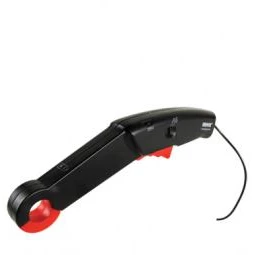
Tuned Port Injector Adapter Cable for Monitor Scan Tool
Mfg: OTC Tools and Equipment
Part #: 212653


Frequently Asked Questions
Does a battery warning light always mean the battery is bad?
No. It means the system isn’t charging the battery at the correct voltage, which is most often caused by the alternator, belt, or wiring — not the battery itself. Test before replacing.
Can a bad battery cause a car to stall while driving?
Not directly — once the engine is running, the alternator supplies power, not the battery. A stall while driving points to a charging system or fuel/ignition fault, not a weak battery.
Why would an alternator test fine at idle but still cause problems?
Some failures only appear under load. Test voltage with headlights, blower motor, and rear defrost on to catch sag that a no-load idle test misses.
Is it normal for a valvetrain problem to show no check engine light?
Yes. The ECM monitors emissions and sensor data, not mechanical wear directly, so cam lobe or lifter wear can progress significantly before any code sets. A persistent tap or rough idle with a clean scan still warrants a mechanical inspection.
How do I know if a ground strap is the problem instead of the alternator?
If the battery and alternator both test good in isolation but the charging complaint persists, voltage-drop test the ground straps and connectors under load. A bad ground causes symptoms that mimic a failing alternator.
Are cheap aftermarket alternators worth it for a budget repair?
Generally no. They’re a common source of early comebacks. Spending more up front on an OEM or OEM-quality unit usually costs less than diagnosing and replacing a failed budget part again within a year.
Battery Diagnostics & Charging Tools
The diagnostic steps above require proper test equipment. The Battery Diagnostics & Charging section carries load testers, multimeters, and replacement parts for these repairs.
- Battery load testers and conductance meters
- Digital multimeters with AC ripple capability
- Alternators, batteries, belts, and fusible links

The Toolsource Technical Team blends decades of real-world automotive service experience with up-to-date technical research. Our writers collaborate with professional mechanics, shop owners, and diagnostic specialists to deliver practical, workshop-ready guidance you can trust.


Follow us on social media