Every shop has heard this one: a customer does a routine DIY oil change, goes to start the car, and nothing happens. Then they notice the oil on the dipstick looks almost clear instead of amber or black, and they’re convinced they did something wrong. In nearly every real-world case, the two issues are unrelated — the no-start is an electrical problem that happened to surface at the same time as the oil change, not because of it. Working through this methodically saves a comeback, saves the customer a wasted parts purchase, and gets you to the actual fault fast.
Step One: Get a Precise Description of the Symptom
“Doesn’t start” means five different things to five different customers, and each one points to a different system. Before touching a meter, nail down exactly what happens when the key is turned or the button is pressed:
- No sound at all — dash lights may or may not come on. Points to a dead battery, a bad ground, or a main fuse/relay.
- Single loud click, nothing else — classic symptom of a failed starter solenoid or a battery too weak to push current through it.
- Rapid click-click-click — the starter relay is cycling because voltage is sagging too low to hold it in. This is almost always a battery or connection problem, not the starter itself.
- Slow, labored crank that gets slower and dies — weak battery or bad connections, more common on older vehicles without voltage-drop cutoffs.
- Cranks fine but won’t catch — this is a fuel or ignition problem, not electrical supply, and is a different diagnostic path entirely.
In the case that prompted this guide, the customer reported the engine cranked once, then subsequent attempts produced nothing. That pattern — one crank attempt followed by silence — is a strong indicator the battery had just enough reserve for a single try and then dropped below the voltage the ECU needs to even engage the starter. Many vehicles built in the last 10-15 years will refuse to energize the starter circuit at all once pack voltage sags too far, specifically to avoid resetting the ECU mid-crank. Older vehicles lack that protection and will simply crank slower and slower until they stop turning over entirely.
Why the Dipstick Oil Looks Almost Clear
This detail derails a lot of self-diagnosis, so address it directly: fresh oil, especially thin modern viscosities like 0W-16 or 0W-20, is genuinely hard to see on a dipstick straight out of the bottle. It hasn’t picked up soot, fuel dilution byproducts, or metal fines yet, so it can look almost water-clear in a thin film, particularly under shop lighting or a phone camera flash. Full synthetic oils are worse for this than conventional blends because they’re formulated to stay cleaner longer. The fix for “I can’t tell if there’s oil on the stick” isn’t concern about contamination — it’s wiping the dipstick fully dry, reinserting it fully seated, and reading it under better light. If the level sits correctly between the hash marks and the plug and filter are confirmed tight, the oil is not the problem.
The one scenario worth ruling out physically, not just verbally: confirm the drain plug was actually reinstalled and torqued, and that the filter seated with a new gasket. A hydrolocked engine from gross overfill is possible but would cause the engine to resist turning over mechanically, not an electrical no-crank — those are distinguishable by hand-rotating the crank pulley or feeling resistance through the starter, so don’t let it distract from the electrical fault in front of you.


Find the Parasitic Drain Before You Blame the Battery
A battery that was fine yesterday doesn’t go flat on its own. Something pulled it down, and it’s usually mundane. Walk the vehicle and check, in order:
- Hood-mounted light — not all vehicles have one, but on those that do, a hood left up during a 20-30 minute oil change is a common drain source.
- Interior dome/map lights and door switches — a door, trunk, or hatch not fully latched will keep courtesy lights on indefinitely.
- Aftermarket accessories — dash cams, phone chargers, or amplifiers wired to always-on circuits instead of switched power.
- Glovebox and trunk lights — easy to overlook, same failure mode as dome lights.
If any of these were left on during the service, a battery that was already marginal (even a relatively new one, since battery age alone doesn’t guarantee a full charge or a good internal connection) can be drained enough that it no longer has the cranking amps to turn the engine, even though it reads near 12V at rest.
Test the Battery Properly — Resting Voltage Isn’t Enough
A battery can show 12.4V sitting on a shelf and still collapse the instant you ask it for 150-200 cold cranking amps. That’s why voltage alone is a weak test. Use this sequence:
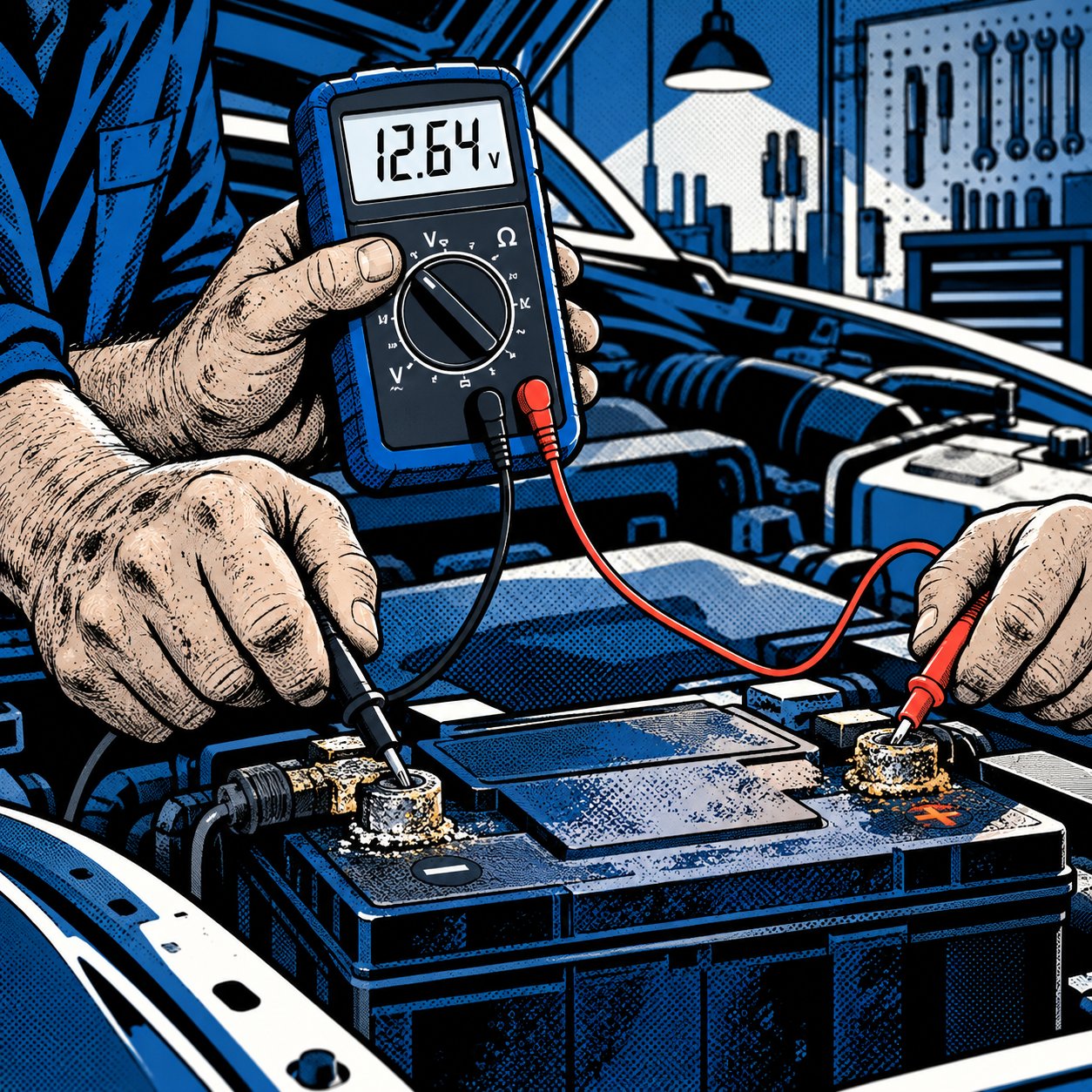
- Check resting voltage with a multimeter — below 12.4V indicates a partial discharge; below 12.0V indicates a deep discharge.
- Inspect both terminals for corrosion, looseness, or a loose ground strap to the body/frame. A clean-looking terminal can still be loose enough to cause high resistance under load.
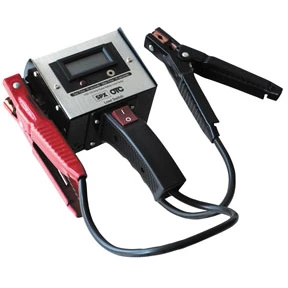
- Use a load tester (or a multimeter while cranking) to watch voltage during the actual start attempt. A healthy 12V battery should hold above roughly 9.6V while cranking; a sharp drop below that confirms the battery can’t supply current, regardless of resting voltage.
- If equipment is limited, jump-start the vehicle and observe what happens next — this doubles as a diagnostic, not just a fix (see the FAQ below for how to read the result).
If the battery fails a load test outright, replace it — don’t just recharge and send it back out, because a battery that’s been deeply discharged once is more likely to fail the same way again soon.
Isolate the Starter and Solenoid
If the battery and connections test good but the no-crank persists, move to the starter circuit. A single loud click with no crank, heard right at the starter, usually means the solenoid is engaging but the starter motor itself isn’t turning — often worn brushes or an open winding. No click at all, with good battery voltage confirmed at the starter’s main lug, points upstream to the ignition switch, neutral safety switch, starter relay, or a blown fuse. On vehicles where the starter is accessible, a firm strike with a hammer handle while someone attempts to start it is a legitimate quick test — if it fires immediately after a tap, the starter’s internal contacts are worn and it needs replacement, not just a diagnosis debate.
When It’s the Charging System, Not the Battery
A jump-start that gets the car running tells you more than just “it starts now.” Pay attention to what happens afterward:
- Starts and runs fine, battery holds charge the next day — it was a one-time drain; battery is fine.
- Starts, runs for a while, then dies again — the alternator isn’t recharging the battery; suspect a failed alternator, bad voltage regulator, or a slipping/broken serpentine belt.
- Starts fine but won’t start again tomorrow without another jump — alternator is likely fine, but the battery itself has failed and can’t hold a charge.
Confirm charging system output with a multimeter across the battery terminals with the engine running — a healthy system should read roughly 13.5-14.8V. Readings stuck near battery resting voltage (12.0-12.6V) with the engine running point directly at the alternator or its drive belt.
Quick Diagnostic Checklist
- Confirm exact crank symptom: no sound, single click, rapid clicking, or slow crank
- Check for hood light, dome light, or a door/trunk left ajar during service
- Verify drain plug and oil filter are properly installed and torqued
- Test resting battery voltage, then voltage under cranking load
- Inspect and tighten both battery terminals and ground strap
- Jump-start and observe behavior over the next start cycle to separate battery vs. alternator
- Test charging voltage at idle if the battery keeps going flat after jumps
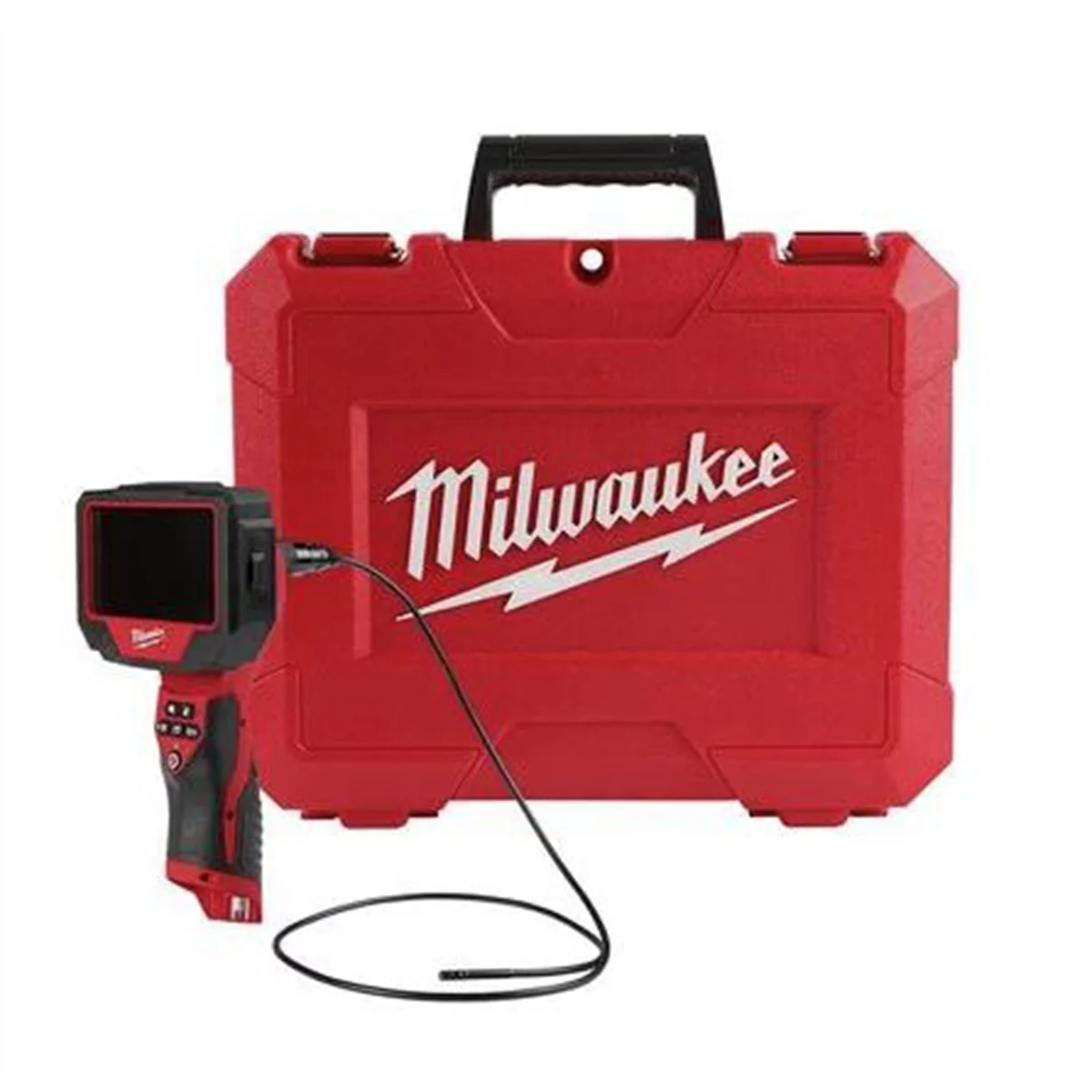
Milwaukee Tool M12 Auto Technician Borescope with 2.0 Starter Ki
Mfg: Milwaukee Electric Tools
Part #: TECHBORESCOPEKIT

USA 2005 European Starter Kit with Cables
Mfg: OTC Tools and Equipment
Part #: 3421-74

Pegisys Diagnostic System Trade-In Kit Handset Version
Mfg: OTC Tools and Equipment
Part #: 3825JT
Frequently Asked Questions
Can an oil change actually drain a car battery?
Not directly. The oil change itself draws no significant current. What drains the battery is something left on during the service — a hood light, an interior light from an open door, or an accessory — which is incidental to the oil change rather than caused by it.
Why does my fresh oil look clear instead of amber or black on the dipstick?
New oil, especially thin synthetic grades, has no soot or combustion byproducts in it yet, so it can appear nearly clear, particularly in a thin film on a dipstick. Wipe the stick dry and reread it under good light before assuming anything is wrong.
How do I know if it’s the battery or the starter?
A single solid click at the starter with no crank usually means the starter solenoid engaged but the motor didn’t turn — a starter issue. Rapid clicking or no sound at all, especially with dim or flickering dash lights, points to insufficient battery voltage reaching the starter.
Is it safe to just jump-start and drive off?
It’s safe to drive, but treat the jump as a test, not a fix. If the car stalls again within a day or needs another jump to restart, the battery or alternator needs further testing before you rely on the vehicle.
Can a new battery still be bad?
Yes. A battery’s manufacture date doesn’t guarantee it hasn’t been damaged, deeply discharged, or defective from the start. Always load-test a battery under suspicion regardless of age, since resting voltage alone can look normal on a battery that fails under cranking load.
What’s the first thing I should check on a no-crank complaint?
Walk the vehicle for anything left on — hood light, interior light, door or trunk not fully closed — before testing any components. It’s the fastest check and the most common actual cause of a sudden no-start after service work.
Diagnostic Tools for Battery and Charging System Testing
The right test equipment is essential for proper diagnosis. Our Battery Diagnostics & Charging category includes multimeters, load testers, and charging system tools needed to isolate electrical faults quickly.
- Battery load testers and multimeters for voltage and capacity testing
- Charging system and alternator diagnostic equipment
- Battery terminal tools and diagnostic clamps

The Toolsource Technical Team blends decades of real-world automotive service experience with up-to-date technical research. Our writers collaborate with professional mechanics, shop owners, and diagnostic specialists to deliver practical, workshop-ready guidance you can trust.


Follow us on social media