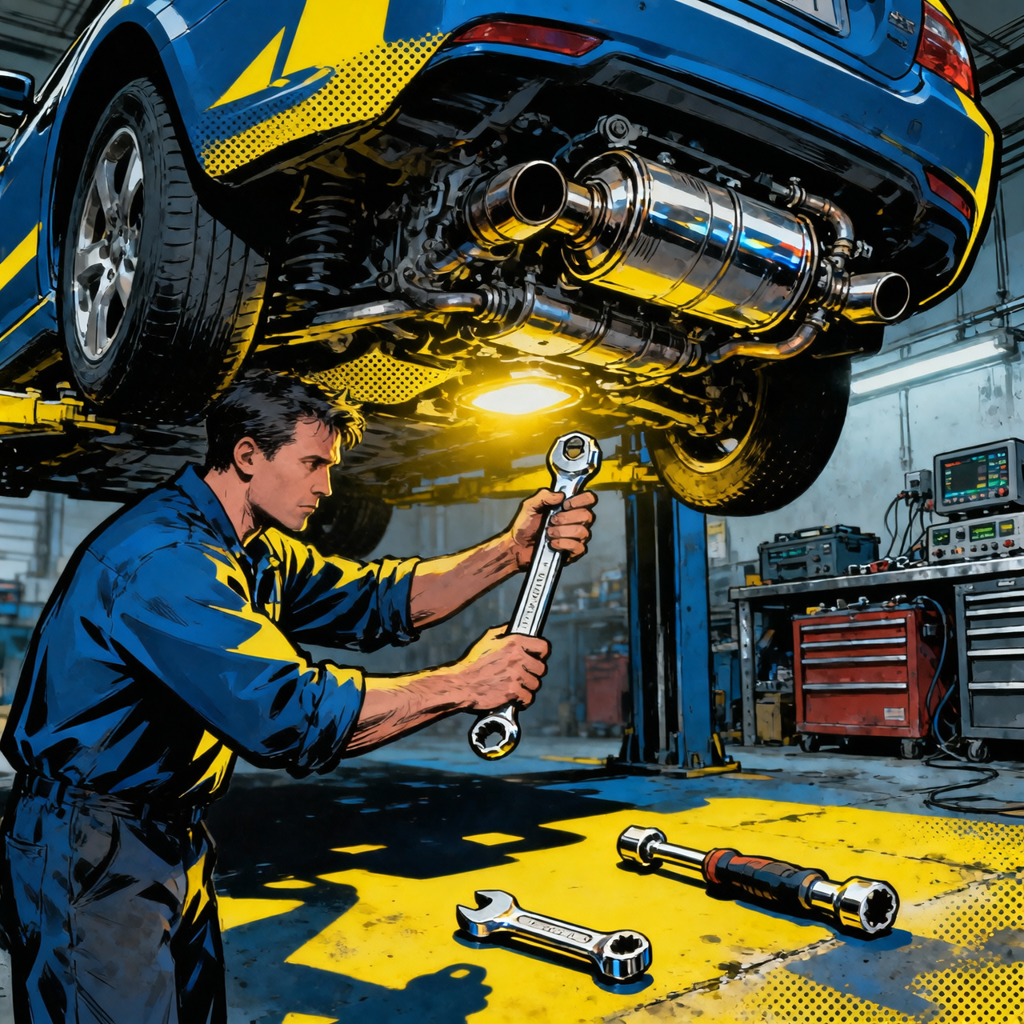
That distinctive rattling or hissing sound under your vehicle signals an exhaust leak. Whether it’s a small rust hole or blown gasket, you’ve got options—from five-dollar fixes to full system replacement. This guide covers every repair method so you can pick one that fits your budget and skill level.
Quick Diagnosis: Finding Your Exhaust Leak
Find the leak before fixing it. Let the engine cool completely—exhaust components reach 400°F+ when running.
Visual inspection and symptoms
Look for black soot around joints, visible holes or cracks, rust holes where water pools, and loose clamps. Common failure points: muffler inlet/outlet connections, muffler welds, and flex pipes. Run your hand along the cold exhaust to feel for rough spots and holes. Try twisting pipes at clamps—if they spin freely, the seal is shot.
Where the leak is matters: near the engine, you get loud ticking/tapping at high RPMs (bad—sensors give wrong readings, fuel economy drops 10-15%); at the muffler, rattling or buzzing when accelerating; at the tail pipe, fluttering when coasting. Check engine lights, rough idle, terrible fuel economy, or exhaust smell inside the cabin all point to upstream leaks needing immediate attention.
Temporary Fixes (Under $20)
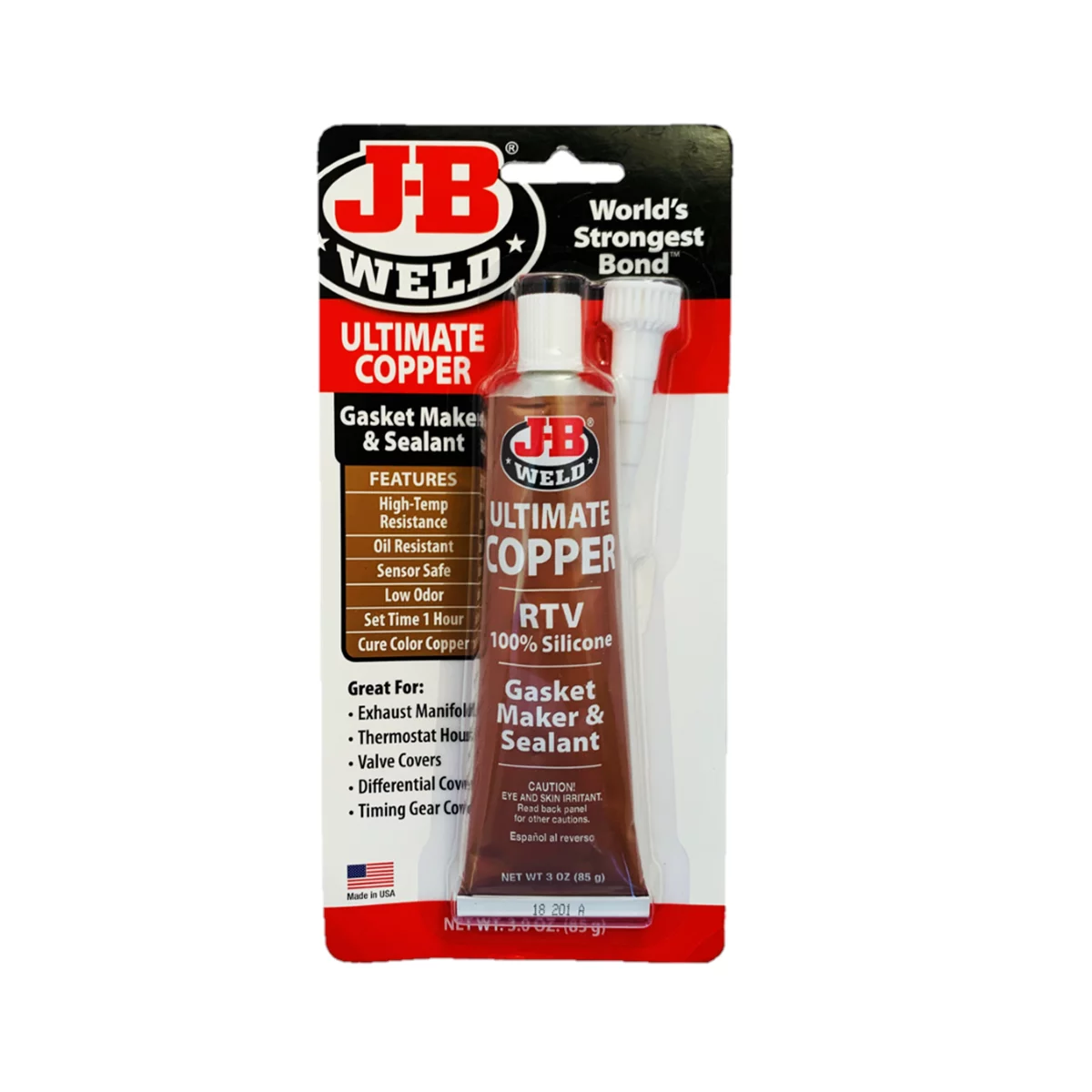
Band clamps with high-temp RTV silicone
Best cheap fix for connection leaks and small cracks. Get stainless steel band clamps 1/2 inch larger than your pipe diameter (usually 2.5-3 inches). Use high-temperature RTV rated for 600°F exhaust.
Wire brush and degrease the leak area to bare metal. Apply RTV silicone, position the clamp, and tighten—don’t overtighten or you’ll dent the pipe. Let cure 24 hours before starting the engine. Expect 3-6 months on small leaks; longer if road spray doesn’t hit it. Flex pipes won’t last as long due to constant movement.
Aluminum foil and hose clamps
Works on tiny pinholes in straight pipes. Wrap 4-6 layers of heavy-duty aluminum foil around the leak, extending 2 inches past the hole. Secure with stainless steel hose clamps spaced an inch apart. Lasts 2-8 weeks on pinholes, fails fast on bigger holes, flex pipes, muffler cracks, or areas hit by road spray. Good for emergency roadside fixes.
Muffler repair patches
Auto parts store patches ($8-15) have mixed results—they need clean, dry metal, which is rare on rusty mufflers. If trying one, grind rust to bare metal, cut the patch 2 inches larger than damage, and seal edges. Expect 2-4 weeks before they fail. Band clamps outperform these at the same price.
Intermediate Repairs (6-18 Months)
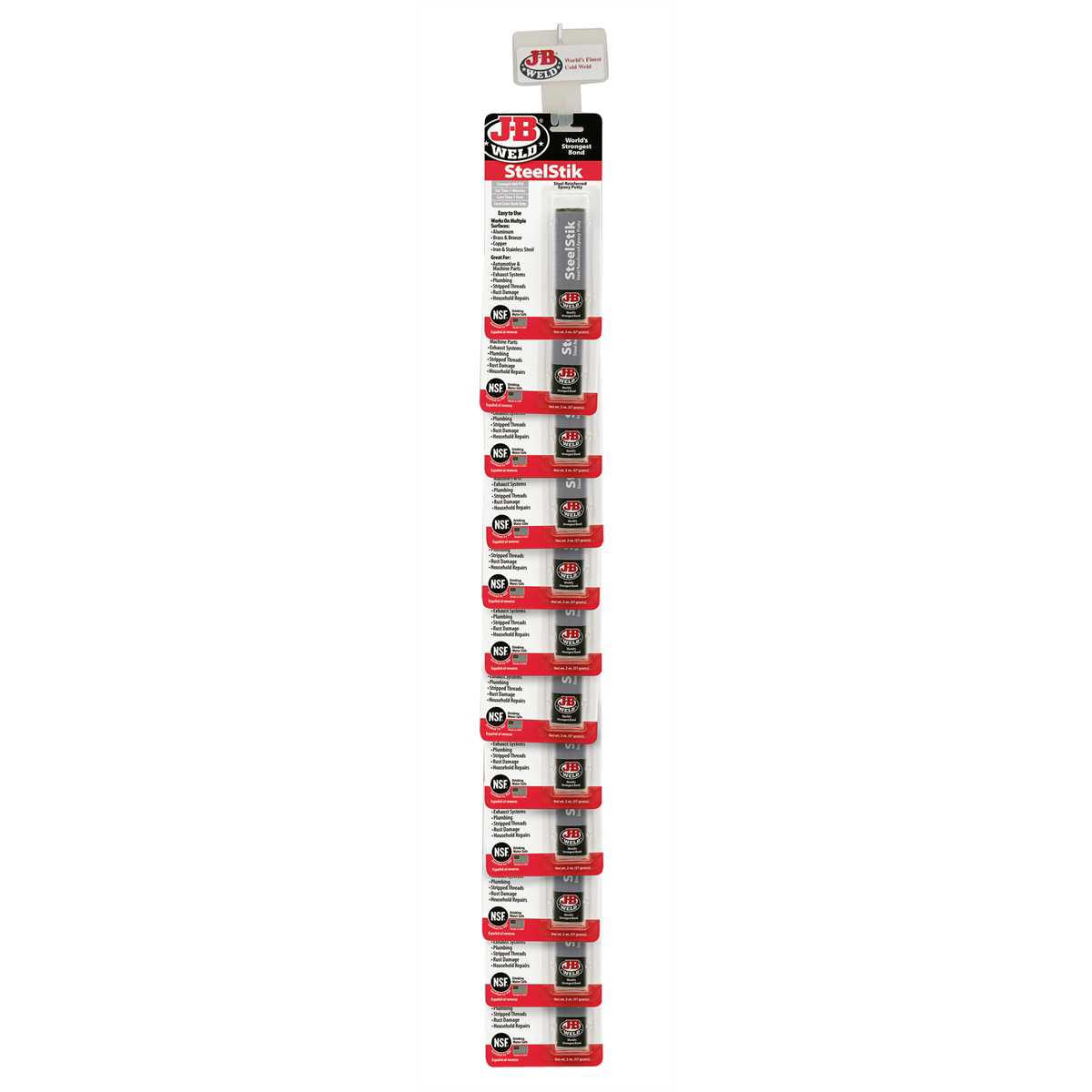
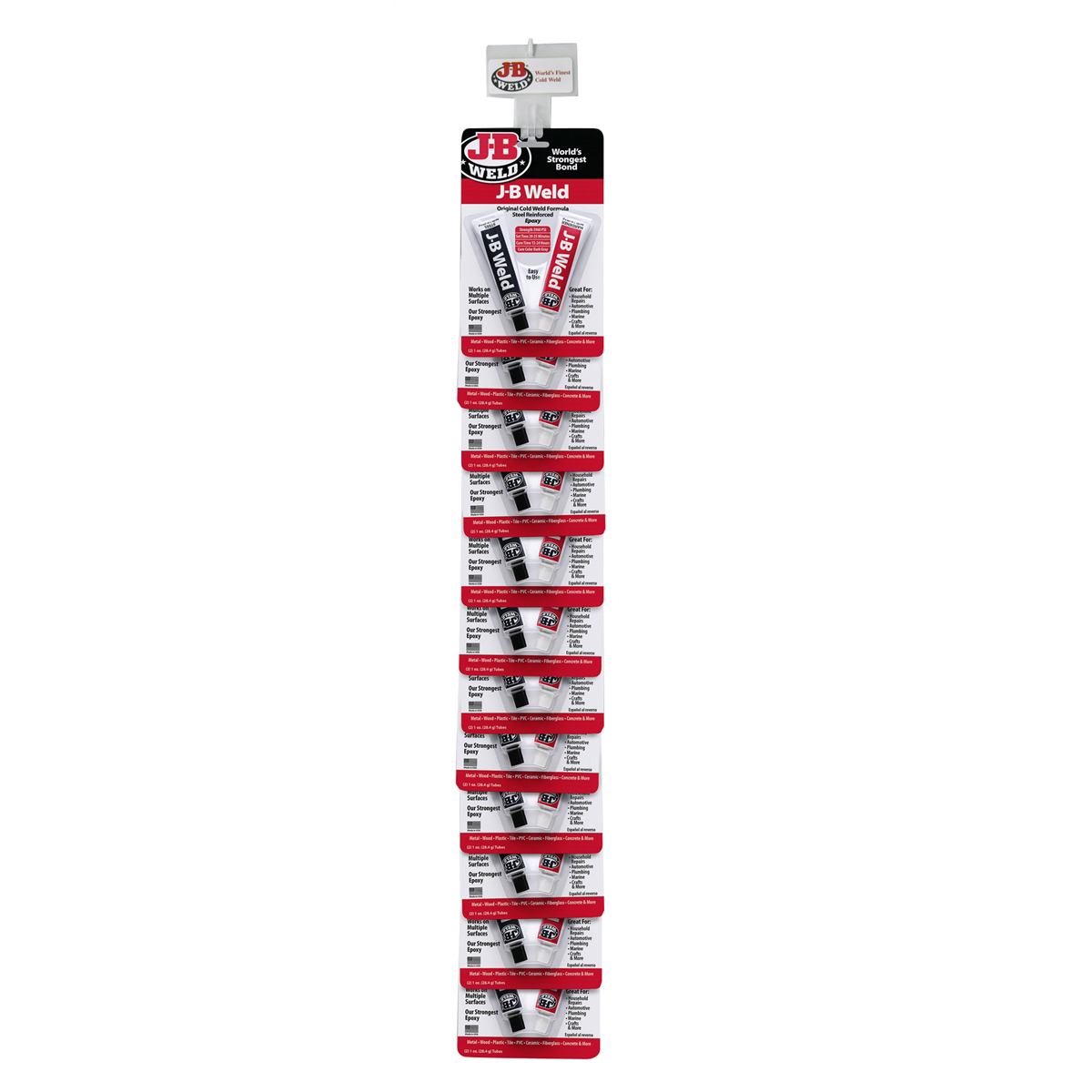
JB Weld High Heat epoxy
Rated to 550°F (ExtremeHeat to 2400°F), this is the best two-part epoxy for exhaust. Prep properly or it fails: grind to bare metal an inch past the leak in all directions, clean with brake cleaner or acetone, mix exactly per instructions, apply 1/8-inch layer. Most DIYers fail by putting epoxy over rust—it sticks fine but separates from the actual metal underneath.
Works on muffler cracks and pipe holes up to 1/2 inch. Fails on flex pipes and heavily corroded metal. For holes bigger than 1/4 inch, back it with sheet metal held by a hose clamp. Cost: $8-12 for enough to repair multiple spots. Lifespan: 6-18 months depending on prep and leak severity.
Professional muffler shop repairs
Simple band clamp fixes: $20-50. Welding: $75-250 depending on complexity and location (rural shops cheaper, cities more expensive). Flex pipe replacement: $150-300. New muffler: $90-250 plus $50-150 labor. Full system: $500-1200 installed. Cities charge 30-50% more than rural areas. When calling for quotes, specify leak location, size, and whether it’s rust or damage. Ask if the quote includes parts, labor, and hardware.
Permanent Solutions
Professional welding
Most durable fix—can last your car’s lifetime on solid metal. Cost: $75-250 depending on complexity and region. Rural areas: $20-75; cities: $100-250. Get quotes from three shops. Good shops warrant work for 12 months/12,000 miles (just the weld, not surrounding exhaust). Get warranty in writing. Heavily rusted systems may be too risky to weld—shops worry more leaks will appear nearby.
Complete exhaust replacement
Makes sense with multiple leaks, heavy rust everywhere, or weak metal. Cost: $300-800 (basic) to $800-2000 (factory/premium stainless) plus $150-300 labor. Consider full replacement if you have three or more issues: multiple leaks, rust through 30%+ of visible areas, repairs failing within six months, shot flex pipe, or 150,000+ miles with plans to keep the car 2+ more years. Basic aluminized steel ($300-600) lasts 3-5 years. Stainless ($800-1500) lasts forever, worth it in winter salt climates.
| Method | Cost | Lifespan | Best For |
|---|---|---|---|
| Band Clamps + RTV | $5-15 | 3-6 months | Single small leak, buying time |
| JB Weld Epoxy | $8-12 | 6-18 months | Muffler cracks, small holes on solid metal |
| Professional Welding | $75-250 | 2-5+ years | Single leak on otherwise good exhaust |
| Full Replacement | $500-1200 | 5-10+ years | Multiple leaks, extensive rust, long-term ownership |
Critical Safety Warnings
Never use duct tape on exhaust
Regular duct tape melts at 200°F—far cooler than exhaust at 400-800°F. The adhesive catches fire on hot pipes and creates real vehicle fires. Even “high-temp” tape at 300°F fails in days and doesn’t seal against exhaust pressure.
Worse: if tape fails, carbon monoxide leaks into your cabin. This invisible, odorless gas causes headaches at 70 ppm, death at 150+ ppm with exposure. Upstream leaks dump CO before it hits the catalytic converter. The National Highway Traffic Safety Administration details exhaust CO poisoning risks.
Catalytic converter damage
An upstream leak triggers destruction of your catalytic converter ($800-2500 replacement). Here’s why: the leak draws air in, cooling exhaust and adding extra oxygen. Oxygen sensors detect this, tell the computer the fuel mix is too lean, so more fuel gets injected. That excess fuel ignites inside the converter at 2000°F, melting its ceramic core permanently. A $150 leak becomes a $1500 repair.
Converters have 8-year/80,000-mile federal emissions warranty, but you lose coverage if you ignore an exhaust leak. Your car also fails emissions testing with any active leak, regardless of actual emission numbers.
When to stop DIY
Get professional help if you see: catalytic converter cracks, check engine lights, visible flames or smoke, glowing-red exhaust components, system hanging down or dragging, strong exhaust smell inside the car, leaks with kids/passengers regularly in the car, or repairs still leaking after your attempt.
Pre-Repair Checklist
- Cool the exhaust 30+ minutes after shutdown
- Block wheels and use jack stands rated for your car—never just a jack
- Locate the leak exactly
- Check rust severity—repairs fail fast on heavy corrosion
- Gather all supplies: clamps, RTV/epoxy, cleaners, tools
- Clean to bare metal with wire brush and degreaser
- Ensure good light and work space
- Keep a fire extinguisher nearby
- Don’t start the engine until materials cure
- Be honest about whether you can handle this or need a pro
Frequently Asked Questions
How much does exhaust leak repair cost at a shop?
Simple band clamp fixes: $20-50. Welding: $75-250 depending on complexity and location. New muffler: $90-250 plus $50-150 labor. Full system: $500-1200 installed. Cities run 30-50% higher than rural areas. Call multiple shops—prices vary wildly.
How long will a temporary muffler leak fix last?
Aluminum foil: 2-8 weeks. Band clamps with RTV: 3-6 months. JB Weld: 6-18 months with proper prep. Store patches: 2-4 weeks. Lifespan drops with holes bigger than 1/4 inch, heavy rust, flex pipes, or road spray exposure.
Can I drive with an exhaust leak?
Small tail pipe or muffler leaks won’t destroy the engine but reduce efficiency. Upstream leaks before the catalytic converter are serious—oxygen sensors malfunction, the engine runs too rich, fuel economy drops 10-25%, and the converter can be damaged ($800-2500). Any leak letting fumes into the cabin risks carbon monoxide poisoning and needs immediate fixing.
Does an exhaust leak affect fuel economy and emissions?
Downstream leaks (muffler/tail pipe) barely hurt economy but increase noise and fail emissions tests. Upstream leaks cut 10-25% from mileage because sensors detect extra oxygen and command more fuel burning. Extra fuel damages the converter and increases emissions. You’ll fail emissions testing with any active leak.
Are exhaust repairs covered under warranty?
Factory warranties (usually 3 years/36,000 miles) cover muffler and pipes against defects, not rust or wear. Catalytic converters: 8 years/80,000 miles federal emissions warranty; oxygen sensors: 2 years/24,000 miles. You lose coverage if a leak caused the failure. Rust usually isn’t covered unless the car is brand-new. Check your paperwork for exact coverage. Some aftermarket exhausts include lifetime parts warranties, but not installation.
What causes muffler leaks?
Rust is the main culprit—moisture from burnt fuel collects inside, creating rust from within. That’s why holes appear on the bottom. Short drives worsen it because exhaust never heats enough to boil water off. Winter salt cuts service life in half in snow regions. Road debris, bad jack technique, or bottoming out puncture pipes. Worn hangers let pipes vibrate and crack at seams. Heat cycling makes metal brittle over years. Catalytic converter theft is newer—thieves cut pipes to steal converters, leaving you needing professional repair or full replacement.


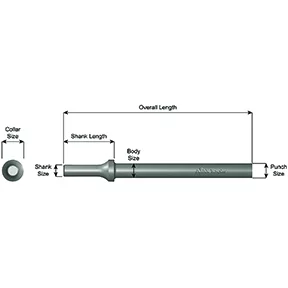
Ready to tackle your muffler leak? Whether you choose DIY repairs or professional service, having the right exhaust components on hand is essential. Explore our complete selection of exhaust system products, including mufflers, pipes, clamps, and sealants to support your repair project.
- Premium Mufflers & Silencers – OEM and aftermarket options for your vehicle
- Exhaust Pipes & Fittings – Durable components for secure connections
- Exhaust Repair Supplies – Clamps, hangers, gaskets, and high-temp sealants

The Toolsource Technical Team blends decades of real-world automotive service experience with up-to-date technical research. Our writers collaborate with professional mechanics, shop owners, and diagnostic specialists to deliver practical, workshop-ready guidance you can trust.


Follow us on social media