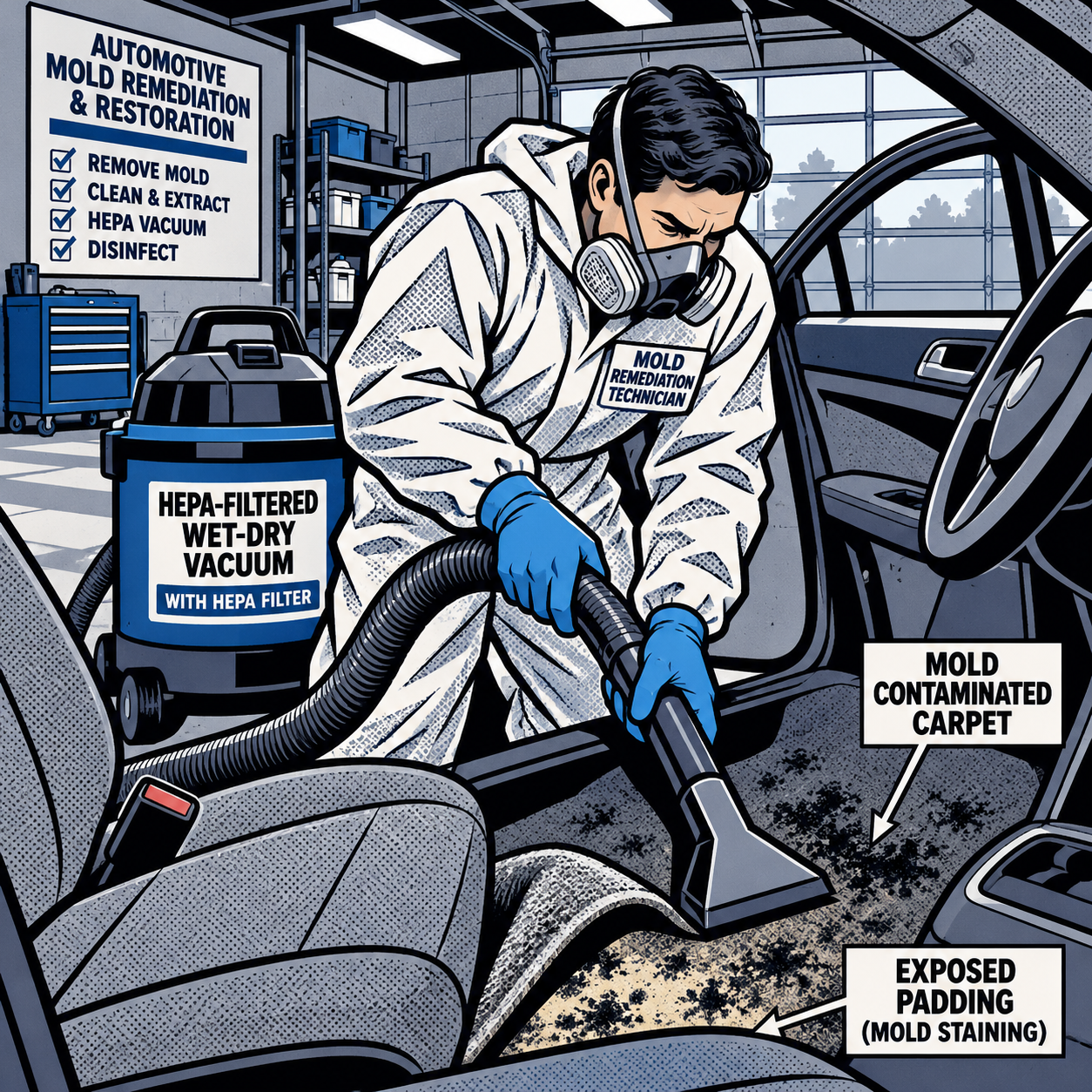
Every shop that does interior work eventually gets the call: a vehicle came out of storage and the inside looks like a science experiment. Mold in a car interior isn’t just a bad smell — it’s a health hazard for whoever works on the vehicle and whoever drives it afterward, and it spreads into places a shop vac and some air freshener will never reach. Before you quote a detail job, you need a realistic process for assessing how bad it is, protecting your team, doing the remediation correctly, and telling the customer honestly whether the vehicle is even worth saving.
Why Mold Takes Over a Stored Vehicle So Fast
Mold needs three things to establish itself: moisture, a food source, and warmth. A car interior provides all three in abundance — carpet padding, seat foam, headliner backing, and sound-deadening material are all organic enough to feed mold once they stay damp. The usual trigger is a water leak that goes unnoticed during storage: a failed sunroof drain, a bad door or window seal, a clogged cowl drain, or a windshield that wasn’t sealed correctly after a replacement. Humid climates and closed-up garages make it worse because there’s no airflow to dry anything out between rain events.
Once spores take hold, they don’t stay on the surface. They work into carpet backing, under seat foam, behind trim panels, inside HVAC ductwork, and into any fabric or foam they can reach. That’s why a car that “looks” cleaned after a wipe-down can bloom right back within days of the next humid stretch — the visible mold was removed, but the colonized material underneath wasn’t.
Assess the Damage Before You Start
Before committing shop time to a mold job, do a real assessment:
- Find the water source. Check the floor pans for standing water or dried water staining, inspect the sunroof drain tubes, check door and trunk seals, and look for rust starting under the carpet.
- Check how far the contamination has spread. Pull back a corner of carpet and check the padding underneath. Look behind the headliner at the A- and C-pillar trim. Smell test the HVAC vents with the blower on — if there’s a musty smell coming through the vents, the evaporator box and ductwork are contaminated too.
- Decide if this is a detail job or a restoration job. Surface mold on hard plastics and lightly affected fabric is manageable. Mold that has soaked into seat foam, carpet padding, or door card insulation usually means those components need to be replaced, not cleaned, because foam and padding can’t be fully decontaminated once spores are embedded.
Be honest with the customer at this stage. If the car has standing water damage plus visible mold on every surface, the realistic options are a full strip-and-replace restoration or an insurance total-loss claim — not a $200 detail package.


PPE and Containment Setup
Treat this like an environmental remediation job, not a detail. Minimum PPE is a properly fitted respirator rated for mold spores (not a paper dust mask), nitrile gloves, and disposable coveralls. Eye protection is worth it too, especially once you start agitating dried spores during vacuuming. Work with doors and windows open or in a ventilated bay, and keep anyone not wearing PPE away from the vehicle while you’re working. If your shop does this kind of job regularly, it’s worth keeping a dedicated set of mold-rated respirators and coveralls rather than borrowing standard shop PPE.
Product search: HEPA-filtered wet/dry vacuum and mold-rated respirator kit for automotive detailing
Step-by-Step Mold Removal Process
Mechanical removal matters more than disinfecting — you have to physically remove the mold and spores, not just kill them in place and leave dead material behind.
- Remove what you can. Pull seats, floor mats, and carpet where feasible. Working on components outside the vehicle is faster, safer, and lets you treat both sides of the material.
- HEPA vacuum everything first. Use a vacuum with a true HEPA filter (a standard shop vac will exhaust spores right back into the air) to pull up loose, dried mold and debris before introducing any liquid.
- Clean with an enzyme cleaner. An enzyme-based cleaner breaks down the organic material mold feeds on, which helps prevent regrowth better than a cleaner that only disinfects the surface. Work it into carpet, seat fabric, and leather, then extract thoroughly.
- Use a mold-specific treatment on heavily affected areas. A dedicated moldicide, or a diluted acetic acid (vinegar) solution for lighter staining on fabric, leather, and plastics, can be applied after the enzyme cleaning step. Follow label directions and saturation times — this isn’t a spray-and-wipe step.
- Dry completely before closing up the vehicle. Use fans and dehumidifiers, not just sunlight. Mold regrows fast in anything left even slightly damp.
- Finish with UV or chlorine dioxide treatment. A UV light run for a few hours can help knock down surface-level mold on hard surfaces. Ozone is commonly used too, but several experienced detailers consider it a gimmick for killing embedded mold — a chlorine dioxide fog is a more reliable finishing step for airborne and deep-surface spores if you have access to the equipment.
Set expectations with the customer: even a thorough two-day remediation job won’t guarantee a 100% mold-free result on heavily contaminated interiors. The goal is getting contamination down to safe levels and stopping further growth, not a guaranteed permanent cure if any material remains that couldn’t be fully cleaned.
Decontaminating the HVAC System
If there’s a musty smell coming through the vents, the cabin air filter, evaporator core, and duct system need attention or the car will smell like mold every time the AC or heat runs, no matter how clean the cabin looks.
- Replace the cabin air filter — don’t try to clean and reuse it.
- Use an AC system cleaner formulated specifically to treat mold and bacteria in the evaporator case, run with the blower on full and the system recirculating in a closed vehicle per the product’s instructions.
- If the smell persists after treatment, the evaporator housing may need to be pulled for direct cleaning — this is more labor but is sometimes the only way to reach mold growing directly on the evaporator fins.
Preventing Mold During Long-Term Storage
Most of these jobs trace back to a vehicle sitting closed up with trapped moisture. A few habits prevent repeat visits:
- Fix the leak first. Cleaning mold without finding and repairing the water source just resets the clock until the next humid stretch.
- Use a dedicated moisture-absorbing product during storage — calcium chloride-based moisture absorbers designed for enclosed spaces work better than loose silica packets, which don’t have the capacity for a full cabin.
- Crack a window slightly or use a solar-powered vent fan if the vehicle will sit for months, to keep air moving.
- Store in a dry, covered space whenever possible — an uncovered vehicle with a marginal seal is a mold case waiting to happen.
- Check stored vehicles periodically rather than opening them up for the first time after months in the garage.
Quick Checklist
- Identify and fix the water intrusion source before cleaning
- Assess spread into foam, padding, and HVAC before quoting the job
- Wear a mold-rated respirator, gloves, and coveralls
- HEPA vacuum before any liquid treatment
- Clean with enzyme cleaner, then treat with moldicide or diluted acetic acid
- Replace cabin filter and treat the HVAC system separately
- Dry completely before closing up the vehicle
- Use a proper moisture absorber for future storage
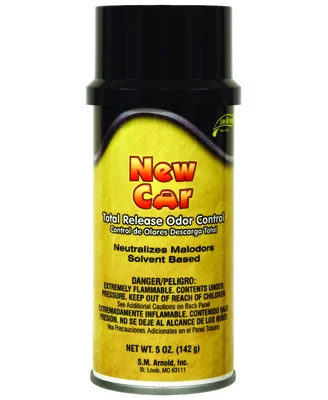
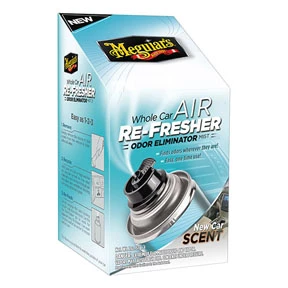
Product search: automotive interior detailing and odor remediation supplies

FAQs
Can mold in a car interior ever be removed 100%?
Realistically, no guarantee exists once mold has spread into foam, padding, or sound-deadening material. The goal of remediation is reducing contamination to safe levels and stopping regrowth, not an absolute guarantee, especially on heavily affected vehicles.
Is ozone treatment effective against mold in cars?
It’s commonly used and can help with odor, but several experienced detailers consider it unreliable for killing embedded mold compared to mechanical cleaning plus a chlorine dioxide fog treatment. Don’t rely on ozone alone as a mold kill step.
When is a moldy car not worth repairing?
When mold has soaked into seat foam, carpet padding, and headliner backing throughout the cabin, and especially if there’s evidence of standing water and developing rust under the carpet, full restoration cost often exceeds the vehicle’s value. That’s when a total-loss insurance claim is the more practical route.
What’s the biggest mistake shops make on mold jobs?
Disinfecting without mechanically removing the contaminated material first. Spraying a surface cleaner on moldy carpet or foam without extraction and real agitation leaves the food source and embedded spores behind, so it blooms again with the next bit of humidity.
Do I need special PPE for a mold job, or is a dust mask enough?
A standard dust mask isn’t adequate. Use a respirator rated for mold spores, nitrile gloves, and disposable coveralls, and ventilate the work area. This protects both the technician and anyone else in the shop.
How do I stop mold from coming back after cleaning?
Fix the water leak that caused it, make sure everything is completely dry before the vehicle is closed up again, and use a proper moisture-absorbing product during any extended storage. Skipping leak repair is the most common reason mold returns.
Shop Equipment and Supplies
A proper mold remediation job requires specialized equipment and protective gear. Browse our Shop Equipment and Supplies for HEPA vacuums, mold-rated respirators, and detailing treatments needed to handle interior contamination safely and effectively.
- HEPA-filtered vacuums and wet/dry extractors for safe mold spore removal
- Respirators, gloves, coveralls, and protective gear rated for mold remediation work
- Enzyme cleaners, moldicides, AC system treatments, and moisture absorbers

The Toolsource Technical Team blends decades of real-world automotive service experience with up-to-date technical research. Our writers collaborate with professional mechanics, shop owners, and diagnostic specialists to deliver practical, workshop-ready guidance you can trust.


Follow us on social media