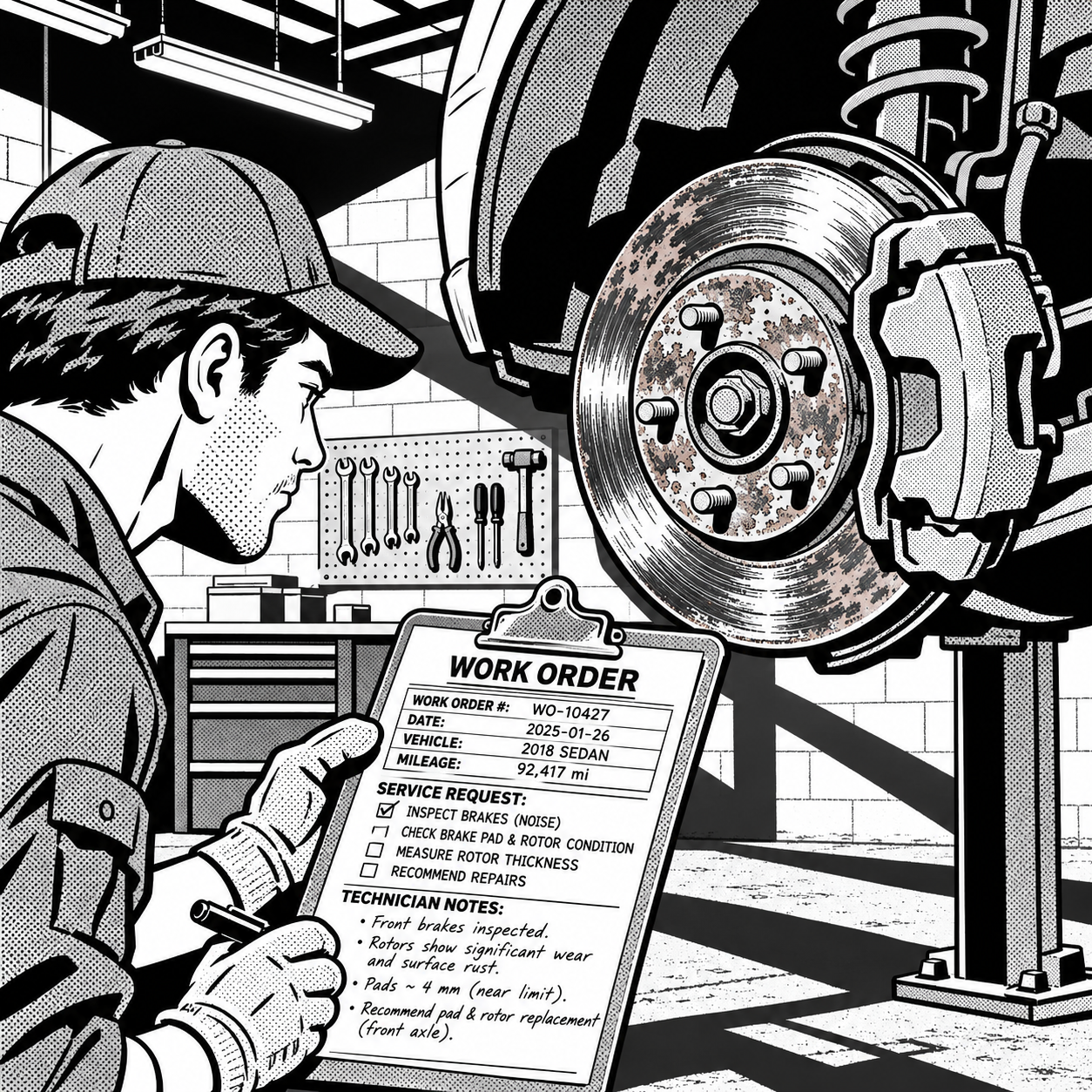
Every shop eventually runs into the same argument: a customer insists they were never told about a needed repair, and the only thing standing between your shop and an expensive comeback is whatever got written down at the time. Verbal warnings don’t hold up in a dispute — paper, timestamps, and signatures do. The good news is that fixing this doesn’t require a lawyer or a new POS system overnight. It requires a consistent habit of documenting every recommendation, every decline, and every approval the same way, every single time.
Why Verbal Conversations Always Lose
When a disagreement escalates, it comes down to one person’s memory against another’s. A service writer who says “I told him about the ball joints” is making a claim; a signed, timestamped decline on an invoice is evidence. Courts and small-claims mediators don’t weigh sincerity — they weigh documentation. If nothing was written down, the shop is starting from a disadvantage even when the technician did everything right.
This matters most on safety-critical items. Steering and suspension components, brakes, and anything tied to vehicle control carry higher stakes if a customer declines the work and something fails later. Treat these differently from routine maintenance recommendations — they need their own paper trail, not just a mental note that “we mentioned it.”
Put Every Recommendation on the Written Estimate
The habit that prevents most disputes is simple: nothing gets recommended verbally only. If a technician flags an issue during an oil change, multi-point inspection, or any other job, it goes on the estimate or work order as a line item — even if the customer is standing right there and says no on the spot. Many shops using modern shop management platforms keep the original estimate and the final payment on the same job record, so there’s no separate “inspection sheet” that can get lost or disputed as a different document than what was paid for.
A few practices make this bulletproof:
- Write the specific finding, not a vague note — “front lower ball joints showing excessive play, recommend replacement” beats “suspension issue noted.”
- Record the date and time the recommendation was made, not just the date of the visit.
- Keep every version of the estimate. If a line item gets added or removed, save the prior version — don’t overwrite it. Several shops staple last week’s printed estimate to this week’s as a running history.
- Print a copy for the customer at pickup, not just a digital copy buried in a portal they’ll never open again.
[PRODUCT_SEARCH: digital vehicle inspection tablet with signature capture]


Require Signatures on Every Declined Repair
A note on a ticket is good. A customer’s initials next to that note is much better. Make it standard procedure that any declined repair — especially anything safety-related — gets a physical or digital signature acknowledging the customer was informed and chose not to proceed. This isn’t about distrust; it’s about removing ambiguity for both sides.
For critical components (steering, suspension, brakes, tires), consider highlighting those lines in red or flagging them separately on the decline sheet. If a customer later claims “I didn’t know that was serious,” you can point to a specific line they initialed that called it out as a safety item, not a routine recommendation buried in a long list.
Don’t assume a customer understands the stakes just because you used the correct part name. “Ball joint” means nothing to most drivers. Train service writers to add a plain-language consequence — “this part failing while driving could cause a loss of control” — directly into the note customers sign off on. That single sentence does more to protect the shop than the technical term ever will.
Lock Down Phone and Verbal Approvals
The messiest disputes aren’t about declined work — they’re about approved work with no record of the approval. A customer calls, says “go ahead,” and by the time the bill comes due, they don’t remember agreeing to it, or claim they approved something different. Two people remembering the same phone call differently is a dead end, and the shop is usually the one left proving the call happened at all.
Close this gap with a few changes to how approvals get handled:
- Move approvals to text message whenever possible. A text that says “Approve brake pads/rotors, $XXX, reply YES to confirm” creates a timestamped, unalterable record that neither side can reasonably dispute later.
- If a call does happen, read the approval back to the customer before hanging up — “just to confirm, you’re approving the ball joint replacement for $X, correct?” — and log the date, time, and who you spoke with in the system notes immediately after.
- Record calls where state law allows it, and disclose that calls may be recorded. This protects both the shop and the customer from genuine misunderstandings.
- Get a name and relationship on file when someone other than the vehicle owner is approving work — a spouse or family member calling in on someone else’s account should be noted as such.
Choose Shop Software That Builds the Record for You
Manual notes work, but they rely on someone remembering to write them every time. Shop management software that ties estimates, approvals, declines, and payments into a single, time-stamped job record removes that dependency. Look for a few specific capabilities when evaluating or upgrading your system:
- Text-based quoting with customer approval built into the message thread, so the approval and the quote live in the same record.
- A dedicated “declined services” section on the invoice that lists what was recommended, what it would have cost, and that it was turned down — visible on every printed or emailed copy.
- Locked, non-editable invoice history once a job is closed, so no one can argue the record was altered after the fact.
- Searchable notes tied to the vehicle, not just the invoice, so repeat customers’ declined-repair history follows the car across visits.
Platforms built around this workflow exist specifically because this dispute is common across the industry — it’s worth the switching cost if your current system can’t produce a clean, time-stamped record on demand.
When a Customer Pushes Back Anyway
Even with perfect documentation, some customers will escalate. Stay factual rather than defensive: provide the signed decline sheet, the printed estimate history, or the text thread, and let the record speak. If a shop genuinely has no documentation — no notes, no signature, no text — that’s a fair argument for splitting the cost of the fix, since the customer has a point that nothing confirms they were warned. But if the documentation exists, the shop owes nothing beyond repairing the new damage at the customer’s cost, billed as a separate job with its own paper trail.
It’s also reasonable to decline future work for a customer who repeatedly disputes documented approvals or declines. Protecting the shop isn’t just about this one invoice — it’s about not re-entering the same dispute with the same person every six months.
Quick Checklist: Documentation That Holds Up
- Every recommendation written on the estimate, not just spoken aloud
- Safety-critical declines get a signature or initials, with consequences spelled out in plain language
- Prior estimate versions saved, not overwritten, when line items change
- Phone approvals read back and logged with date, time, and name
- Text-based approval used whenever the customer is willing
- Printed copy of the ticket, including declines, handed to the customer at pickup
[PRODUCT_SEARCH: shop management software and work order supplies]


Frequently Asked Questions
Do I have to inspect every component on a car that comes in for an unrelated service?
No. A shop hired for a specific job, like an oil change, generally has no legal duty to inspect unrelated systems unless that inspection was part of the agreed service. If a technician happens to notice an issue during that work, documenting and communicating it is good practice, but it doesn’t create liability for components outside the original scope.
Is a verbal warning enough if the customer later denies hearing it?
No. Without a note, signature, or recording, a verbal warning is unprovable in a dispute. Always follow a verbal recommendation with something written — on the estimate, the invoice, or a text message.
Should declined repairs appear on the final invoice, or just the original estimate?
Both, ideally, but the invoice matters most since it’s the document the customer pays against and keeps. A declined-services section on the invoice, separate from completed work, is the clearest way to show what was offered and turned down.
What if the customer only initials some declines and not others?
Treat any unsigned recommendation as unprotected documentation. If a customer is unwilling to initial a decline, note that refusal in the system with a timestamp and have a second staff member witness it if possible.
Are recorded phone calls legal to use for approval purposes?
Laws vary by state — some require only one party’s consent to record, others require both. Check local law before recording calls, and when in doubt, disclose that calls may be recorded and shift approvals to text or email instead.
How long should a shop keep estimate and decline records?
Most shops keep records for several years to cover the statute of limitations on personal injury and property damage claims in their state, which commonly runs two to four years. Check with a local attorney for the specific limit that applies, and default to keeping digital records longer since storage is cheap.
Documentation Supplies and Equipment
The practices outlined here depend on having proper documentation supplies on hand. Our Shop Equipment and Supplies category includes work order forms, signature sheets, and record-keeping systems built for this workflow.
- Multi-part work order forms and inspection tickets
- Signature and initials documentation pads
- File organization and storage solutions for repair records

The Toolsource Technical Team blends decades of real-world automotive service experience with up-to-date technical research. Our writers collaborate with professional mechanics, shop owners, and diagnostic specialists to deliver practical, workshop-ready guidance you can trust.


Follow us on social media