A driveway fender-bender or a parking-lot door ding rarely justifies a full insurance claim, but the person writing the check still wants to know the damage is worth what they’re being charged. As a technician, you’re the tiebreaker in that conversation — the one who can look at a dented bumper cover and say whether it’s a $150 PDR job, a $2,500 respray, or something in between. Getting that call right protects your shop’s reputation and gives customers (and the insurance-averse parents footing the bill) a number they can trust. Here’s a practical walkthrough for assessing minor bumper damage, choosing the right repair path, and quoting it honestly.
Start With an Honest Damage Assessment
Before touching a heat gun or dent tool, separate cosmetic damage from anything structural. Most “my kid backed into your car” incidents involve the bumper cover — a plastic or composite shell over the actual impact-absorbing bumper bar — not the bar itself. Check for:
- Cracks or splits in the plastic (not just a dent) — these usually can’t be pulled back to spec and need cover replacement.
- Misalignment at the panel gaps next to the headlight, fender, or trunk, which can indicate a bent bracket or mounting tab behind the cover.
- Paint transfer only, with no deformation — often buffs or touches up without any reshaping at all.
- A single, shallow depression with intact paint — the best-case scenario for a low-cost fix.
If the cover is cracked, the mounting tabs are broken, or there’s damage to the reinforcement bar behind it, don’t quote a cosmetic fix — that’s a parts-and-labor job that belongs on a proper estimate, not a handshake price.
Paintless Dent Repair (PDR) for Shallow, Unpainted-Damage Dents
For dents on metal panels with intact paint, PDR is almost always the right first option. It’s faster and cheaper than body filler and paint, and done correctly it leaves no trace. The basic process:
- Access the backside of the panel (through a wheel well, trunk, or by partially removing a door panel).
- Use dent rods and tips to apply gradual pressure from behind while working the metal back to its original contour.
- Use a PDR light board on the front side to read the panel’s reflection lines — this is how you judge progress without seeing the repair from behind.
- Finish with fine tapping or a glue-pull kit for high spots that can’t be reached from behind.
PDR only works when the paint hasn’t cracked or stretched. If you see the clearcoat has crazed or the base coat has flaked at the deepest point of the dent, PDR alone won’t get you a clean result — plan on a small spot repair with primer and blend.
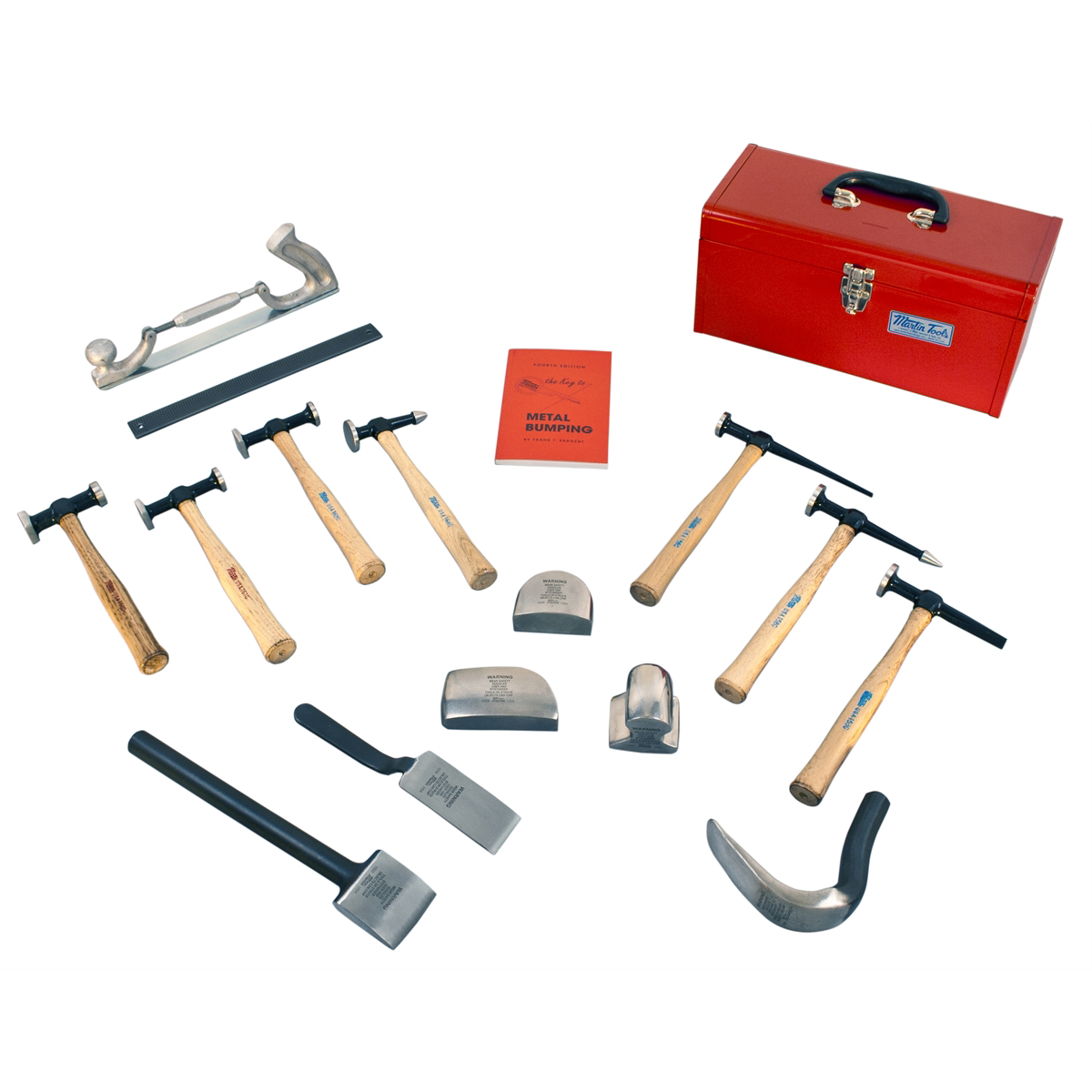
Techs stocking a mobile or in-bay PDR setup should look at kits scaled to daily door-ding and minor collision work rather than full collision-shop rigs.
[[PRODUCT_SEARCH: paintless dent repair kit]]
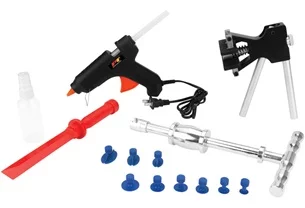
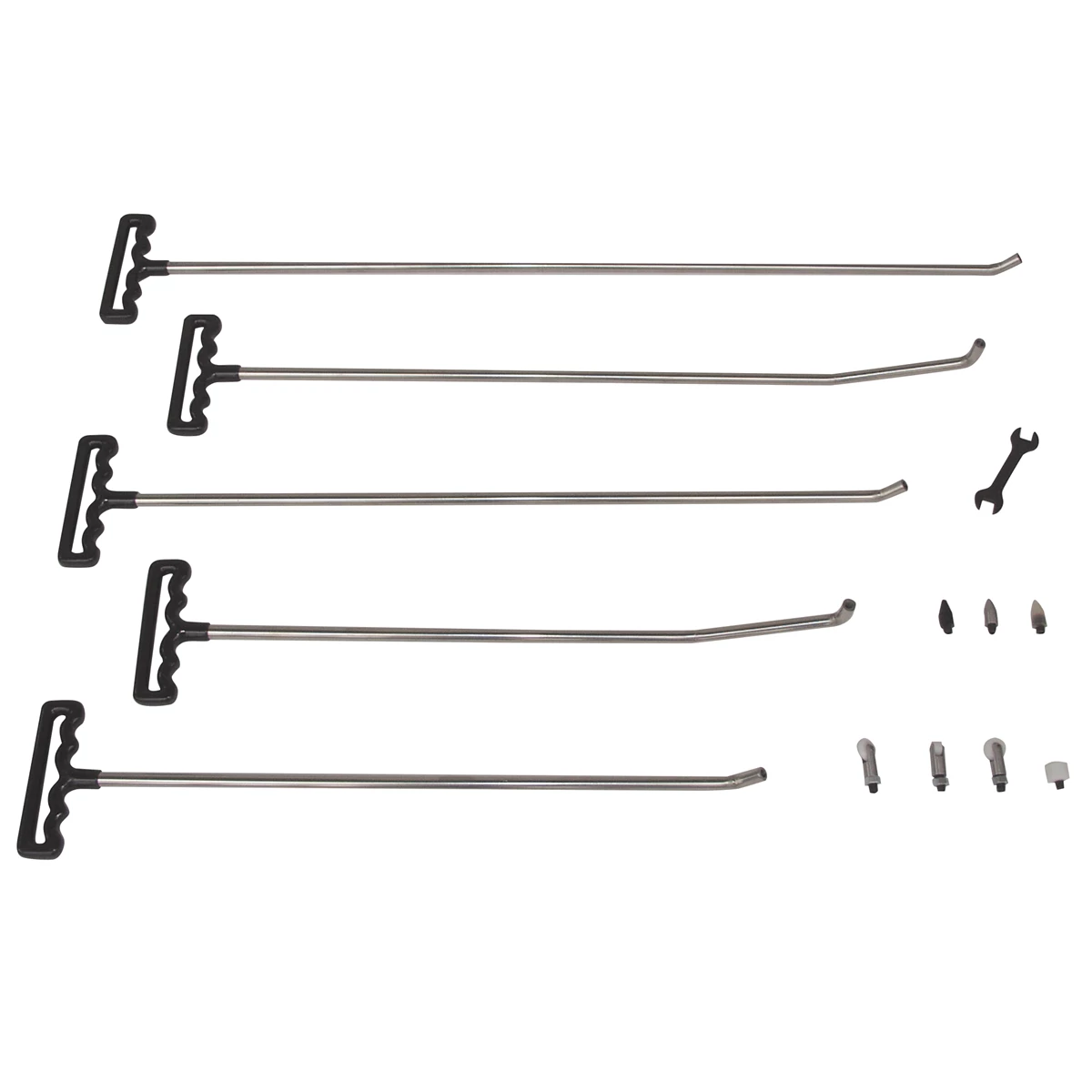
Roller Rod Paintless Dent Removal Kit
Mfg: Lock Technology LTI by Milton
Part #: LT825D
Bumper Cover Reshaping With Heat
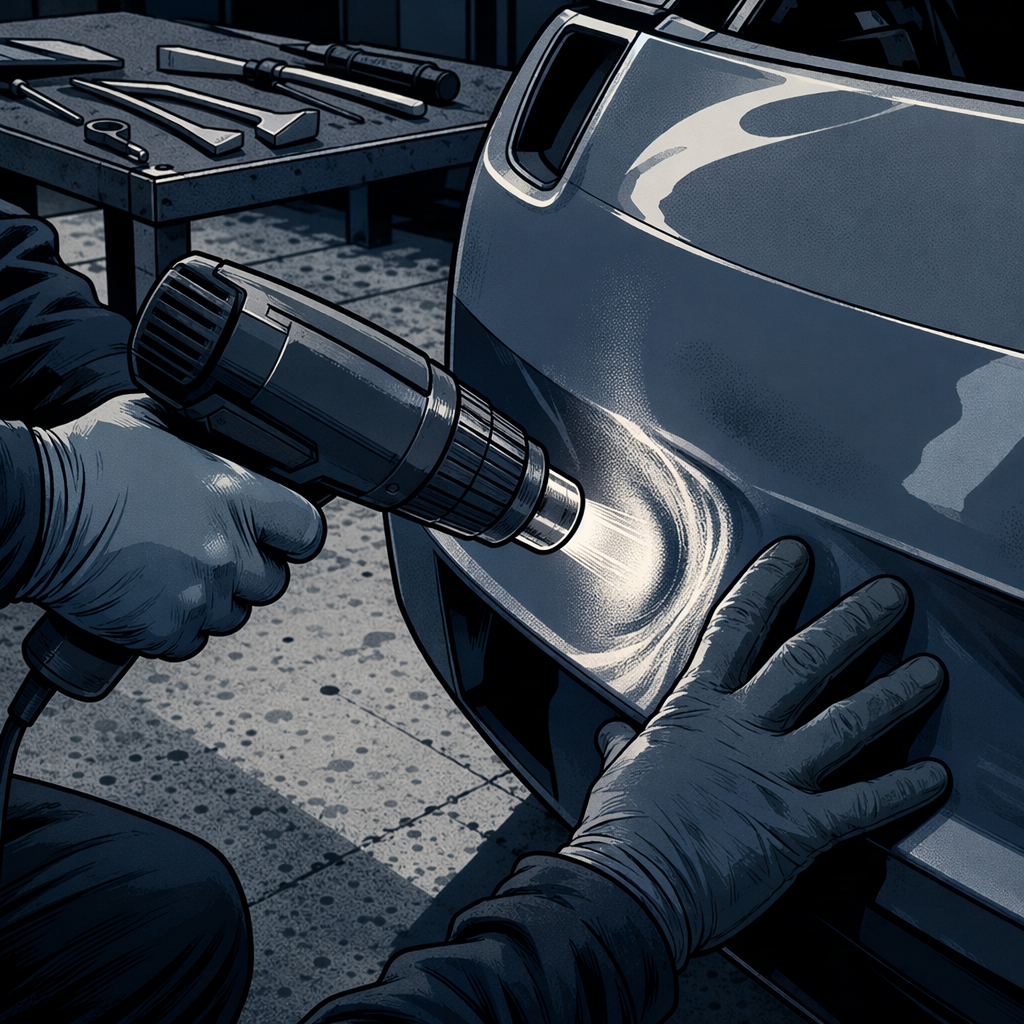
Plastic bumper covers behave differently than metal — they don’t hold a memory the same way, but they do respond well to heat. This is the standard approach for a pushed-in bumper cover with no cracking:
- Warm the damaged area evenly with a heat gun (or a hair dryer for very minor work) at a moderate distance, moving in slow, continuous passes. Never hold the heat in one spot — that scorches or warps the plastic.
- Once warm and pliable, apply steady pressure from behind, pushing the deformed area back toward flush. A gloved hand works for light damage; use a rounded push tool or suction cup puller for stubborn spots.
- Let the area cool while holding shape, then re-check panel alignment against adjacent trim.
- Repeat in short cycles rather than trying to force it flush in one pass — bumper covers spring back if pushed too hard too fast.
This method routinely brings a bumper cover back to factory contour without any filler or paint work, which is why it’s the go-to for the classic “minor dent, no crack” scenario.
Touch-Up Paint and Blending — Do It Right or Don’t Do It
Once the shape is corrected, surface finish is the next decision point. A true touch-up (small chip or light scuff with no reshaping) can reasonably be handled with a matched touch-up pen or a basecoat/clearcoat pen system, applied in thin layers and leveled with fine wet-sanding and polish.
For anything larger than a coin-sized chip, skip the paint pens. A proper spot repair means:
- Scuffing and masking the repair zone with a soft-edge blend into the surrounding panel.
- Applying primer, basecoat, and clearcoat in calibrated ratios — a single pint of basecoat, clearcoat, and catalyst can run $250+ before labor, which is a big part of why “just paint it” estimates run higher than customers expect.
- Color-matching by VIN or paint code, not by eye, since factory color can shift by production batch.
Setting expectations here matters. A customer who says “it’s just a little paint” is often surprised that a proper blend costs materials alone in the hundreds of dollars — which is exactly why so many minor bumper incidents get settled in cash rather than through insurance or a full repaint.
Quoting a Fair Cash Price Instead of a Full Estimate
When the customer (or the at-fault party) explicitly says they don’t want to file a claim and won’t be doing a full cosmetic repair, your job shifts from “estimate the repair” to “quote what it would take if they did.” Some working guidelines:
- If the damage is a shallow, unpainted dent, a PDR-only quote ($150–$500 depending on access and depth) is a fair number.
- If the bumper cover needs heat-reshaping plus a spot blend, price it as a real repair — parts, materials, and shop labor, not a guess. Many honest quotes for cover replacement plus paint land in the $1,500–$2,500+ range at full-service body shops.
- Don’t pad the number to account for “aggravation” — a defensible, itemized quote is easier for both sides to accept and holds up if the conversation turns into a dispute later.
- If a customer says outright they won’t be repairing it and are settling for a token amount, that’s a negotiation between the parties — your role is giving them an accurate number to negotiate from, not setting the final settlement.
Quick Checklist: Assessing Minor Bumper Damage
- Confirm the cover isn’t cracked and mounting tabs are intact
- Check panel gaps at headlight/fender for hidden misalignment
- Test PDR feasibility if paint is unbroken on a metal panel
- Use slow, even heat passes for plastic cover reshaping — never spot-heat
- Match repair scope to actual cost: PDR vs. touch-up vs. full blend
- Give an itemized quote, not a round-number guess
Shops that regularly handle these walk-in, no-claim repairs benefit from keeping a basic cosmetic repair station stocked separately from full collision equipment — heat guns, panel pullers, glue-pull tabs, and a small paint-matching reference kit cover the vast majority of these jobs without pulling from full-collision inventory.
[[PRODUCT_SEARCH: automotive body repair tools]]


FAQs
Is PDR always cheaper than traditional bodywork?
For shallow dents with unbroken paint, yes — PDR typically costs a fraction of filler-and-paint repair because there’s no material or refinish labor involved. It stops being an option once paint has cracked or stretched.
Can a heat gun damage a bumper cover?
Yes, if held too close or too long in one spot — this can scorch, discolor, or warp the plastic. Keep the gun moving in passes and test heat on an inconspicuous area first if you’re unsure of the plastic type.
How do I know if a dent needs a new bumper cover versus reshaping?
If there’s a visible crack, split seam, or broken mounting tab, reshaping won’t hold — the cover needs replacement. Intact plastic with only a smooth depression is a good reshaping candidate.
Why do touch-up pens get bad results on bigger repairs?
Pens lay down a thick, unblended dot of color that rarely matches sheen or exact shade, and they don’t address surface leveling. They work fine for chip-sized damage but look worse than the original scratch on anything larger.
Should I recommend a customer file an insurance claim for a small dent?
That’s the customer’s call, not the technician’s — but it’s worth mentioning that even minor claims can affect future premiums regardless of fault, which is why many people prefer a cash settlement for low-cost repairs. Give them the real repair cost either way.
What’s a reasonable price range for a single-panel PDR job?
Depending on dent size, depth, and access, most single-panel PDR work runs $150–$500. Deeper dents near body lines or with limited backside access can run higher.
Recommended Tools for Bumper Repair
Whether you’re assessing damage or preparing a repair, our Paint & Body selection stocks the tools and supplies you need for minor bumper work.
- Paintless dent repair kits for shallow dents with intact paint
- Heat guns and panel-reshaping tools for plastic bumper covers
- Paint, primers, and blending supplies for spot repairs

The Toolsource Technical Team blends decades of real-world automotive service experience with up-to-date technical research. Our writers collaborate with professional mechanics, shop owners, and diagnostic specialists to deliver practical, workshop-ready guidance you can trust.


Follow us on social media