Now I’ll compress this to under 2000 words by removing redundancy, tightening sentences, and consolidating information while keeping all structure and the FAQs:
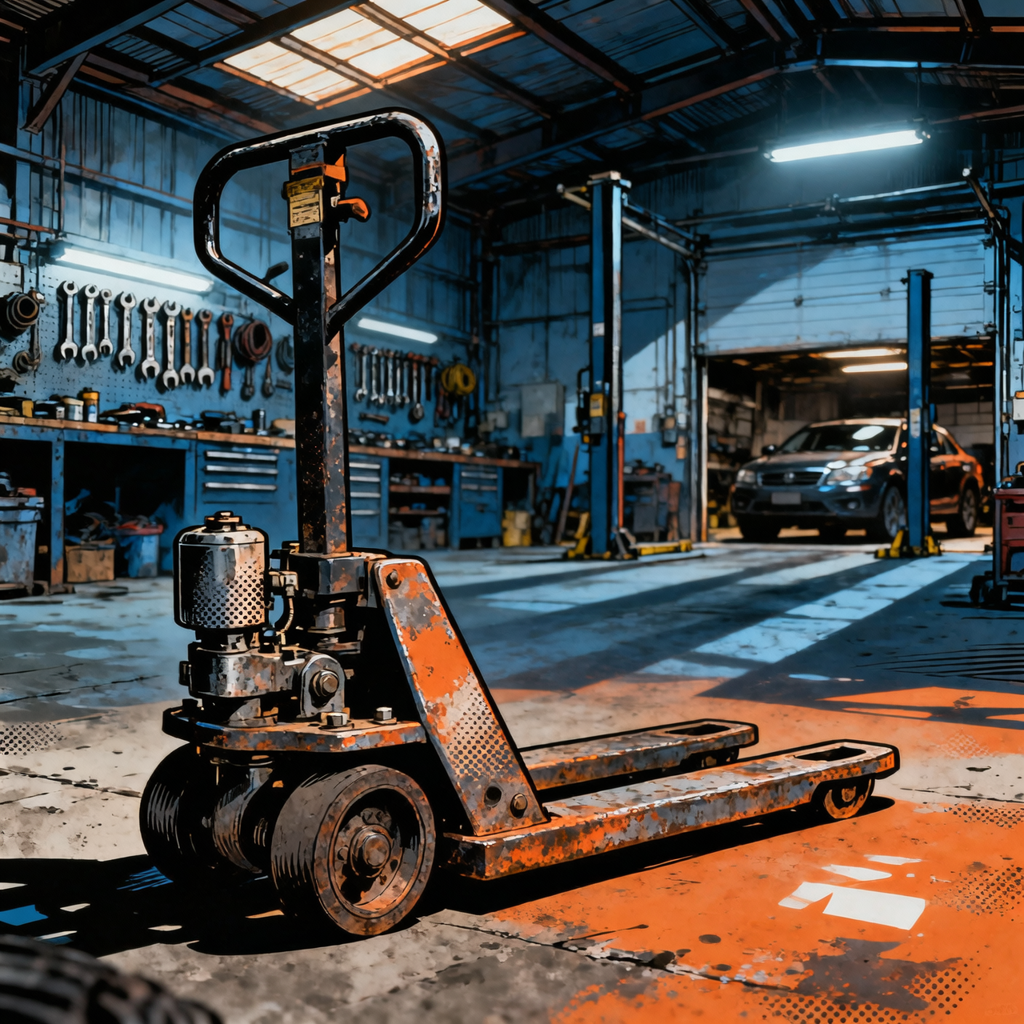
Manual pallet jacks remain indispensable in North American warehouses despite decades of automation. These simple hydraulic tools combine reliability, versatility, and low cost—costing a fraction of electric alternatives while providing essential backup when powered equipment fails. Understanding when and how to use them effectively ensures smooth operations and prevents costly downtime.
Why Manual Pallet Jacks Remain Essential in Modern Warehouses
Manual pallet jacks operate on straightforward hydraulic principles with minimal moving parts. They require no batteries, no motor maintenance, and no complex electronics. This simplicity ensures operational reliability—they work during power outages when forklifts and electric jacks fail. Industry veterans report Raymond and Crown manual jacks operating 10-15 years with only occasional hydraulic fluid top-offs and wheel replacements.
Unlike electric jacks requiring dedicated charging stations and rotation schedules, manual jacks eliminate charging infrastructure headaches. Grab one after months of storage and use it immediately.
Cost comparison is striking: quality manual jacks cost $300-800, while electric models start at $2,500 and reach $8,000+. Over ten years, manual jacks cost far less—no battery replacements ($800-1,200 every 3-5 years), no electrical maintenance, minimal repairs if properly maintained. For facilities moving 50-100 pallets daily, a hybrid fleet of 2-3 manual jacks plus one electric unit optimizes spending and flexibility.
Experienced warehouse managers maintain manual jack fleets specifically as contingency equipment. When forklifts break down, electric batteries die mid-shift, or automated systems fail, manual jacks prevent complete work stoppage.
Choosing the Right Manual Pallet Jack for Your Operation
Weight capacity ratings and load-handling best practices
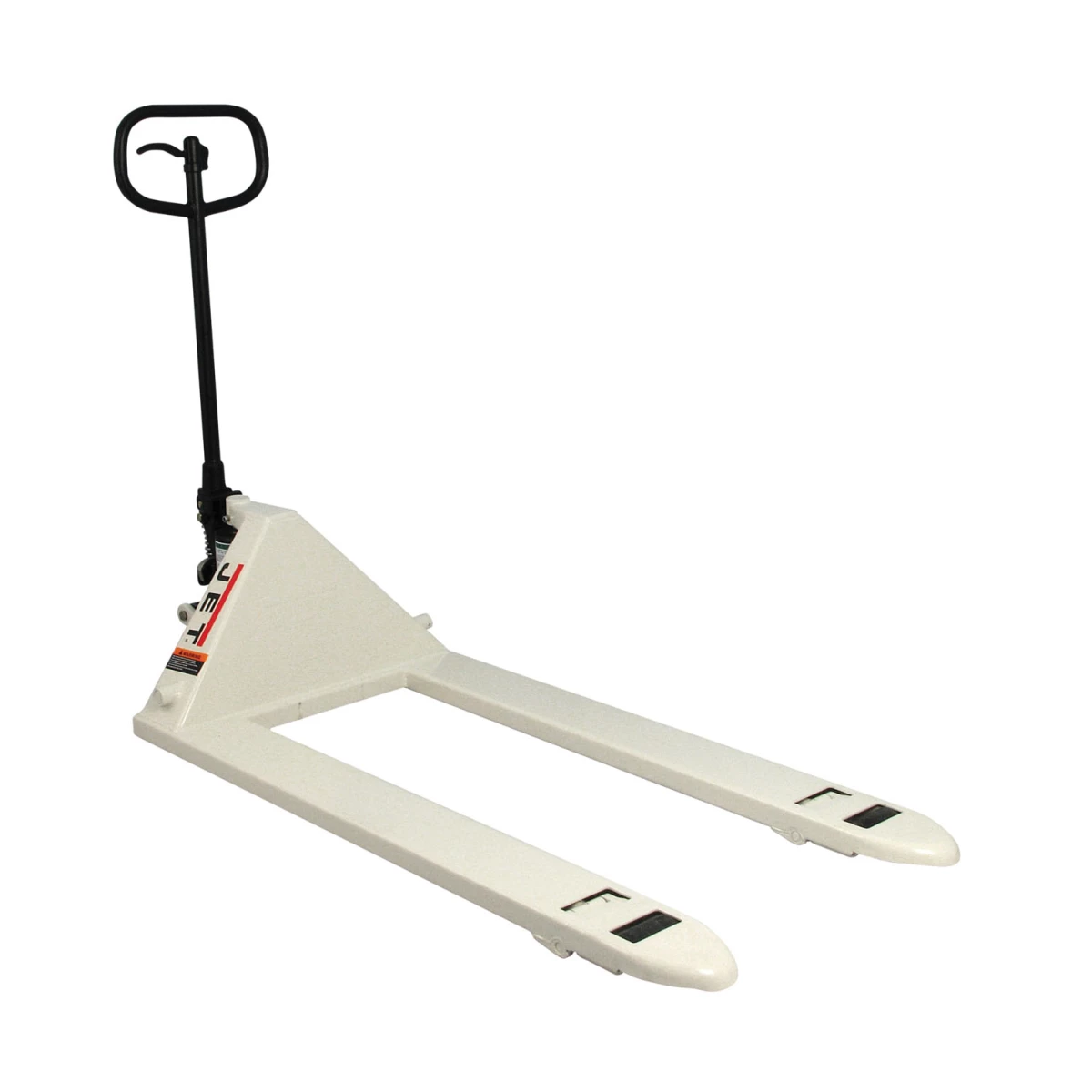
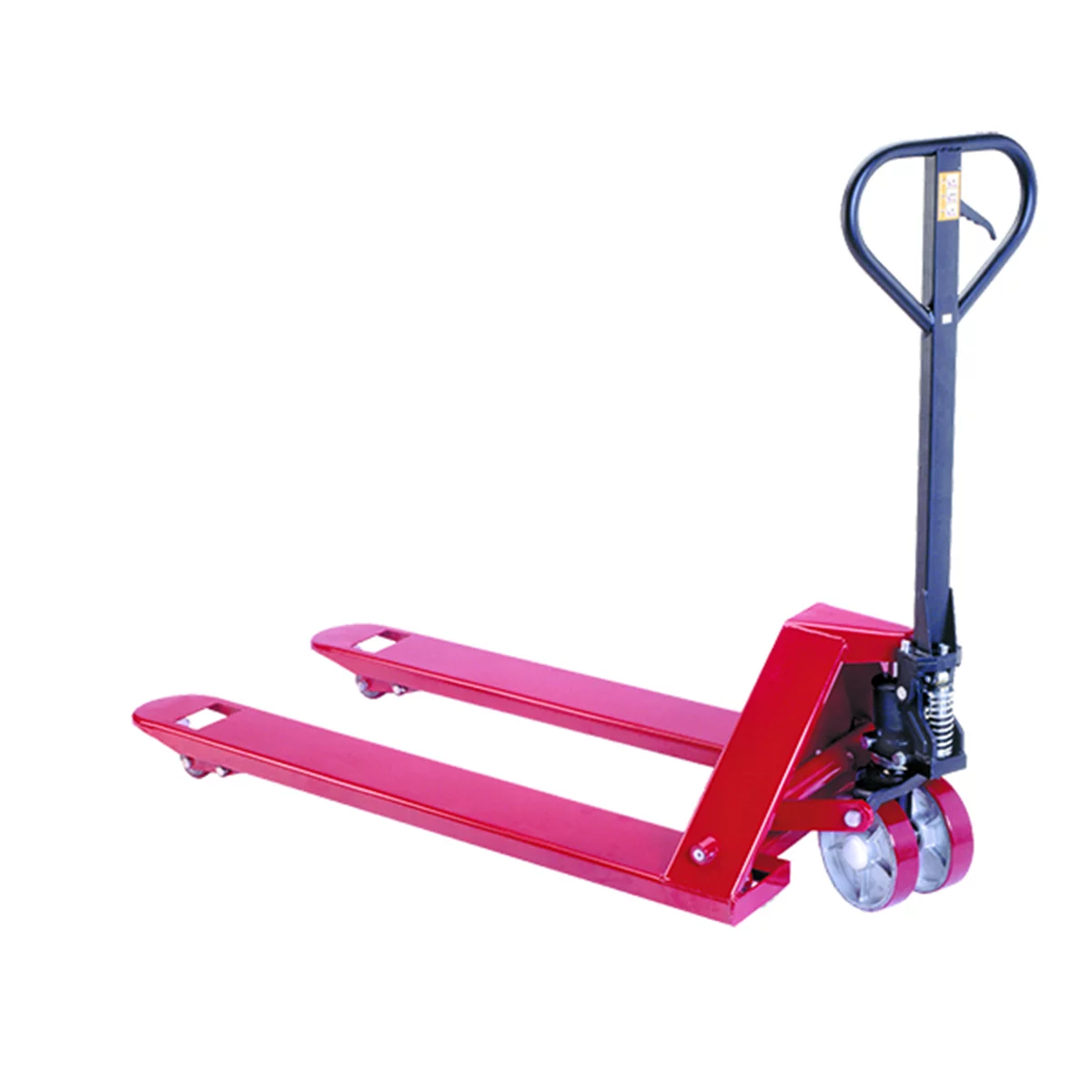
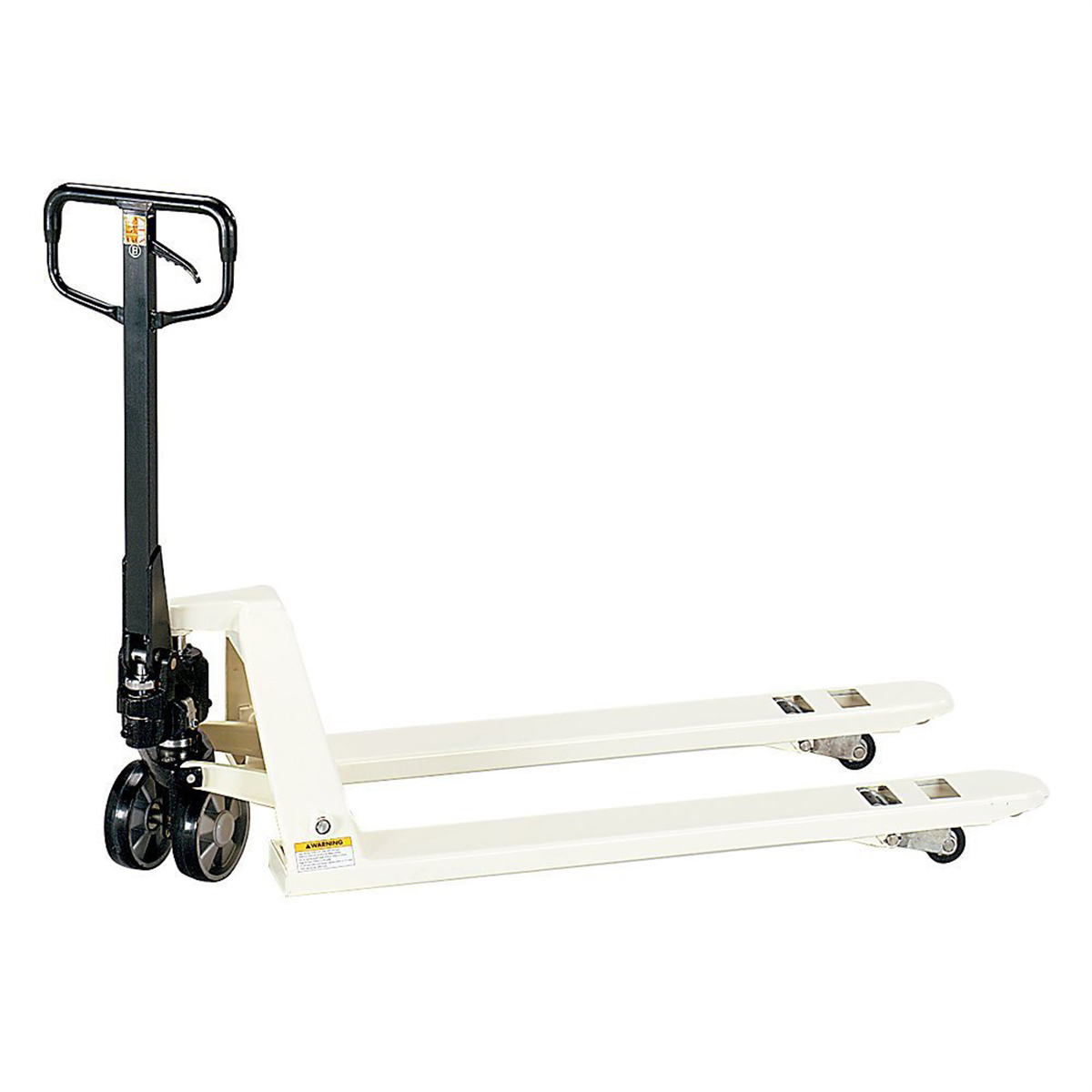
Standard manual pallet jacks are rated for 5,500 pounds. However, best practice dictates operating at 80% of rated capacity (4,400 pounds) for regular use, reserving full capacity for occasional peak loads. This safety margin prevents damage to equipment and protects against unbalanced loads or concentrated weight distributions.
For facilities regularly handling 4,500+ pound loads, invest in heavy-duty models rated for 6,600-8,000 pounds. Standard 48″ forks work for most applications, but larger pallets require longer forks. Tight retail stockrooms benefit from shorter 36″ forks for improved maneuverability.
Top-rated brands and quality considerations
Raymond, Crown, and Yale consistently deliver reliable performance with minimal maintenance. Raymond jacks excel in heavy daily use and last 10+ years. Crown offers solid commercial performance with readily available parts. Yale provides mid-tier quality at competitive prices.
Budget import jacks at $200-350 seem attractive but rarely justify the savings. These units feature inferior hydraulic components, thin steel construction, and wheels that degrade rapidly. The $300-500 saved upfront disappears when cheap jacks require replacement after 18-24 months while quality units remain operational.
Specifications for your warehouse environment
Fork width options include narrow (20.5″), standard (27″), and wide configurations. Narrow forks navigate tight European pallets and confined spaces but sacrifice stability with wider loads.
Wheel composition affects performance: Polyurethane wheels roll smoothly on concrete and finished floors while protecting surfaces. Nylon wheels handle rougher surfaces and outdoor use better but create more noise. Steel wheels suit only demanding industrial environments due to noise and floor wear.
| Feature | Raymond 8310 | Crown PW 3010 | Yale MP |
|---|---|---|---|
| Capacity | 5,500 lbs | 5,500 lbs | 5,500 lbs |
| Fork Options | 36″, 48″, 60″ | 42″, 48″ | 45″, 48″ |
| Price | $650-$800 | $600-$750 | $450-$600 |
| Warranty | 3 years | 2 years | 1 year |
| Best For | Heavy daily use | Commercial operations | Moderate use, budget |
No products found for “manual pallet jack 5500 lbs capacity”
Safety Protocols and Injury Prevention
Manual pallet jacks cause thousands of preventable workplace injuries annually. OSHA classifies them as “powered industrial trucks” requiring training under 29 CFR 1910.178. Proper training and safety adherence eliminate 70-80% of incidents.
Common hazards and prevention
Crushed feet and toes are the most frequent injuries, caused by stepping backward while pulling loaded jacks or positioning feet under descending forks. Steel-toed safety boots are mandatory PPE.
Load crushing occurs when improperly secured cargo shifts or operators position themselves between loads and fixed objects. Finger crushing happens during fork insertion, especially in dim lighting or when rushing.
Load tipping results from unbalanced loads, excessive speed on turns, or operating on inclines beyond equipment capabilities. Maintain 3:1 height-to-width ratios for stable operation.
Proper operation techniques
For unbalanced loads, position the jack so the heavier portion sits closest to the handle, keeping the center of gravity over wheels. Never transport loads with significant overhang beyond fork tips.
On inclines: Always pull loads up and push them down, keeping loads on the uphill side. Manufacturers specify maximum inclines of 5-8 degrees. For steeper grades, use electric jacks with braking systems. Never ride on pallet jacks—this causes serious injuries annually.
Training and inspections
Implement structured training covering equipment inspection, operation techniques, load limits, and hazard recognition. Document training for liability protection.
Pre-shift inspections are essential: check hydraulic function by raising/lowering unloaded forks, inspect wheels for damage, verify handle operation and release mechanisms, and check for hydraulic leaks. Tag defective equipment out of service immediately.
Manual Pallet Jack Safety Checklist
- Verify load weight is within jack’s rated capacity (≤80% maximum)
- Inspect load for stability, proper palletization, and balance
- Ensure forks fully insert under pallet with center alignment
- Wear steel-toed safety boots and high-visibility clothing
- Keep fingers clear of pinch points during fork insertion
- Pump handle until load clears floor by only 1-2 inches
- Pull jack forward, push backward, maintain clear sightlines
- Reduce speed when turning, avoid sharp turns with heavy loads
- Never leave raised loads unattended—always lower forks when parked
- Keep loads on uphill side on inclines, never exceed grade rating
- Report malfunctions immediately and tag defective units out of service
Maintenance and Troubleshooting
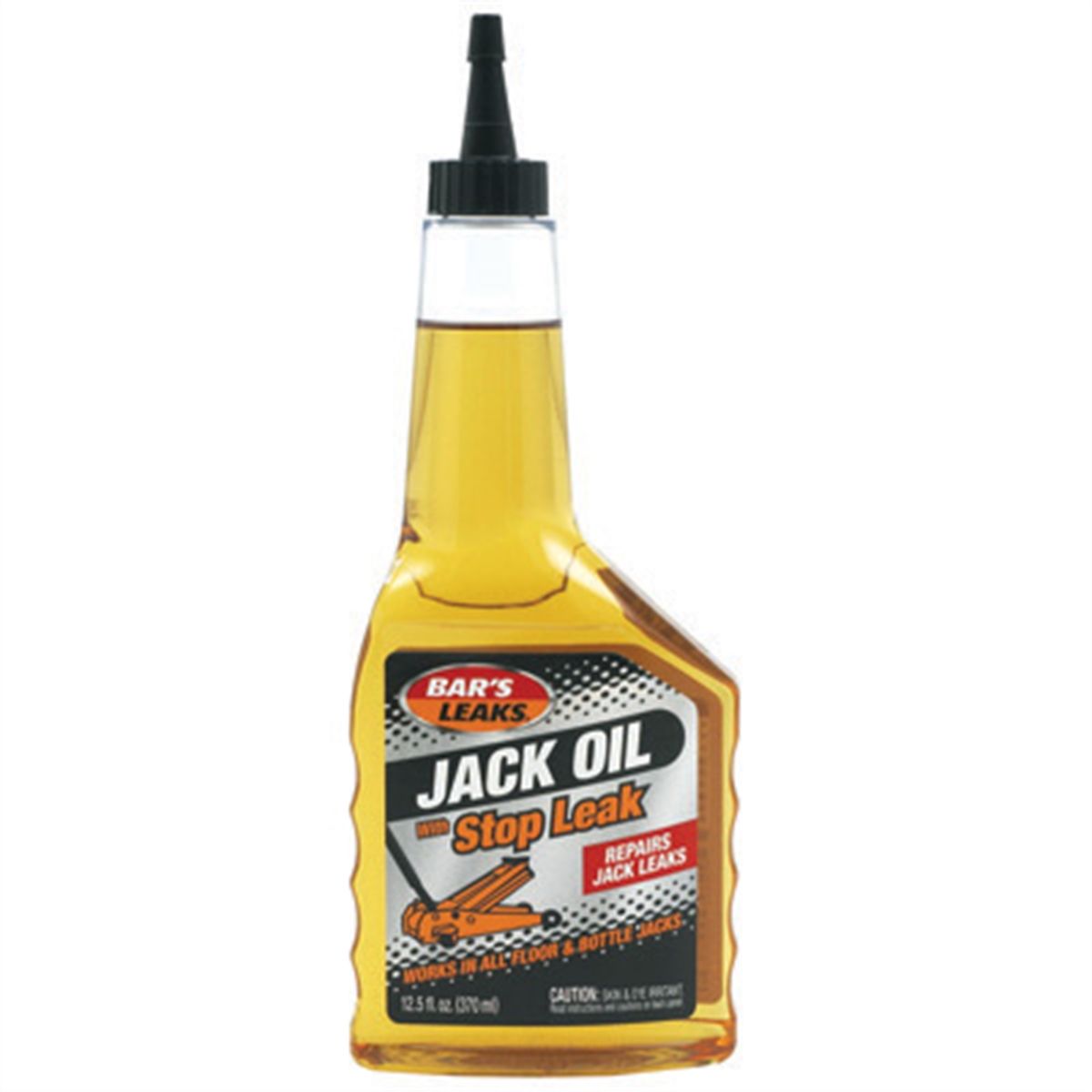
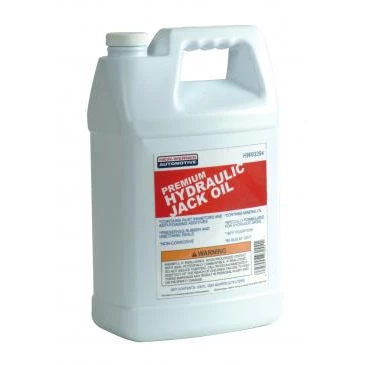

Proper maintenance extends jack service life from years to decades. Maintenance requirements are minimal compared to powered equipment, but neglect causes premature failure and safety hazards.
Hydraulic system care
Most units use standard hydraulic jack oil or automatic transmission fluid. Check levels monthly—fluid should reach the fill hole bottom when forks are fully lowered. Top off with manufacturer-specified fluid as needed.
Air in the system causes excessive pumping or failure to maintain fork height. Bleed air by pumping the handle 10-15 times with forks raised, then lowering completely. Repeat 4-5 times to purge air bubbles. If problems persist, internal seals need replacement.
Cold storage environments thicken hydraulic fluid, making jacks difficult to operate until warmed. Store jacks in climate-controlled spaces between shifts. Synthetic hydraulic fluids rated for low-temperature operation solve chronic cold-weather problems.
Common repairs and costs
Hydraulic cylinder seal failure causes fluid leaks and inability to maintain fork height. Seal kit replacement ($20-50) requires basic mechanical skills. Full cylinder replacement costs $150-300 and extends equipment life significantly.
Wheel bearing failure creates grinding noises and difficulty maneuvering. Individual wheels cost $20-60. Replace worn wheels immediately to prevent axle and mounting point damage.
Release valve problems cause unexpected fork dropping. Often debris in the valve mechanism is the culprit—disassembling and cleaning resolves issues without parts replacement.
Preventive maintenance schedule
Weekly: Check all operational functions—hydraulic operation, wheel condition, handle integrity, and structural soundness.
Monthly: Check hydraulic fluid levels, clean equipment to prevent debris accumulation, lubricate pivot points with light machine oil.
Annually: Drain and replace hydraulic fluid, inspect welds and connections for cracks, replace worn wheels, rebuild or replace hydraulic cylinders showing seal degradation.
Maintain service records documenting all activities, repairs, and replacements. These demonstrate due diligence for safety and liability purposes.
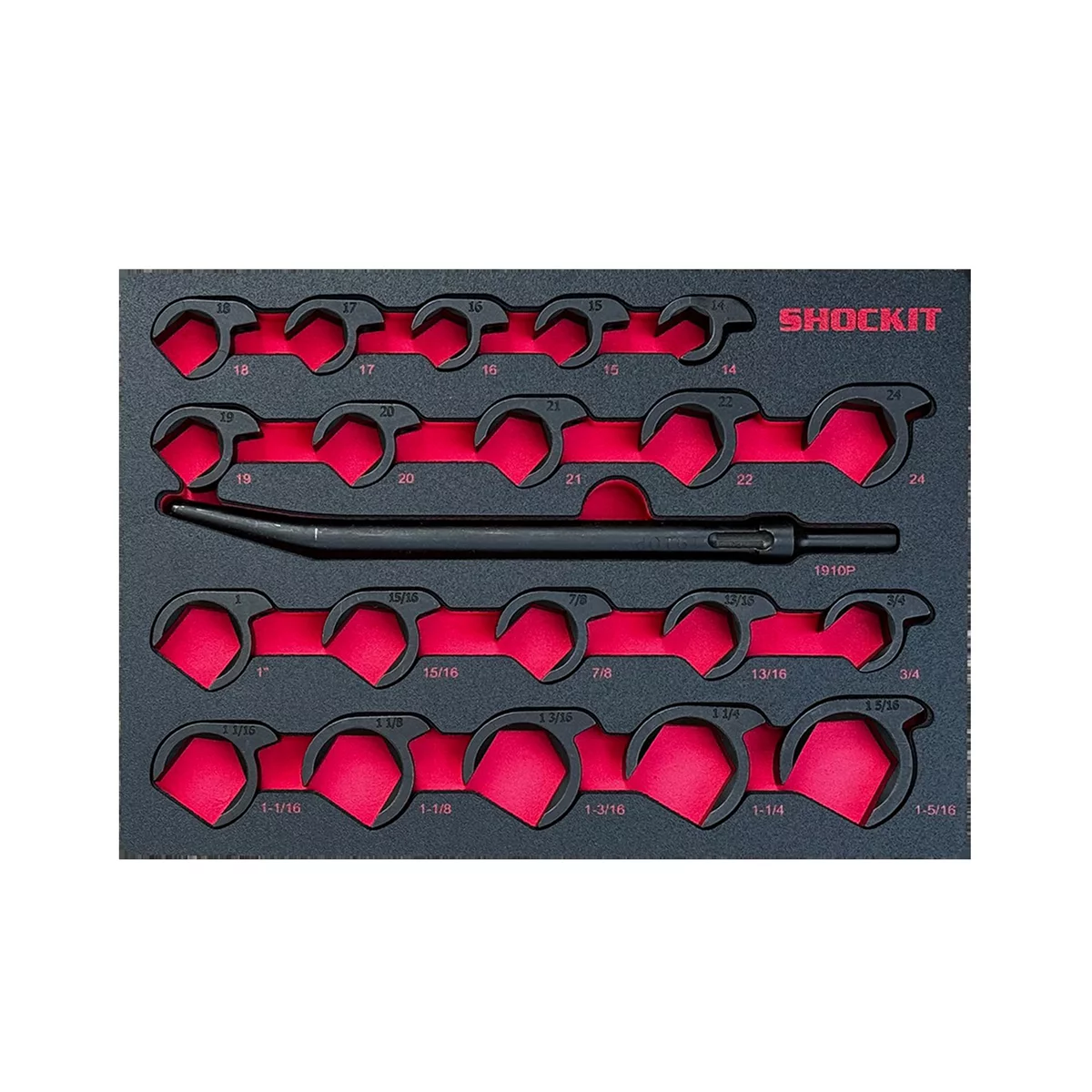
Milton Industries LTI Tool By MIlton 20-Piece SAE/METRIC
Mfg: Lock Technology LTI by Milton
Part #: LT1915FM
ID: 411083
Manual vs. Electric vs. Robotic: When to Use Each Solution
Modern warehouses employ mixed fleets, selecting the right tool for each application. Manual jacks win decisively on cost and reliability, while electric units sacrifice initial investment for productivity gains.
Electric jacks eliminate pumping effort and maneuver heavy loads automatically. A single operator moves 50-60% more pallets per shift compared to manual equipment. Productivity gains justify electric investment when facilities move more than 150 pallets daily per operator. Industry guidelines suggest electric jacks pay for themselves within 18-24 months through productivity improvements and reduced injury rates.
Automated guided vehicles (AGVs) and autonomous mobile robots represent the cutting edge but remain 5-10 years from widespread adoption. High acquisition costs ($25,000-100,000+ per unit), infrastructure requirements, and integration challenges limit deployment to large facilities with substantial capital budgets.
Where manual jacks excel
Manual jacks excel in tight retail stockrooms and confined warehouse areas where electric jacks’ larger turning radius doesn’t fit. Low-volume operations moving 10-50 pallets daily find manual jacks perfectly adequate with manageable physical effort.
Loading docks, where jacks position pallets over short distances rather than extended transport, represent ideal manual applications. Outdoor use in unpredictable weather also favors manual jacks—electric units experience battery degradation in extreme cold while electronics and motors face corrosion risks.
Cost of ownership analysis
For a facility moving 100 pallets daily over five years: Manual jack fleet (3 units) costs roughly $2,500 acquisition plus $500 maintenance = $3,000 total. Electric jack fleet (2 units) runs $12,000 acquisition plus $4,000 in battery replacements and maintenance = $16,000 total. However, the electric fleet accomplishes work with one fewer operator-hour daily. Labor savings may justify investment depending on wage rates and productivity requirements.
Frequently Asked Questions About Manual Pallet Jacks
Will electric pallet jacks eventually replace manual models?
Complete replacement is unlikely. Manual jacks serve essential backup functions, excel where electric units prove impractical, and provide cost-effective solutions for low-volume operations. Industry experts predict manual jacks will remain standard equipment for decades. The trend is toward mixed fleets optimized for specific tasks.
How do you handle steep inclines?
Manual pallet jacks should not operate on inclines exceeding 5-8 degrees per manufacturer specifications. When slopes are acceptable, position loads on the uphill side—pull loads up, push down. This prevents runaway conditions and improves control. For facilities regularly confronting inclines, electric jacks with integrated braking or specialized dock equipment provide safer alternatives. Never attempt inclines that feel unsafe.
What’s the maximum safe weight capacity for standard jacks?
Standard manual pallet jacks are rated for 5,500 pounds, but safe operation recommends staying at 80% of maximum capacity (approximately 4,400 pounds) for regular use. This safety margin accounts for load imbalances, equipment wear, and operational variables. Heavy-duty models rated for 6,600-8,000 pounds handle regular maximum-weight pallets. Always verify actual load weight and never exceed manufacturer ratings.
How often should hydraulic fluid be changed?
Drain and replace hydraulic fluid annually under normal operating conditions. Facilities in dirty environments, extreme temperatures, or high-volume applications should consider six-month intervals. Regular changes prevent contamination that damages seals and cylinders while ensuring optimal performance. Check and top off fluid monthly between changes.
What causes excessive pumping?
Excessive pumping usually indicates air in the system or low fluid levels. Check and refill fluid first, then bleed air by pumping the handle 10-15 times and completely lowering forks. Repeat this cycle several times. If problems persist after bleeding and refilling, internal seal degradation or cylinder wear likely requires professional repair.
Are cheaper import pallet jacks worth considering?
Budget import jacks at $200-350 rarely justify savings. Professional users report short service lives, frequent repairs, and poor reliability compared to Raymond, Crown, and Yale brands. The $300-500 upfront savings typically evaporates within 18-24 months when cheap jacks require replacement while quality units remain operational. For commercial operations, investing in reputable brands proves far more cost-effective. Budget imports may suit very occasional residential use but represent false economy for professional applications.

Drum Handling Equipment – Band Type 30121 Dolly for 100-120 lb Drum with Steel Casters
Mfg: Zeeline fmr National-Spenser
Part #: 120-S
ID: 134049

Drum Handling Equipment – Band Type Dolly for 25-50 lb Pail
Mfg: Zeeline fmr National-Spenser
Part #: 105
ID: 134045
Essential Lifting & Shop Equipment
While manual pallet jacks are the foundation of warehouse operations, complementing them with other lifting and shop tools ensures your team can handle any material handling challenge efficiently and safely.
- Electric Pallet Jacks – Reduce operator fatigue with powered lifting for high-volume operations
- Hand Trucks & Dollies – Perfect companions for moving loads in tight spaces and along aisles
- Load Stabilizers & Straps – Keep loads secure during transport to prevent accidents and damage
Explore Our Complete Warehouse Equipment Collection
Whether you’re looking to expand your pallet jack arsenal or discover complementary warehouse tools, our Uncategorized collection features a curated selection of reliable equipment designed for demanding warehouse environments. From manual handling solutions to ergonomic accessories, find everything you need to optimize your operations.
- Manual Pallet Jacks & Lifts: Heavy-duty models built for durability and smooth operation across various floor surfaces
- Warehouse Safety Gear: Protective equipment and accessories to keep your team safe during material handling operations
- Pallet Jack Maintenance Supplies: Lubricants, replacement parts, and repair kits to extend the life of your equipment

The Toolsource Technical Team blends decades of real-world automotive service experience with up-to-date technical research. Our writers collaborate with professional mechanics, shop owners, and diagnostic specialists to deliver practical, workshop-ready guidance you can trust.


Follow us on social media