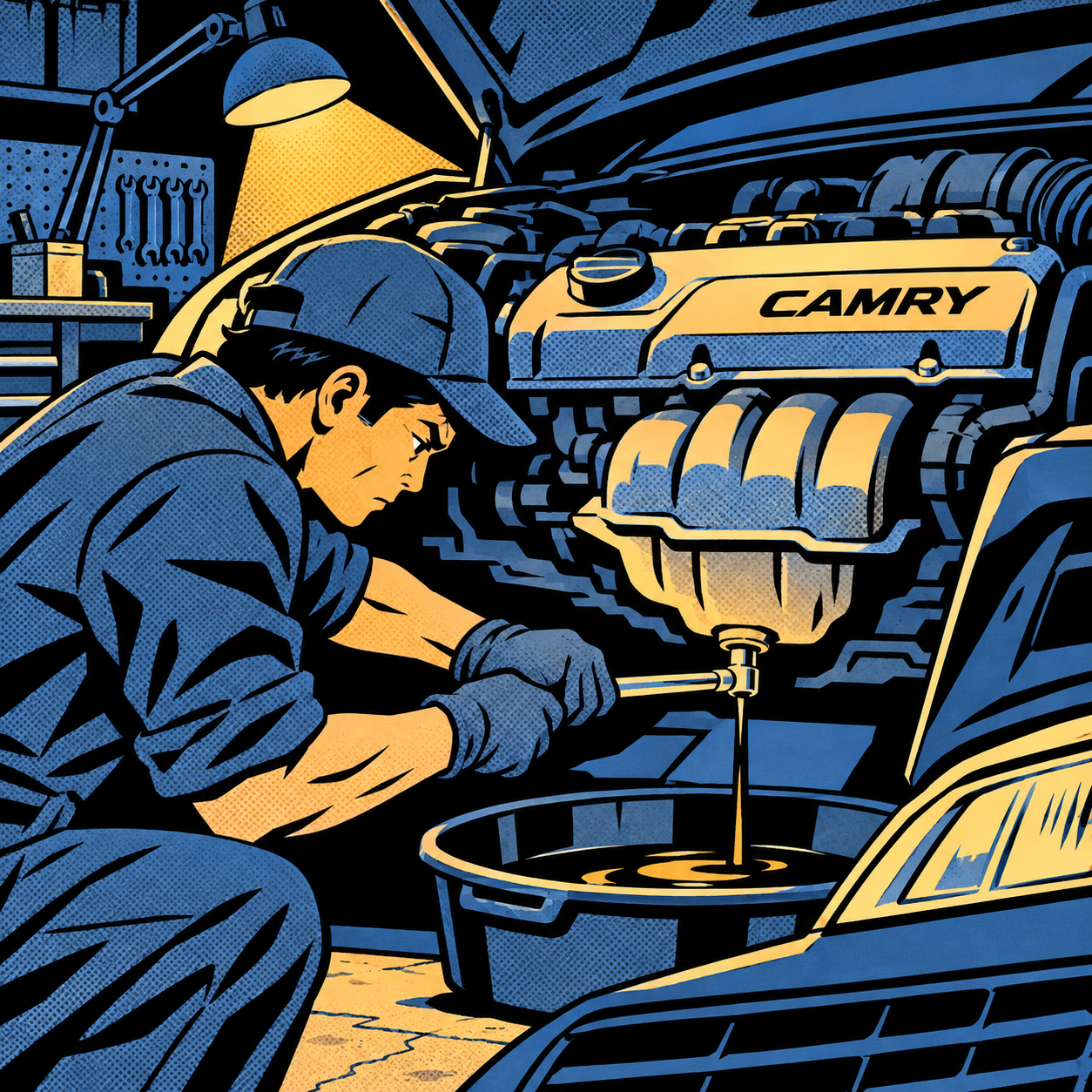
The Toyota Camry’s reputation for reliability gets repeated so often it sounds unconditional, but it isn’t. Shops that have serviced these cars across multiple generations know the real pattern: a disciplined oil change schedule is what actually produces the 300,000-mile survivor, not the badge on the trunk. Skip that discipline and the same platform shows up on the lift with sludge-packed valve covers and misfires. Add the V6 option and you trade some of that durability margin for power, mostly in the transmission. This guide walks through what matters when diagnosing, maintaining, or evaluating a used Camry, including the recurring wear items every tech eventually learns by heart, and how the car stacks up against its longtime rival, the Honda Accord, when a customer asks which one was really built better.
Oil Change Intervals Are Non-Negotiable on These Engines
The single biggest predictor of a Camry’s lifespan is how consistently it got oil changes, not the trim level or engine size. Cars that went 20,000 miles or more between changes routinely turn up with sludged galleries, clogged PCV passages, and misfires that trace back to carbon and varnish buildup rather than any design flaw. Late-1990s through mid-2000s Toyota four-cylinder engines in particular have a documented history of oil consumption tied to ring and oil-control deposits, and infrequent changes make that worse, not better.
On a high-mileage example, don’t just follow the owner’s manual interval — treat 5,000 miles as the practical ceiling regardless of what the sticker says, and inspect the PCV system and valve cover gasket for seepage at every service. If you’re pulling a valve cover for a gasket replacement anyway, that’s the moment to check for sludge around the cam towers and oil ring deposits. Catching early buildup during a routine gasket job is far cheaper than diagnosing a misfire complaint six months later.
V6 Transmission Wear vs. Four-Cylinder Reliability
The V6 Camry is the quicker, more refined version of the car, but it carries a known weak point: the automatic transmission behind it has historically taken more abuse than the one paired with the four-cylinder, partly because of the added weight over the front axle and partly because of the extra torque the trans has to absorb. Four-cylinder automatics in this platform have a strong track record of surviving hard use, including sustained high-RPM driving and aggressive downshifting, with few transmission complaints. V6 cars are more prone to harsh shifts, slipping, and eventual transmission failure if fluid service gets neglected.
The practical takeaway for a shop inspecting a used V6 Camry: check transmission fluid condition and color before anything else, and don’t wait for a customer complaint about shift quality. Fluid and filter service on these should run tighter than the four-cylinder’s interval, and any hint of shift flare, delayed engagement, or harsh 1-2 shifts warrants a fluid and pan inspection immediately rather than a “drive it and see” approach.

Automatic Transmission Fluid Exchanger
Mfg: RTi Reading Technologies, Inc
Part #: 400 80009 00
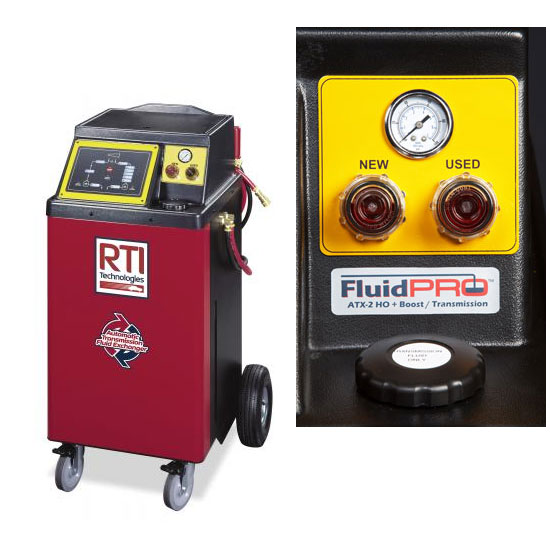
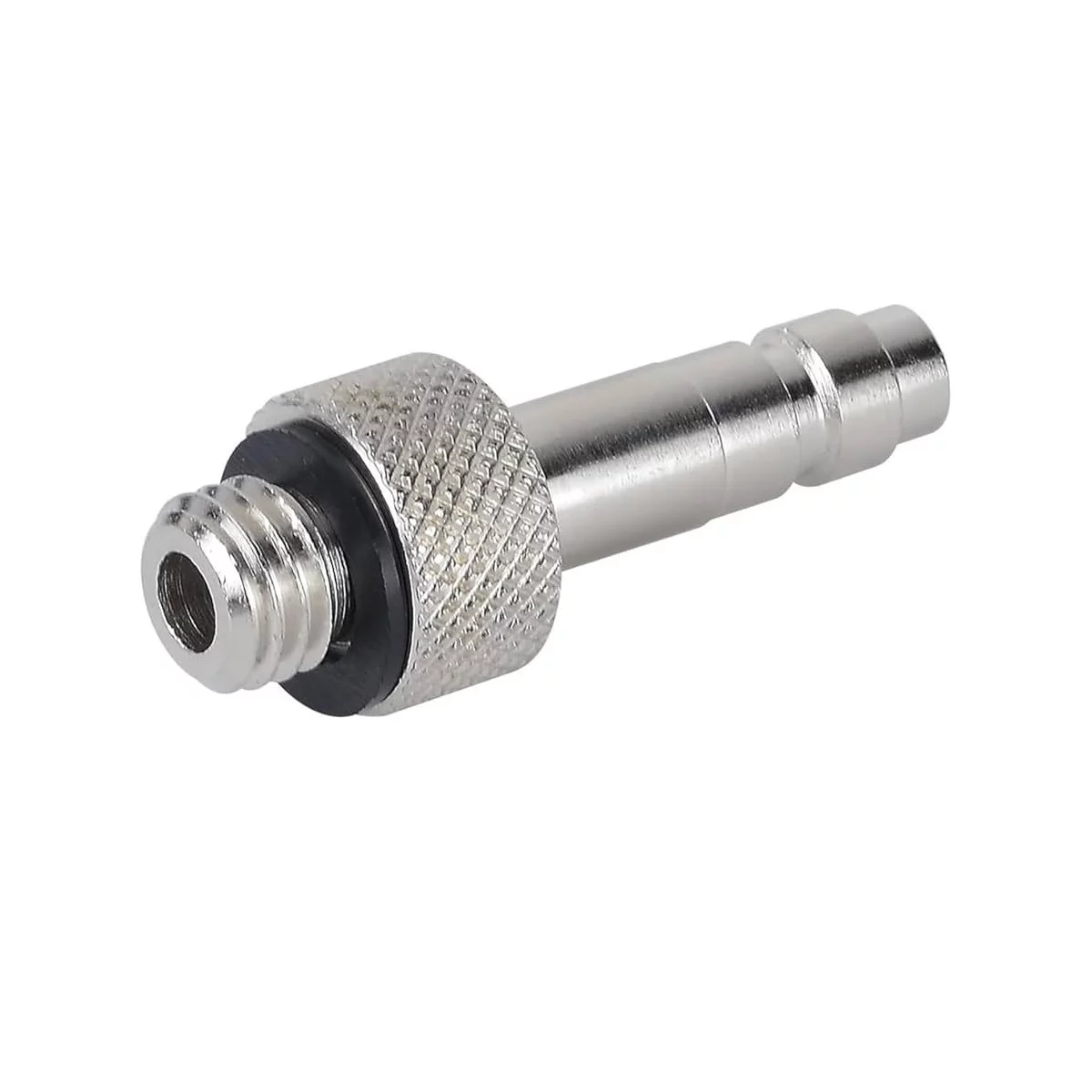
Automatic Transmission Fluid Exchanger
Mfg: RTi Reading Technologies, Inc
Part #: ATX-2BOOST
Benchmarking Against the Honda Accord for Diagnostic Context
Customers cross-shopping a used Camry against a same-era Accord often ask which one holds up better, and the honest answer is “it depends on the drivetrain.” The Accord’s double-wishbone front suspension and VTEC four-cylinders were genuinely more sophisticated, and by the early 2000s the F-series four-cylinder engine and five-speed manual transmission in the Accord were about as durable as anything on the road. Manual Accords from this era are some of the toughest cars either brand produced.
The catch is the Accord V6 automatic. Those transmissions were a known liability through the early 2000s and didn’t become reasonably reliable until later refinements around 2006. So the fair comparison isn’t “Camry vs. Accord” in general — it’s four-cylinder Camry vs. manual Accord (both excellent), and V6 Camry vs. V6 automatic Accord (both carry transmission risk, with the Accord historically being worse in this specific pairing). When a customer asks why they see more old Accords being driven hard and more old Camrys just cruising, that’s less about engineering quality and more about what each car was actually optioned and driven as.
Recurring Wear Items Every Camry Tech Should Know
A few failure points show up often enough on these cars that they’re worth flagging proactively rather than waiting for a complaint:
Door handles. The exterior door handle plastic on these generations is a known weak point and tends to crack or snap with age and UV exposure, sometimes leaving the handle non-functional. It’s a straightforward replacement, but stock up on a few if you service a fleet of these — it’s common enough to be a recurring parts order.
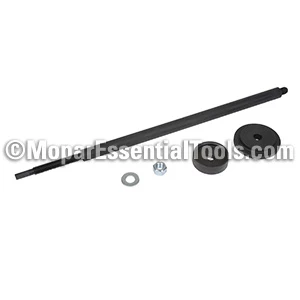
Crank pulleys. The harmonic balancer’s rubber isolator layer can separate over time, leading to pulley wobble or failure. It’s a basic driveway-level repair with the right pulley puller and a few hand tools, and catching it early avoids secondary damage to the accessory belt or tensioner.
Valve cover gaskets. These dry out and seep oil at high mileage, which is expected rather than alarming. The upside is that when techs pull the cover for this job on a well-maintained example, they often find cam lobes with minimal visible wear even past 150,000 miles, which says more about consistent oil changes than anything unique about the metallurgy.
Cosmetic Durability: The “Camry Dent” Phenomenon
Ask anyone who’s owned one of these long enough and they’ll mention the same cosmetic quirk: the front bumper cover tends to pick up a dent or crease in nearly the same spot on car after car, enough that it’s become a running joke among owners. Mechanically this comes down to the bumper cover being a relatively thin plastic skin over a structural absorber bar — it’s designed to protect the car’s structure in a low-speed impact, not to stay dent-free itself. The underlying reinforcement is doing its job; the cosmetic panel is just soft by design.
For shops handling bumper repairs, the fix is almost always a cover replacement or paintless dent approach rather than anything structural, and it’s worth setting that expectation with customers up front: there’s no armored aftermarket bumper cover for these cars, because the factory design already prioritizes occupant and structural protection over cosmetic resilience. Replacement clips and mounting tabs are worth inspecting during any bumper job too, since they’re often as brittle as the handle plastic by this point in the car’s life.
Quick Maintenance Checklist
- Change oil every 5,000 miles on high-mileage examples, regardless of the factory interval
- Inspect PCV system and valve cover gasket for seepage at every service
- Check V6 automatic transmission fluid condition at every other oil change; service sooner at the first sign of harsh or delayed shifts
- Inspect door handles, crank pulley, and bumper clips during routine visits — replace proactively if cracked
- Pull a valve cover periodically on high-mileage cars to check cam lobe wear and confirm oil change discipline is paying off
Frequently Asked Questions
How often should I really change the oil on an older Camry?
Every 5,000 miles is a safer practical interval than the extended intervals some owner’s manuals list, especially once the car has significant mileage. Extended intervals are the single most common cause of sludge-related failures on this platform.
Is the V6 Camry less reliable than the four-cylinder?
The engine itself is solid, but the automatic transmission behind the V6 has historically seen more wear and failures than the four-cylinder’s transmission, partly due to added weight and torque. Fluid service discipline matters more on V6 cars.
What causes the oil consumption issues people mention on these engines?
Certain late-1990s through mid-2000s Toyota four-cylinder engines are known for oil ring and ring-land deposit buildup that increases oil consumption over time. Consistent oil changes slow this process significantly; neglect accelerates it.
Why do Camry front bumpers dent in the same spot on so many cars?
The bumper cover is a thin plastic skin over a structural absorber bar. It’s designed to flex and protect the car’s structure, not to resist cosmetic dents, so the same impact point tends to show wear across many examples.
Is the Honda Accord actually more reliable than the Camry?
It depends on drivetrain. Manual four-cylinder Accords from this era are extremely durable and arguably match or beat the Camry dynamically. V6 automatic Accords, however, had real transmission reliability problems until later refinements, making them a weaker comparison point than the four-cylinder.
What are the most common failure points to check on a used high-mileage Camry?
Door handle plastic, crank pulley isolator separation, valve cover gasket seepage, and — on V6 models — transmission fluid condition are the recurring items worth inspecting before buying or servicing one.
Recommended Tools
The maintenance work described here — valve cover gaskets, transmission service, crank pulley inspection — calls for the right specialty tools. Our Automotive Specialty Tools include pullers, socket sets, drain pans, and diagnostic equipment to streamline this work.
- Harmonic balancer and pulley pullers
- Valve cover and gasket removal tools
- Transmission fluid service equipment

The Toolsource Technical Team blends decades of real-world automotive service experience with up-to-date technical research. Our writers collaborate with professional mechanics, shop owners, and diagnostic specialists to deliver practical, workshop-ready guidance you can trust.


Follow us on social media