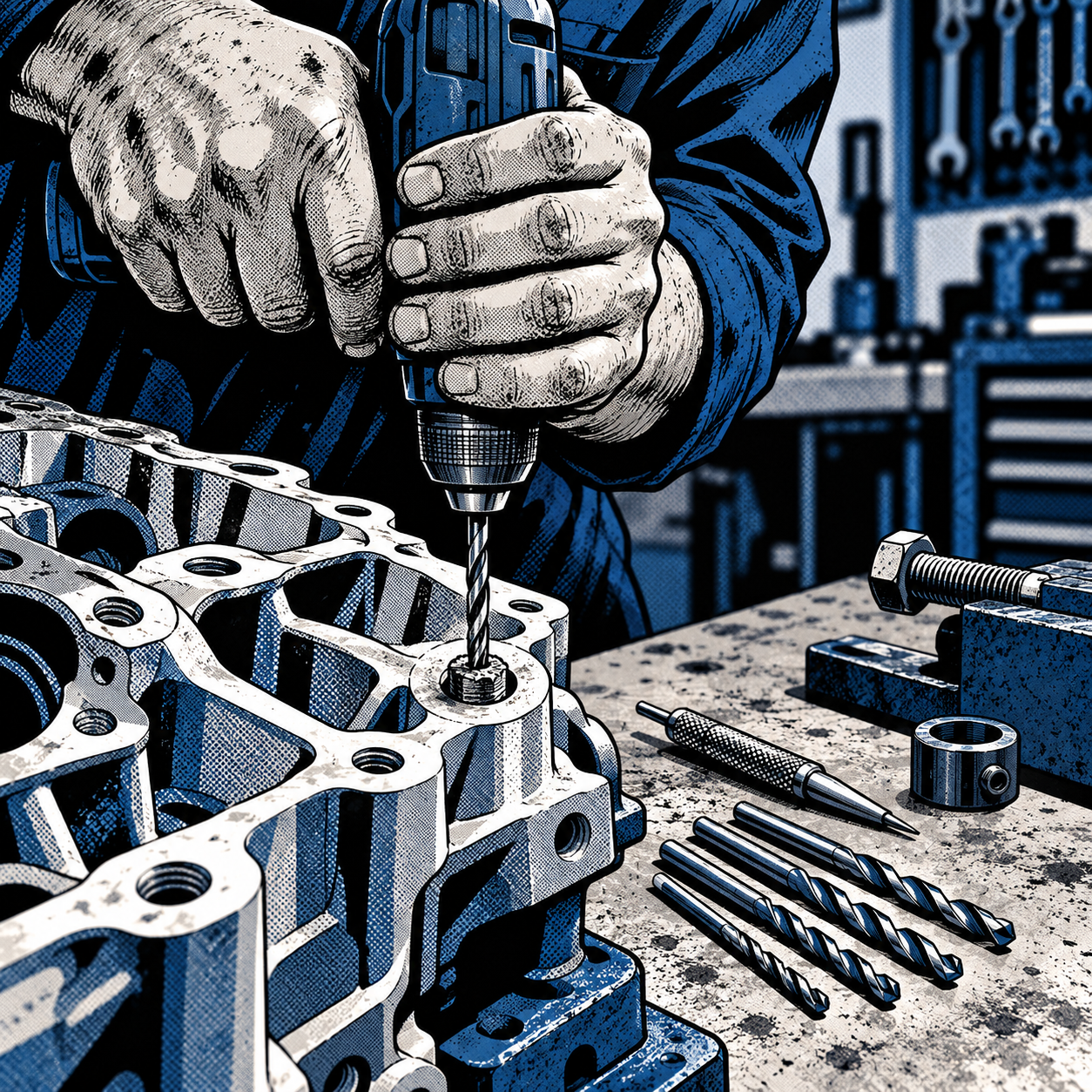
Every tech has a story about a routine job that went sideways the moment a bolt head twisted off in a blind aluminum hole. Water pump bolts, exhaust manifold studs, and A/C compressor bolts are repeat offenders because they live in corrosion-prone spots and get torqued into soft castings. The fix isn’t complicated, but the order of operations matters — skip a step or rush the drill and you’ll turn a broken bolt into a stripped hole, and a stripped hole into a block that needs a helicoil or a trip to a machine shop. Here’s the sequence experienced techs actually follow, along with where the shortcuts tend to bite.
Assess the Break Before You Touch a Drill
Before any metal gets removed, figure out exactly what you’re dealing with. Is the hole blind (dead-ends into a coolant or oil passage) or does it pass through into open air? That one detail changes your entire approach — a through-hole gives you room for error; a blind hole means a drill that walks six seconds too long can punch into a water jacket or oil gallery.
Check how much of the bolt is exposed. Flush breaks and sub-surface breaks need different tactics than a bolt that snapped with a quarter-inch of shank still standing above the casting. Also check access: can you get a drill in straight and square to the hole, or is the bolt tucked behind a bracket, mount, or manifold where you’ll need to pull something else first? A lot of “quick” bolt extractions turn into half-day jobs simply because nobody checked clearance before reaching for a drill.
If the broken fastener goes through a mounting tab rather than into the block itself, you may be able to drill it out without worrying about what’s behind it. If it’s threaded into a casting with coolant or oil on the other side, treat every step as if a mistake could open that passage, because it can.
Center-Punch and Drill Prep — Do This Right or Not at All
The single biggest point of failure in bolt extraction is a drill bit that wanders off-center. A broken bolt’s surface is rarely flat, so a sharp, accurate center punch mark is non-negotiable. If the break is ragged, dress it flat first with a small end mill, a die grinder, or a rotary file so the punch has something even to bite into. A dull or off-angle punch mark guarantees a crooked pilot hole, and a crooked pilot hole guarantees you’ll be fighting the extractor instead of the bolt.
Once you have a solid punch mark, step up drill sizes gradually — start small (a 1/8″ pilot is typical) and work up rather than jumping straight to your target diameter. If the hole is blind, use a stop collar or wrap tape around the bit at the correct depth so you can’t run through into a coolant passage. A trick that works well in practice: thread an old, undamaged bolt of the same part into an adjacent hole and use it as a visual depth reference, or use a spare part (an old water pump, housing, etc.) clamped in place as a drill bushing so the bit tracks straight and can’t skate sideways on the casting.
Use quality bits — cobalt or titanium-coated bits hold an edge far longer than cheap black-oxide bits when you’re drilling into hardened or work-hardened steel at the break.
===PRODUCT_SEARCH_1===


Left-Hand Drill Bits: Often the Fastest Fix
Before committing to a full drill-and-extract sequence, try a left-hand (reverse) drill bit first. Chucked in a drill spinning in reverse, these bits cut like a normal bit — but because the rotation is counterclockwise, the friction and vibration of drilling frequently backs a broken bolt straight out before you ever finish the hole. It doesn’t work every time, but when it does, it saves you from needing an extractor or a tap at all. It costs nothing to try it as your first move once you have a true, centered pilot hole started.
If the bolt doesn’t walk out on its own, keep drilling with the left-hand bit to a diameter just under the bolt’s minor thread diameter, then move to a reverse-threaded tap. Cutting reverse threads into the remaining bolt material and backing the tap out (counterclockwise) often pulls the bolt with it. Add a drop of thread-locker to the tap threads before backing out — it gives the tap enough bite to drag the bolt remnant out rather than just spinning in place. If you can’t source a reverse tap, a standard tap with red (high-strength) thread-locker works as a substitute: let it cure for an hour or two before trying to back it out.
Welding a Nut or Washer: The Cleanest Method on Steel Blocks
If you’ve got a MIG or stick welder and the block is steel (or the bolt isn’t flush with an aluminum surface), welding a nut directly onto the broken stub is one of the most reliable extraction methods in the trade. Build weld material up into a nut or washer sitting on top of the stub, let it cool completely (don’t quench it), then back it out with a box-end wrench using short back-and-forth movements rather than a ratchet, which can shear the weld.
On aluminum castings this gets trickier. Weld won’t fuse to aluminum, which is actually useful — spatter won’t stick to the surrounding casting — but a bolt recessed well below the surface doesn’t leave enough depth to build a solid puddle without risking burn-through into the hole wall. Shield the surrounding aluminum with foil or aluminum tape to catch spatter, and if the recess is too deep or tight to build a proper pool, skip welding and go back to the drill-and-tap approach instead. For deeply recessed breaks, this isn’t a DIY-with-a-cheap-welder situation — a tech who does extraction work regularly can often have it out in minutes with the right technique.
When (and When Not) to Reach for a Screw Extractor
Spiral or square-flute screw extractors (EZ-outs) have a reputation for making things worse, and there’s a reason: they work by expanding outward as you twist them into a drilled hole, which can crack the remaining bolt wall outward against the threads and lock it in place even tighter — or the extractor itself snaps off, and now you’re drilling hardened tool steel instead of a bolt. If you go this route, drill for the smallest extractor size that fits, not the largest, since an oversized hole leaves too little bolt wall to grip.
Extractors are a reasonable last resort when welding isn’t possible and reverse drilling/tapping hasn’t worked, but go in expecting the threads in the casting may be damaged by the time you’re done. Have a thread repair kit on hand before you start, not after.
Checklist: Broken Bolt Extraction, Step by Step
- Confirm blind vs. through-hole and check for coolant/oil passages behind it
- Dress the break flat and set an accurate center-punch mark
- Drill a true pilot hole, stepping up sizes gradually, with a depth stop on blind holes
- Try a left-hand bit first — it may back the bolt out on its own
- If not, tap reverse threads (or standard threads with thread-locker) and back it out
- Weld a nut/washer on if the material and access allow it
- Use an extractor only as a last resort, sized to the smallest viable option
- Have a helicoil or Time-Sert kit ready in case the threads need repair
===PRODUCT_SEARCH_2===
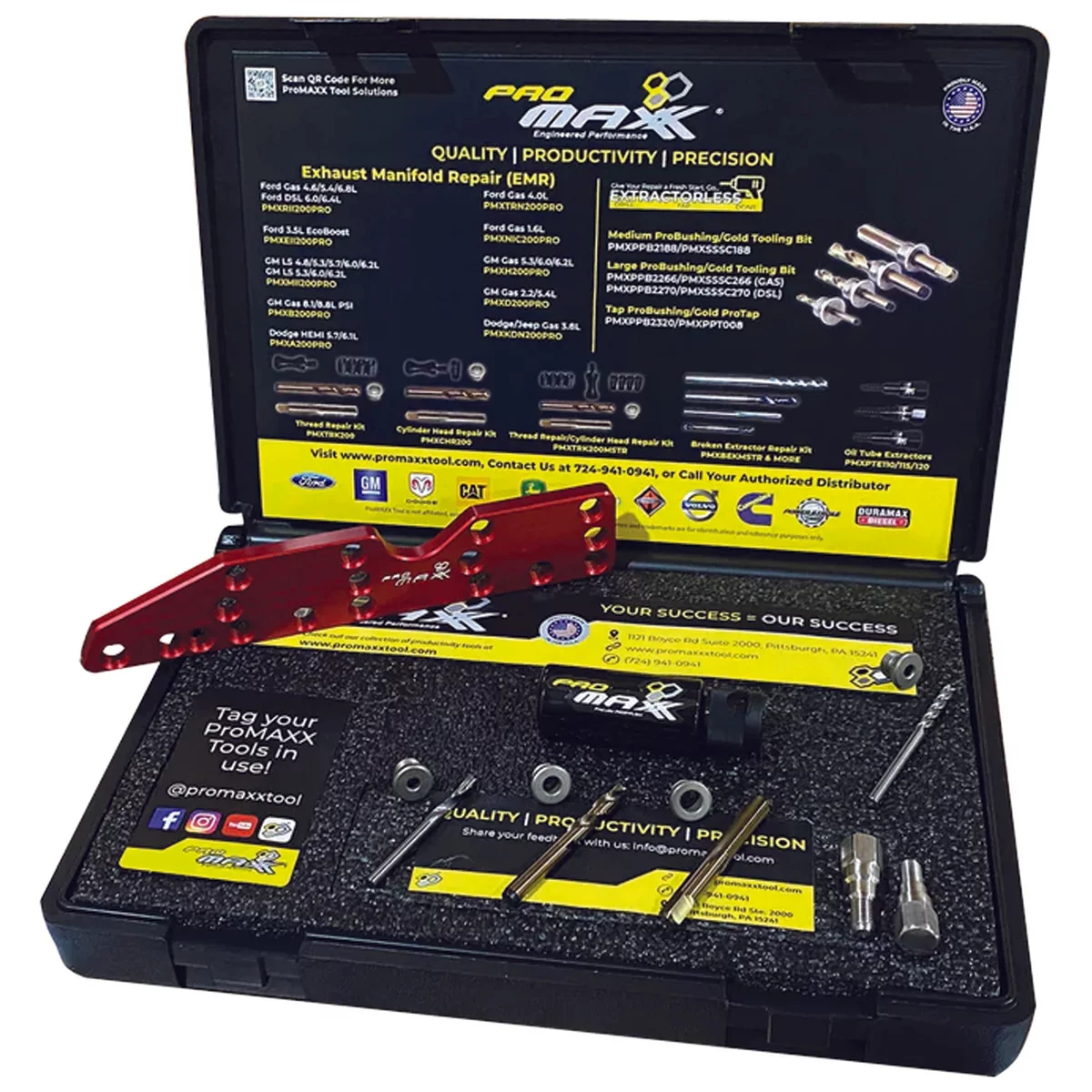
ProMAXX Tool by Milton™ EcoBoost 3.5L ProKit Plus
Mfg: ProMaxx Tool by Milton
Part #: EII200PROP
FAQs
Can I just leave a bolt out and run the part with fewer fasteners?
Sometimes, temporarily, but it’s not a real fix. A water pump or cover missing a bolt can still seal fine with the remaining fasteners torqued correctly, but it’s a liability on anything carrying pressure or vibration, and it should be corrected at the next opportunity, not treated as permanent.
Will heat help loosen a broken bolt before I drill?
Yes — localized heat from a torch (on steel, not near fuel lines or seals) can break the corrosion bond and make the remaining material easier to drill or tap out. Be cautious on aluminum castings since the aluminum will absorb and dissipate heat fast, and excessive heat can warp thin-walled parts.
How do I know if the threads in the hole are too damaged to reuse?
If a new bolt won’t thread in by hand for at least the first few turns, or if you feel grinding/binding rather than a clean mechanical catch, the threads are compromised. At that point, re-tapping to the next size up or installing a helicoil/Time-Sert insert is the right call rather than forcing a bolt in and hoping it holds.
Is it worth buying a dedicated extractor kit, or just left-hand bits?
For occasional use, a quality left-hand cobalt bit set covers the majority of broken-bolt situations on its own. A full extractor kit with reverse taps is worth the investment if you do this kind of repair more than a couple times a year, since it gives you a fallback when the bit alone doesn’t walk the bolt out.
What’s the risk of drilling into a blind hole behind the bolt?
You can punch through into a coolant or oil passage, turning a bolt-extraction job into a casting repair or replacement. This is why depth stops, stop collars, or a sacrificial part used as a drill guide matter — they’re cheap insurance against a very expensive mistake.
Should I take this to a shop instead of doing it myself?
If the bolt is deeply recessed, in a hard-to-access spot, or you don’t have a welder and quality bits on hand, a shop or specialist who does extraction work regularly can often resolve it faster and cleaner than repeated DIY attempts — especially once you’ve already tried an extractor and it snapped.
Recommended Tools for Bolt Removal
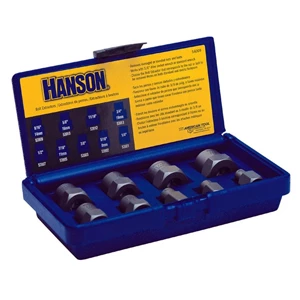
The methods covered in this guide require quality drill bits, taps, and precision tools. Find everything you need in our Cutting, Threading and Drilling category.
- Cobalt and titanium-coated drill bits for hardened steel
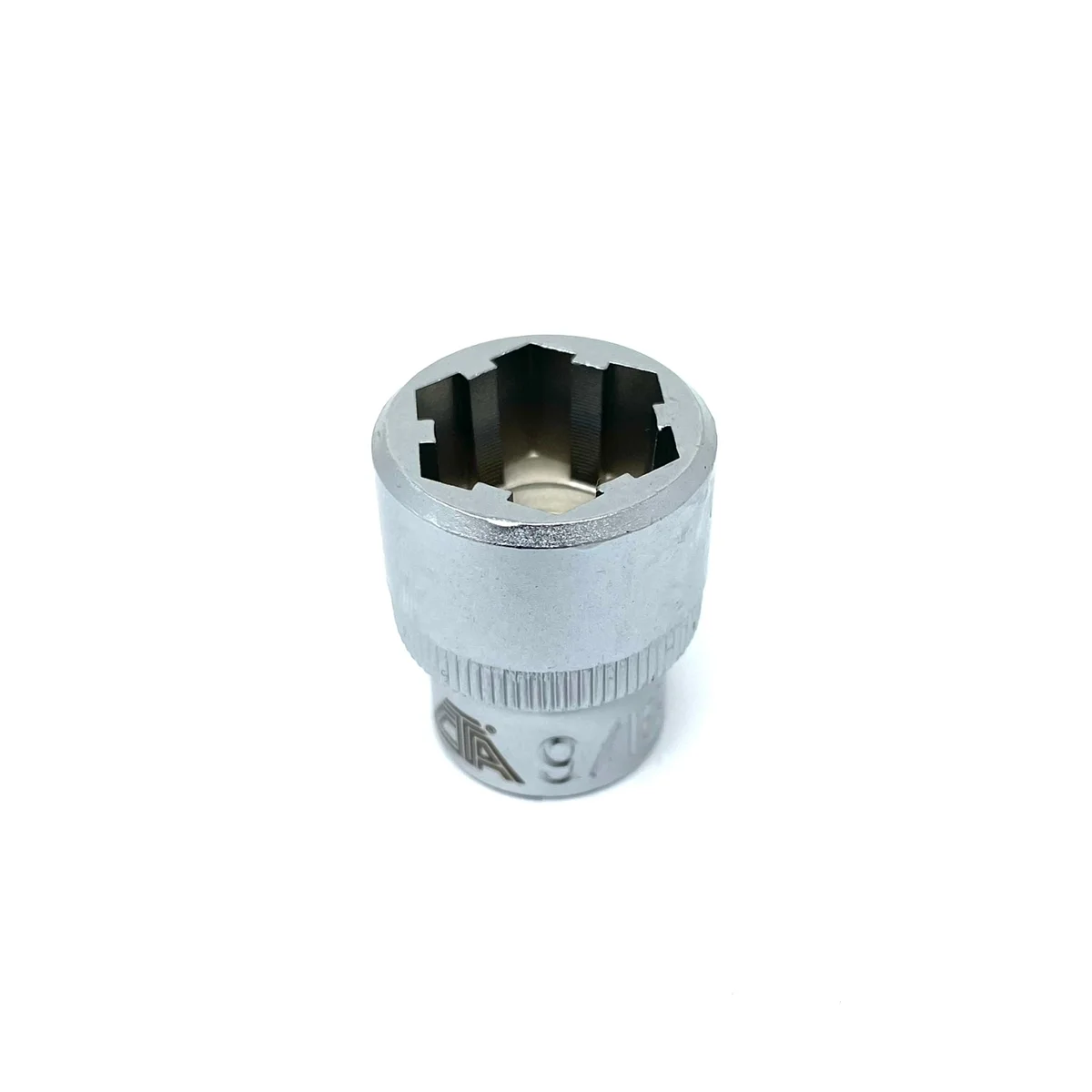
- Left-hand bits, reverse taps, and screw extractors
- Center punches, stop collars, and depth stops

The Toolsource Technical Team blends decades of real-world automotive service experience with up-to-date technical research. Our writers collaborate with professional mechanics, shop owners, and diagnostic specialists to deliver practical, workshop-ready guidance you can trust.


Follow us on social media