Every tech eventually breaks a bolt flush or snaps a screw extractor off inside one. What you do next determines whether you’re back on the job in twenty minutes or chasing a ruined hole for the rest of the afternoon. The fastener market sells a lot of extractor kits, but the techs who’ve been doing this for decades mostly agree on one thing: extractors are a last resort, not a first move. Here’s the order of operations that actually works, why extractors fail as often as they do, and when it’s time to stop and bring in help.
Why Screw Extractors Fail More Than They Succeed
The classic fluted, tapered “easy-out” extractor has a bad reputation for a reason. It works by wedging itself into a drilled hole and biting as you turn it counterclockwise — but that wedging action also expands the broken bolt outward against the surrounding threads, which can seize it even tighter or crack the casting around it. Worse, extractors are made from hardened tool steel so they’re brittle. Side-load one at an angle, lever on it with pliers, or hit it with an impact driver, and it snaps off inside the hole you’re trying to clear. Now you have a broken bolt with a broken hardened extractor inside it, and ordinary drill bits won’t touch that hardened steel.
If you’re going to try an extractor at all, use the square-drive tapered style with a tap wrench, get it dead straight down the bore, and never hammer or impact it. If it doesn’t bite cleanly on the first try, stop before it snaps.
Welding a Nut On: The Most Reliable Fix in the Shop
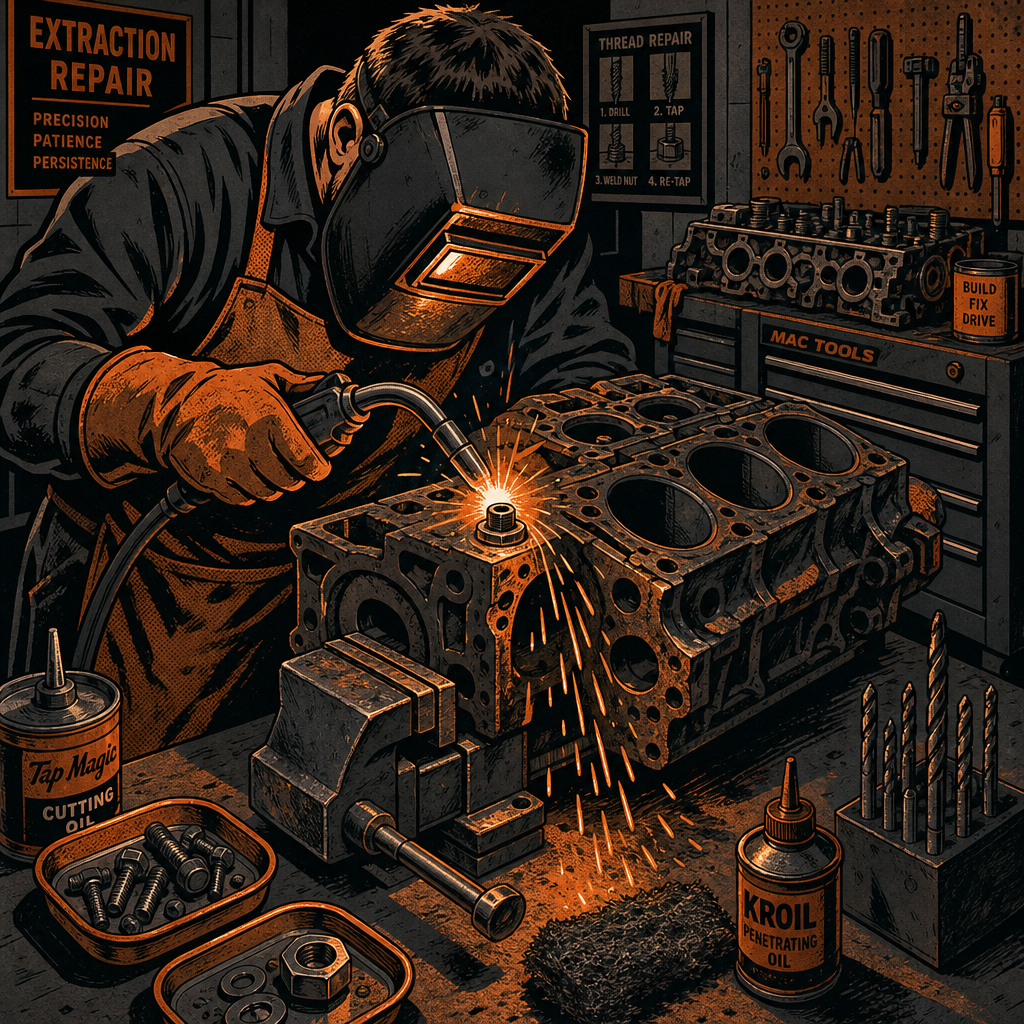
Ask any veteran tech what their first move is on a broken bolt and the answer is almost always the same: weld something to it. This works because the heat of welding breaks the corrosion bond (rust and thread-locker) between the bolt and the surrounding threads, and it gives you a clean, tall head to turn with a wrench instead of pliers or vise-grips on a jagged stub.
The technique that gets the best results: start with a flat washer over the broken bolt, weld it down into the hole first so you build up material even with a bolt that’s sitting below flush. Then center a nut on top of the washer and weld it solidly to both the washer and the stub underneath. Let the whole thing cool completely — do not try to turn it hot, it’s still expanded and will shear again. Once cool, back it out slowly with a wrench, not an impact gun, which can snap the weld or twist the nut off. If the nut or washer pops off before the bolt moves, clean it up and weld again; most broken bolts come out within two or three attempts.
A cheap flux-core welder is enough for this, but MIG is far more forgiving for techs without a lot of welding time under their belt. If you don’t weld regularly, this is also a job a mobile welder can usually knock out in under an hour.


Drilling It Out the Right Way
When welding isn’t an option — no power, no access angle, or the bolt is too shallow to build up — drilling is the next best method, and it beats extractors when done correctly. Center-punch the stub as precisely as you can, then step up bit sizes gradually with cutting oil, checking depth constantly against a reference (use an unbroken bolt or an adjacent hole to gauge how deep to go). Left-hand drill bits are worth owning for this specific job: the counterclockwise rotation can sometimes walk the bolt out on its own as you drill, especially on bolts that aren’t heavily corroded.
Keep the drill square to the bore. Any angle wastes the bit and transfers stress sideways instead of down the centerline — this is the single most common reason a drilling attempt turns into a ruined hole. Work up in size until the remaining bolt wall is thin enough to pick or chisel out, then clean up and run a tap through the original threads before reinstalling anything.
If you’ve already broken an extractor off inside the bolt, standard cobalt bits won’t cut hardened tool steel. Diamond-grit bits (sold as glass and tile bits) will go through a hardened extractor where cobalt just skates, and they should be run dry rather than with cutting oil.
Find the right extraction tools before you start
Heat Cycling and Penetrating Oil
Heat is the other half of nearly every successful extraction, whether you’re welding or not. Corrosion and thread-locker both lose their grip when you cycle temperature: heat the surrounding casting with a torch, let it cool, apply penetrating oil, and repeat. The goal is differential expansion — the block or housing expands and contracts at a different rate than the bolt, which breaks the rust bond between the two. Keep oil flowing while heating since dry heat on a seized fastener is a minor fire risk, and never apply direct flame near fuel lines, wiring looms, or plastic components.
An induction heater is a safer, more controlled alternative to an open torch for this, especially on engine bolts surrounded by other hardware you don’t want to damage. It heats the fastener itself rather than everything around it, which also means less risk of warping aluminum castings.
Repairing the Threads After Extraction
Getting the broken bolt out is only half the job if the original threads are damaged, cross-threaded (a common root cause of snapped bolts in the first place), or you had to drill oversized to clear a stuck extractor. Run a tap through the hole to true up the threads before reinstalling anything. If the hole is too far gone — stripped, oversized, or drilled through on an aluminum casting — don’t force an oversized bolt into it. Drill to the correct oversize, tap for a thread insert, and install a helicoil or a thread-forming threaded insert with thread-locker. This takes an extra twenty minutes but prevents the repair from failing again under torque.
When to Call a Mobile Welder or Machine Shop
Know when to stop. If you don’t have welding equipment or experience, and the bolt is in a location you can’t get square to with a drill, this is a reasonable point to bring in help rather than make the hole worse. A mobile welder can often handle a nut-weld extraction on-site for a modest shop fee, and it’s cheaper than replacing a cracked block or a stripped housing. If the bolt broke due to cross-threading and the surrounding casting is thin or already cracked, a machine shop with a mill can remove it with zero risk of walking off-center — worth the trip for anything in an expensive or hard-to-replace housing.
Quick Checklist Before You Start
- Confirm the bolt is square and accessible — pull a bumper, radiator, or bracket if needed rather than working at an angle
- Try heat cycling and penetrating oil first on anything that’s just rusted, not snapped
- Weld a washer, then a nut, if you have welding equipment and skill — let it cool fully before turning
- If drilling, center-punch, go square, step up bit sizes, and use left-hand bits with cutting oil
- Switch to diamond bits if you’re drilling through a broken hardened extractor
- Re-tap the hole or install a thread insert before reassembly
- Stop and call a mobile welder or machine shop if you lack the tools, skill, or access angle
Shop for welding and extraction equipment
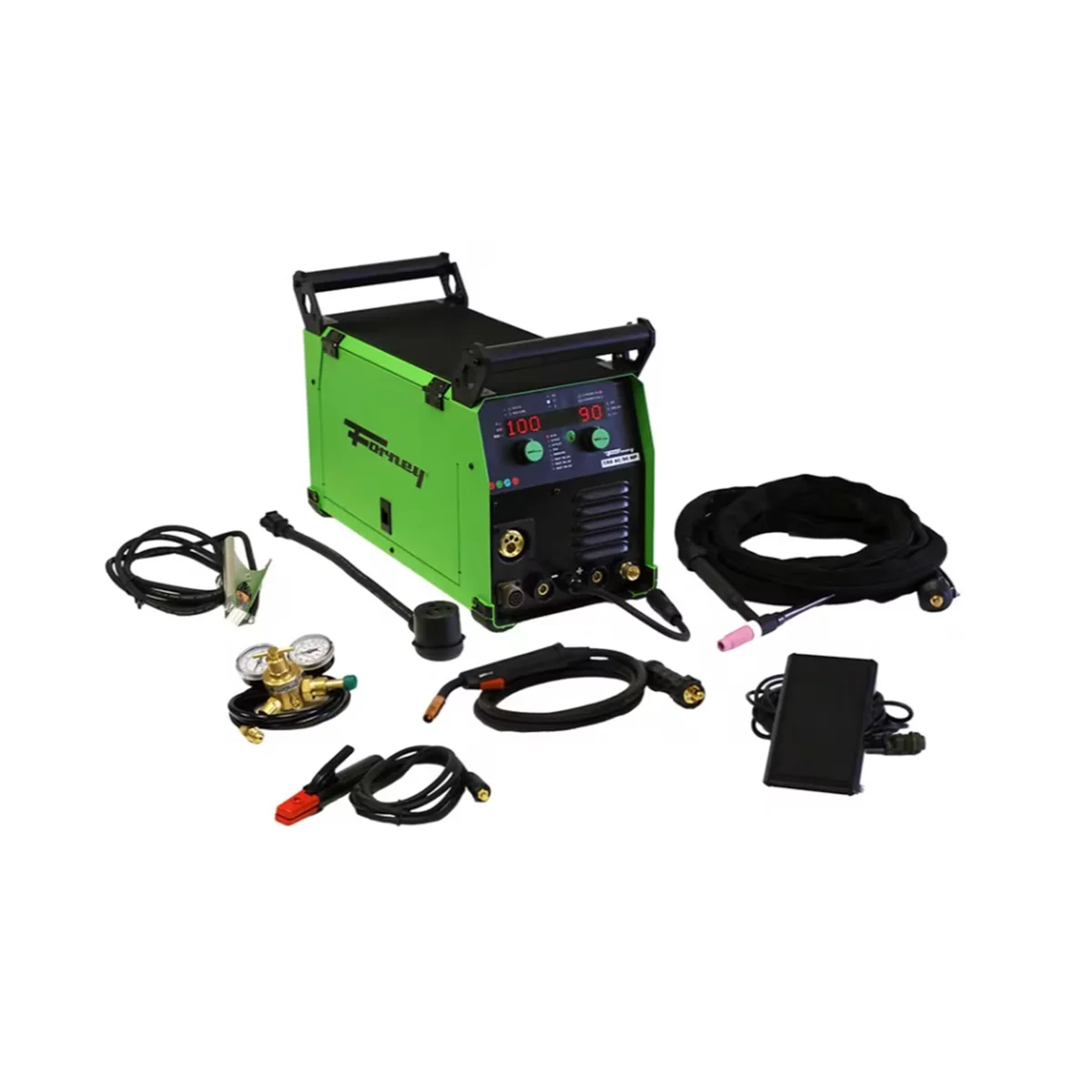
Forney 300 190 AC/DC Multi-Process MIG/TIG/Stick Welder
Mfg: FORNEY INDUSTRIES
Part #: 300

FAQs
Should I ever use a standard fluted easy-out extractor?
Only as a last resort, square to the bore, turned by hand with a tap wrench — never with pliers, vise-grips, or an impact driver. Many techs skip them entirely because they’re brittle and expand the bolt as they bite.
What’s the best first attempt on a broken bolt?
If you have welding equipment, weld a washer and then a nut to the stub and back it out with a wrench once it’s fully cooled. It’s the most consistently successful method across both rusted bolts and bolts broken flush or below flush.
Can I drill out a broken bolt without an extractor?
Yes — center-punch, drill square with increasing bit sizes and cutting oil, and the remaining wall often gets thin enough to pick out. Left-hand bits can back the bolt out on their own in favorable cases.
What do I do if the extractor itself breaks off inside the bolt?
Standard cobalt bits won’t cut hardened extractor steel. Use a diamond-grit (glass/tile) bit run dry, or weld a washer and nut directly to what’s exposed if there’s enough material protruding.
Do I need a tap and die set after extraction?
Yes, always clean up the threads with a tap afterward. If the hole is stripped or oversized, step up and install a thread insert rather than forcing an oversized fastener in dry.
When is it worth paying for a mobile welder instead of doing it myself?
If you don’t have welding experience, lack a square angle to the bolt, or the part is expensive to replace if the hole gets damaged, a mobile welder’s shop fee is cheap insurance compared to a cracked block or stripped housing.
Tools for Bolt Extraction
Successful extraction depends on the right drilling and threading equipment. Our Cutting, Threading and Drilling selection includes the drill bits, taps, and extraction tools covered in this guide.
- Left-hand and cobalt drill bits for stepped hole enlargement
- Diamond-grit drill bits for cutting through hardened extractors
- Taps and dies for thread cleanup and repair

The Toolsource Technical Team blends decades of real-world automotive service experience with up-to-date technical research. Our writers collaborate with professional mechanics, shop owners, and diagnostic specialists to deliver practical, workshop-ready guidance you can trust.


Follow us on social media