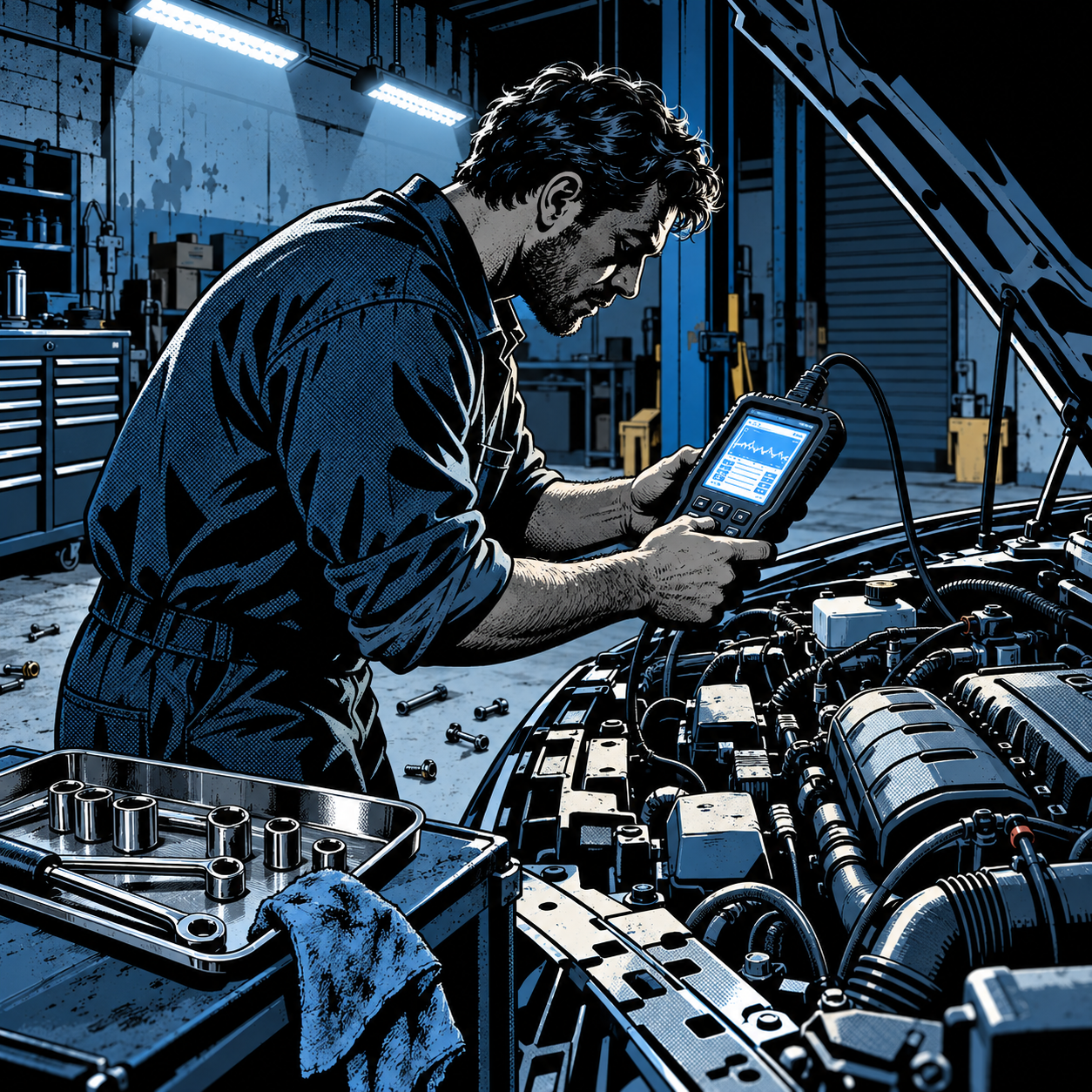
Every few months, a technician posts about going independent — leaving a dealership or chain shop to run their own mobile rig or build a shop on their own land — and the comments fill up with the same questions: how did you afford it, what insurance do you carry, how did you get past zoning, and what’s actually paying the bills. Strip away the skepticism and the detail that’s left is useful: there’s a real, repeatable path that techs follow when they go from wrench-turner to business owner. This post walks through that path — the paperwork, the coverage, the permitting, and the equipment decisions — without the hype.
Why Technicians Are Moving Into Mobile and Independent Repair Work
The appeal is straightforward: shop labor rates keep climbing, but so does the overhead a dealership or franchise owner pays to keep the doors open. A technician with a truck, a solid diagnostic kit, and a willingness to take emergency calls can undercut that overhead while charging a premium for availability. The most consistent income source reported by techs who’ve made this jump isn’t walk-in retail work — it’s contract work with commercial fleets, agricultural haulers, trucking companies, or construction outfits that need a mechanic on call 24/7 for breakdowns. One tech described specializing in servicing aluminum auger and feed trailers for poultry-industry haulers; another described pivoting toward hotshot and one-ton work along a busy interstate corridor. The common thread is a steady, contracted client base rather than one-off repairs, which smooths out cash flow in a way retail traffic never does.
Equipping a Mobile Service Truck or Shop Bay for Roadside Calls
Emergency and roadside work has different equipment demands than bay work. At minimum, a mobile setup needs a heavy-duty diagnostic scan tool that covers the makes you’re contracted for (don’t assume one scanner covers medium-duty trucks and trailers equally), a portable air compressor, a jump pack or booster capable of handling diesel starts, work lighting for night calls, and secure, weatherproof tool storage that can take a beating on gravel lots and farm roads. If you’re also running a fixed bay, a vehicle lift, a stocked parts inventory for your niche (trailer brakes, electrical connectors, hydraulic fittings), and a generator for sites without power round out the list. Buy for the calls you’ll actually run — a tech doing emergency trailer service doesn’t need the same gear as one doing general passenger-vehicle diagnostics, and overbuying ties up capital that’s better spent on insurance and permitting costs.

K Tool 2 Ton Heavy-Duty Trolley Jack KTITH22007
Mfg: K Tool International
Part #: KTITH22007
Choosing a Business Structure: LLC and Liability Basics
Nearly every tech who’s done this successfully points to the same first step: form an LLC before taking your first paying job, not after. An LLC separates your personal assets — your house, your personal vehicle, your savings — from claims against the business. If you’re running both a mobile outfit and a fixed shop, consider whether they should be separate legal entities; several independent techs keep their shop and their mobile/field service operation as distinct businesses so a liability event in one doesn’t automatically expose the other. Along with forming the LLC, get an EIN from the IRS, open a dedicated business bank account, and keep business and personal spending separate from day one — mixing the two is one of the fastest ways to lose the liability protection an LLC is supposed to provide, and it makes tax season miserable.
Insurance Coverage: What a $1 Million Policy Actually Means
Commercial contracts — especially with trucking, agricultural, or fleet clients — routinely require proof of general liability insurance, often with a minimum coverage amount like $1 million per occurrence. That number sounds large, but it’s a common baseline, not a luxury tier, and it’s frequently the floor a client’s own insurer requires before they’ll let you work on their equipment. General liability covers property damage and third-party injury; it is not the same as errors and omissions (E&O) coverage, which protects you if a repair itself is found to be faulty and causes a later failure. Some techs intentionally avoid higher-risk work — like full engine builds — specifically because the liability exposure isn’t worth it relative to the margin, and they’ll pay out smaller incidents of out of pocket rather than file a claim and risk a premium increase. Before quoting a contract, confirm the client’s minimum coverage requirement in writing, and talk to a commercial insurance broker (not a personal auto agent) about whether a standalone general liability policy is enough or whether you need E&O or an umbrella policy layered on top.
Navigating Zoning, Permits, and Local Regulations
If the plan includes a physical shop — even a pole barn on your own land — zoning is often the hardest obstacle, harder than financing or equipment. Counties regulate commercial use of residential or agricultural-zoned land, and getting a variance or permit can take months of hearings, paperwork, and sometimes direct negotiation with a zoning board. Before signing a lease or breaking ground, check the parcel’s current zoning designation, ask the county planning office directly what’s required for commercial vehicle repair use, and budget both time and legal fees for the process. It’s also worth confirming any business license requirements at the city or county level separately from zoning — the two are handled by different offices in most jurisdictions and both need to be cleared before you can legally operate.
Finding a Profitable Niche and Working With an Accountant
Techs who’ve successfully gone independent consistently point to specialization as the thing that made the business sustainable, not general repair work. Picking a niche — a specific trailer type, a regional industry (agricultural, construction, logistics), or a service gap like after-hours emergency calls — reduces competition and lets you price for expertise and availability rather than competing on an hourly rate against every other shop in town. Once there’s real revenue coming in, bring in an accountant rather than handling taxes and entity structure alone. A good accountant will flag licensing issues, quarterly estimated tax obligations, and entity-structure choices (like whether to elect S-corp tax treatment) that are easy to miss and expensive to fix retroactively. The cost of an accountant is small compared to the cost of a tax penalty or a missed filing that jeopardizes the business later.
Startup Checklist
- Form an LLC (and a separate entity if running both a mobile outfit and a fixed shop)
- Get an EIN and open a dedicated business bank account
- Secure general liability insurance meeting your target contracts’ minimums, and ask about E&O coverage separately
- Confirm zoning and business licensing requirements before signing a lease or building
- Equip for the specific work you’re contracted to do, not every possible job
- Pick a niche or client type before trying to serve everyone
- Hire an accountant once revenue starts, not after a tax problem shows up


Frequently Asked Questions
Do I need an LLC to start a mobile mechanic business?
It’s not legally required in most places to simply do the work, but operating without one means your personal assets are exposed to any business liability. Most techs who’ve scaled past a side hustle form an LLC before taking their first contracted job.
How much insurance coverage do I actually need?
It depends on your clients. Many commercial contracts, particularly with trucking or agricultural companies, set a minimum — commonly $1 million in general liability — as a condition of working on their equipment. Ask prospective clients for their minimum requirement before quoting, and confirm it with a commercial insurance broker.
What’s the difference between general liability and errors and omissions coverage?
General liability covers third-party property damage and injury on the job site. Errors and omissions (E&O) covers claims that a repair itself was done incorrectly and caused a later failure or loss. Many standard policies don’t automatically include E&O — it has to be added or purchased separately.
How do I deal with zoning if I want to build a shop on my own property?
Contact your county planning or zoning office directly and ask what’s required for commercial vehicle repair use on your parcel’s current zoning designation. If it’s not already permitted, you may need a variance or conditional use permit, which can take months and may require a public hearing.
Should I hire an accountant before or after I start taking jobs?
Before, if possible. An accountant can help you choose the right entity structure, set up proper bookkeeping, and flag licensing or tax obligations early — all of which are harder and more expensive to fix after the fact.
What’s a good way to pick a niche as a new independent technician?
Look for a service gap with steady demand and limited competition — a specific vehicle or trailer type, an underserved industry, or after-hours emergency availability. A defined niche lets you price on expertise rather than competing purely on hourly rate.
Shop Diagnostic Tools for Your Setup
A heavy-duty diagnostic scan tool is foundational equipment for any independent technician. Browse our Automotive Diagnostic Tools for portable and fixed options that handle multiple makes and vehicle types.
- Multi-make diagnostic scanners for trailers and commercial vehicles
- Portable tools for roadside and mobile diagnostics
- Specialized diagnostic equipment for electrical and brake systems

The Toolsource Technical Team blends decades of real-world automotive service experience with up-to-date technical research. Our writers collaborate with professional mechanics, shop owners, and diagnostic specialists to deliver practical, workshop-ready guidance you can trust.


Follow us on social media