Every year, a wave of experienced technicians decide they’re done turning wrenches for someone else’s bottom line and go out on their own. The jump from employee to owner looks simple from the outside — rent a bay, buy some lifts, hang a sign — but the techs who actually make it work usually point to the same handful of decisions: get the legal and zoning paperwork right before you sign a lease, pick a service model that fits your market, spend equipment money in the right order, and carve out a niche instead of trying to be everything to everyone. This guide walks through each of those decisions with the kind of detail a working technician actually needs, not generic small-business fluff.
Why More Technicians Are Making the Jump
The math behind shop ownership is straightforward even if the execution isn’t: a tech with 10-15 years of experience is often generating far more in labor billing than they’re taking home in wages, and the gap between those two numbers is what funds someone else’s shop. Techs who’ve been through flat-rate pay structures, shop politics, and watching management make decisions they’d have made differently are often the ones most ready to own the outcome — good or bad — themselves.
That said, ownership changes what you’re actually doing all day. You’re no longer paid primarily for turning wrenches; you’re paid for running a business that happens to repair vehicles. Payroll, insurance renewals, parts accounts, customer complaints, and tax filings compete for the same hours you used to spend diagnosing problems. Technicians who transition successfully go in expecting that shift rather than being surprised by it.
Laying the Legal and Business Groundwork
Before any equipment gets ordered, the business structure and paperwork need to be locked down. Skipping this step — or doing it halfway — is the most common reason new shop owners end up with fines, zoning disputes, or personal liability they didn’t anticipate.
- Entity formation: Forming an LLC (or equivalent) separates personal assets from business liabilities. It’s not expensive or complicated to set up, but it needs to happen before you sign a commercial lease or buy equipment under the business name.
- Zoning and use permits: Not every commercially zoned property allows automotive repair use. Confirm the parcel is zoned for the specific type of work you’re doing (general repair, heavy equipment, hydraulic/hose fabrication, etc.) before you commit to a property, not after.
- Business licenses: City/county business license, state repair facility registration, and sometimes a separate license for air conditioning (EPA 609), used oil handling, or hazardous waste disposal depending on your state.
- Insurance: General liability, garagekeepers coverage (covers customer vehicles in your care), workers’ comp once you have employees, and commercial auto coverage if you run service trucks.
- EPA/environmental compliance: Used oil, coolant, refrigerant, and solvent disposal all have documentation requirements. Inspectors check this, and violations are expensive.
Techs who’ve watched this process firsthand often note that doing the “boring” business-end work — the paperwork most technicians never see as employees — is what actually separates a shop that survives inspections, audits, and lawsuits from one that gets shut down over a technicality.

Atlas 9,000 LB 2-Post Baseplate Car Lift XH-9KBPX-FPD
Mfg: Atlas Automotive
Part #: XH-9KBPX
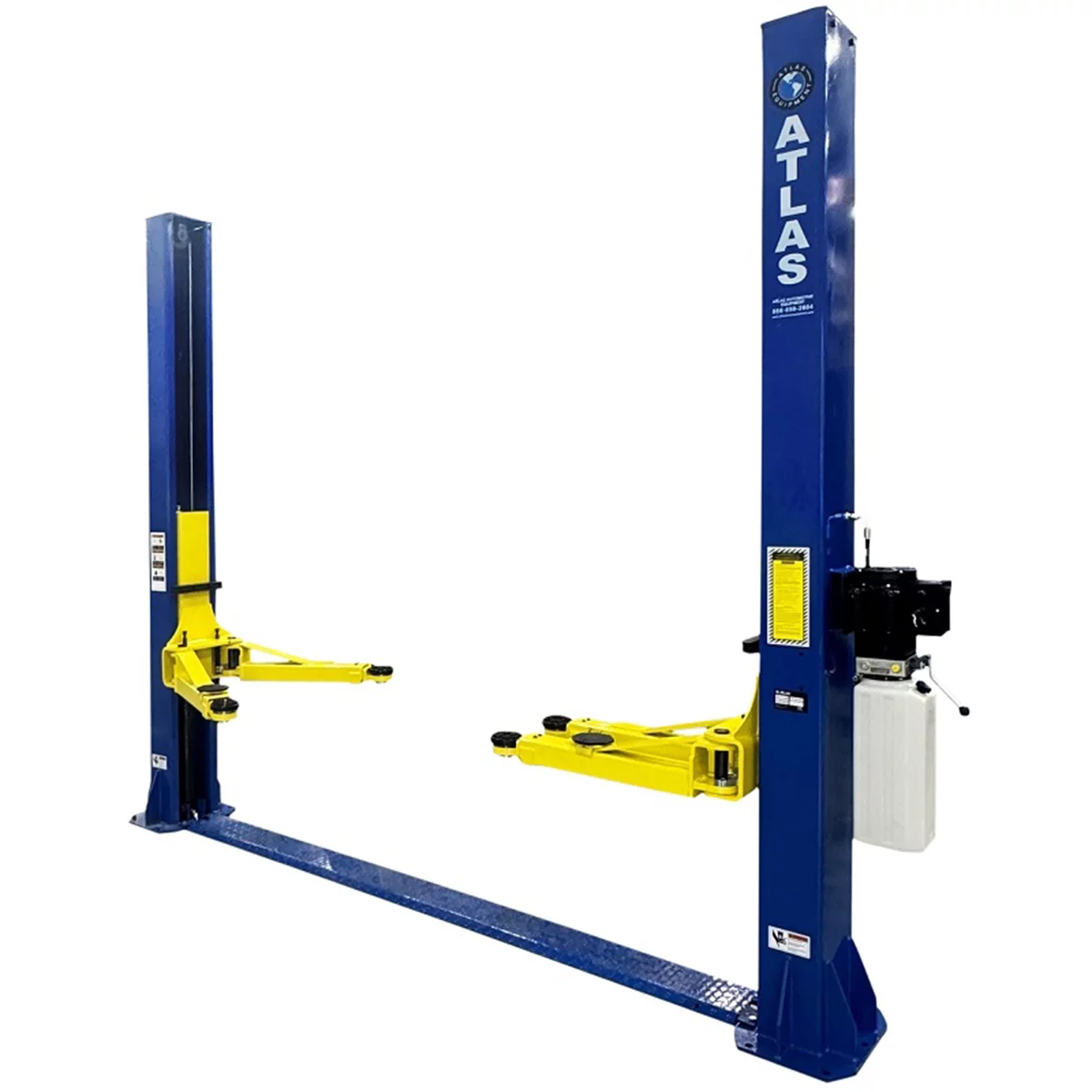
Atlas 9,000 lb. Capacity Baseplate 2-Post Lift Free Freight*
Mfg: Atlas Automotive
Part #: TPF-9

BP10000X Commercial Grade Baseplate 2-Post Lift 10,000 lb. Cap
Mfg: Atlas Automotive
Part #: ATTD-BP10000X
Choosing Your Shop Model: Fixed Bay, Mobile, or Both
Not every shop needs to start as a full facility with multiple lifts. A lot of technicians build toward ownership by running a mobile or roadside service operation first, which lowers the startup capital required and lets you build a customer base before committing to a lease.
Fixed-bay advantages: heavier equipment (lifts, alignment racks, diagnostic bays) is usable, walk-in and fleet business is easier to capture, and you can run multiple techs simultaneously. Mobile/roadside advantages: dramatically lower overhead, no lease risk, and you can specialize in service calls that a stationary shop can’t profitably do — like on-site repairs for construction or highway operations, which keeps the truck moving between jobs instead of sitting idle.
Many shops that start fixed-bay eventually add a service truck anyway, since it opens up fleet contracts, roadside calls, and on-site diagnostic work that walk-in customers never generate. If your market has industrial, agricultural, or construction equipment nearby, a mobile unit can be a better first investment than a second lift.
Equipping the Shop Without Overspending
Equipment decisions should follow your service plan, not the other way around. A common mistake is buying a full set of specialty tools before the shop has a single paying customer. The order that works for most startups:
- Lift(s) sized for the vehicle types you’ll actually service most — don’t buy a heavy-duty 2-post if 90% of your work is passenger cars and light trucks.
- Diagnostic scan tool with OEM-level coverage for the makes you expect most often, plus a subscription plan for updates.
- Core hand tool and air tool sets — buy once, buy quality, since these get the heaviest daily use.
- Fluid handling equipment (oil evacuation, coolant exchange, A/C recovery/recharge) since these are recurring revenue services from day one.
- Specialty tools only after you’ve confirmed demand — transmission jacks, press equipment, alignment racks, or hydraulic hose crimping equipment should match a defined niche, not a guess.
Financing equipment through a supplier line of credit is common, but match the payment term to the expected revenue from that equipment — a tool that doesn’t pay for itself within its own useful life is a bad buy regardless of how good the interest rate looks.
[PRODUCT_SEARCH: query=”shop-rated hydraulic 2-post car lift” context=”mid-article”]
Finding and Owning a Niche
General repair shops compete on price and convenience against every other general repair shop in town. Specialized shops compete on being the only reasonable option. Technicians who’ve built successful independent shops consistently point to picking an underserved niche in their specific area — transmission rebuilding, hydraulic hose and component repair, diesel/heavy equipment, European electrical diagnostics, or on-site fleet service — rather than trying to be a general-purpose shop from day one.
To evaluate a niche before committing capital to it:
- Count how many shops within a reasonable driving radius already do this work well. Fewer competitors with a real demand signal (local industry, aging vehicle population, no dealer presence) is the target.
- Talk to parts suppliers and other shops about what they’re turning away or referring out — that’s unmet demand sitting in plain sight.
- Price the specialty equipment and certification/training costs against the expected job volume and margin per job, not just the sticker price.
A niche also makes marketing dramatically easier. “Transmission specialist” or “hydraulic repair and hose fabrication” is a search term customers actually type in; “auto repair” is a term they type in and then pick whoever’s cheapest or closest.
Managing the Grind: Staffing, Customers, and Avoiding Burnout
The operational side of ownership is where a lot of technically excellent mechanics struggle, because it’s a different skill set than diagnosing a vehicle. A few practical habits that consistently show up among owners who stay in business past the first few years:
- Hire slowly, document everything. A bad hire costs more in rework, comebacks, and customer trust than the wages saved by rushing to fill a bay.
- Set a cash reserve before you need it. Slow months happen every year — seasonal downturns, a slow local economy, a big piece of equipment failing. Owners who get caught without a buffer make panic decisions.
- Protect your own hours. It’s easy to work every day of the week when it’s your name on the building. Owners who last build in actual time off, even if it’s just a half-day, because burnout closes more shops than bad luck does.
- Keep the books current weekly, not quarterly. Waiting until tax season to find out your margins are thin is how shops run out of cash without warning.
Startup Checklist
- Form your LLC (or equivalent entity) before signing any lease or purchase agreement
- Confirm zoning and use permits for your specific type of repair work
- Secure business license, repair facility registration, and any trade-specific permits (EPA 609, waste disposal, etc.)
- Line up garagekeepers, general liability, and workers’ comp insurance
- Decide fixed-bay, mobile, or hybrid based on your market and starting capital
- Buy equipment in order of revenue impact, not wish list order
- Identify and validate a niche before marketing spend
- Build a cash reserve before you’re forced to rely on one
[PRODUCT_SEARCH: query=”shop startup equipment packages for independent auto repair” context=”end-article”]

ATLAS TC755EZ & WB49-2-PRO COMBO PACKAGE
Mfg: Atlas Automotive
Part #: TCWB-COMBO4-FPD


ATLAS PREMIUM 408SL AND RJ35 COMBO
Mfg: Atlas Automotive
Part #: ATTD-408SL-COMBO-FPD
FAQs
Do I need an LLC before I buy any equipment?
It’s strongly recommended. Buying equipment or signing a lease personally before forming your entity can leave your personal assets exposed and complicate transferring ownership of those assets to the business later.
Is a mobile/roadside service truck a good way to start instead of a fixed shop?
Yes, for many technicians it’s the lower-risk entry point. It avoids lease commitments and lets you build a customer base and cash flow before taking on a facility’s fixed costs.
How do I know if a niche like transmission or hydraulic repair is viable in my area?
Check how many competitors already do it well nearby, ask parts suppliers and other shops what work they’re turning away, and price specialty equipment against realistic job volume before committing.
What insurance is non-negotiable for a repair shop?
Garagekeepers coverage (for customer vehicles in your care), general liability, and workers’ compensation once you have any employees. Commercial auto coverage is also required if you run service trucks.
How much should I save before opening a shop?
There’s no universal number, but owners who survive slow months typically have enough reserve to cover several months of fixed costs (rent, insurance, minimum payroll) without relying on that month’s revenue.
Should I specialize from day one or start general and narrow down later?
Starting with a clear niche usually makes marketing and equipment decisions easier, but it’s reasonable to start general in a new market, track which jobs are most profitable and in-demand, and narrow your focus once you have real data instead of guesses.
Recommended Equipment
Build your equipment collection in stages: lifts first, then diagnostic tools, hand tools, and fluid handling systems. Our Shop Equipment and Supplies covers the essentials at each stage.
- Lifts and jacks for your target vehicle types
- Diagnostic scan tools and core hand/air tool sets
- Fluid handling equipment for service operations

The Toolsource Technical Team blends decades of real-world automotive service experience with up-to-date technical research. Our writers collaborate with professional mechanics, shop owners, and diagnostic specialists to deliver practical, workshop-ready guidance you can trust.


Follow us on social media