Every shop has a version of the same argument: a tech clocks out a few minutes early, or shows up a few minutes late, and someone in a dispatcher or management role decides this is the hill to die on. The specifics change — a text message calling out “5 minutes,” a dispatcher muttering about a “target on your back,” a GM asking why work isn’t dispatched until an hour after start time — but the underlying issue is always the same. Nobody has clearly defined who owns the clock, what the pay structure actually obligates you to, and what counts as a real problem versus a power trip. If you’re a technician dealing with this right now, the fix isn’t venting in the parking lot — it’s knowing your pay structure, your actual obligations, and how to document and respond so you’re not the one left holding the bag.
Know Which Clock You’re Actually On: Flat-Rate vs. Hourly
Before you respond to any clock-time complaint, figure out which pay model governs your job, because it completely changes what “being on time” even means.
If you’re flat-rate, you are paid for completed, billed labor operations — not for occupying a bay between 7:00 and 5:00. A tech sitting idle at 7:05 because no work has been dispatched yet isn’t costing the shop anything in labor hours; if anything, the shop is costing the tech billable time by not having work ready. Under flat rate, your leverage point is simple: you get paid when you turn wrenches, so waiting around unpaid for someone else’s dispatching delays is not your problem to solve by showing up earlier.
If you’re hourly, the math flips. You’re being paid whether or not there’s a car on the lift, so an employer has a more legitimate interest in you being present and productive for the full shift. Hourly techs who show up late or leave early without approval are giving away a real, quantifiable thing — paid time the shop is purchasing.
Mixing these up is where most of these disputes start. A dispatcher measuring a flat-rate tech’s clock-out time to the minute, while that tech has spent the morning waiting on unapproved repair orders, is applying hourly logic to a flat-rate arrangement. That’s worth naming out loud, calmly, the first time it comes up.
Who Actually Has Authority Over Your Time
A dispatcher’s job is to route work orders to techs efficiently — assign jobs, track flow, keep bays moving. That’s a coordination role, not a supervisory one. In most shop org charts, a dispatcher does not have the authority to discipline a technician, set attendance policy, or threaten consequences over clock times. That authority sits with the service manager, shop foreman, or general manager.
When a dispatcher starts sending texts about targets on your back or lecturing you about leaving five minutes early, the correct first move isn’t to argue with the dispatcher — it’s to go to whoever that dispatcher answers to and ask directly: “Is this an official policy change, and does [dispatcher] have the authority to enforce it?” This does two things. It forces management to either back the dispatcher’s position (now you know the real rule) or clarify that the dispatcher overstepped (now you have cover to ignore it). Either answer is more useful than staying in an unresolved back-and-forth with someone who isn’t actually your boss.
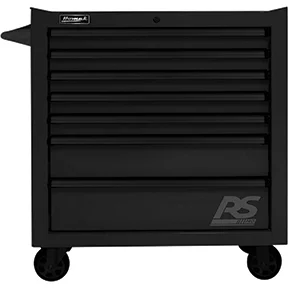
Homak 36" RS Pro 7-Drawer Rolling Tool Chest
Mfg: Homak Tool Storage
Part #: BK04036070

Beta RSC24 Heavy Duty 7-Drawer Rolling Tool Cabinet, Black, 29.1
Mfg: Beta Tools
Part #: RSC24/7-N
Beta RSC24 Heavy Duty 8-Drawer Rolling Tool Cabinet, Orange, 29.
Mfg: Beta Tools
Part #: RSC24/8-O
Document Before You React
If clock-time complaints start showing up in texts, screenshots, or write-ups, treat it like any other workplace paper trail — because that’s what it is. Save every message. Note dates and times when work wasn’t dispatched until well after your official start time; if a pattern exists (work consistently starting an hour late, for example), two months of dated notes turns “I feel like this happens a lot” into a documented, specific grievance you can bring to a GM.
This cuts both directions. If management wants to hold you to a strict clock, they need to hold dispatch to a strict clock too — work orders approved and ready at shift start, parts staged, lifts open. If you can show, in writing, that the shop routinely fails its half of that bargain, a complaint about you leaving five minutes early loses most of its force.
Keep the documentation factual and unemotional: dates, times, what was said, what work was or wasn’t available. Venting in the same message as your documentation weakens it. Save the venting for your truck.
Reading the Intent Behind the Warning
Not every clock-time comment is a power trip, and it’s worth telling the two apart before you decide how hard to push back. A coworker or senior tech who’s been there longer and quietly tells you “heads up, they’re watching your start time” is often passing along a real signal from conversations happening above your pay grade — that’s worth taking seriously even if the delivery is clumsy. A dispatcher publicly timestamping your clock-out and threatening you in writing over a five-minute variance, with no corresponding standard applied to dispatch delays, reads as someone either covering for their own failures or enjoying a small amount of authority they don’t actually have.
The test is consistency: is the same standard applied to everyone, including the people causing the delays on the other end? If a dispatcher is strict about your clock-out but work isn’t ready until an hour after your clock-in, that’s not a legitimate time-management concern — that’s selective enforcement, and it’s reasonable to say so to management plainly.
Use Your Market Position, But Don’t Burn the Relationship First
The technician labor market right now favors skilled techs, and that changes the calculus on how much friction is worth absorbing. If you can realistically find comparable work within a week, you don’t need to accept a dispatcher threatening your job over minor clock variance — you have options a shop in a tech shortage can’t easily replace. That said, “I could leave tomorrow” is leverage you use selectively, not a daily posture. Burning a decent working relationship with management over a single bad text from a dispatcher who isn’t your boss is a worse trade than just escalating the issue once, calmly, and letting the record speak for itself.
If the pattern continues after you’ve raised it with the right person — real management, not dispatch — that’s a different conversation. At that point you’re not overreacting by treating it as a reason to start looking elsewhere; you’re responding to a shop that’s shown you, in writing, how it actually operates.
Quick Reference Checklist
- Confirm whether you’re flat-rate or hourly, and apply the right logic to the dispute
- Verify the person raising the issue has actual authority over attendance policy
- Screenshot and date every relevant text, write-up, or verbal warning
- Track dispatch delays with the same rigor being applied to your clock-out time
- Take the issue to the service manager or GM, not back-and-forth with dispatch
- Keep your own documentation factual — no venting mixed into the paper trail


Pocket-Size Bluetooth Scan Tool w/Bi-Directional Controls
Mfg: TOPDON
Part #: TOPSCANPRO

FAQs
Can a dispatcher discipline me or threaten my job over clock times?
Generally no. Dispatchers coordinate work orders; disciplinary authority typically belongs to a service manager, foreman, or GM. If a dispatcher is making threats, verify with actual management whether that’s an authorized position before treating it as policy.
I’m flat-rate — does clock-in time even matter?
It matters less than for hourly staff, since you’re paid on completed labor operations, not hours present. But most shops still expect a reasonable presence window for safety, scheduling, and team coordination — the issue is usually enforcement being one-sided, not the existence of a start time at all.
How should I document a pattern of late-dispatched work?
Keep a simple dated log: your clock-in time, the time work was actually assigned or approved, and any relevant texts or conversations. A few weeks of consistent entries is far more persuasive to management than a one-off complaint.
Is it reasonable to leave early if there’s no work and no one objects?
If you’ve completed assigned work and additional jobs aren’t approved or available, leaving isn’t unreasonable — but confirm with your direct supervisor (not dispatch) that this is acceptable so there’s no ambiguity later if the issue resurfaces.
Should I escalate immediately or wait to see if it happens again?
One documented incident is usually worth a calm, direct conversation with management to clarify the real policy. A repeated pattern after that conversation is when it’s reasonable to treat it as a serious workplace issue rather than a one-off misunderstanding.
Does the current tech shortage actually give me leverage here?
In many markets, yes — skilled techs often have realistic options elsewhere, which reduces the cost of pushing back on unreasonable demands. Use that leverage deliberately on real issues, not as a daily bargaining chip over minor friction.
Shop Equipment for Efficient Operations
When dispatch delays and workplace friction come up, a well-organized shop with proper equipment is your strongest foundation. Good tools and organization reduce bottlenecks and keep everyone’s responsibilities clear.
- Tool storage and organization solutions that reduce downtime
- Diagnostic equipment for faster, more efficient troubleshooting
- Shop supplies that support reliable workflow and accountability
Browse our shop equipment selection to set your operation up for success.

The Toolsource Technical Team blends decades of real-world automotive service experience with up-to-date technical research. Our writers collaborate with professional mechanics, shop owners, and diagnostic specialists to deliver practical, workshop-ready guidance you can trust.


Follow us on social media