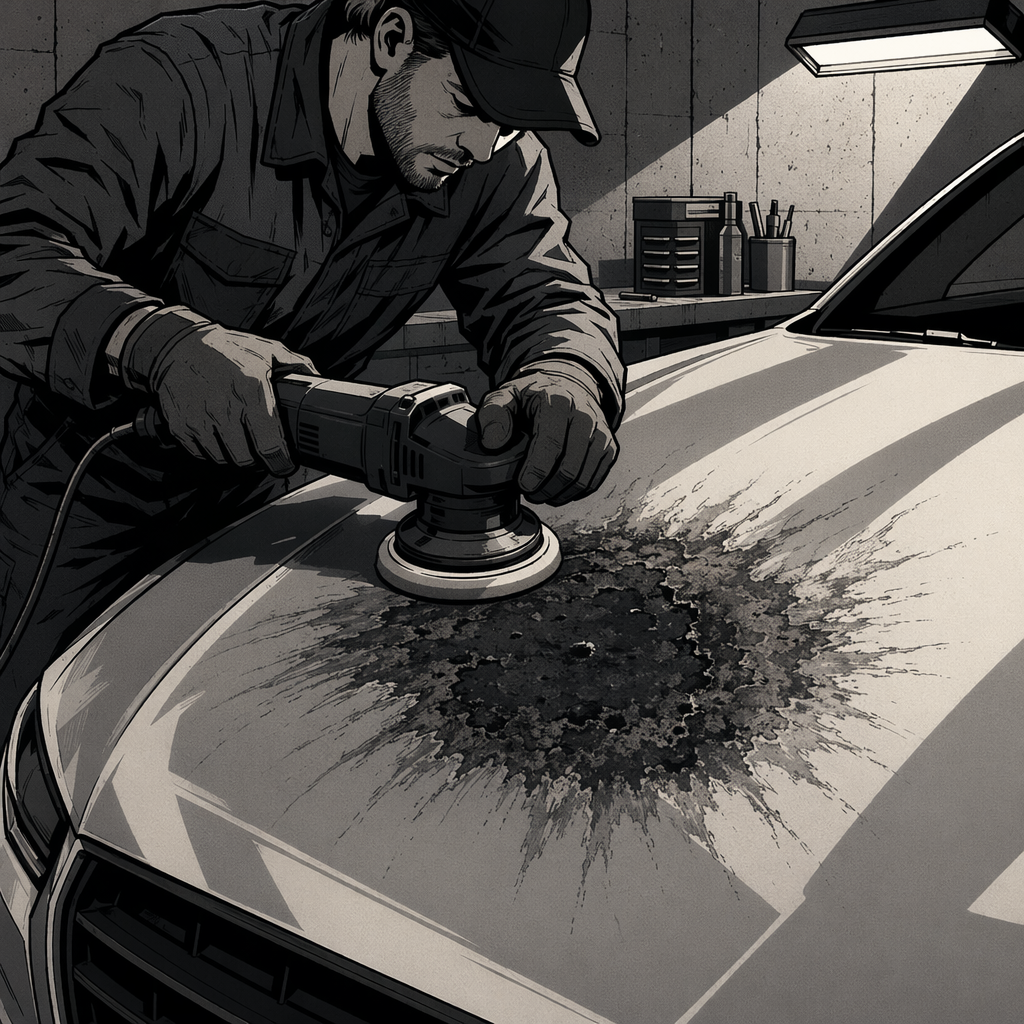
When a firework detonates on or near a vehicle’s painted surface, the damage goes far beyond surface-level soot. The explosive chemical reaction generates intense localized heat—often exceeding 2,000°F at the point of contact—that burns through modern automotive finishes in seconds. What you’re seeing isn’t just residue that wipes away; it’s thermal and chemical degradation of the clear coat, base coat, and potentially the primer layers beneath. The visible scorch pattern typically indicates whether the firework exploded in contact with the hood or was launched from the surface. Understanding the depth and chemistry of this damage determines whether you’re facing a correction job or a full repaint.
Understanding the Damage Mechanism
Fireworks contain oxidizers, fuel compounds, and metal salts that produce both thermal and chemical burns. When these compounds ignite against automotive paint, three simultaneous processes occur: thermal ablation from the combustion temperature, chemical etching from the oxidizers and metal salts, and mechanical cratering from the explosive force. Modern automotive finishes typically consist of a primer layer, base coat (color), and clear coat protective layer—each approximately 1-2 mils thick. A direct-contact firework explosion can penetrate all three layers in under a second.
The scorch pattern tells the story. A circular burn with radiating streaks indicates the firework was placed on the surface and detonated. A more diffuse, spattered pattern suggests an aerial explosion with burning debris falling onto the hood. The former causes deeper, more concentrated damage; the latter often affects a wider area but with shallower penetration. Look for cratering in the center of the burn zone—if you can catch a fingernail on the edge of the damaged area, the clear coat is compromised. If the underlying primer or metal is visible, you’re through the paint entirely.
The chemical residue left behind is equally problematic. Firework compounds continue etching the paint after the initial burn. Potassium perchlorate, sulfur compounds, and metal oxides are hygroscopic—they absorb moisture and form acidic or alkaline solutions that further degrade the finish. This is why immediate action matters. Every hour the residue remains on the surface, the damage extends deeper into the paint layers and wider across the panel.
Immediate Chemical Removal Protocol
Before attempting any correction work, you must neutralize and remove all firework residue. Do not use aggressive rubbing with dry cloths—this drives abrasive particles into the already-damaged clear coat and creates permanent scratches around the burn zone. Start with a pH-neutral car wash soap and copious amounts of water. Use a soft wash mitt with minimal pressure, working from the outer edges of the residue inward to avoid spreading contaminants across undamaged paint.
After the initial wash, inspect the surface under direct lighting. If visible residue remains—often appearing as white, gray, or colored powder—you’re dealing with metal oxide deposits. Mix a solution of distilled white vinegar and water (1:3 ratio) and apply it to the affected area using a microfiber applicator pad. Let it dwell for 60-90 seconds to chemically dissolve the alkaline compounds, then rinse thoroughly. For stubborn residue, isopropyl alcohol (70% concentration) can be used, but test on an inconspicuous area first as it may soften certain paint systems.
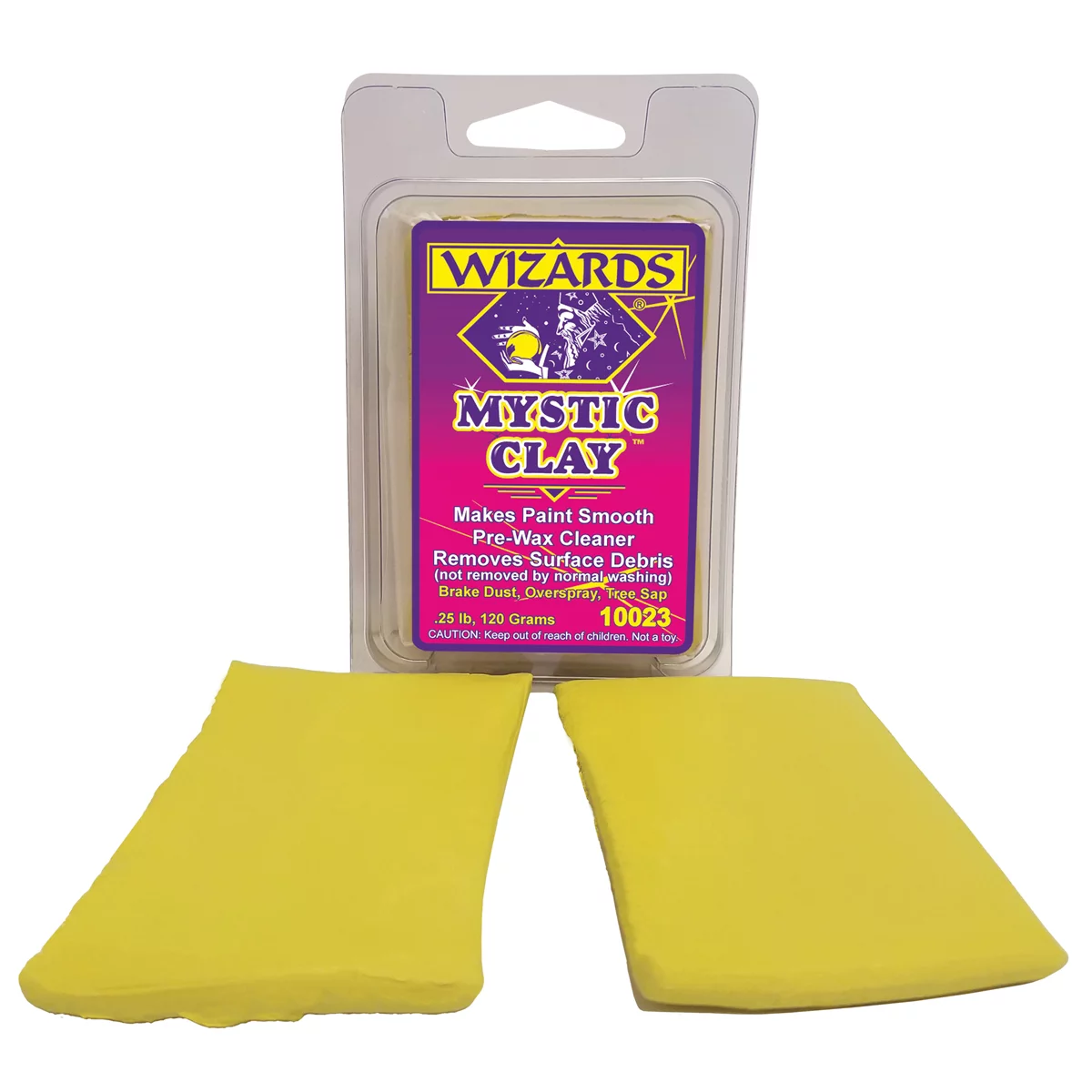
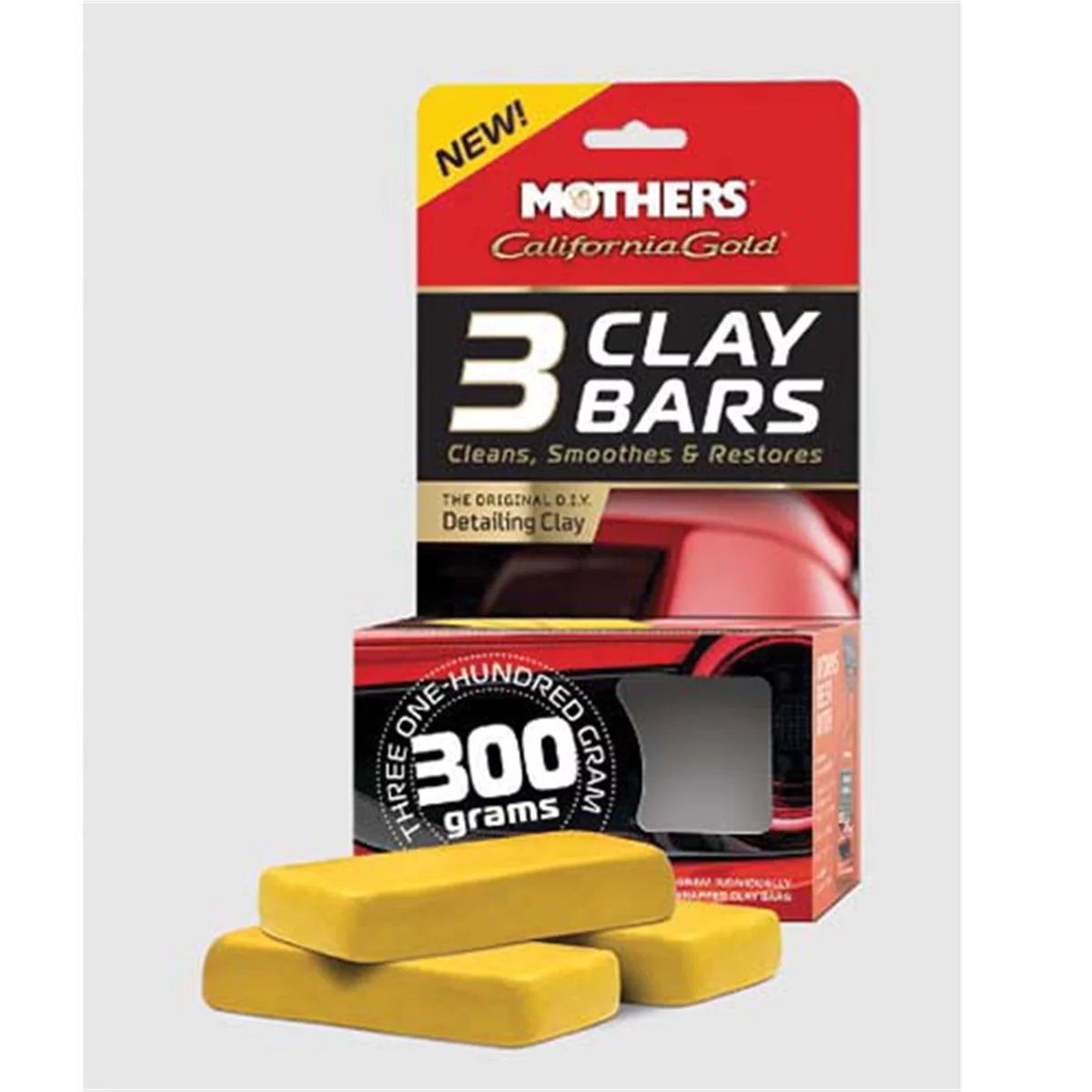
Once chemical residue is removed, use an automotive clay bar with dedicated clay lubricant. Work in straight, overlapping passes with light pressure. The clay will pick up embedded particulates that washing missed—you’ll feel the surface change from rough to smooth as contamination is removed. Inspect the clay frequently and fold to a clean section when it becomes loaded with debris. This step is critical before moving to any abrasive correction, as attempting to polish over embedded particles will inflict additional scratches.
Damage Assessment and Correction Options
With the surface clean, proper lighting becomes essential for accurate assessment. Use a high-intensity LED work light at a low angle to the panel—this reveals the true depth of the damage. You’re looking for three indicators: clear coat integrity, base coat exposure, and substrate visibility. Run your finger lightly across the damaged area. If it feels smooth but shows discoloration, you may have clear coat damage only. If you feel a definite edge or crater, the base coat is compromised. If you see primer gray or bare metal, you’re through the entire paint system.
For damage contained to the clear coat with no cratering, paint correction may be viable. Start with a medium-cut compound applied with a dual-action polisher at 1200-1500 RPM using a cutting pad. Work in overlapping passes with moderate pressure. You’re attempting to level the surrounding clear coat down to the depth of the thermal damage. This only works if sufficient clear coat thickness remains—typically you have 1.5-2 mils to work with before reaching the base coat. Check your progress frequently with the lighting method described above. If the burn mark diminishes but doesn’t disappear, you’re approaching the base coat and should stop.
Follow compound work with a finishing polish and a finishing pad to remove haze and restore gloss. If the damage is still visible after this process, you’ve reached the limit of correction—the thermal burn extends into or through the clear coat. At this point, attempting further correction will only thin the clear coat to failure. The panel requires either localized repainting or an alternative covering solution.
Repainting vs. Alternative Solutions
Professional hood repainting typically costs $800-$1,500 depending on your market and the quality level required. This involves sanding the damaged area, feathering the edges, applying primer if needed, color matching the base coat, and applying new clear coat with proper blending into the surrounding panel. The hood may need to be removed for optimal results, and curing time adds several days to the process. For vehicles with complex colors—particularly metallics, pearls, or tri-coats—matching can be challenging, and the repair may require blending into the fenders to hide any color variation.
For owners seeking a faster, lower-cost alternative, vinyl wrapping the hood presents a viable option. Quality cast vinyl designed for automotive use costs $50-$150 for a hood-sized piece. The damaged paint must still be cleaned and any loose material removed, but perfect surface preparation isn’t required—the vinyl creates a new protective and aesthetic layer over the damage. Application requires a heat gun, squeegee, and patience, but the process can be completed in 2-3 hours by a moderately skilled DIYer. The wrap protects the damaged area from further degradation and can last 3-5 years with proper care.
Partial vinyl wraps—covering just the hood in a complementary or contrasting color—have become an accepted aesthetic choice, eliminating the “visible repair” concern. This approach is particularly practical for higher-mileage vehicles where a $1,000 paint job may not make financial sense. The key is ensuring the damaged area is sealed to prevent rust development beneath the vinyl. If bare metal is exposed, apply a rust-inhibiting primer to those spots before wrapping.
Insurance coverage for firework damage falls under comprehensive coverage in most policies, subject to your deductible. If your deductible is $500 or less and the repair estimate exceeds $1,500, filing a claim may be worthwhile. However, some policies specifically exclude “willful acts” or require proof that the damage was truly accidental rather than vandalism you may have contributed to. Document the damage thoroughly with photos before beginning any repair work, and consider filing a police report if the incident appears to be vandalism—this strengthens the insurance claim and may be required by your carrier.
Preventing Future Damage and Rust Development
If you’re in an area where firework use is common—particularly around major holidays—preventative measures can save significant repair costs. Parking away from street-facing positions during high-risk periods reduces exposure to aerial debris. Car covers provide protection, but only if they’re fire-resistant—standard polyester covers can melt and fuse to paint if burning debris lands on them. Canvas or specialized fire-resistant covers offer better protection, though they’re more expensive.
For damage already sustained, rust prevention becomes critical if the burn penetrated to bare metal. Exposed steel begins oxidizing within hours in humid conditions. If professional repair or wrapping isn’t immediately feasible, apply a temporary rust inhibitor to any exposed metal areas. Products like Rust-Oleum Rust Reformer chemically convert surface rust to a stable compound and provide a barrier against moisture. This is a stopgap, not a permanent solution, but it prevents the damage from worsening while you arrange proper repair.
Monitor the damaged area weekly for signs of rust development—look for brown or orange discoloration at the edges of the burn zone or bubbling beneath any remaining paint. Rust spreads quickly once established, potentially undermining paint inches away from the original damage point. If you notice rust forming, accelerate your repair timeline—every week of delay increases the area that will require treatment during the eventual repair.
Quick Reference Checklist for Firework Damage Response
- Photograph the damage from multiple angles under good lighting before touching the vehicle
- Wash the affected area immediately with pH-neutral soap and abundant water using a soft wash mitt
- Apply diluted vinegar solution (1:3) to remaining residue, dwell 60-90 seconds, rinse thoroughly
- Clay bar the entire damaged area with proper clay lubricant to remove embedded particles
- Assess damage depth under angled LED lighting—check for clear coat only vs. base coat vs. primer/metal exposure
- If bare metal is visible, apply rust inhibitor immediately to prevent oxidation
- Attempt paint correction only if damage is clear coat-level with no cratering
- Consider vinyl wrap for moderate damage where correction isn’t viable but cost is a concern
- Obtain professional paint estimates for deep damage exposing primer or metal
- Contact insurance if comprehensive coverage is in place and damage exceeds your deductible

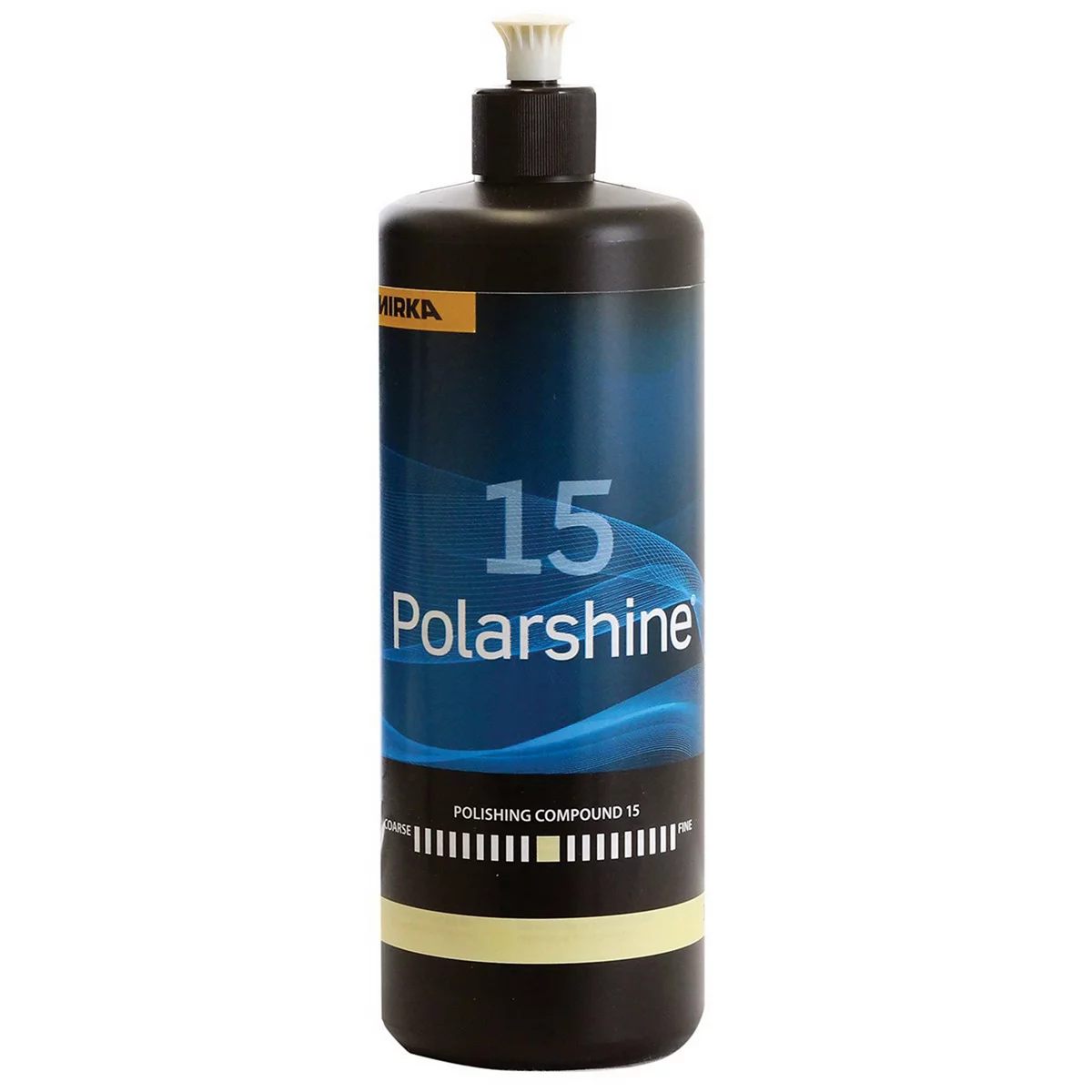
Polarshine PC15-1L Polishing Compound, 1 L Bottle, Beige, Li
Mfg: Mirka Abrasives
Part #: PC151L
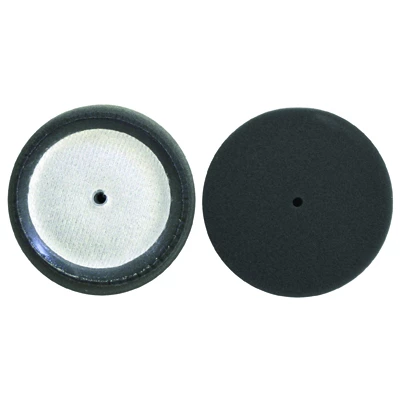
Professional Black Micro Speedy Foam Polishing/Finishing Pads wi
Mfg: SM Arnold
Part #: 44-643
Frequently Asked Questions
Can firework damage just be wiped off if I act quickly enough?
No. While immediate cleaning prevents chemical residue from causing additional damage, the initial thermal burn happens in milliseconds and permanently alters the paint structure. You can remove soot and chemical deposits, but the heat damage to the clear coat and paint layers cannot be reversed—only corrected through leveling (if shallow enough) or covered through repainting or wrapping.
Will ceramic coating or paint protection film prevent firework damage?
Not from direct-contact explosions. Ceramic coatings are typically 2-5 microns thick and offer no meaningful protection against 2,000°F+ temperatures. Paint protection film (PPF) provides slightly better thermal resistance and may prevent some damage from falling debris, but a firework detonating on the surface will burn through quality PPF just as it burns through clear coat. These products protect against scratches, UV exposure, and chemical etching from normal environmental contaminants—not explosive ordinance.
How do I know if the damage is too deep for paint correction?
If you can catch a fingernail on the edge of the damaged area, you have cratering that extends into or through the clear coat. If you see a different color than your car’s paint—particularly white, gray, or silver primer, or the metallic substrate—you’re through the paint system entirely. If the damage feels smooth to light touch but shows discoloration only, correction may be possible. When in doubt, consult a professional detailer with a paint depth gauge—this tool measures remaining clear coat thickness and determines if sufficient material exists for safe correction.
Can I just touch up the damaged area with a paint pen or brush?
This approach rarely produces acceptable results for firework damage because the affected area is typically too large and irregularly shaped for touch-up application. Touch-up paint is designed for chips and scratches measured in millimeters, not the several-inch diameter burns common with firework damage. Additionally, the thermal damage often creates a crater with defined edges—touch-up paint applied to this creates a visible mound. For small spots of bare metal, touch-up can serve as temporary rust prevention until proper repair, but it won’t restore appearance.
How long can I wait before repairing firework damage without causing rust?
If bare metal is exposed, oxidation begins within 24-48 hours in humid conditions, faster in coastal or winter road-salt environments. Surface rust that responds to chemical treatment develops in 1-2 weeks. Structural rust that requires metal treatment or replacement can establish in 4-8 weeks. The timeline varies based on climate, but the rule is simple: the moment you see bare metal, the clock is ticking. Apply rust inhibitor within 24 hours and schedule permanent repair within 2-4 weeks to minimize rust-related complications.
Will my insurance rates increase if I file a claim for firework damage?
Comprehensive claims (covering non-collision damage like theft, vandalism, weather, and fire) typically have less impact on rates than collision or at-fault accident claims, but insurers vary in their policies. A single comprehensive claim under $2,000 often results in no rate increase, especially if you have a claim-free history. Multiple claims within 3-5 years, regardless of type, can trigger rate increases or policy non-renewal. Review your policy documents or contact your agent to understand your specific insurer’s approach. If the repair cost is within $200-300 of your deductible, paying out-of-pocket may be the better financial decision long-term.
Related Paint & Body Tools
Proper firework damage assessment and correction require the right tools and materials. Browse our Paint & Body category for compounds, polishers, clay bars, and finishing supplies needed to evaluate and correct thermal burns on automotive finishes.
- Dual-action polishers and cutting/finishing pads for paint correction work
- Automotive compounds, polishes, and clay bar systems for damage assessment and residue removal
- LED work lights and precision measuring tools for evaluating repair depth

The Toolsource Technical Team blends decades of real-world automotive service experience with up-to-date technical research. Our writers collaborate with professional mechanics, shop owners, and diagnostic specialists to deliver practical, workshop-ready guidance you can trust.


Follow us on social media