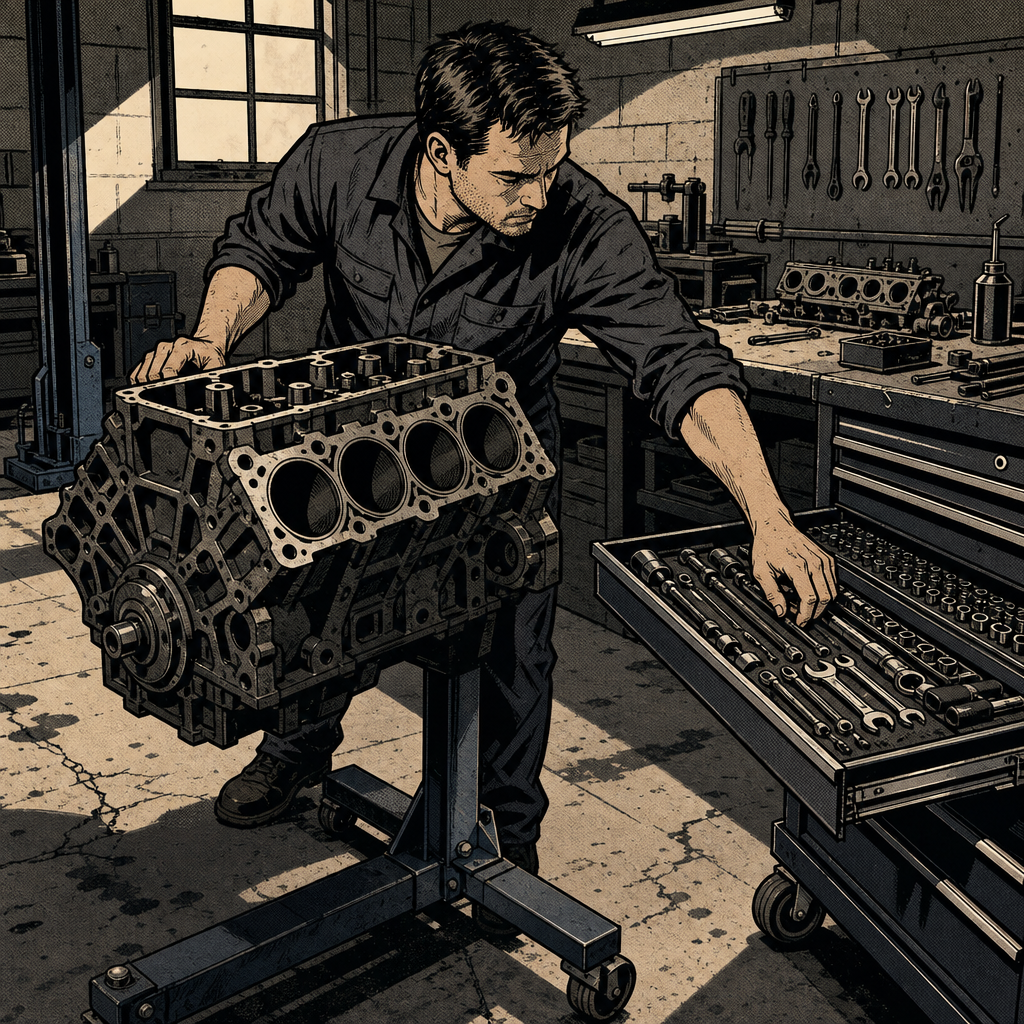
A recent thread about a technician using repurposed filing cabinets as tool storage turned into a bigger argument than the topic deserved—half the shop floor weighing in on whether a $15/hour apprentice with no floor space should be running a $10,000 box. The actual answer is less dramatic: storage needs to match your budget, your space, and your workload, and there’s a real difference between “improvised but functional” and “going to get you hurt or fired.” Here’s what matters when you’re deciding what to store your tools in, whether that’s a filing cabinet, a cart, or a proper rolling box.
Why Techs Start With Improvised Storage
Almost nobody starts their career with a 72″ Snap-on box. Apprentices and entry-level techs commonly start with whatever is cheap, available, and keeps tools dry and organized: a small Craftsman cart, a repurposed bank or office filing cabinet, a shelf unit, or in some documented cases, a shopping cart. This isn’t unusual—it’s the default starting point for most people in the trade, and plenty of senior techs still mention the beat-up 3-drawer box they started with decades ago sitting on top of their current full-size box, still in use for travel or odd jobs.
The driving factors are almost always the same: limited cash, limited floor space, and a shop environment where a full-size box simply doesn’t fit. In small garage bays or mobile setups, a bulky rolling cabinet can be a liability rather than a convenience. Improvised storage solves a real, immediate problem—it’s not a character flaw, it’s a budget and space constraint.
What Repurposed Storage Actually Gets Right
Office and bank filing cabinets show up as tool storage more often than you’d think, and for good reason: they’re often built from stamped steel, have lockable drawers, and were designed to hold a lot of weight (paper is heavy, and these cabinets are rated for it). When they come with actual drawer slides—not just a tray resting on rails—they can hold general hand tools, fasteners, and small specialty equipment without issue. Picking one up for $30–35 at a surplus sale is a legitimate way to get lockable, weight-rated storage for less than the cost of one drawer liner kit from a tool truck.
The practical use case that keeps coming up: dedicate drawers by category. One drawer for plumbing tools, one for electrical, one for fasteners, one for specialty or rarely-used items. That same logic applies inside a shop—filing cabinets or secondhand cabinets work well as auxiliary storage next to a primary box, holding blow-molded cases, overflow sockets, or specialty tools that don’t need to live in your main rollaway.
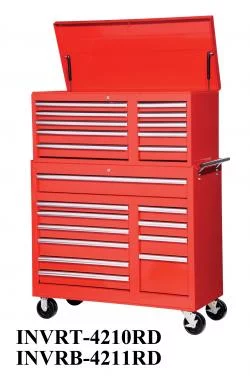
42" 11 Drawer Cabinet with Ball Bearing Slides - Red
Mfg: International Tool Boxes
Part #: VRB-4211RD
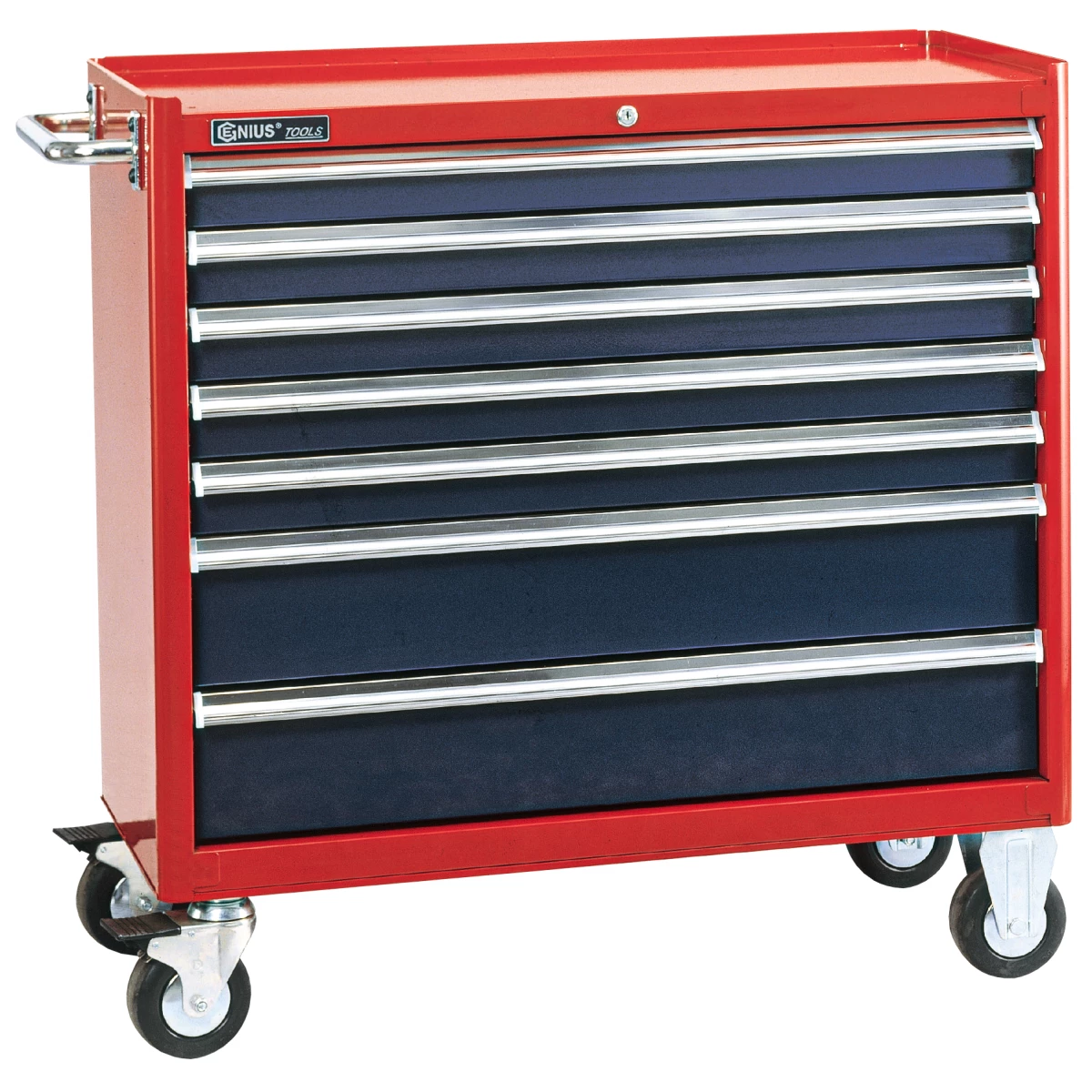

Beta RSC24 Heavy Duty 8-Drawer Rolling Tool Cabinet, Red, 29.13"
Mfg: Beta Tools
Part #: RSC24/8-R
Where Improvised Storage Falls Apart
The failure points aren’t about appearance—they’re mechanical and practical:
- No drawer slides. A drawer resting on bare rails gets exponentially harder to open as it fills with steel tools. This is the single biggest functional difference between a real toolbox and a repurposed cabinet. If it doesn’t have slides, weigh the drawers lightly or expect to fight them daily.
- No mobility. Toolboxes have locking casters for a reason: techs move stations, work on multiple bays, and need their tools with them. A filing cabinet with no wheels means every relocation is a manual lift-and-carry job, or it stays permanently fixed in one spot—fine for a home garage, a problem in a shop that rotates bays.
- Weight ratings are a guess. Office furniture isn’t engineered for the density of a tool drawer. A drawer stuffed with wrenches and sockets weighs far more per cubic inch than paper. If you don’t know the rated load, don’t max it out—overloading a cabinet not rated for it risks a drawer failure or a frame that bends under strain.
- Security is inconsistent. Some filing cabinets lock per-drawer or with a bar lock across all drawers; others don’t lock at all. If you’re in a shop with shared space or walk-in customers, an unlocked cabinet is a theft risk for tools that often represent thousands of dollars of personal investment.
- Shop professionalism standards vary. Some employers don’t care what you store tools in as long as the bay stays functional. Others expect a baseline level of shop presentation, especially customer-facing bays. If you’re new at a shop, it’s worth a quick conversation with a lead or owner about whether your setup is acceptable rather than finding out the hard way.
When It’s Time to Upgrade
There’s no fixed dollar threshold or tenure requirement—but a few signals reliably point to “time to upgrade”:
- You’re regularly fighting drawers that won’t slide, or physically relocating a cabinet that should have wheels.
- You’ve outgrown the drawer count and are stacking tools or using cardboard/overflow boxes as a workaround.
- You’ve landed steady work and have discretionary income—investing in organization and speed starts paying for itself in time saved per job.
- Your current setup is a safety or security liability (unlocked, overloaded, or blocking walkways).
Upgrading doesn’t mean financing a $7,000–$12,000 rolling box from a tool truck on day one. A solid Craftsman, Husky, or similar mid-range box in the $250–$800 range, bought outright, covers the vast majority of working techs for years. Full-size, heavy-gauge boxes with the features the top-tier brands offer matter more once you’re carrying a large, specialized tool inventory and working in a shop that expects a polished presentation—not because a bigger price tag makes you better at the job.
Features That Actually Matter When You Buy a Real Box
When you do move up from improvised storage, prioritize function over brand prestige:
- Ball-bearing drawer slides rated for the load you’ll actually carry (heavier for bottom drawers holding sockets and power tools).
- Lockable, lift-off or sliding lid bars that secure every drawer with one lock, not drawer-by-drawer.
- Caster quality—locking casters rated for the fully loaded weight of the box, not just the empty frame.
- Drawer depth variety so you’re not wasting a deep drawer on thin hand tools or cramming power tools into a shallow one.
- Steel gauge and weld quality—thin stamped steel will oscillate and dent; a heavier gauge holds up to daily shop abuse.
None of this requires premium-brand pricing. Mid-tier manufacturers use the same basic slide and caster hardware as the high-end tool trucks; what you’re paying extra for at the top end is largely steel thickness, finish, and brand service network.
Avoiding the Financing Trap
The recurring warning from experienced techs is specifically about tool truck financing. A $7,000–$12,000 box financed at tool-truck rates can turn into a long-term payment obligation that outlasts the job you bought it for—and it has zero correlation with skill or output. Buying a capable box outright, even a smaller one, and building up your storage over time as cash allows, avoids a debt load that doesn’t improve your diagnostic speed or repair quality. The box holds tools; it doesn’t do the job.
Quick Checklist Before You Buy or Build Storage
- Does it have functional drawer slides, not bare rails?
- Is the weight rating known, and are you staying under it?
- Does it lock, and is that lock adequate for your shop environment?
- Does it need to move between bays—and if so, does it have rated casters?
- Have you confirmed with your shop that your setup meets their expectations?
- Are you buying outright, or financing at a rate that outlasts the box’s usefulness?
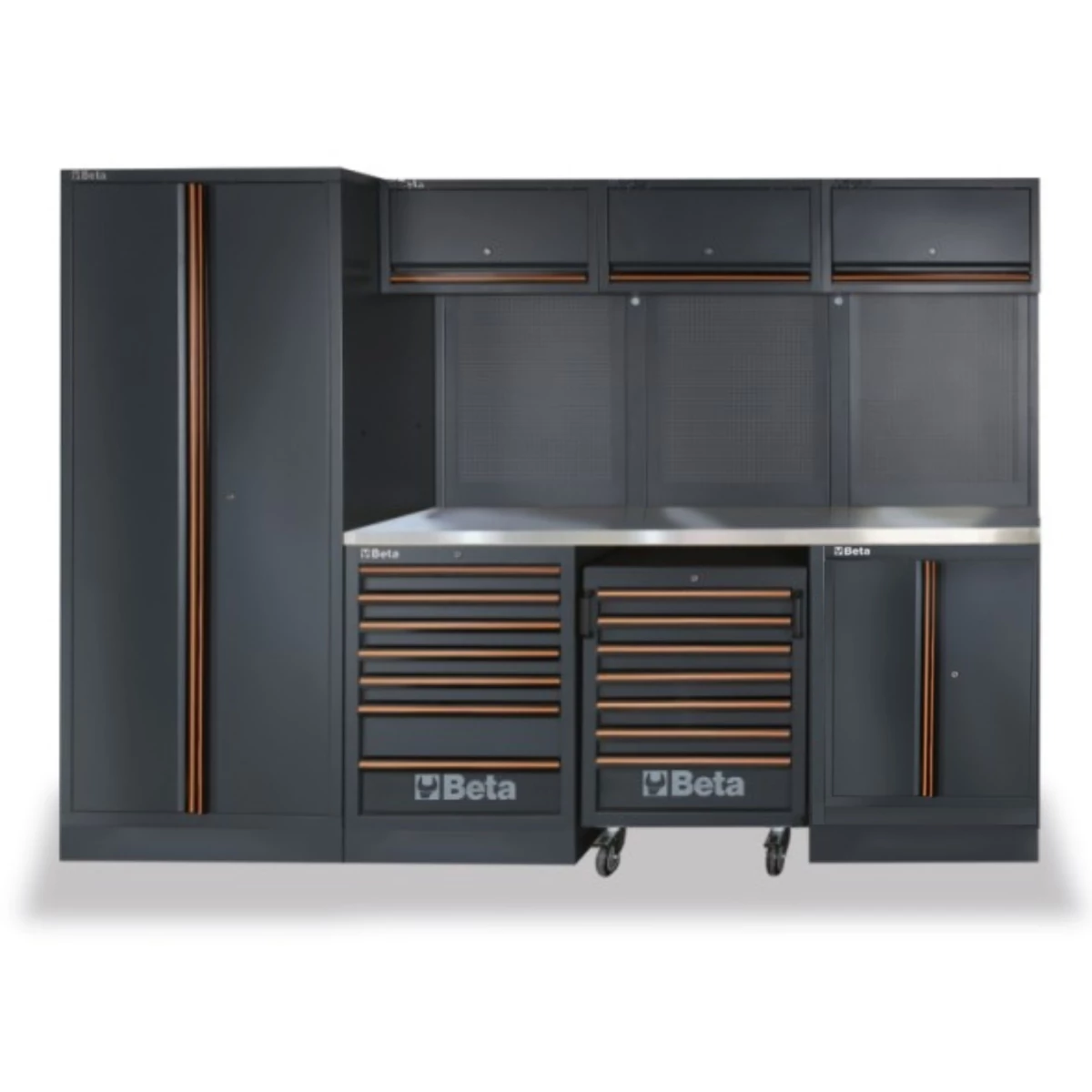
Beta C45PROX+MA Garage Tool Storage Cabinet System, Stainless St
Mfg: Beta Tools
Part #: C45PROX +MA

$SE SERIES 41" 18" DEPTH CHEST & CABINET
Mfg: Homak Tool Storage
Part #: TBK7041180

24" Heavy-Duty Steel Wall Tool Cabinet with Shelves
Mfg: Homak Tool Storage
Part #: GS00724004
FAQs
Is it unprofessional to use a filing cabinet instead of a toolbox?
Not inherently. As long as it’s secure, load-appropriate, and doesn’t create a safety or mobility problem in the shop, it’s a functional storage solution. Some shops care about appearance more than others—ask before assuming it’s fine.
Do I really need roller slides?
If you plan to load drawers with steel tools, yes. Without slides, drawers become progressively harder to open as weight increases, which slows you down and accelerates wear on the cabinet.
How much should a first “real” toolbox cost?
Most working techs get years of use out of a $250–$800 mid-range rolling box bought outright. There’s no need to finance a premium tool-truck box early in your career.
Will a shop require me to have a specific type of box?
Some will, especially customer-facing shops; many won’t care as long as your tools are organized and secure. Confirm directly with your employer rather than guessing.
Is financing a toolbox from a tool truck worth it?
Generally not early on. High-interest financing on a $7,000+ box creates a long payment obligation that has no bearing on your skill or earning potential. Buy what you can afford outright and upgrade over time.
What’s the biggest risk with repurposed storage like filing cabinets?
Unknown weight ratings and lack of drawer slides. Both can cause drawer failure or make the cabinet unsafe to overload, especially with dense tool weight versus the paper it was originally designed for.
Explore Tool Storage Options
Browse our Tool Storage selection to compare rolling cabinets, mid-range boxes, and other storage solutions that meet the requirements discussed in this guide.
- Rolling cabinets with ball-bearing slides and locking drawers
- Mid-range boxes suitable for professional shop environments
- Storage solutions for different budgets and space constraints

The Toolsource Technical Team blends decades of real-world automotive service experience with up-to-date technical research. Our writers collaborate with professional mechanics, shop owners, and diagnostic specialists to deliver practical, workshop-ready guidance you can trust.


Follow us on social media