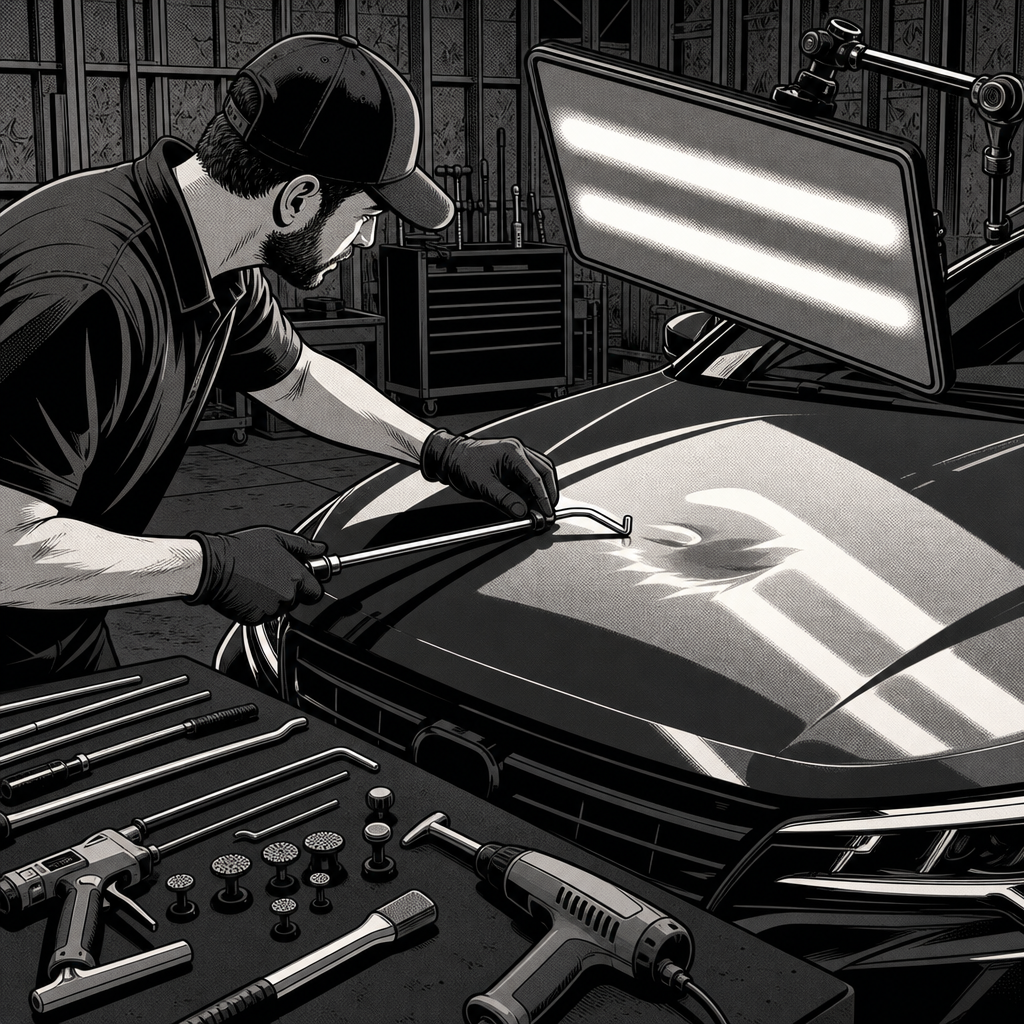
Every service writer has a story about a customer who swears “it was just a pinecone” or “a branch fell on it” and the damage looks like it came from a collision. It’s not an exaggeration — modern body panels are made from thinner gauge steel and aluminum than vehicles from even ten years ago, and a dense, heavy object falling from height (or wind-driven hail) can put a fist-sized dent in a hood or fender with surprisingly little force. Customers are often more shocked by the estimate than the dent itself. This guide walks through how to evaluate the damage, decide between paintless dent repair (PDR) and panel replacement, source parts efficiently when replacement is the right call, and help customers navigate a comprehensive insurance claim without unnecessary drama.
Why Thin-Gauge Panels Dent So Easily
Automakers have shifted to thinner steel (and increasingly aluminum) for weight savings and fuel economy targets. On many current hoods and fenders, the sheet metal itself contributes very little structural rigidity — the paint and clear coat layers add a measurable amount of stiffness, which is why panels can flex noticeably under hand pressure yet hold their shape until an impact breaches that thin margin. Once the elastic limit is exceeded, the metal work-hardens into a dent rather than springing back. This matters for diagnosis: a shallow, wide dent with no crease is usually still workable metal, while a dent with a sharp crease or visible paint cracking has likely exceeded the panel’s elastic range and may not fully pull back with PDR alone.
Aluminum panels behave differently than steel — they have less elasticity and work-harden faster, so aggressive PDR attempts on aluminum hoods and doors are more likely to stress-crack paint or thin the metal further. Identify panel material before quoting a repair method; a magnet test is a fast field check, but pulling the VIN-decoded body material spec is more reliable for late-model vehicles.
Assessing PDR Candidacy Before You Quote
Not every debris dent is a PDR job, and setting expectations up front saves a comeback argument later. Check these factors during inspection:
- Paint condition over the dent — any cracking, chipping, or exposed primer generally rules out pure PDR and pushes toward filler/paint or replacement.
- Dent location relative to body lines, seams, and edges — PDR access is limited near reinforced areas, sunroof channels, and panel edges.
- Depth and sharpness of the crease — shallow, rounded dents respond well; sharp creases or “pointed” impact marks (typical of a rigid object like a pinecone or hailstone) often have stretched metal at the center that won’t fully relax.
- Access to the backside of the panel — hoods and doors usually have good access; quarter panels and roof rails may require glue-pulling methods instead of rod access.
If more than a third of the dent area shows stretched or cracked paint, or if metal has been pierced, stop quoting PDR and move to the replacement-vs-repair-with-filler conversation.
Sourcing Used Panels When Replacement Is the Right Call
When a dent is too severe for PDR, or when the customer’s deductible makes a new OEM panel impractical, a used panel from a salvage yard is usually faster and cheaper than a new part, and for a 10+ year old vehicle it’s often the only economically sensible choice. Cross-reference regional salvage inventory through an aggregator site rather than calling yards one at a time — you can search by year/make/model and part type and get a list of yards with matching panels in stock, along with mileage and condition notes on the donor vehicle.
Set the customer’s expectations on color matching before you order: even with an identical paint code, a used panel will very likely need to be blended or fully repainted to match, because factory paint fades and shifts tone differently across panels depending on sun exposure and age. Quoting “paint to match” as a separate line item up front avoids disputes at delivery. If the vehicle is a common model, ask the yard for panel photos before committing — surface rust, prior repair, and hardware condition vary widely between listings even at the same price point.
PDR Technique and the Tools That Make It Repeatable
For jobs that do qualify as PDR, working method matters more than brute force. Start from the outer edge of the dent and work inward in small, overlapping passes rather than pushing directly on the deepest point — pushing the center first tends to overcorrect and create a high spot or “oil can” flex that’s harder to chase down than the original dent. Use a light source (an LED reflection board or PDR lamp) positioned so the panel’s reflection lines run across the dent; this lets you read the metal’s contour in real time instead of relying on touch alone.
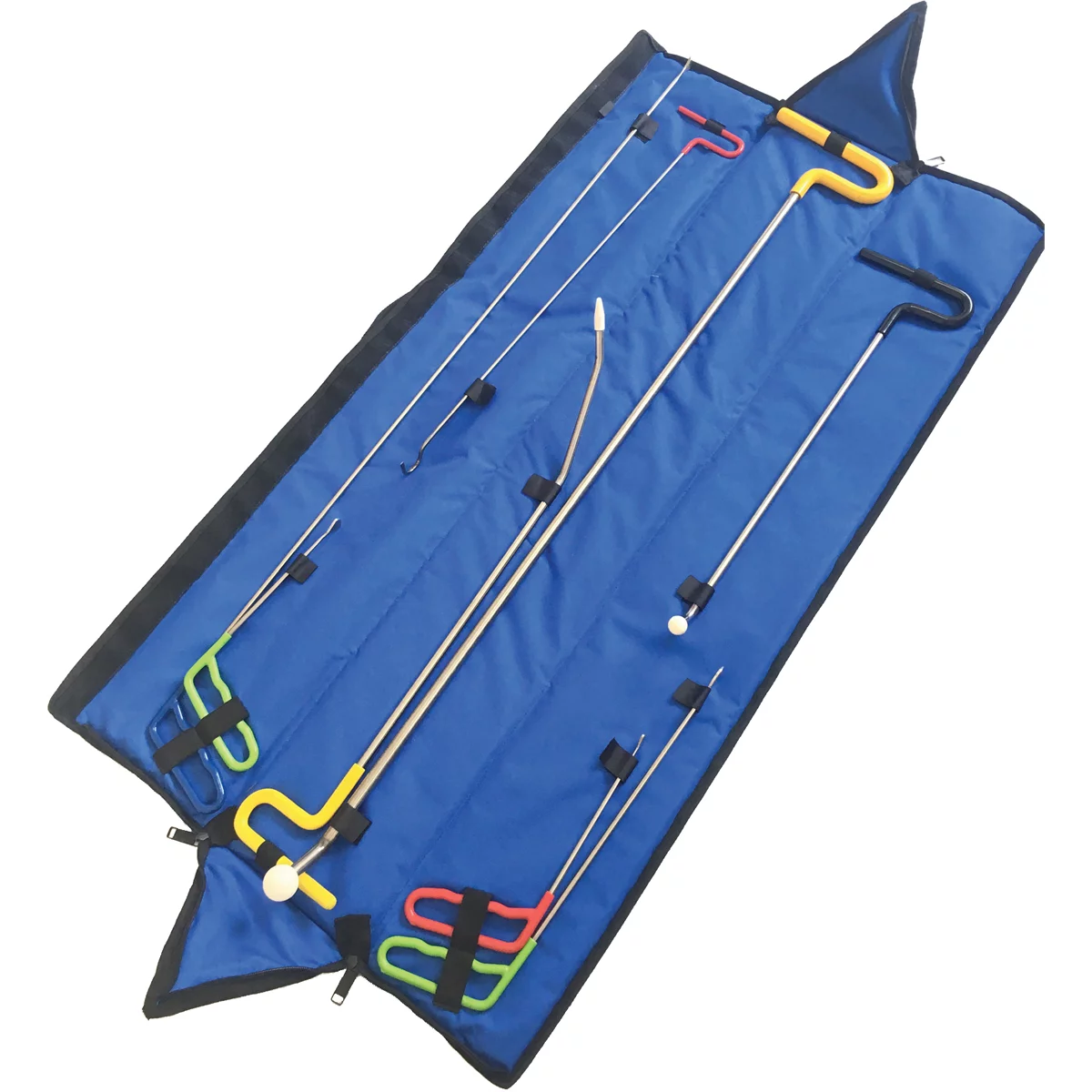
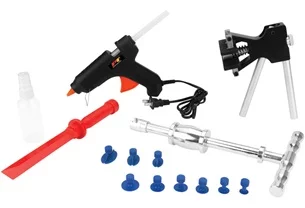
A basic kit for debris-dent work should include a range of rod lengths and tip profiles for different access points, a glue-pulling kit with tabs for edge dents where rod access is blocked, and a knockdown tool for any high spots raised during pulling. On thin aluminum panels, favor slower, lower-force passes with broader tips — aluminum’s faster work-hardening means aggressive pulling raises the risk of stress cracks that show up in the paint days later. Keep a heat gun or dent-repair heat lamp on hand as well; gently warming stubborn dents in cooler shop temperatures improves metal flexibility and reduces the force needed to pull it back.
Documenting the Job for a Comprehensive Claim
Debris and weather damage (falling branches, pinecones, hail) is typically processed under comprehensive coverage rather than collision, and comprehensive claims generally don’t carry the same premium-increase risk as at-fault collision claims — but that determination is made by the insurer, not the shop, so don’t promise a specific outcome to the customer. What you can control is the documentation that makes the adjuster’s job easy and the claim faster to approve:
- Photograph the dent from multiple angles with a scale reference (tape measure or coin) before any repair work begins.
- Photograph the source object if it’s still present or identifiable (the branch, the pinecone, hail damage pattern) — this supports the comprehensive classification.
- Write the estimate as two line items: PDR/paint labor and parts (if any), so the adjuster can see the repair logic rather than a single lump sum.
- Keep the used-panel sourcing quote and photos on file in case the adjuster wants to verify the part cost against OEM pricing.
Encourage customers to file the claim before authorizing repair if the estimate is anywhere near their deductible — repairing first and filing after can complicate the adjuster’s damage assessment.
Quick Reference Checklist
- Confirm panel material (steel vs aluminum) before choosing a repair method
- Inspect for paint cracking or exposed metal — disqualifies pure PDR
- Check backside access for rod work; plan glue-pull for restricted areas
- If replacing, pull used-panel quotes from multiple yards via a salvage aggregator
- Quote paint/blend work separately from the panel cost on used-part jobs
- Photograph damage and (if available) the causing object before repair for claim documentation


FAQs
Can PDR fully fix a large dent from a falling branch or pinecone?
Often yes if the paint is intact and there’s no sharp crease, but large-diameter impacts from rigid objects sometimes stretch the metal at the point of contact enough that a residual low spot remains even after pulling. Inspect closely before quoting a guaranteed full correction.
Will filing a comprehensive claim for debris or hail damage raise my insurance premium?
Comprehensive claims are generally treated separately from at-fault collision claims and are less likely to affect premiums, but this varies by insurer and state — direct the customer to confirm with their agent rather than assuming.
How do I find a used panel that matches the vehicle’s factory paint code?
Pull the paint code from the vehicle’s door jamb or VIN plate and search salvage inventory using that code plus year/make/model. Even with a code match, plan on blending or repainting since factory paint fades unevenly with age and sun exposure.
What’s the minimum PDR toolkit for a shop that only occasionally handles debris dents?
A set of varied-length rods with interchangeable tips, a glue-pull kit for edge access, an LED reflection board, and a knockdown tool covers the majority of hood, fender, and door dents without investing in a full dedicated PDR bench setup.
Does aluminum bodywork change how you approach a debris dent?
Yes — aluminum work-hardens faster than steel and is less forgiving of aggressive pulling. Use broader tips, lighter passes, and moderate heat rather than forcing the repair, and watch for stress cracking in the paint after the metal is worked.
When does panel replacement make more sense than repair?
When paint is cracked or metal is pierced, when the dent sits on a body line or edge with poor tool access, or when the vehicle’s age makes a used panel cheaper than the labor hours a difficult PDR/filler repair would require.
Tools for Debris Dent Repair
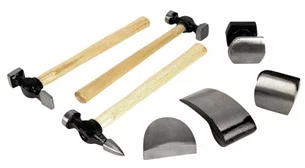
Whether you’re tackling PDR or sourcing replacement panels, having the right equipment on hand makes the work faster and more efficient. Our Paint & Body selection includes everything you need for debris-dent work.
- PDR rods and glue-pull kits
- Knockdown tools and heat lamps
- Reflection boards and work lighting

The Toolsource Technical Team blends decades of real-world automotive service experience with up-to-date technical research. Our writers collaborate with professional mechanics, shop owners, and diagnostic specialists to deliver practical, workshop-ready guidance you can trust.


Follow us on social media