A customer brings in a three-year-old vehicle with an electrical gremlin, the estimate comes back in the thousands, and the write-up says the harness is “fried.” That word does more harm than good — it tells the customer nothing about what actually failed, and it gives them no reason to trust the number on the invoice. Coolant and water intrusion into connectors and harnesses is a real, common failure mode, but diagnosing it correctly, repairing it at the right scope, and explaining the bill in plain technical terms separates a shop customers trust from one they leave a bad review for. Here’s how to handle these jobs from diagnosis to invoice.
Why Coolant and Moisture Wreck Wiring Harnesses
Wiring problems from fluid intrusion rarely stay contained to one spot. Coolant is conductive and corrosive, and it wicks along stranded copper wire inside the insulation through capillary action — sometimes traveling a foot or more from the actual entry point before it causes a visible problem. That’s why a leak at a sensor connector near the engine can show up as corrosion or an open circuit at a connector down near the transmission or firewall.
What’s actually happening at the failure point is one or more of a short list of specific conditions, and your write-up should name which one it is:
- Corroded terminals (oxidation increasing resistance or breaking contact entirely)
- Shorted conductors (insulation breakdown allowing two wires to bridge)
- Open circuit (a wire strand corroded through completely)
- Damaged or melted connector housing (from heat generated by high resistance at a bad contact)
Each of these has a different repair scope. “Fried” could mean any of them, or none of them, which is exactly the problem — it skips the diagnostic step the customer is paying for.
Pinpointing the Damage Before You Write the Estimate
Before quoting a harness replacement, confirm the actual extent of the damage with a methodical approach:
- Visual trace from the known leak source. If coolant got into a connector, follow the harness run in both directions looking for discoloration, crusty residue, or wire insulation that’s swollen or stiff.
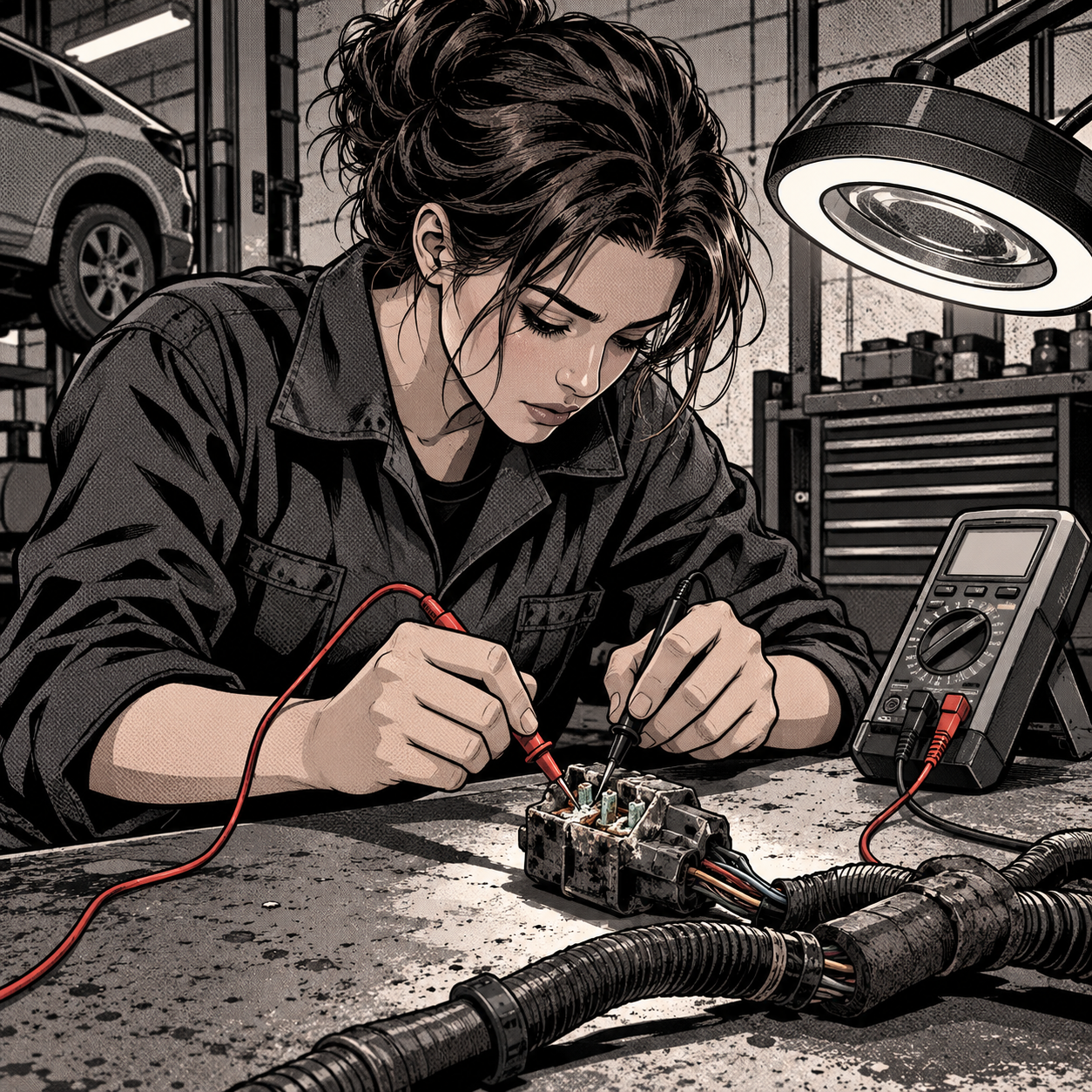
- Pin-out resistance and continuity checks. Back-probe suspect connectors with a DVOM rather than assuming damage based on appearance alone. Corrosion can look bad cosmetically but still read clean, or look fine and read high resistance.
- Voltage drop testing under load. A connector with elevated resistance may pass a static continuity check but fail once the circuit draws real current. This is how you catch intermittent problems before they become no-starts or drivability complaints.
- Open the connector, don’t just wiggle the harness. Depin a few terminals in the suspect area and inspect for green/white corrosion by-products, melted plastic, or water staining inside the shell.
Document what you find with photos at each step. If you ultimately quote a full harness, you want evidence showing why a localized repair wasn’t sufficient — both for your own records and for the conversation with the customer.
[PRODUCT_SEARCH_1]
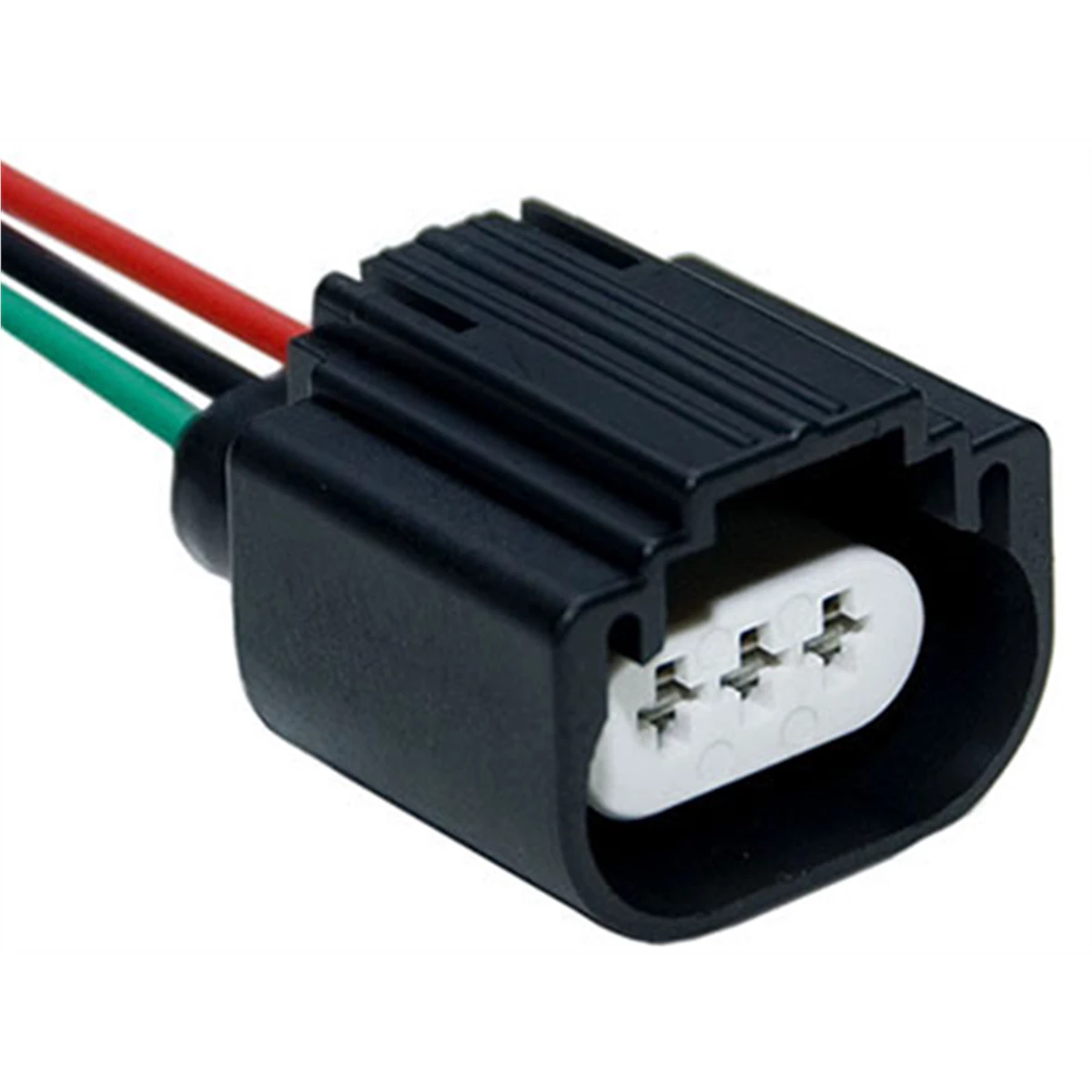
3-WIRE UNIV. 9008/H13 HALOGEN BULB CONNECTOR 1PC
Mfg: The Best Connection
Part #: 2787F

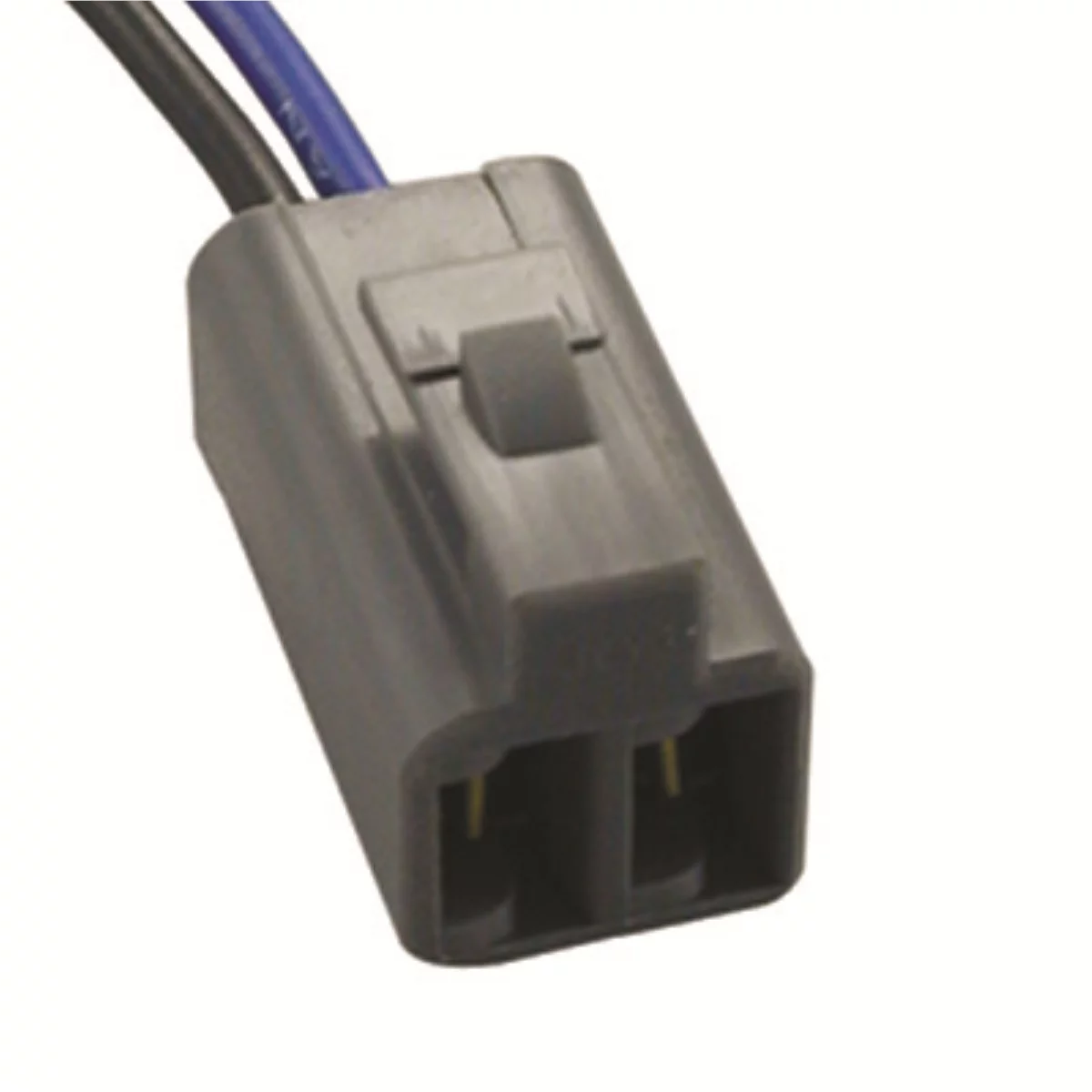
Electrical Connector Blue 18-14 Gauge
Mfg: AUVECO - Auto Vehicle Parts LLC
Part #: 9481
Repair the Connector, Not Always the Whole Harness
A lot of comparable shops jump straight to “replace the whole harness” when the actual damage is confined to one or two connectors or a short run of wire. That’s sometimes the right call, and sometimes it’s overkill that triples the bill for no good reason. Aftermarket connector and pigtail kits exist for most common OEM connector families specifically so you can replace just the damaged section — splice in a new pigtail with the correct terminals and factory-style locking features rather than sourcing an entire harness assembly.
That said, there are real reasons a shop — especially a dealer — may be required to quote the full harness instead of a local repair:
- Manufacturer repair procedures. Many OEMs restrict how many splices, solder joints, or crimp repairs are allowed on a given circuit, particularly for high-current, safety-critical, or data bus circuits where added resistance or impedance changes can cause intermittent faults that are far more expensive to chase later.
- Sensitive systems. CAN bus, airbag, and some sensor circuits have tight tolerances for resistance and signal integrity. A crimp or solder splice that would be fine on a simple power circuit can introduce enough variance to trip fault codes or affect sensor accuracy.
- Connector-only failure. If the connector shell itself is damaged (melted, cracked, or the locking tabs are gone) and no quality aftermarket replacement exists for that specific connector, replacing the harness section may genuinely be the only reliable fix.
The practical rule: if you’re an independent shop with latitude to make a quality repair, a connector or pigtail repair done with proper crimping tools (not twist-and-tape) is usually the better value for the customer and holds up fine. If you’re bound by OEM repair procedures or working on a sensitive circuit, document why the full harness is the required fix rather than just defaulting to it.
What’s Actually Driving the Labor Rate
Shop labor rates vary widely by region and shop type, and customers are right to ask questions when a quote lands well outside the local range. A few things worth knowing when you’re explaining a bill:
- Flat-rate shops (common at dealers) pay the technician a fraction of the posted labor rate per flat-rate hour, with the rest covering facility costs, tooling, training, and warranty administration — the difference between what the customer is billed and what the tech is paid is often larger than customers assume.
- Diagnostic time on an intermittent electrical fault is genuinely time-consuming. Finding a single corroded pin buried in a 40-pin connector, or tracing a wicking path through a harness, can take hours even for an experienced tech.
- Specialty/import dealers and some urban markets routinely post labor rates well above $200/hour; that alone doesn’t mean a customer is being overcharged, but it’s worth comparing against a few other shops in the same category (same brand specialization, same region) before assuming a number is out of line.
- If a harness quote seems disproportionate to the actual damage found, get a part number from the estimate and price it independently — OEM harness assemblies vary enormously in cost, and a second opinion from an independent specializing in that make is reasonable before authorizing a four-figure repair.
Warranty and Recall Checks Come Before the Estimate, Not After
Any time an electrical failure shows up on a vehicle that’s three years old or less, check the following before you finalize a customer-pay estimate:
- Confirm current mileage against the basic/powertrain warranty terms for that make — electrical components are frequently covered under basic warranty even after powertrain coverage on a mileage basis has more room.
- Run the VIN for open recalls or service campaigns related to coolant intrusion, connector corrosion, or the specific harness in question. Some manufacturers have had running campaigns for exactly this failure mode on specific models.
- If it’s a dealer, don’t assume a flat “it’s out of warranty” answer is final — a service manager can escalate certain borderline cases to the district/area service manager for goodwill or policy adjustment, particularly on a documented pattern failure.
- If the failure is tied to a known design or supplier issue (e.g., a connector/sensor with a documented corrosion problem), note that in the file — it strengthens any warranty or goodwill claim and it’s useful information for your own shop’s parts sourcing going forward.
Talking to Customers: Replace “Fried” With Specifics
The underlying issue with “fried” isn’t just that it’s unprofessional — it signals to the customer that the diagnosis was skipped. Customers who hear “corroded connector at the engine harness, confirmed by resistance test, repaired with a new OEM-style pigtail” trust the bill a lot more than customers who hear “it’s fried, needs a new harness.” Specificity isn’t about jargon for its own sake; it’s the difference between a verifiable diagnosis and a guess, and it’s also your best protection if a customer disputes the invoice later.
Quick Checklist for Coolant/Moisture-Damaged Wiring Jobs
- Trace the fluid entry point and inspect the harness run in both directions
- Confirm damage with continuity, resistance, and voltage-drop testing — not just visual inspection
- Check VIN for warranty eligibility and open recalls before estimating customer-pay work
- Determine whether a connector/pigtail repair is viable or OEM procedures require full harness replacement
- Photo-document damage and testing results to support the estimate
- Write the estimate using specific failure terms, not generic language like “fried”
[PRODUCT_SEARCH_2]


Replacement Bulb for 3630 Continuity Tester - Clear - 10/Pk
Mfg: OTC Tools and Equipment
Part #: 3630-10
FAQs
Is coolant intrusion into a wiring harness usually covered under warranty?
It depends on mileage, warranty type, and whether it’s tied to a known defect or recall. Basic/bumper-to-bumper coverage often applies to electrical components even when powertrain-specific coverage doesn’t, so always check VIN-specific warranty status before quoting customer-pay.
Can a damaged connector be repaired without replacing the whole harness?
Often yes, using an aftermarket pigtail or connector repair kit with proper crimping tools. Exceptions apply to safety-critical or data-bus circuits where OEM procedures limit splice repairs, or when the connector shell itself is too damaged to reuse.
Why do dealers sometimes insist on replacing the entire harness instead of just the bad section?
Manufacturer repair procedures can restrict the number of allowable splices or crimps on certain circuits because added resistance or impedance changes can affect sensitive systems like CAN bus or airbag circuits. This isn’t always upselling — it can be a documented procedural requirement.
Is a $270/hour labor rate normal?
It’s on the high end but not unheard of, especially at luxury/import-brand dealers or in high-cost-of-living markets. Compare against two or three other shops specializing in the same brand before assuming it’s excessive, and ask for the part number to price-check separately.
What’s the real difference between “fried” and a proper diagnosis?
“Fried” describes a symptom, not a cause. A proper diagnosis identifies whether the failure is a corroded terminal, a short, an open circuit, or connector housing damage — each of which has a different, verifiable repair path and cost.
Should I get a second opinion before authorizing a large harness repair quote?
Yes, particularly on quotes in the thousands of dollars. An independent specialist for that make can confirm whether the scope (connector repair vs. full harness) and the parts pricing are reasonable before you commit.
Shop for Electrical Diagnostic Tools
Diagnosing and repairing coolant-damaged wiring harnesses requires proper diagnostic equipment and quality repair materials. Browse our Automotive Electrical Systems selection to find the tools your shop needs for precision electrical work.
- Digital multimeters and continuity testers for resistance and voltage-drop testing
- OEM-style connector kits and terminal repair supplies for targeted harness repairs
- Professional crimping and depinning tools for quality connector work

The Toolsource Technical Team blends decades of real-world automotive service experience with up-to-date technical research. Our writers collaborate with professional mechanics, shop owners, and diagnostic specialists to deliver practical, workshop-ready guidance you can trust.


Follow us on social media