A trouble code pointing to the mass airflow sensor doesn’t always mean the sensor is bad — sometimes the engine just can’t breathe or burn fuel the way the ECU expects, especially on cold start. This case study, built from a real-world repair discussion, walks through how to diagnose cold-enrichment rough running correctly, when a piston soak is the right call, and how to execute it without creating comebacks down the road.
Don’t Let the Code Pick the Part
A MAF-related trouble code frequently comes with a generic recommendation to replace the sensor. That’s a starting point, not a diagnosis. Before ordering a MAF sensor, pull live data and compare commanded values against what the engine is actually doing:
- Check short-term and long-term fuel trims at idle and under light load, both warm and cold.
- Compare MAF grams/sec readings against expected values for the engine’s displacement and RPM.
- Clean the MAF sensor with proper MAF cleaner as a diagnostic step — if fuel trims improve afterward, the sensor itself may be marginal and should be replaced with an OEM or OEM-equivalent part, not a reman or budget parts-store unit, since both engine and transmission calibration depend on its accuracy.
- If trims and MAF data look normal both before and after cleaning, stop blaming the sensor and look at why the engine struggles to use the air-fuel ratio the ECU is commanding.
On a cold engine, the ECU intentionally richens the mixture to compensate for fuel that condenses on cold cylinder walls. If the engine can’t draw enough air, or can’t burn a rich mixture efficiently, you’ll see rough running, smoke, or hesitation that clears up once the engine warms — and a MAF code that’s really a symptom of something else entirely.
Trace Rough Cold-Start Running to Airflow and Combustion Efficiency
Once sensor data is confirmed accurate, the next step is figuring out why the engine can’t handle the commanded enrichment. The usual suspects, roughly in order of likelihood:
- Worn or fouled spark plugs — a rich cold mixture is already harder to ignite; a weak or widened spark gap makes it worse.
- Restricted air filter — a severely clogged filter chokes the air pump the engine relies on to hit the ECU’s target AFR.
- Carbon buildup on intake valves — disrupts airflow and atomization, especially noticeable at cold start.
- Carbon-glazed or stuck piston rings — reduces compression and lets oil into the combustion chamber, producing visible smoke on startup.
Pull the air filter and look at it before you touch anything else. A filter that’s visibly packed with debris is a strong clue that the owner has skipped maintenance long enough for carbon to accumulate elsewhere too — intake tract, valves, and rings included. Check the cabin air filter at the same time; it won’t affect engine performance, but it’s an easy, visible way to show the customer what else has been neglected.

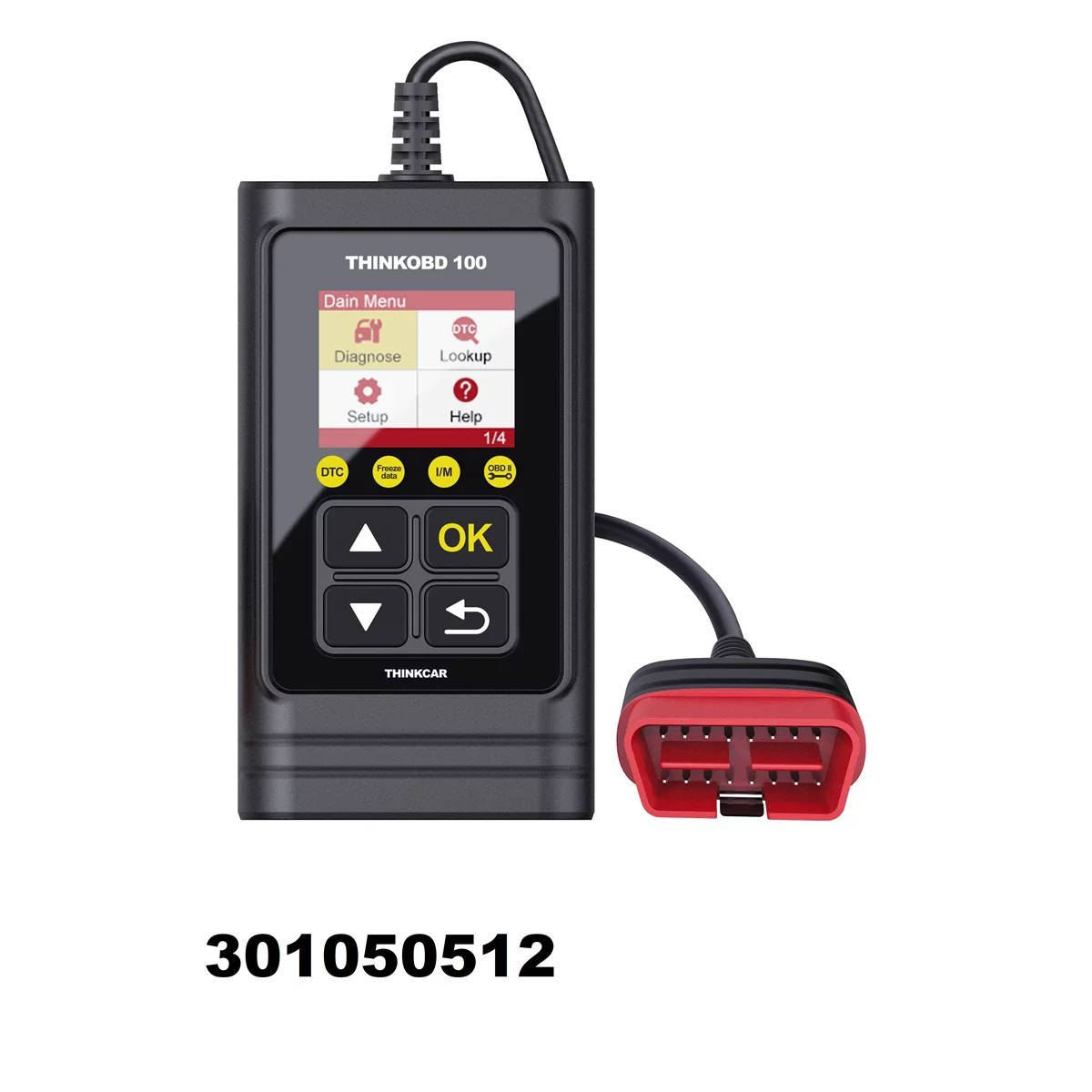
2002 Monitor Elite Deluxe OBD2 Scan Tool Kit
Mfg: OTC Tools and Equipment
Part #: 3354

Running a Compression Test Before You Commit
Before recommending a piston soak, confirm there’s something worth soaking for. A compression test across all cylinders tells you whether you’re dealing with carbon-related ring sticking (compression low but even, often with blue-gray smoke on startup) versus a mechanical failure like a scored cylinder or broken ring land (compression very low or wildly uneven on one cylinder). A piston soak can meaningfully improve sticking rings and carbon glazing; it will not repair worn-out mechanical components. Document baseline numbers — you’ll want them again after the soak to show measurable improvement and justify the labor to the customer.
Performing the Piston Soak Correctly
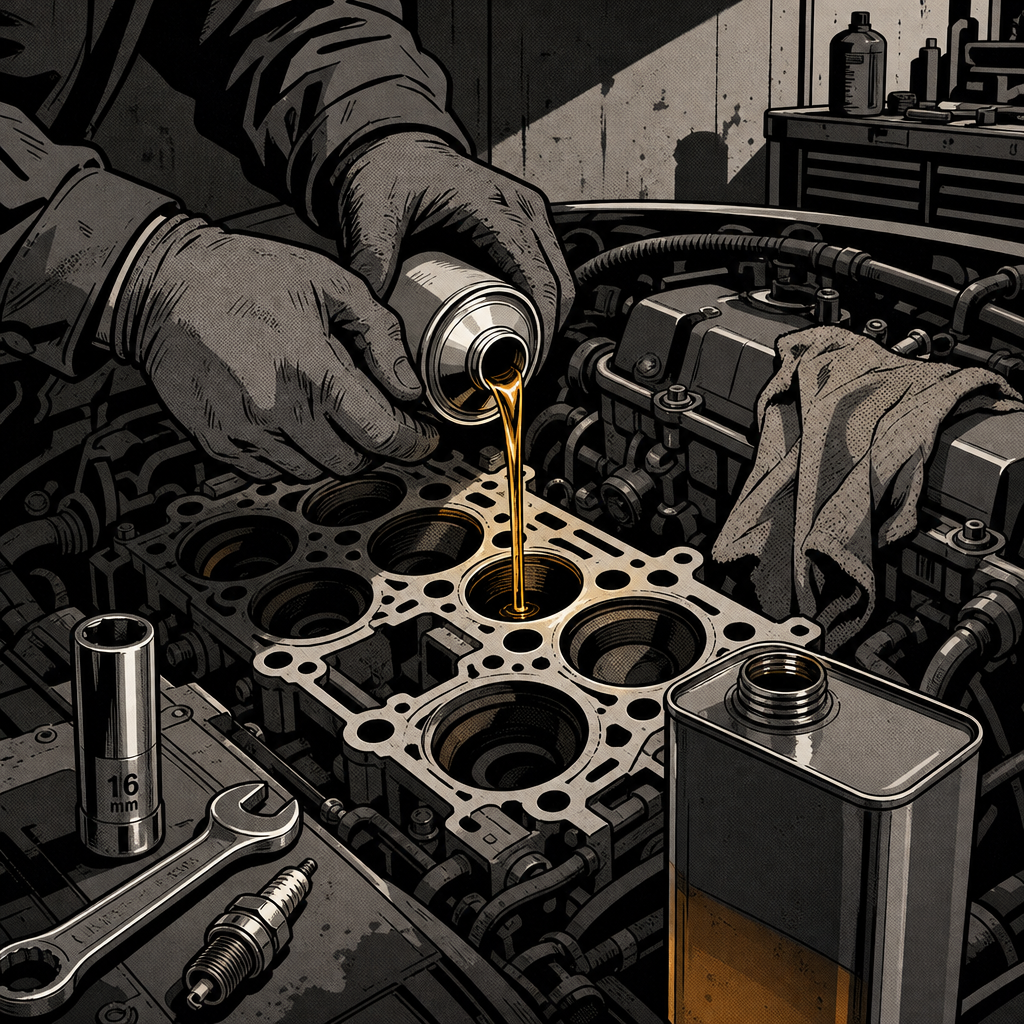
A piston soak uses solvent poured into the cylinders through the spark plug holes to break down carbon deposits and free stuck rings, giving the engine a chance to seal and burn oil properly again. The process that produced solid results in this case:
- Remove spark plugs and pour Berryman B-12 Chemtool (or equivalent) into each cylinder; let it soak roughly 4 hours.
- Follow with Marvel Mystery Oil for another 4-hour soak — the lighter solvent loosens carbon first, and the oil-based product that follows helps lubricate and further free the rings without leaving the cylinders bone dry.
- Rotate the crankshaft periodically during longer soaks if accessible, which helps distribute the solvent around the ring lands rather than letting it pool at the bottom of the bore.
- Before cranking the engine, remove excess fluid from the cylinders — use a hand vacuum or shop vac through the spark plug holes, and/or crank the engine briefly with plugs out and a shop towel over the holes to catch anything the compression stroke pushes out. Don’t skip this; hydraulic lock from liquid in a cylinder can bend a rod.
- Reinstall new spark plugs (don’t reuse fouled ones after a soak), replace the air filter if needed, and start the engine.
In the case referenced here, compression rose from 188 to roughly 210 PSI, and visible exhaust smoke dropped off noticeably within about five minutes of driving — a reasonable real-world benchmark for a successful soak.
Closing Out the Job Without a Comeback
Loosened carbon and leftover solvent residue have to go somewhere, and that somewhere is your oil, your catalytic converter, and your O2/AF sensors if you’re not careful. To avoid comebacks on fuel trim or catalyst codes in the weeks after a soak:
- Change the oil and filter immediately after the soak and initial test drive — don’t let loosened carbon circulate on old oil.
- Do a second oil and filter change after roughly 100 miles to catch any carbon that worked its way past the rings during break-in driving.
- Take the vehicle on a real test drive (city and highway speeds, not just a parking-lot loop) before calling the job done, and watch live fuel trims during that drive.
- Set the expectation with the customer that minor smoke or a slight oil-consumption smell may persist briefly as the engine continues clearing residual carbon over the next several hundred miles.
If trims or compression don’t improve as expected, be upfront that a piston soak is a maintenance-level intervention, not a guaranteed fix for worn mechanical components — some engines with genuinely worn rings or glazed cylinder walls will need a more involved repair regardless of how thorough the soak was.
Quick Reference Checklist
- Pull fuel trims and MAF data before assuming the sensor is bad
- Clean the MAF as a diagnostic step; replace with OEM-quality parts only if trims confirm a real fault
- Inspect air filter and cabin filter condition as a neglect indicator
- Run a baseline compression test before recommending a soak
- Soak with a solvent (e.g., B-12) followed by an oil-based product (e.g., Marvel Mystery Oil)
- Fully evacuate cylinders before cranking to avoid hydraulic lock
- Replace spark plugs after the soak, change oil/filter immediately, and again at ~100 miles
- Recheck compression and fuel trims after a real-world test drive
For shops that run this kind of job regularly, having the right mix of diagnostic and cleaning equipment on hand speeds up the whole process and avoids guesswork.

NH-3 New Style 1-1/2" Bristle Injector Brush - Seat Cleaning New
Mfg: Brush Research
Part #: NH3N

FAQs
Is a piston soak a permanent fix for oil consumption?
No. It’s effective for carbon-related ring sticking and glazing, not for worn rings, scored cylinders, or other mechanical wear. A compression test before and after helps confirm whether it actually worked on a given engine.
Why use B-12 and then Marvel Mystery Oil instead of just one product?
The solvent-based product breaks down hardened carbon first; the oil-based product that follows helps lubricate freed components and reduces the risk of leaving cylinders dry before restart. Order matters — solvent first, oil-based product second.
How do I know if a MAF code actually means a bad MAF sensor?
Compare fuel trims and MAF readings before and after cleaning the sensor. If values stay consistent and within normal range, the sensor is likely fine and the real issue is elsewhere — commonly cold-enrichment combustion problems caused by worn plugs, restricted airflow, or carbon buildup.
What’s the risk of skipping cylinder evacuation after a soak?
Liquid trapped in a cylinder won’t compress. Cranking the engine against trapped fluid can hydraulic-lock the cylinder and bend a connecting rod. Always vacuum out excess fluid and/or crank briefly with plugs removed before reinstalling plugs and starting the engine.
Why change the oil twice after a piston soak?
The first change after the soak and initial drive removes bulk solvent residue and dislodged carbon. The second change around 100 miles catches additional carbon that works loose during normal break-in driving, protecting the oil filter and bearings from abrasive buildup.
Should I replace spark plugs that still have some life left after finding they’re not the primary cause?
Yes, if they’re worn, fouled, or heavily gapped — they contribute to the cold-enrichment combustion problem even if they weren’t the sole cause, and reusing degraded plugs after a soak undercuts the rest of the repair.
Recommended Diagnostic Tools
The diagnostic process in this article—from fuel trim review to compression testing—requires specific tools. Find what you need in our Automotive Diagnostic Tools selection.
- OBD2 scan tools with live data and fuel trim readout
- Compression testers for baseline and post-repair measurement
- Additional diagnostic sensors and equipment for system verification

The Toolsource Technical Team blends decades of real-world automotive service experience with up-to-date technical research. Our writers collaborate with professional mechanics, shop owners, and diagnostic specialists to deliver practical, workshop-ready guidance you can trust.


Follow us on social media