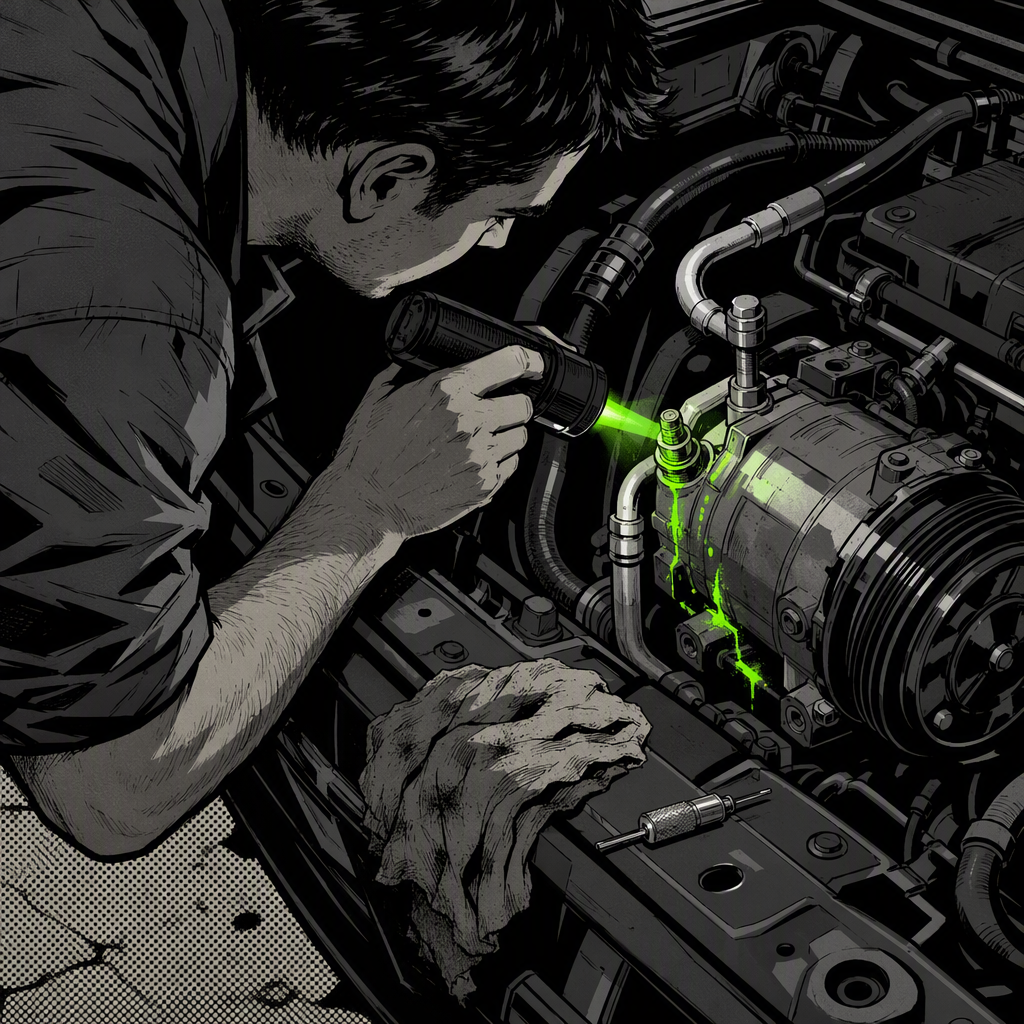
An AC system that blows warm again within days of a “completed” repair almost never means a new, unrelated failure — it means something in the diagnostic sequence got skipped. The most common culprit by far is a leaking Schrader valve at the service port, followed closely by a vacuum test that never ran long enough to reveal it. This guide breaks down the proper sequence for finding and confirming a refrigerant leak, why R-1234yf systems make this worse, and how to decide when a customer’s money is better spent on OEM parts versus aftermarket.
Why “It Was Cold When It Left the Shop” Doesn’t Mean It’s Fixed
A system can hold pressure, blow cold on a test drive, and still leak out completely within a day or two. That’s not a contradiction — it’s what happens when the leak point is at the service port itself. Once the recovery/recharge machine’s hoses are connected, the fitting depresses the Schrader valve core and effectively bypasses it as a leak path. The machine can pull a clean vacuum, show no drop, and charge the system successfully, all while the valve core underneath is damaged or under-seated. The leak only becomes active again after the hoses come off and the valve has to hold pressure on its own.
This is why a customer’s timeline — cold at pickup, warm within a week, cold again after a second charge, warm again — is a textbook signature of a bad core, not evidence of some new failure each time. If a shop’s story is “we recharged it, test drove it, and it worked,” that’s consistent with a core leak and doesn’t rule out incompetence in the original diagnosis.
Running a Proper Vacuum Hold Test
The vacuum test exists specifically to catch leaks the eye can’t see. Pulling the system down to 29-30 inHg and immediately charging it tells you almost nothing. The vacuum needs to hold for a documented period — most experienced techs target 45 minutes to an hour, and some shops leave larger or more suspect systems on the machine overnight — before refrigerant goes in. If the gauge shows any measurable rise during that hold, there is a leak somewhere in the system, full stop.
Two caveats matter here. First, a vacuum test with the machine’s hoses still attached will not expose a leaking service port valve, since the hose fitting is physically holding that valve open. Second, R-1234yf has smaller molecules than R-134a and is documented to leak through marginal seals, valve cores, and fittings faster. That means vacuum hold times that used to be “good enough” on R-134a systems can miss slow leaks on YF systems, and moisture contamination from an inadequate vacuum is also more likely to corrode metal components over time.


Confirming the Leak Point: Dye, UV Light, and Soap Test
Once a vacuum test flags a leak — or a system has already been charged and comes back warm — the next step is locating it precisely, not guessing. Standard sequence:
- Add UV dye to the PAG oil charge if it isn’t already in the system.
- Inspect service ports, the condenser, compressor, evaporator inlet/outlet, and line fittings with a UV light after the system has run for a short period.
- Use an electronic refrigerant sniffer on accessible fittings, since dye can take time to migrate to the exact leak point.
- Do a soap-and-water check on valve cores and fittings before assuming a part needs replacement.
A word of caution on interpreting dye photos: disconnecting a dye injector under pressure, or removing hoses without clearing the service lines first, will splatter dye around the port regardless of where the actual leak is. Dye pooled around a valve cap is suggestive but not definitive on its own — clean the area, let the system run, and recheck before condemning a part.
Schrader Valve Replacement: Usually the First Thing to Try
Schrader valve cores are a low-cost, high-frequency failure point in automotive AC systems — arguably the single most common source of slow leaks, ahead of stone-damaged condensers. They fail from age, from repeated hose connections wearing the seat, and from aftermarket hose couplers that aren’t matched well to the valve design and can damage it on connection or removal. A missing or worn valve cap also lets the seal degrade faster, since the cap is the final layer of sealing, not just a dust cover.
Replacement cores cost only a few dollars, and swapping one takes minutes with a valve core removal tool — the system doesn’t need to be fully evacuated first if you have a self-sealing tool. Given the low cost and high hit rate, replacing the core (and cap) is a reasonable first move before condemning an entire line or hose assembly, provided the port threads and fitting surface aren’t damaged. If a fresh core still leaks or the fitting itself is deformed, then a line or hose replacement is justified — but that’s a step two, not a starting point.
OEM vs. Aftermarket Parts: When the Extra Cost Is Worth It
Aftermarket AC hoses, lines, and valve assemblies vary enormously in build quality depending on the supplier, and a shop that just replaced an aftermarket part that failed again has legitimate grounds to push OEM on the second attempt. That said, a jump of several hundred to over a thousand dollars between an aftermarket quote and an OEM quote for what should be a single hose or valve is worth scrutinizing — that price gap is usually not explained by the part alone.
A few points worth relaying to customers:
- Aftermarket AC components frequently ship without a warranty unless paired with a full system service, which is part of why shops upsell additional parts alongside them.
- A part that fails at 4-5 years old on the original OEM equipment isn’t a strong argument that a cheaper aftermarket replacement will last longer — but it’s also not proof that OEM is required if the failure mode (valve core, minor fitting damage) is unrelated to build quality.
- Get an itemized breakdown: part cost, labor hours, and any additional components (o-rings, oil, refrigerant) before comparing two shop quotes. A “double the price” quote for the same repair scope is unusual and worth a second opinion.
Comeback Prevention Checklist
- Vacuum hold for 45-60+ minutes (longer on YF systems or suspect cases) before charging — hoses disconnected from any component being leak-tested
- UV dye in the system and a UV light inspection pass, not just a vacuum reading
- Check and replace worn Schrader valve cores and caps as a low-cost first step
- Confirm cause before quoting a full line/hose replacement — clean, inspect, and recheck rather than assuming
- Hold the vehicle 24-48 hours post-repair and recheck pressures before calling the job done
- Document part source (OEM vs. aftermarket) and warranty terms on the invoice
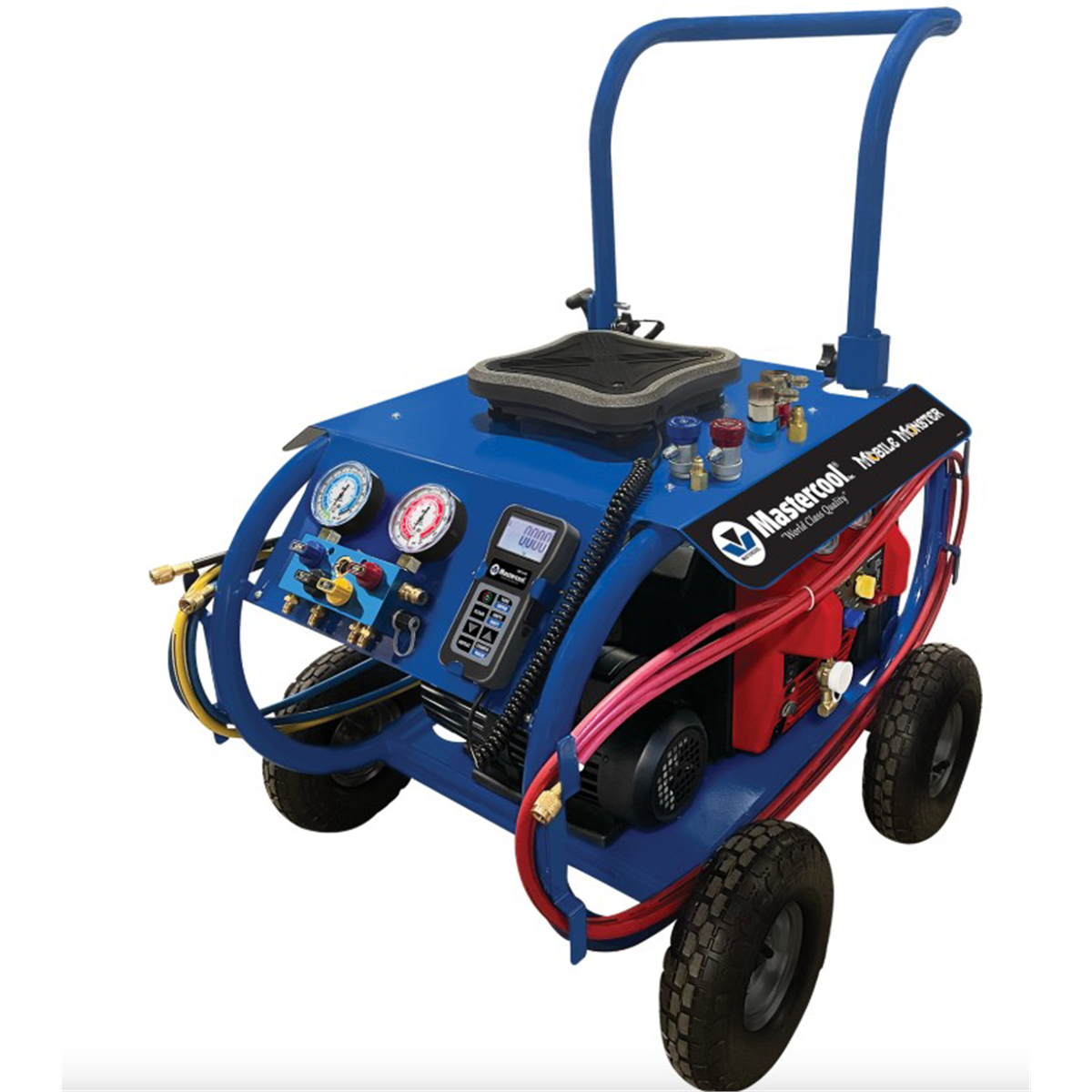
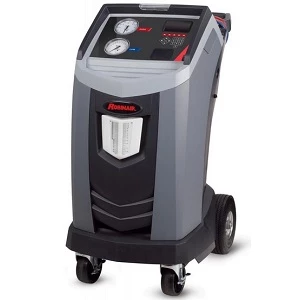
Premier R-1234yf Recover, Recycle and Recharge Machine
Mfg: Robinair
Part #: AC1234-4
Frequently Asked Questions
How long should a vacuum test actually take?
Most experienced techs hold vacuum for a minimum of 45 minutes; an hour or overnight is common practice on systems with any leak history or on R-1234yf vehicles, which are more sensitive to moisture and small seal defects.
Can a leaking Schrader valve pass a vacuum test?
Yes. The recovery machine’s hose fitting physically depresses the valve core while connected, which can mask a core leak. The leak only reappears once the hoses are disconnected and the valve has to hold pressure unassisted.
Is dye around the service port proof of a leak there?
Not by itself. Disconnecting a dye injector or hose set under pressure can splatter dye around a port even when that’s not the leak source. Clean the area, run the system, and recheck with a UV light before condemning a part.
Why does R-1234yf seem to leak more than R-134a?
R-1234yf has smaller molecules and is more prone to escaping through marginal seals, worn valve cores, and minor fitting imperfections that would hold R-134a longer. It also increases the importance of a full vacuum hold to remove moisture.
Should I always insist on OEM AC parts?
Not always, but be skeptical of large price gaps for simple parts like a single hose or valve core. Reputable aftermarket brands with a known quality track record are often fine; unknown or unbranded budget parts are the ones that tend to cause repeat failures.
What’s a fair price for a valve core replacement and recharge?
Parts cost only a few dollars; total labor and recharge (including refrigerant and oil) typically runs well under what a full hose or line replacement costs. A quote in the four-figure range for what turns out to be a core issue warrants a second opinion.
Recommended Tools for AC Diagnostics & Repair
Proper diagnosis of AC leaks requires specialized equipment. Our selection of Auto Air Conditioning Tools includes everything needed to run a complete diagnostic and service sequence.
- Vacuum pumps, gauges, and recovery/recharge machines for proper leak detection
- Schrader valve core removal tools and replacement cores for quick service port repairs
- UV dye injectors and inspection lights for pinpointing leak sources

The Toolsource Technical Team blends decades of real-world automotive service experience with up-to-date technical research. Our writers collaborate with professional mechanics, shop owners, and diagnostic specialists to deliver practical, workshop-ready guidance you can trust.


Follow us on social media