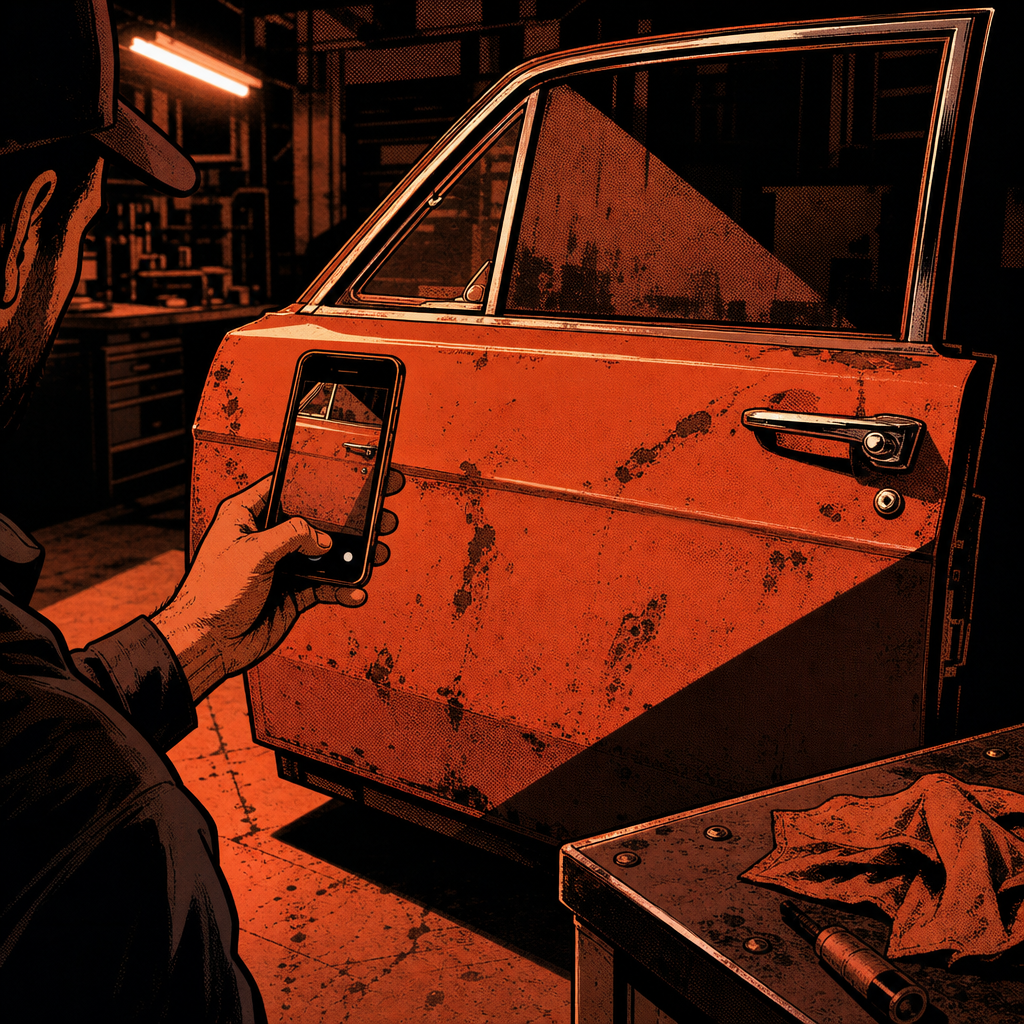
Every shop eventually gets the call: “You scratched my door,” “You stole my gas,” “My radio doesn’t work anymore.” Most of the time it’s a genuine misunderstanding — a forgotten pre-existing scratch, a rental car habit carried over, a button the customer never noticed before. Sometimes it’s a deliberate attempt to get free work. Either way, the only thing that reliably settles the argument is documentation you captured before you ever touched the vehicle. Field adjusters, shop owners, and techs across the industry all land on the same conclusion: photograph and film everything, every time, no exceptions. Below is a practical process you can put in place this week, built around what’s actually worked for shops dealing with these disputes daily.
Why Documentation Has Become Non-Negotiable
Shops report that false claims — damage, theft, “it wasn’t like this before” — have increased noticeably in recent years. A quarter-century insurance adjuster who reviews these disputes regularly notes he denies multiple windshield claims a day as unrelated to the reported work, and fields fuel-theft accusations often enough that he now tells every shop to photograph the fuel gauge and dash lights on intake as standard practice. The pattern is consistent: the customer is convinced of their version of events, and without evidence, the burden falls on the shop to disprove a negative. A five-minute photo routine at drop-off turns a costly argument into a two-minute email with a timestamped picture attached.
This isn’t about distrust of customers — it’s risk management. A clear intake record protects the shop when a claim is false, and it protects the customer when the shop genuinely missed something in QC. Several techs point out that reviewing intake photos against delivery photos sometimes reveals the shop’s own mistake, and the right move is to own it. Documentation cuts both ways, which is exactly why it holds up.
Building a Standard Intake Photo and Video Protocol
The most consistent process described by working shop managers covers these angles every single time a car comes in, regardless of the job size:
- All four diagonal corners of the vehicle
- Each body panel individually, including anything easy to miss like rocker panels and mirrors
- The windshield specifically — chips and cracks are among the most disputed items, since customers often don’t notice existing damage until they’re inspecting the car more closely at pickup
- All four doors from the inside, plus seats and trunk/cargo area
- A dash shot with the engine running, capturing odometer mileage, fuel level, and any active warning or check-engine lights
Take these as a full walkaround video, not just stills — a continuous video is harder to dispute and captures condition in context rather than in isolated frames. If you’re shooting with a phone, turn off HDR/Live Photo blending features first; some phone cameras merge multiple exposures into one image and can visually smooth over small scratches, which undermines the very thing you’re trying to prove. Repeat the entire process at delivery once the job is complete, so you have a clean before/after pair for every vehicle.
===FYP-PRODUCT-SEARCH-1===
{“after_section”:2,”query”:”vehicle inspection camera phone mount tripod shop”}
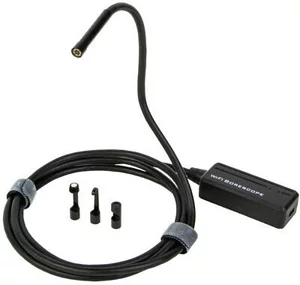
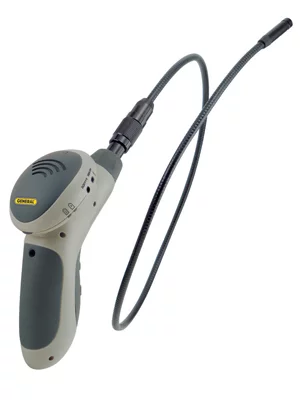
iBorescope WiFi Enabled Real Time Video Capture
Mfg: General Tools & Instruments
Part #: DCiS1
Documenting Function, Not Just Appearance
Cosmetic damage isn’t the only source of disputes — power windows, door locks, seat sensors, child locks, and infotainment functions generate just as many callbacks. A function check sheet completed at intake (and again at delivery) closes this gap. Walk through windows, locks, mirrors, seat memory, and any relevant sensors, check them off on a paper or digital form, and then photograph that completed sheet so it carries a date stamp along with the vehicle photos. This single habit resolves a surprising number of “you broke my radio” or “the shifter button moved” complaints, which in practice often turn out to be a customer unfamiliar with a control they rarely use, or one they simply forgot existed. Having a dated record of a working feature at intake ends the conversation quickly and without confrontation.
Making Your Evidence Actually Hold Up
Photos and videos are only as strong as their proof of timing. Digital photo and video files carry EXIF metadata — timestamps, and often location data — embedded in the file itself, even after the file has been shared through text or messaging apps in many cases. If a customer disputes your intake photo or presents their own “proof” that conflicts with your timeline, an EXIF reader can confirm when a file was actually created. This is rarely needed since outright fabrication is uncommon, but it’s a useful backstop when a claim doesn’t add up, and it’s worth knowing your shop’s photos can be verified this way if a dispute ever escalates to insurance or legal review.
A related pitfall: some phone messaging apps let users add text overlays to photos or videos before saving them, and those overlays can be removed non-destructively, restoring the clean original. If you’re archiving customer-submitted “before” photos as part of a dispute, don’t take an annotated version at face value — ask for or extract the underlying original when it matters.
Photographing Completed Work for Quality Control
Delivery photos serve two purposes: they close out the liability record, and they double as a QC checkpoint before the keys go back to the customer. Comparing your intake and delivery sets side by side catches issues before the customer does — a panel gap that’s off, a trim clip that didn’t seat, a warning light that wasn’t there at drop-off. Catching it internally means you fix it on your terms instead of on an angry customer’s terms. If your shop handles sublet work — glass, calibrations, alignments — that requires the vehicle to leave the premises, document the mileage before and after that trip specifically. It preempts the joyride accusations that come up even when a vehicle went a few hundred meters to a glass shop and back.
Handling Disputes When They Come In Anyway
Even with a full record, customers will still call upset. Handle it the same way every time: pull the intake and delivery documentation before you respond, compare it against the specific claim, and reply with the evidence rather than an argument. Most disputes resolve immediately once a dated photo is in front of the customer. For the rare case where a customer continues pressing a claim your documentation clearly contradicts — or worse, tries to file the same complaint twice after being shown proof the first time — that’s a legitimate reason to decline future business from that customer. A shop that documents consistently rarely needs to have that conversation, but it’s worth having a policy for it before you need one.
Quick Intake Checklist
- Walkaround video: all four corners, every panel, windshield
- Interior: all door panels, seats, trunk/cargo area
- Dash running: mileage, fuel level, warning/check-engine lights
- Function check sheet completed and photographed with a timestamp
- HDR/photo-blending features turned off before shooting
- Repeat the full set at delivery for a before/after pair
===FYP-PRODUCT-SEARCH-2===
{“after_section”:-1,”query”:”automotive shop documentation and inspection equipment”}

FAQs
Do we need a dedicated phone for intake photos?
It’s not required, but many shops use a dedicated work phone or tablet rather than personal devices, both for privacy reasons and to keep intake photos organized and easy to purge on a schedule. If your dealership or shop has a no-photo policy on customer vehicles for privacy reasons, a dedicated device with photos deleted after a set retention period is a workable middle ground.
How long should we keep intake and delivery photos?
Match your retention window to your typical claim/comeback period plus a buffer — many shops keep records for 90 days to a year, longer for insurance-related or high-value jobs. Check with your insurer or legal counsel on any state-specific retention requirements.
What if a customer disputes a claim we can’t fully document, like a sublet job?
Photograph mileage immediately before and after the vehicle leaves your lot for any sublet or test drive, not just at overall intake/delivery. This isolates exactly what happened during that specific trip and heads off “joyride” accusations before they start.
Can EXIF data really prove when a photo was taken?
In most cases, yes — image and video files typically retain creation timestamps in their metadata, and free EXIF readers can extract this even from files shared through text or messaging apps. It’s a useful last resort when a customer’s own “before” photo conflicts with your timeline, though outright fabrication is uncommon.
Should we photograph the fuel gauge specifically?
Yes. Fuel-theft accusations are common enough that experienced adjusters recommend it as a standard part of the dash photo, alongside mileage and warning lights, since it’s one of the easiest disputes to resolve with a single clear image.
What’s the single biggest mistake shops make with documentation?
Skipping it on “quick” jobs. The disputes that catch shops off guard are rarely the big, obviously risky jobs — they’re the oil change or the small repair where nobody thought to grab photos, and that’s precisely when a claim shows up.
Inspection Tools for Complete Documentation
Solid intake documentation requires more than a phone camera. Measurement Tools and Inspection equipment — from mirrors and lights to camera mounts — makes the process faster and more reliable.
- Inspection lights and mirrors for hard-to-see damage
- Camera mounts for steady, hands-free documentation
- Measurement tools to document condition and wear

The Toolsource Technical Team blends decades of real-world automotive service experience with up-to-date technical research. Our writers collaborate with professional mechanics, shop owners, and diagnostic specialists to deliver practical, workshop-ready guidance you can trust.


Follow us on social media