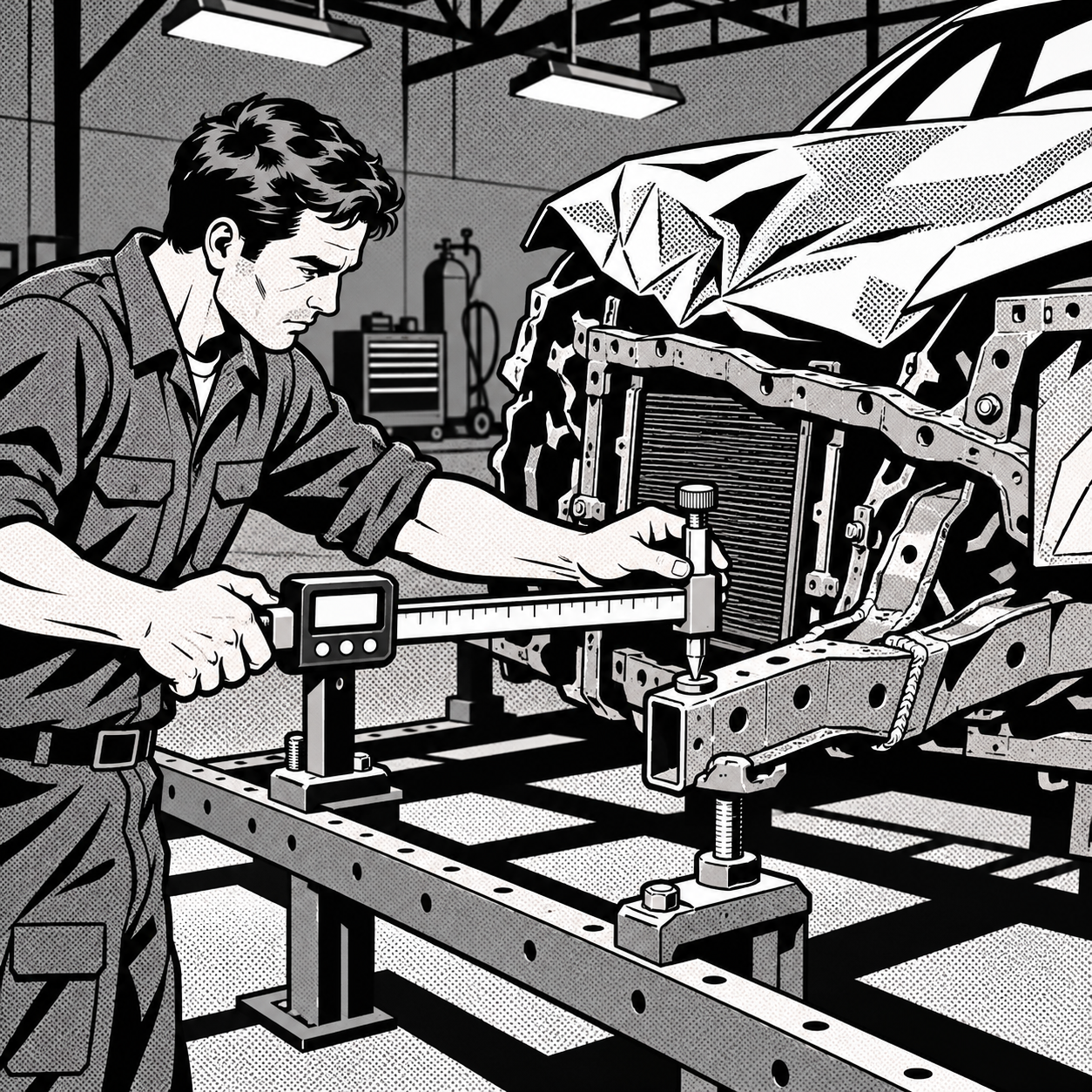
Every shop eventually gets the project car question: a front-end collision car sitting next to a rust bucket, and someone asking which one is worth fixing. The honest answer almost always comes down to structural measurement, parts availability, and what the finished car is actually worth — not how the damage looks at a glance. Here’s how to work through that decision methodically instead of guessing from photos.
Reading Front-End Structural Damage Correctly
A hard front hit rarely stays contained to the bumper and grille. Once impact force travels past the crush zones, it pushes into the radiator support, aprons, frame rails, and in bad cases the firewall itself. Signs the damage has gone structural include:
- A radiator support or fan shroud pushed back into the battery tray or engine components
- Visible gaps or wrinkles at the apron-to-rail seams
- Doors or hood that no longer line up with panel gaps
- Deployed airbags, which almost always indicate the collision sensor saw enough deceleration to qualify as a structural-level hit
Don’t rely on eyeballing it from underneath with a flashlight. Rails that look straight can still be tweaked a few millimeters in ways that throw off alignment, tire wear, and crash safety down the line. If you can’t measure it, you can’t certify it’s fixed — you’re guessing.
Frame Straightening and Measuring: Let the Machine Decide
This is the step that separates a real repair estimate from a guess. Put the vehicle on a frame rack and pull baseline measurements with an electronic measuring system before you touch a torch or a pull chain. The process techs rely on:
- Anchor the car on the rack using factory pinch points, not just resting it on the frame
- Run a full measurement comparison against factory spec points for that chassis
- Identify every point out of tolerance — not just the obviously bent rail, but adjacent points that shift when one area is damaged
- Pull out the damage in stages, re-measuring between pulls, before any cutting begins
Cutting first and measuring later is backwards. If a rail, apron, or core support needs replacing, you want the surrounding structure already pulled back close to spec so the new panel welds in true instead of fighting a twisted frame. On unibody cars especially, a rail that’s “a little off” at the front can translate into several millimeters of deviation by the time you measure at the rear subframe mounts — small errors compound.

Xtra Value Electronic Caliper 6 Inch / 150mm Supersedes 74-101-1
Mfg: Fowler High Precision
Part #: 74-101-150-2

Brake Drum and Rotor Measuring Kit w/ Caliper
Mfg: Fowler High Precision
Part #: 74-101-777

Single Stage Portable Evacuation / Electronic Charging Station
Mfg: Mastercool
Part #: 91580-B
Comparing Rust Damage to Collision Damage
Rust and collision damage fail differently, and that changes the repair math:
- Collision damage is usually localized and follows predictable load paths — rail, apron, core support, maybe a cradle. You can scope it with measurements and know exactly what you’re replacing.
- Rust damage is deceptive. If rockers, pinch welds, or floor pans feel soft, the corrosion almost always extends further than what’s visible. Rust spreads along seams and inside box sections where you can’t inspect without cutting access holes.
As a rule of thumb, a clean, rust-free car with known collision damage is usually the better repair candidate than a high-mileage car with active structural rust — because the collision repair has a defined scope, while rust repair tends to uncover more work the deeper you go. That said, the real decision driver is parts: if the collision-damaged rail, apron, and core support sections are available (new, aftermarket, or from a donor), repairing structural damage on an otherwise solid car is often more time-efficient than chasing rust through rockers, floors, and quarter panels.
Looking for the right gear to make this call yourself? Shops doing their own structural assessments typically want an electronic frame measuring system and a tram gauge set on hand before committing to any pull work.
Repair Sequence: Pull Before You Cut, Cut at Factory Seams
Once you’ve decided to repair, sequence matters as much as the parts list:
- Pull first. Rough out the gross damage on the frame rack before removing any panels. Cutting into a still-deformed structure makes it far harder to get the replacement section to sit correctly.
- Cut at factory seams, not at the damage. Replacement panels are engineered to be welded at OE seam locations with proper overlap and spot-weld patterns. Cutting wherever the damage happens to end leaves you improvising joints that weren’t designed to carry structural load.
- Work outward from the firewall. Confirm the firewall itself isn’t bent before investing in rail and apron work — a bent firewall changes the whole repair scope and may push the job into “not economically repairable” territory.
- Re-measure after every major weld. Heat from welding can pull panels out of alignment. Don’t consider the repair done until post-weld measurements match spec.
Parts Sourcing and Donor Vehicle Strategy
Structural repair lives or dies on parts availability, especially on older or lower-volume models. Before committing:
- Check salvage auctions and parts networks for the specific rail, apron, and core support sections — not just “a donor car,” but confirmed availability of the exact sections you need
- If you have two damaged vehicles (one rusted, one crashed), consider cross-swapping: pull the clean core support or rail section from the rust car into the crash car, and move clean trim, interior, and soft parts the other direction
- Budget for the parts that aren’t metal — interior trim, weatherstripping, and plastic clips are often the parts that stall a project longest, because they’re harder to source than sheet metal and harder to fabricate as a workaround
- Factor in cooling system and AC components if the impact reached the condenser or radiator — these are often overlooked in the initial estimate
Salvage Titles and the Resale Reality
Even a technically perfect structural repair carries a branded title once airbags deploy or the damage crosses an insurance threshold. Before investing serious hours:
- Confirm whether the vehicle will carry a salvage or rebuilt title after repair, and check your state’s rebuild inspection requirements
- Understand that branded titles cut resale value significantly and eliminate most dealership trade-in and financing paths — private-party sales are typically the only viable market
- Weigh the total repair cost (parts + labor + rack time) against a comparable clean-title example in your market — if a rust-free, unwrecked example sells for close to what the repair will cost, the project rarely pencils out financially
- If the plan is to keep and drive the vehicle long-term rather than resell, title branding matters much less — size the decision to your actual intent, not a hypothetical resale
Quick Pre-Repair Checklist
- Measured on a frame rack with an electronic measuring system before any cutting
- Confirmed firewall is not bent
- Identified every out-of-spec point, not just the visibly damaged one
- Verified parts availability for rail, apron, core support, and cooling components
- Checked rockers, pinch welds, and floor pans for hidden rust if applicable
- Confirmed title branding implications and compared cost to a clean-title replacement
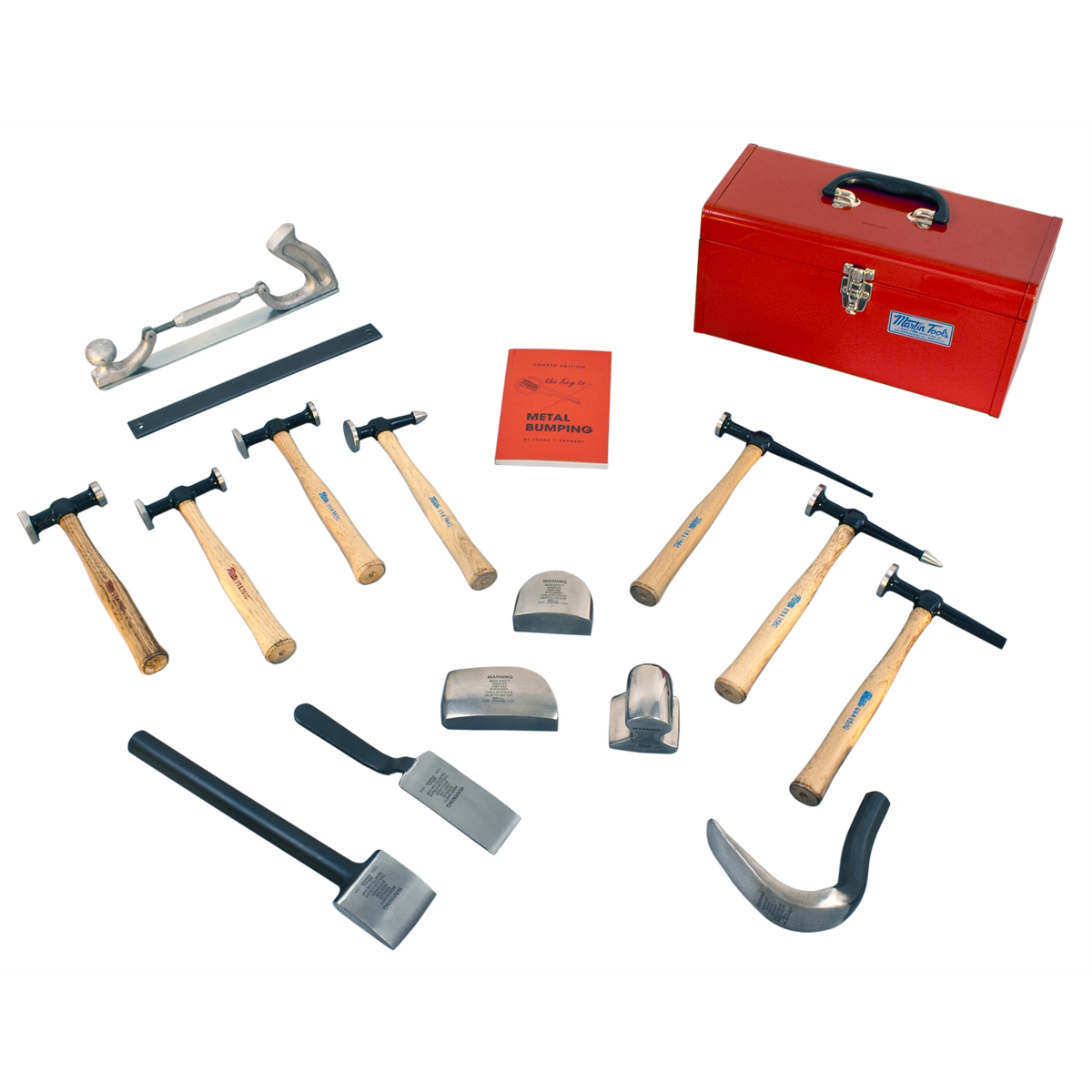
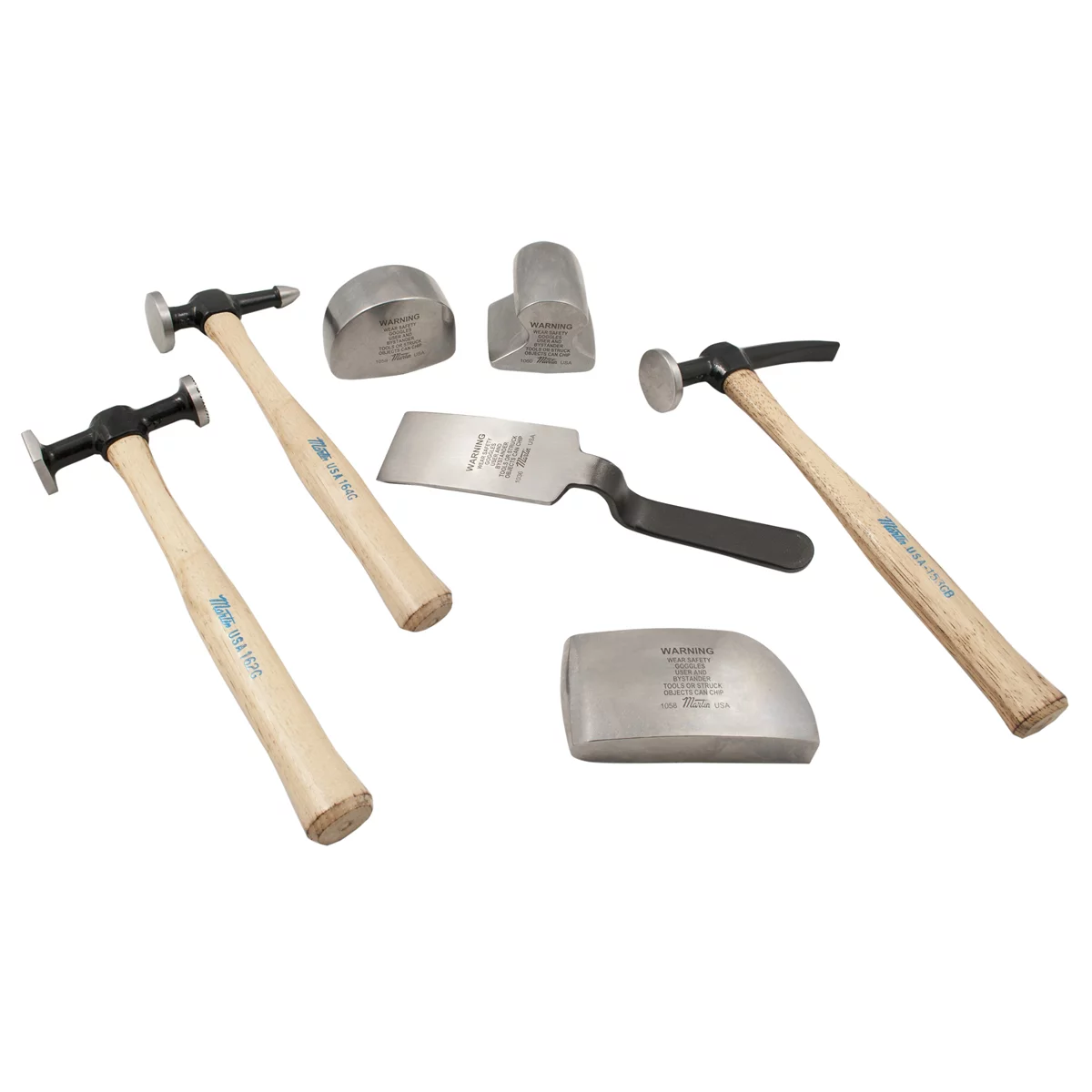
Once you’ve worked through the structural and sourcing questions, it’s worth having the broader shop equipment ready for the job — frame racks, body hammers, panel clamps, and welding gear are what actually turn a measurement plan into a finished repair.
FAQs
How do I know if frame damage is repairable versus a total loss?
Get it on a frame rack with an electronic measuring system. If the out-of-spec points are limited to the front rails, apron, and core support and the firewall is straight, it’s typically repairable. Damage extending into the firewall, pillars, or rear structure usually isn’t economical to fix.
Can I straighten a frame without a frame rack?
You can rough out minor damage with chain pulls and a solid anchor point, but without a measuring system you have no way to confirm the result meets factory tolerances. For anything beyond cosmetic bends, a rack and measuring system are necessary.
Is it better to repair rust or collision damage on an otherwise good car?
Collision damage is usually more predictable to scope and repair because it’s localized and parts can be sourced to exact specs. Rust tends to extend further than visible, making it harder to estimate accurately. Parts availability for the specific collision-damaged sections should still be confirmed first.
Does a salvage title affect resale value?
Yes, significantly. Even a properly repaired structural vehicle will sell for less than a clean-title equivalent, and many dealerships won’t take it in trade. Private-party sale is typically the only realistic resale path.
Should I cut out damaged metal before or after pulling?
Always pull first. Rough out the gross deformation on the frame rack, then cut at factory seam locations. Cutting before pulling makes it much harder to align the replacement panel correctly.
What’s the biggest hidden cost in a structural repair project?
Soft parts and trim — interior panels, weatherstripping, and plastic clips — are frequently harder to source than the sheet metal itself and are a common reason project repairs stall out before completion.
Recommended Tools for the Job
Structural repair demands precision equipment. The tools and materials you’ll need — from frame racks and measuring systems to cutting and welding gear — are available in our Paint & Body category, ready to support your repair from measurement through final weld.
- Frame racks and electronic measuring systems for baseline measurements
- Body work tools including hammers, clamps, and pullers
- Welding supplies and panel materials for structural replacement

The Toolsource Technical Team blends decades of real-world automotive service experience with up-to-date technical research. Our writers collaborate with professional mechanics, shop owners, and diagnostic specialists to deliver practical, workshop-ready guidance you can trust.


Follow us on social media