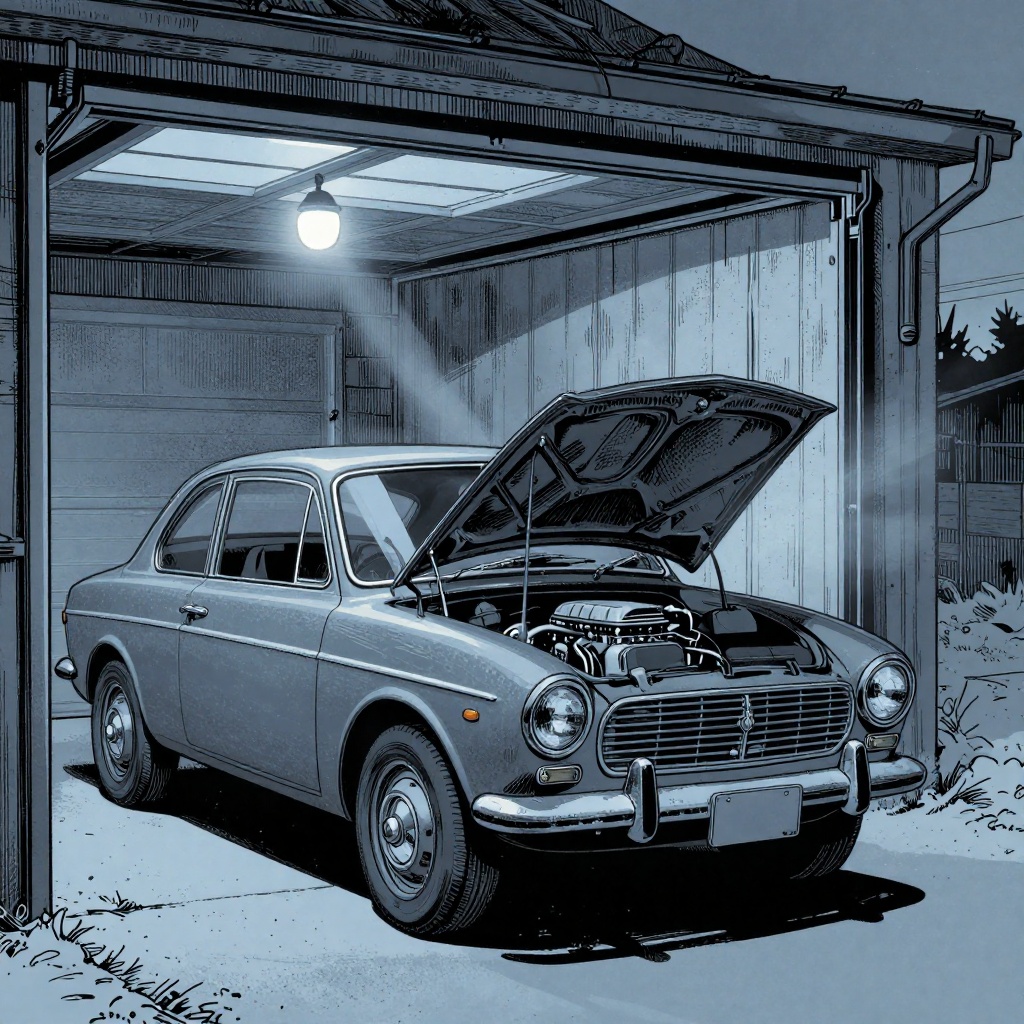
Carbureted, air-cooled 2CVs can be reliable winter starters when the choke, ignition, and fuel system are set up correctly. This guide consolidates technician-oriented steps for cold-starting and diagnosing a 2CV that cranks but won’t “catch,” with a focus on practical checks you can complete with hand tools and a few common service products.

Understand the system you’re working with
Before diving into diagnostics, align on the 2CV’s fundamentals:
- Ignition architecture: No conventional distributor. The 2CV uses a cam-driven points and condenser box that triggers the single ignition coil. It’s a wasted-spark system that fires each plug on both compression and exhaust strokes.
- Common moisture path: The points housing sits low in the engine bay and can admit condensation if the gasket is damaged or missing. Moisture here often causes weak or no spark, especially in cold, damp weather.
- Fuel system: Mechanical fuel pump feeding a simple carburetor with a manual choke and an accelerator pump. If the car sits, fuel can drain back, requiring extended cranking to refill the bowl.
- Choke: The dash cable physically closes the choke flap. If cable slack, linkage binding, or choke misadjustment exists, cold starts suffer.
- Hand crank: The factory crank handle can turn the engine for diagnostics or starting when battery support is limited. Use with care.
Cold-start procedure that prevents flooding
Use a consistent process. The goal is to supply a richer-than-normal mixture with the choke while avoiding puddling fuel on the plugs.
- Battery and safety: Ensure a fully charged battery (12.6 V at rest is ideal). Set parking brake, neutral selected. If you have a jump pack, keep it warm indoors until use; cold lithium packs sag.
- Choke out: Pull the choke fully out. Confirm the choke flap closes at the carb throat. If it doesn’t fully close, adjust the cable or linkage before proceeding.
- Crank continuously: Turn the key and crank steadily. If the car has sat for weeks, it can take 20–45 seconds for the pump to refill the carb bowl. Avoid repeated key-off/key-on cycles; continuous cranking is more effective at priming.
- Throttle discipline: If the engine hasn’t caught after roughly four revolutions, give one full pedal press and release to trigger the accelerator pump, then continue cranking with your foot off the pedal. Repeating this “one pump” every few seconds is acceptable; do not pump repeatedly.
- When it catches: Feed a small amount of throttle to keep it alive, then gradually ease the choke in until it runs smoothly. Do not push the choke fully in immediately. Allow 2–3 minutes of gentle warmup before driving.
- If you suspect flooding: Strong raw-fuel odor or plugs likely wet? Push the choke fully in, hold the throttle to the floor (wide-open throttle) and crank to clear excess fuel. As the engine starts to fire, lift the pedal gradually and re-introduce choke only if necessary.
Using the hand crank safely (when the battery is weak)
With ignition off and plugs removed (for clearing flood or checking spark), the crank is low-effort. To attempt start by hand, use ignition on, choke set as above, and be prepared to disengage the crank immediately if it fires. Keep your thumb alongside the handle, not wrapped around it, to avoid injury from kickback.
Quick triage: spark, fuel, compression (in that order)
On older carbureted engines, most cold no-starts are ignition-related. Work from easiest/highest-yield checks first.
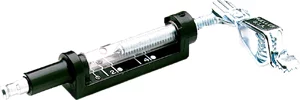
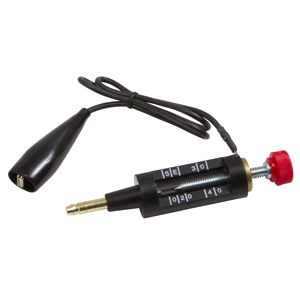
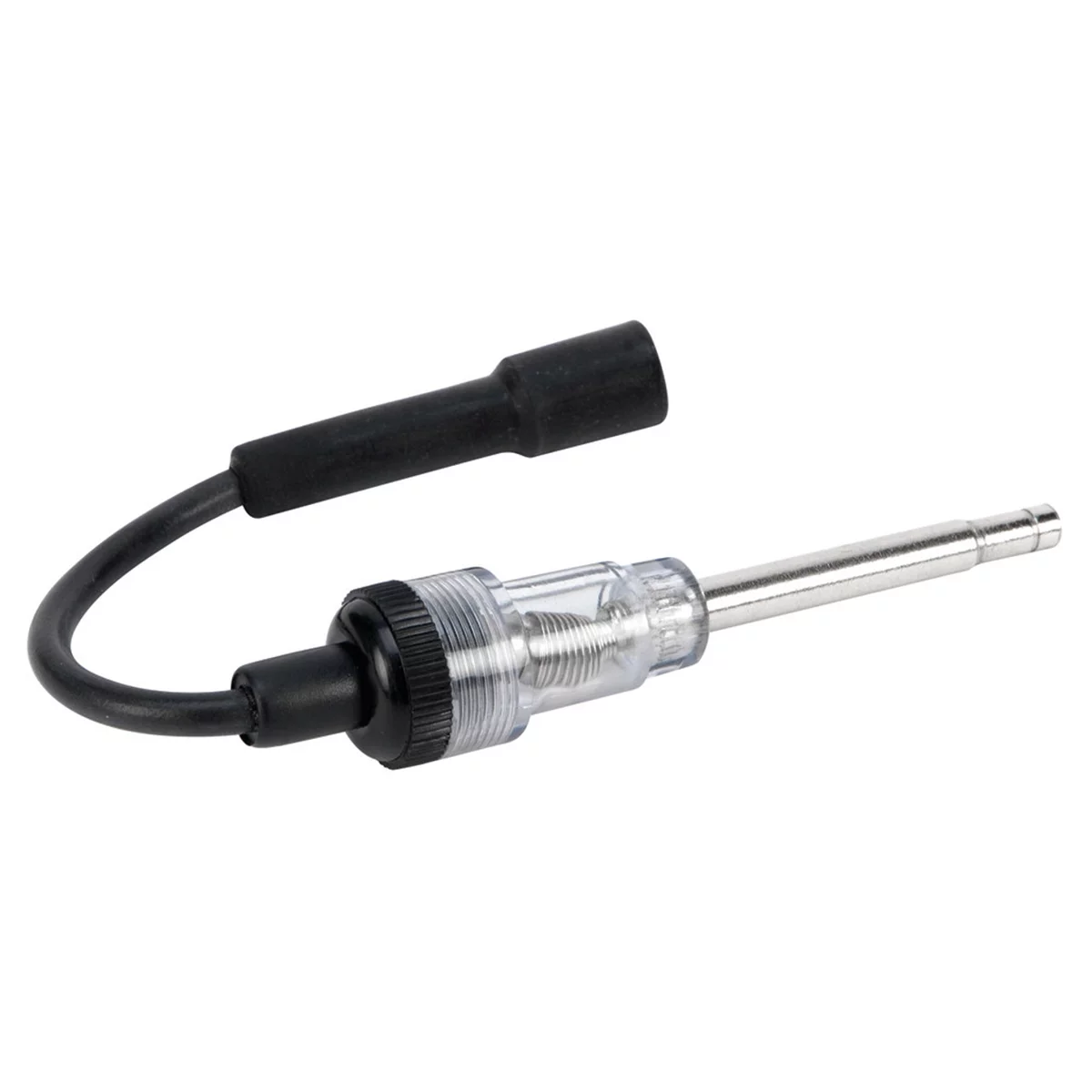
- Check for spark quality: Remove a spark plug, reconnect the wire, ground the plug threads to a clean engine metal point, and crank. Look for a strong, snappy blue spark. Orange, weak, or intermittent spark points to ignition maintenance: moisture, worn points, weak coil, corroded connectors, or excessive plug gap.
- Assess flooding quickly: Pull a plug. If wet and smells heavily of fuel, it’s flooded. Dry or replace plugs, crank WOT with choke in to clear, then retry with minimal choke.
- Confirm fuel presence: If plugs are dry and there’s no rich odor, remove the air cleaner and observe the accelerator pump shot. A quick throttle blip should produce a clean squirt into the carb throat. No squirt suggests an empty bowl or pump issue. If the engine fires briefly on starting fluid or carb cleaner but dies, spark is present and you likely have a fuel delivery problem.
- Compression is rarely the cold-only culprit: A mechanically healthy 2CV will have sufficient compression even in cold weather. If you suspect valve or ring issues, a compression or leakdown test is appropriate, but address spark and fuel first.
Ignition checks that matter most in the cold
Cold, damp conditions expose marginal ignition parts. Focus on these:
- Moisture at points box: Open the points housing. If you see condensation, dry it with a clean paper towel. Apply a light WD-40 mist to displace water, then wipe off the excess. Inspect the gasket; replace if torn or missing to prevent repeat moisture ingress.
- Points condition and gap: Pitted or burned points reduce spark energy. Dress lightly or replace. Set the points gap to the factory spec; if you lack the manual, a typical ballpark is 0.40 mm (0.016 in). Verify dwell with a dwell/tach meter if available. After points service, recheck timing.
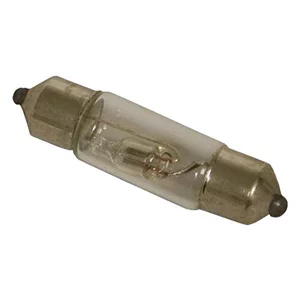
- Timing: Set static timing using a test lamp or verify dynamically with a timing light per factory marks. Incorrect timing often presents as hard cold starting and poor throttle response off-idle.
- Spark plugs: Old or fuel-fouled plugs struggle in the cold. Install fresh plugs in the correct heat range for the 2CV and set the gap to 0.6–0.7 mm (0.024–0.028 in) unless your manual specifies differently. Typical torque for M14 plugs in an aluminum head is around 20 N·m (15 ft·lb) on clean, lightly oiled threads. Replace suspect leads and boots.
- Coil, leads, and connections: Inspect the primary coil wires for corrosion and tightness. Check plug leads for cracks, high resistance, or carbon tracking. Clean and protect with dielectric grease at boots. A weak coil may fire intermittently in the cold; substitute with a known-good coil if spark remains weak.
- Battery and cranking voltage: A slow cranking speed reduces spark strength. Confirm 12.4–12.6 V at rest and at least ~10 V during crank. Use a maintainer overnight in sub-freezing weather. Keep jump starters warm indoors.
Fuel delivery and cold-weather aids
When spark is confirmed, ensure the carb gets consistent fuel and that your cold-start enrichment is working.
- Prime the system: If the car sat, expect extended cranking for the mechanical pump to refill the bowl. Some pumps include a manual priming lever—use it if fitted.
- Fuel filters and ice: A restricted filter or water in fuel can freeze. Replace any clouded/contaminated filter. Adding isopropyl-based fuel-line antifreeze (per label) can absorb small water volumes and reduce freeze-ups.
- Choke function: Verify the choke flap closes fully with cable pulled and opens fully when pushed in. Adjust cable slack at the clamp. A partially closing flap won’t enrich enough to start; a flap that sticks closed after start will cause rich misfire and black smoke.
- Accelerator pump: With the air cleaner off, crack the throttle and confirm a crisp fuel squirt. If absent, the bowl may be empty or the pump circuit is faulty, making starts difficult without priming.
- Starting aids: A short burst of starting fluid (ether) or a quick spray of carb/brake cleaner into the carb throat can get initial fire in extreme cold. Use brief, controlled bursts with the air cleaner removed and keep your face and hands clear in case of backfire. Do not overuse ether; it can wash cylinder lubrication.
- Heat management: In sustained sub-zero conditions, consider a grille cover to reduce overcooling during warmup, a battery blanket/maintainer, or a small safe external heat source near (not touching) the intake/carb area before start. Never use open flame under the vehicle.
Carburetor adjustments: when and how
Do not adjust the carb until ignition and choke linkage are verified. Carburetors are often blamed but less often at fault.
- Baseline first: Ensure no vacuum leaks at carb base, intake boots, or hoses. Check fasteners for proper torque and gasket condition.
- Idle mixture for winter: If the engine only struggles at idle/initial light throttle when cold but runs well warm, you can enrich the idle mixture slightly. Mark your initial screw position, then enrich by 1/8 to 1/4 turn and re-test cold start. Readjust to normal as temperatures rise to avoid sooty plugs.
- Idle speed: A modest increase in idle speed during winter helps stability during warmup. Keep within spec to avoid clutch engagement shock and excessive fast idle.
- Float level: If hot starting is fine but cold starts demand excessive priming, verify float height per spec. Incorrect float level affects bowl volume and enrichment behavior.
Short pre-crank checklist
- Battery 12.4–12.6 V; charger or warm jump pack ready
- Choke cable/linkage verified; flap closes fully
- One pedal press to prime; then foot off during cranking
- Strong blue spark confirmed at a plug
- No obvious moisture in points housing; WD-40 applied and wiped
- Plugs clean, gapped 0.6–0.7 mm; leads firmly seated
Frequently asked questions
How do I know if I’ve flooded the engine?
Symptoms include strong raw-fuel odor from the tailpipe or carb, no sign of firing, and wet spark plugs. Remedy: choke in, hold the throttle wide open, and crank to clear. Dry or replace the plugs if heavily soaked. Once it coughs, ease off the pedal and reintroduce a small amount of choke if needed.
Does a 2CV have a distributor that can get damp?
No conventional distributor. The cam-driven points/condenser box triggers the coil. That box sits low and can admit moisture if the gasket is compromised, leading to weak/no spark. Dry it, apply WD-40 to displace water, wipe, and replace the gasket.
What oil viscosity helps winter starts?
Oil that’s too thick increases cranking drag and reduces cranking voltage and spark energy. In cold climates, use a winter-appropriate viscosity per the factory chart (for many vintage air-cooled engines, a 10W-30 or 5W-40 suitable for older flat-tappet valvetrains may be appropriate). Always use oil that meets the engine’s additive needs and ambient temperature range.
What resting and cranking voltages are acceptable?
A healthy, fully charged 12 V battery reads about 12.6 V at rest. Around 12.4 V is serviceable; below 12.2 V is marginal. During crank, voltage should remain near or above ~10 V. If it drops much lower, recharge, warm the battery, or support with a jump pack.
Is starting fluid safe to use on a 2CV?
Yes, in short bursts. Remove the air cleaner, spray a one-second burst into the carb throat, then crank immediately. Avoid repeated heavy doses to prevent washing cylinder lubrication. Carb cleaner or brake cleaner can also work as a milder primer.
When should I adjust the carburetor versus the ignition?
Always verify ignition first: spark quality, plug gap, points condition and gap, timing, and moisture control. If ignition is solid and the choke operates correctly, then fine-tune idle mixture and speed. Most cold no-starts trace back to ignition or choke issues rather than a defective carb.
Recommended tools and supplies
- Spark tester or a known-good spare plug
- Feeler gauges (for points and plug gaps)
- Dwell/tach meter and timing light
- 12 V multimeter
- Starting fluid, carb/brake cleaner
- WD-40 (water displacement) and dielectric grease
- Fuel-line antifreeze (isopropyl-based)
- Battery maintainer/jump starter
- Replacement points/condenser, spark plugs, and plug wires
- Inline fuel filter (if fitted), gaskets for points housing
Follow this order-of-operations: confirm spark and choke function, clear flooding, verify fuel delivery and accelerator pump shot, then move to fine carb adjustments. In most cases, setting up the ignition and choke correctly restores reliable winter starts without major parts replacement.
Recommended Tools
Looking for the tools and supplies mentioned here? Check here for diagnostic tools
- Spark/ignition testers, feeler gauges, and timing lights
- Multimeters, battery maintainers, and jump starters
- Carb cleaner, starting fluid, and service gaskets

The Toolsource Technical Team blends decades of real-world automotive service experience with up-to-date technical research. Our writers collaborate with professional mechanics, shop owners, and diagnostic specialists to deliver practical, workshop-ready guidance you can trust.


Follow us on social media