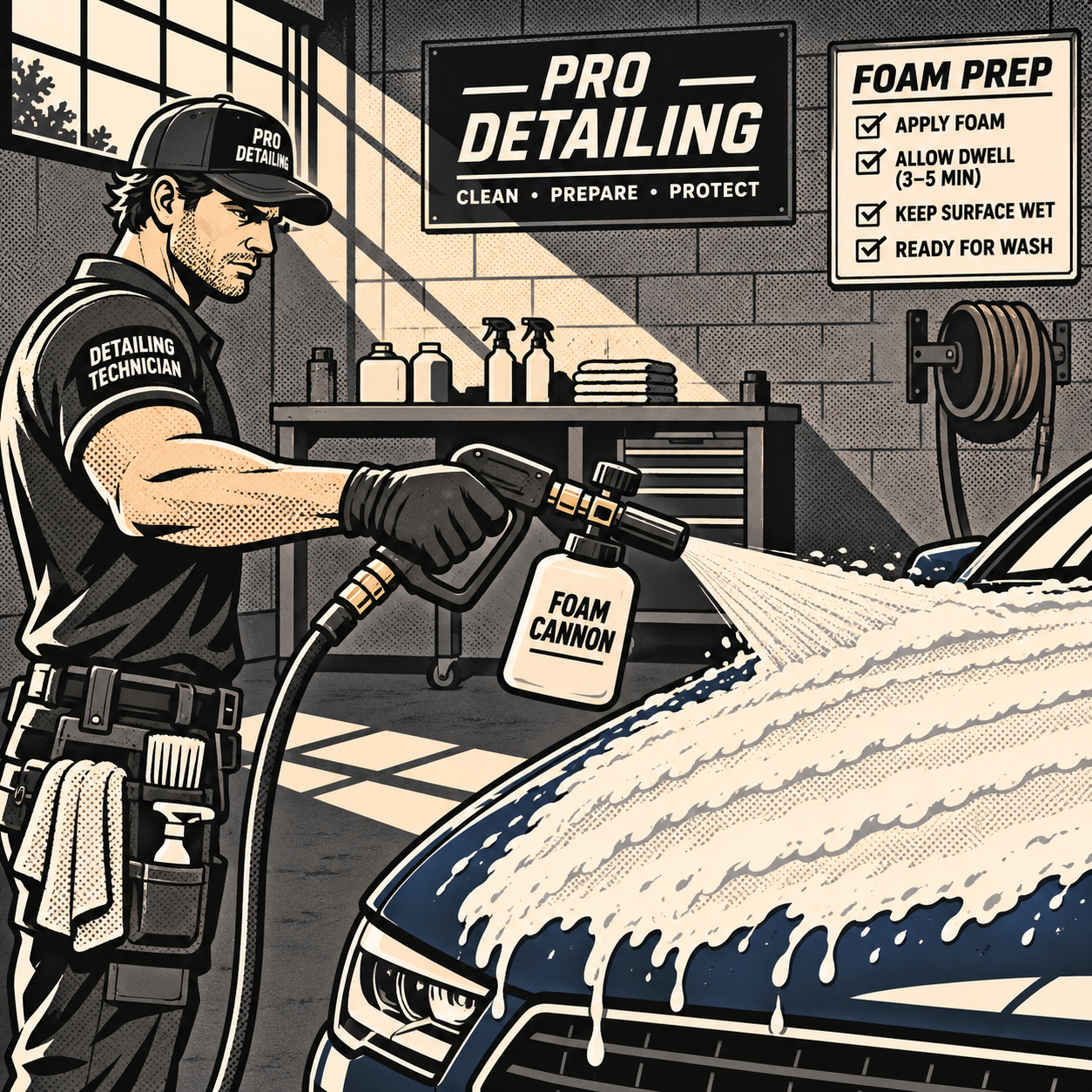
Spend ten minutes in any detailing forum and you’ll find the same argument playing out: does the soap actually matter, or is it all marketing? The honest answer from people who wash cars for a living is “sort of.” A pH-neutral soap at $12 a gallon will lift dirt just as well as one that costs $100 — the paint doesn’t know the difference. What changes is everything around the cleaning: how long the foam clings to the panel, how slick the surface feels under your mitt, how much product you burn through per wash, and how forgiving the process is if your technique isn’t perfect. This guide breaks down what’s actually worth paying for and how to calculate what you’re really spending per wash.
Soap Chemistry Doesn’t Change the Cleaning, It Changes the Process
Almost any pH-neutral car shampoo will safely lift loose dirt, road film, and light grime when it’s agitated against the paint — that’s basic surfactant chemistry, and it’s true whether the bottle costs $8 or $80. Where soaps actually separate is in dwell time, lubricity, and foam structure. A thicker, slicker soap keeps the panel wet longer, which matters most in a foam-rinse-foam process where the foam is doing passive cleaning work before you ever touch a mitt to the car. Thinner, less lubricated soaps rinse off fast and offer less cushioning, so your mitt is doing more of the work mechanically — fine if your technique and tools are good, riskier if they’re not.
This is why experienced detailers who learned on a garden hose and a single bucket often say they don’t need fancy foam at all — their process relies on technique (grit guards, quality microfiber, straight-line motions, frequent rinsing) rather than product to stay swirl-free. Less experienced washers get more margin for error from a soap with better lubricity and longer dwell, because the foam is physically keeping grit suspended and away from the paint longer before contact.
Calculate Cost Per Wash, Not Cost Per Gallon
This is the single biggest mistake buyers make: comparing price per gallon instead of price per wash. Dilution ratio changes everything. A $30/gallon soap that only needs 1 oz per foam cannon fill and 2 oz per wash bucket can easily beat a $12/gallon soap that needs 3 oz for the same job. Do the math before you buy:
Cost per wash = (price per gallon ÷ 128 oz) × total ounces used per wash
Work it out for your own setup: a gallon that costs $30 and needs 4 oz total (foam cannon fill plus bucket) runs about $0.94 per wash. A $12 gallon needing 6 oz total runs about $0.56 per wash — cheaper, even though the sticker price per gallon is higher on the first one. Hard water, panel count on larger vehicles, and whether you’re doing a full foam-rinse-foam cycle or a quick maintenance wash all push ounce-per-wash totals up, so track your own usage for a few washes rather than trusting a manufacturer’s suggested ratio alone.
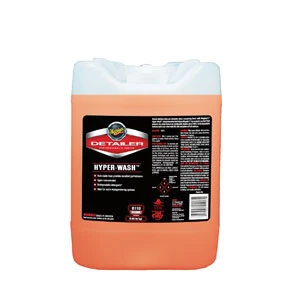
Meguiar's Hyper-Wash Biodegradable Car Wash Soap 5-Gallon
Mfg: Meguiars
Part #: D11005
Dialing In a Foam Cannon or Foam Gun
Soap and equipment are a package deal — a great soap in a poorly set-up foam cannon will underperform a mediocre soap in a well-tuned one. A few things to check before blaming the product:
- Match your dilution to your cannon’s design. Pressure-washer foam cannons generally run thinner (lower ratio) than foam guns fed by an air compressor, because the pressure washer is doing more of the agitation work.
- If your cannon has an adjustable metering valve, start thick and back off until foam consistency and cling time look right for your soap — don’t assume the factory setting is correct for every product.
- Low-pressure pumps (under roughly 1.5–2 GPM) often need a slightly richer mix to get thick foam; if you’re using a low-flow nozzle setup, expect to use more product than the bottle’s ratio suggests.
- Rinse the cannon reservoir between uses if you switch soap brands — residue from a different formula can cause odd foam behavior or reduced cling.
If you’re getting thin, runny foam that slides off the car in seconds regardless of dilution adjustments, the soap itself may just not be formulated for foam cannon use — check the label or manufacturer notes before assuming it’s a setup problem.
Match the Soap to Your Water and Your Routine
Hard water changes soap behavior more than most buyers expect. Mineral-heavy water can suppress foam, leave spotting, and increase the ounces needed to get the same cling and slickness you’d see with soft water. If you’re in a hard water area and fighting weak foam, try increasing concentration slightly before switching products — and consider a water softener or deionizing filter for the final rinse if spotting is a recurring problem regardless of soap.
Also match soap choice to wash frequency and goal. A heavier-duty, more lubricated soap makes sense for a deep monthly wash where you want maximum dwell time and cushioning. For quick weekly maintenance washes between deeper cleans, a lighter, faster-rinsing soap is often more practical — less time spent foaming and rinsing, since you’re mostly removing light dust rather than bonded grime. Rotating between a stronger monthly product and a lighter weekly one is a common professional approach rather than relying on one soap for every job.
What’s Actually Worth Paying Extra For
If you’re deciding whether to upgrade from a budget soap, these are the differences that show up in real-world use, not just marketing copy:
- Dwell time and lubricity — directly reduces swirl risk during contact washing, especially valuable if your mitts or towels aren’t top-tier.
- Foam stability — some soaps hold thick foam on vertical panels for minutes, others slide off in seconds; this matters most for foam-rinse-foam processes.
- Scent and user experience — genuinely a factor for hobbyists who wash their own cars regularly; it has zero effect on cleaning performance but affects whether you enjoy the process.
- Consistency across hard or soft water — pricier formulas are sometimes more resistant to mineral interference, which can offset the cost difference in foam performance.
None of these affect whether the car actually gets clean. They affect how pleasant, fast, and forgiving the process is — which is a legitimate reason to pay more, just not a reason to assume cheaper soap “doesn’t work.”
Quick Checklist: Choosing and Using Car Wash Soap
- Confirm the soap is labeled pH-neutral and safe for regular paint/wax maintenance washes
- Calculate actual cost per wash using your real ounce usage, not the bottle’s advertised ratio
- Match dilution to your specific equipment (pressure washer foam cannon vs. foam gun vs. bucket-only)
- Adjust concentration upward if you have hard water and foam looks weak
- Keep a lighter, fast-rinsing soap for weekly maintenance and a thicker, high-dwell soap for deeper monthly washes
- Don’t judge a soap by foam volume alone — cling time and rinse behavior matter more than suds height
Meguiar's Hyper-Wash Biodegradable Car Wash Soap 5-Gallon
Mfg: Meguiars
Part #: D11005
FAQs
Does more foam mean better cleaning?
No. Foam volume is mostly a function of surfactant type and agitation, not cleaning power. A soap that produces less foam but holds dwell time well can outperform a high-foam soap that rinses off quickly.
Is it safe to mix leftover soap from a different brand into a fresh gallon?
Generally not recommended. Different surfactant packages can interact unpredictably, sometimes killing foam or leaving residue. Finish one product before switching, and flush your cannon or bucket between brands.
Why does my foam cannon soap work great in summer but weak in winter?
Cold water reduces surfactant activity and can thicken concentrated soap, changing how it meters through a cannon. Some techs keep a warm-water rinse bucket or slightly increase concentration in cold months to compensate.
Do I need a foam cannon at all, or is a bucket wash enough?
A two-bucket wash with good technique (grit guards, quality mitts, frequent rinsing) can be just as safe as foam-rinse-foam. Foam cannons add convenience and extra dwell time, which helps most if your technique or tools aren’t dialed in yet.
How do I know if my dilution ratio is too weak?
Thin, watery foam that disappears within seconds of hitting the panel, or a wash that doesn’t feel slick under the mitt, usually means the mix is too weak. Increase concentration incrementally rather than guessing a large jump.
Is a $100/gallon soap ever worth it for a shop doing volume washes?
Rarely, on a pure cost basis — the cost-per-wash math usually favors mid-priced, concentrated soaps for high-volume work. Premium soaps make more sense for low-volume detailing where user experience and finish quality are part of the service being sold.
Protect Your Clean Paint
Once you’ve mastered the washing technique and chosen the right soap, the next step is protecting that clean surface. Our selection of polishes and waxes covers both corrective treatments and long-lasting protective coatings.
- Compounds and polishes for removing oxidation and paint correction
- Paste and liquid waxes for water beading and UV protection
- Products matched to different paint types and climate conditions

The Toolsource Technical Team blends decades of real-world automotive service experience with up-to-date technical research. Our writers collaborate with professional mechanics, shop owners, and diagnostic specialists to deliver practical, workshop-ready guidance you can trust.


Follow us on social media