A door that looks fine but lets wind whistle through at highway speed is one of the most common complaints that never makes it onto a shop’s official diagnostic chart — customers describe it as “a draft,” “a whistle,” or “it just doesn’t feel like it closes right.” Most of the time it’s a simple window frame or hinge alignment issue that takes a few minutes to correct. Occasionally it’s a sign the vehicle was in a collision and repaired poorly. This guide walks through how to tell which one you’re dealing with, the technique for a safe DIY correction, and when the smart move is to stop and send it to a body shop.
Start by Reading the Symptoms, Not Just the Gap
Before touching anything, get specific about what’s actually wrong. “Wind noise while driving” and “door doesn’t sit flush at rest” are related but separate diagnostic paths. Close the door normally and run a hand around the entire perimeter of the weatherstrip — top of the frame, B-pillar edge, and bottom sill. A gap you can see daylight through, or a spot where the seal isn’t compressing evenly, points to frame or hinge misalignment rather than a bad gasket alone.
Next, check whether the noise is speed-dependent. Wind noise that only appears above 40–50 mph but is silent at idle usually means the top of the window frame is pulled slightly outward, so aerodynamic pressure opens a gap that isn’t visible with the car parked. Noise present even at low speed more often points to a seal that’s torn or has come unseated from its channel, or a door sitting slightly proud of the body line. Inspect the weatherstrip itself for cracking, flattening, or a section that’s popped loose — sometimes the “alignment problem” is really just a worn gasket that needs reseating or replacing, and it’s worth ruling that out before you start bending metal.
Frame Sag vs. Full Door Misalignment
Doors hang from two or three hinges bolted to the body, and over time — or after even a minor impact — the hinge pins wear or the door drops slightly on its mounts. This shows up as a door requiring extra effort to latch, a panel gap that’s wider at the top than the bottom (or vice versa), or a door edge that no longer sits flush with the fender and quarter panel. That’s different from a bent window frame, which is common on frameless-window doors (coupes and some sedans/hatchbacks without a fixed frame around the glass) where the top rail the window seals against has been tweaked outward — usually from someone leaning on it, a hard slam, or a minor impact.
Check panel gaps around the whole door: hood-to-fender, door-to-fender, door-to-quarter-panel, and door-to-rocker. Uneven gaps — wide in one spot, tight in another, or a visible step where one panel sits proud of its neighbor — suggest hinge sag or, if paint tone or texture doesn’t quite match between panels, prior bodywork. Consistent gaps with only the top window frame kicked outward is usually just a frame alignment issue, and it’s the easiest of these problems to correct without special equipment.
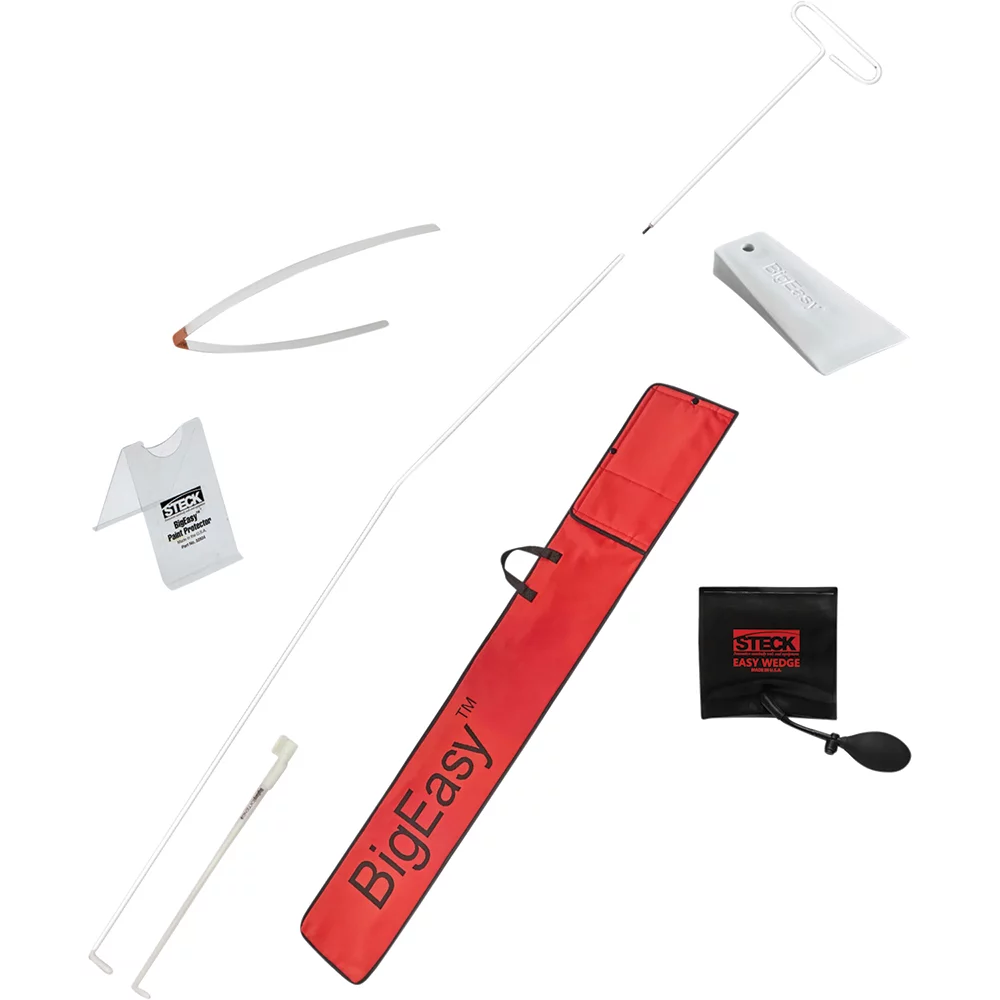
Big Easy 2PC Glo with Easy Wedge Kit Vehicle Access Tool
Mfg: Steck Manufacturing
Part #: STC32902-KIT

Double Sided Door Tool Kit - 2 Pc Durable VIM Tools DTD100
Mfg: VIM Tools
Part #: DTD100
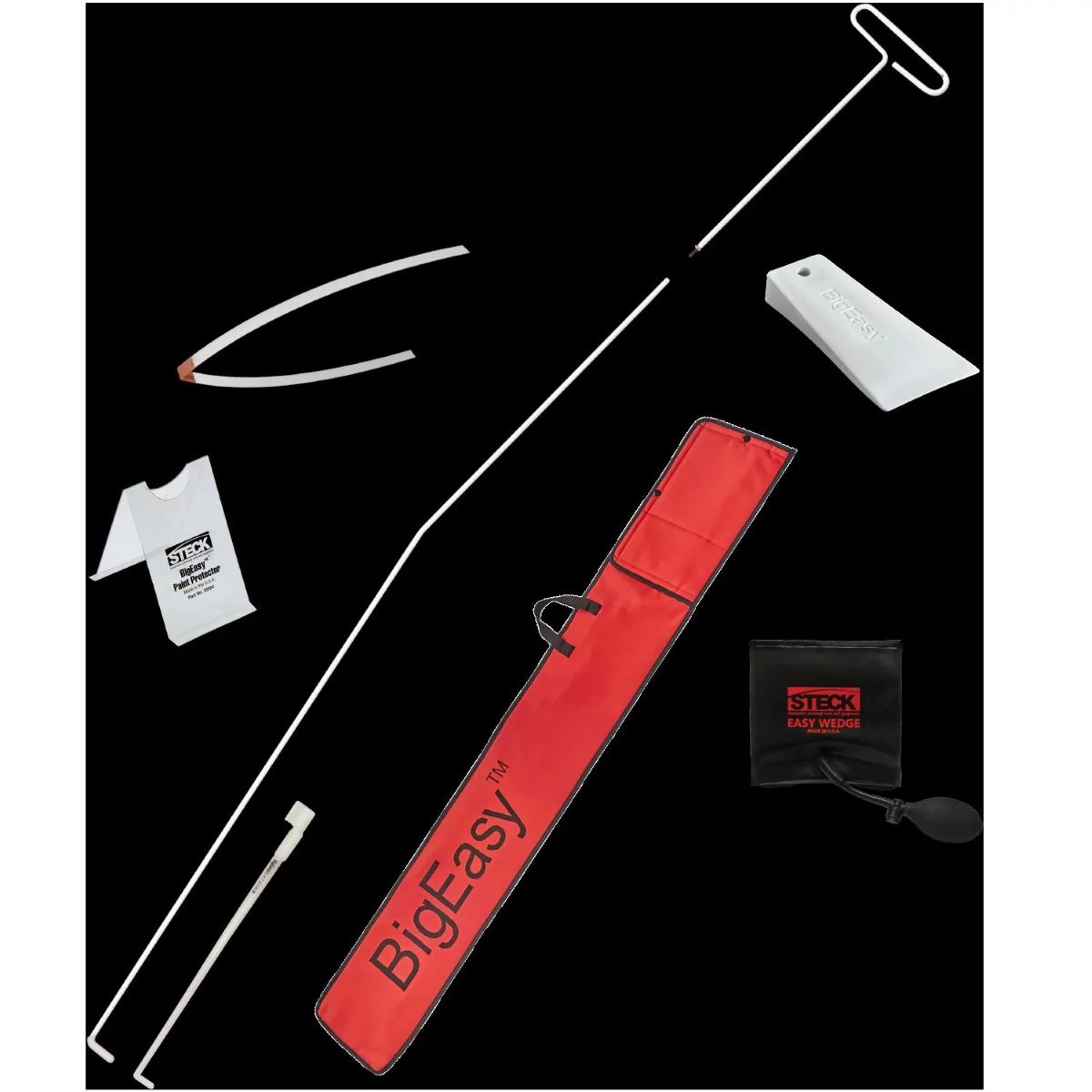
Big Easy 2PC Glo with Easy Wedge Kit Emergency Vehicle Acces
Mfg: Steck Manufacturing
Part #: 32902-KIT
The Careful Way to Realign a Sagging Window Frame
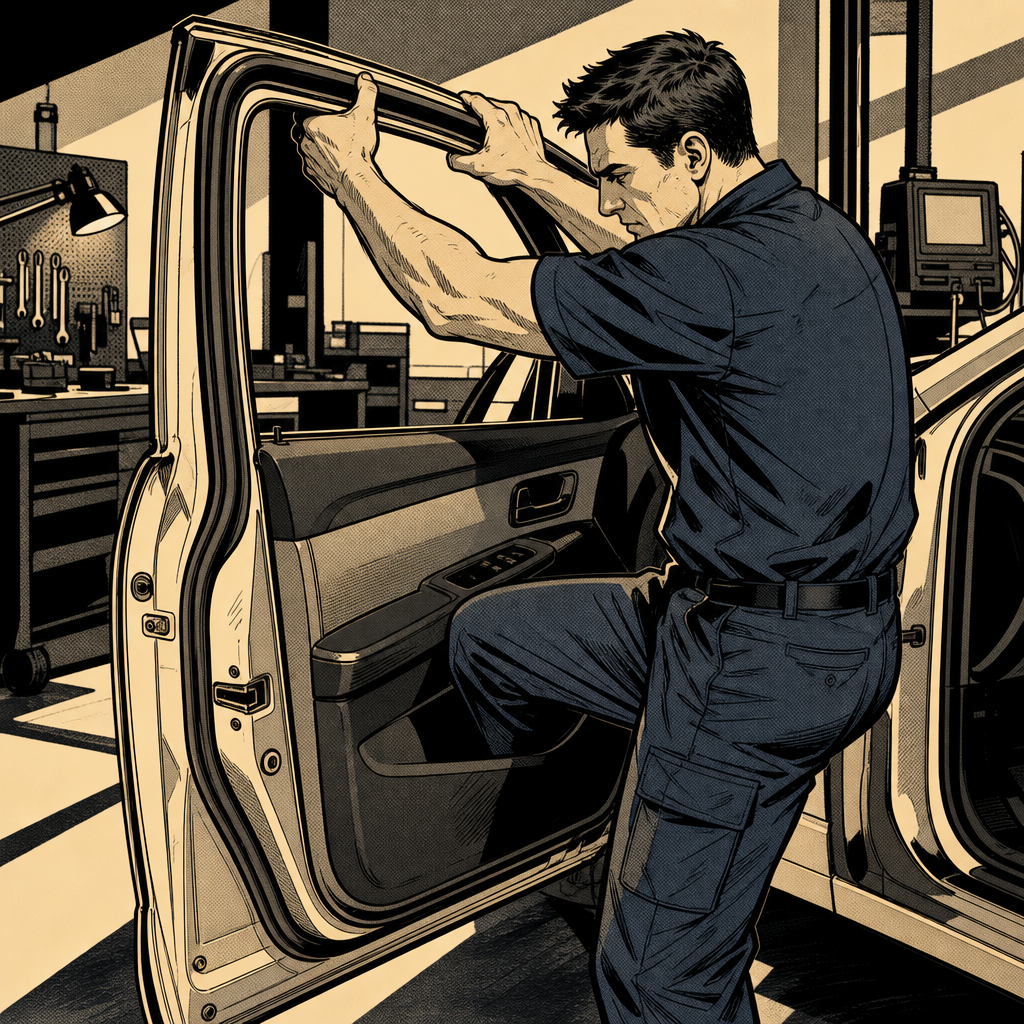
On many frameless-door vehicles, a slightly bowed top rail can be pulled back into position by hand, but it has to be done with control, not brute force. With the window fully down and the door open, brace your knee (or a padded block) against the inside of the door panel below the frame for support, then grip the top of the frame with both hands and apply steady, even inward pressure — pulling the frame toward the center of the car rather than up or down. Move a small amount, close the door, and check the seal and window travel before adjusting further. Overcorrecting is the main risk: pull too far and you’ll create a new gap on the opposite side or cause the glass to bind in its channel.
Do this in small increments and re-check after every adjustment. If the frame won’t move with moderate, controlled pressure, don’t force it — that resistance usually means the metal is more than just “sprung” out of place, and continued force risks a crease or stress crack in the panel that turns a free fix into a paint-and-body-shop job.
PRODUCT_SEARCH: door alignment tool kit window frame
Check Hinges, Latches, and Strikers Before You Blame the Glass
If the window frame realigns but the door still doesn’t seal evenly, the problem is often downstream of the glass entirely. With the door open, grab it by the outer edge and check for vertical and horizontal play at the hinges — noticeable movement means worn hinge pins or bushings, which are inexpensive to replace and directly affect how well the door lines up with the body when shut. Also inspect the striker plate on the B-pillar: if it’s been bent, corroded, or improperly adjusted, the door can look aligned but still not pull fully closed, leaving the seal under-compressed on one side. Most strikers have slotted mounting holes specifically so they can be shifted slightly to correct this — loosen the two screws, adjust in small increments, and test the door close after each change.
Don’t overlook the door check strap and latch mechanism either. A worn check strap won’t cause air leaks directly, but a door that doesn’t swing and seat consistently makes it harder to judge whether your alignment fix actually worked, since you’re introducing a second variable every time you close it.
Spotting Prior Collision Repair on a Used Vehicle
Uneven door alignment discovered after a used-car purchase deserves more scrutiny than a factory-fresh car with the same symptom, because it can be a leftover sign of collision damage that wasn’t repaired to spec. Warning signs to check for, beyond the door gaps themselves: paint overspray on rubber trim, weatherstripping, or inside the door jamb; slightly different paint texture or sheen between adjacent panels under bright light; and mismatched VIN or manufacture-date stickers on door jambs and under the hood (factory panels carry date-stamped stickers that should be consistent across the vehicle). If you find any of these, widen the inspection — check tire wear patterns for uneven scrubbing and have the wheel alignment checked, since both can indicate frame or suspension damage from a prior impact that was never properly corrected. A pre-purchase inspection from an independent shop before money changes hands is the cheapest insurance against buying a car with unresolved structural damage.
DIY Fix or Body Shop? Knowing When to Stop
A minor frame tweak, hinge lubrication, or striker adjustment are reasonable DIY jobs with basic hand tools and patience. Hand off the repair once you see any of the following: the door won’t move with moderate pressure, panel gaps are dramatically uneven in more than one location, there’s visible creasing or a stress line in the metal, or you suspect the door itself — not just the frame — has been bent from an impact. Cosmetic dings and scratches that don’t affect the seal are a different category entirely; on an otherwise sound door, those are cosmetic-only and can be addressed later (or not at all) without affecting safety or function.
Quick Diagnostic Checklist
- Run a hand around the full weatherstrip perimeter to locate the gap
- Note whether noise is speed-dependent (frame) or constant (seal/latch)
- Inspect weatherstrip for cracks, flattening, or a dislodged section
- Check panel gaps on all four sides of the door for consistency
- Test hinges for play and inspect the striker plate alignment
- Look for overspray, mismatched paint texture, and mismatched date stickers if buying used
- Check tire wear and get an alignment check if collision damage is suspected
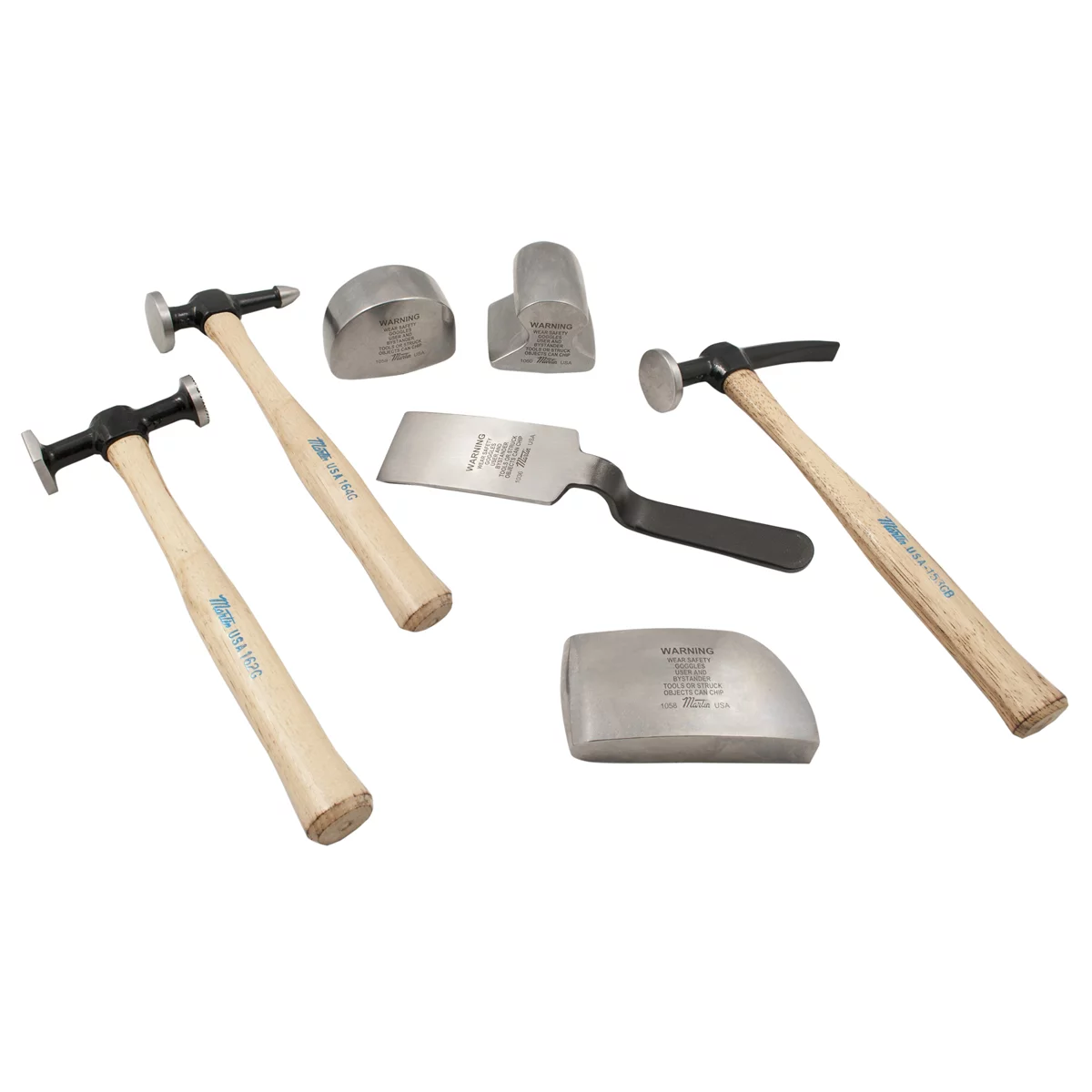
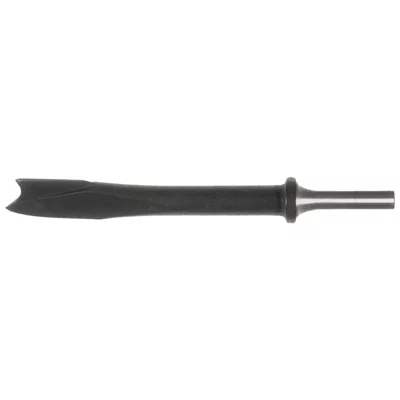
PRODUCT_SEARCH: auto body panel alignment and dent repair tools
FAQs
Is it safe to pull a window frame back into place by hand?
On most frameless doors, yes, as long as you use slow, controlled pressure and check the result after every small adjustment. Stop immediately if the frame resists moderate force — that’s a sign the metal issue is more than a simple bend.
My door seals fine when parked but whistles on the highway — what’s going on?
This is the classic sign of a window frame pulled slightly outward at the top. It’s invisible at rest because there’s no aerodynamic pressure pushing on it, but at speed the gap opens enough to let air through. A controlled frame adjustment usually resolves it.
Can a bad door seal cause this same symptom?
Yes. Always inspect the weatherstrip for cracking, flattening, or a section that’s popped out of its channel before assuming it’s an alignment problem — a worn seal is a much cheaper fix.
How do I know if a used car’s door misalignment is from a crash?
Look for uneven gaps in more than one spot, paint texture or color mismatches between adjacent panels, overspray on trim or inside jambs, and mismatched date stickers on the door jamb. If you see any of these, have an independent shop check the vehicle’s alignment and structure before buying.
Will adjusting the striker plate fix a door that doesn’t seal?
Sometimes. If the frame and hinges are fine but the door doesn’t pull fully shut, a misaligned striker is often the cause. Most strikers have slotted holes for small adjustments — loosen, shift slightly, and test.
Should I worry about cosmetic dings if the door still seals properly?
No. Dings and scratches that don’t affect the seal or panel function are cosmetic-only and don’t need immediate repair. Focus first on anything that affects sealing, function, or safety.
Paint & Body Tools & Equipment
The measurements and adjustments needed to correct door and frame alignment are easier with the right tools. Our Paint & Body category includes measuring instruments and specialty equipment for hinge work, frame assessment, and seal installation.
- Measuring gauges and straightedges for panel and frame assessment
- Door jacks and hinge spreaders
- Tools for weatherstrip and seal work

The Toolsource Technical Team blends decades of real-world automotive service experience with up-to-date technical research. Our writers collaborate with professional mechanics, shop owners, and diagnostic specialists to deliver practical, workshop-ready guidance you can trust.


Follow us on social media