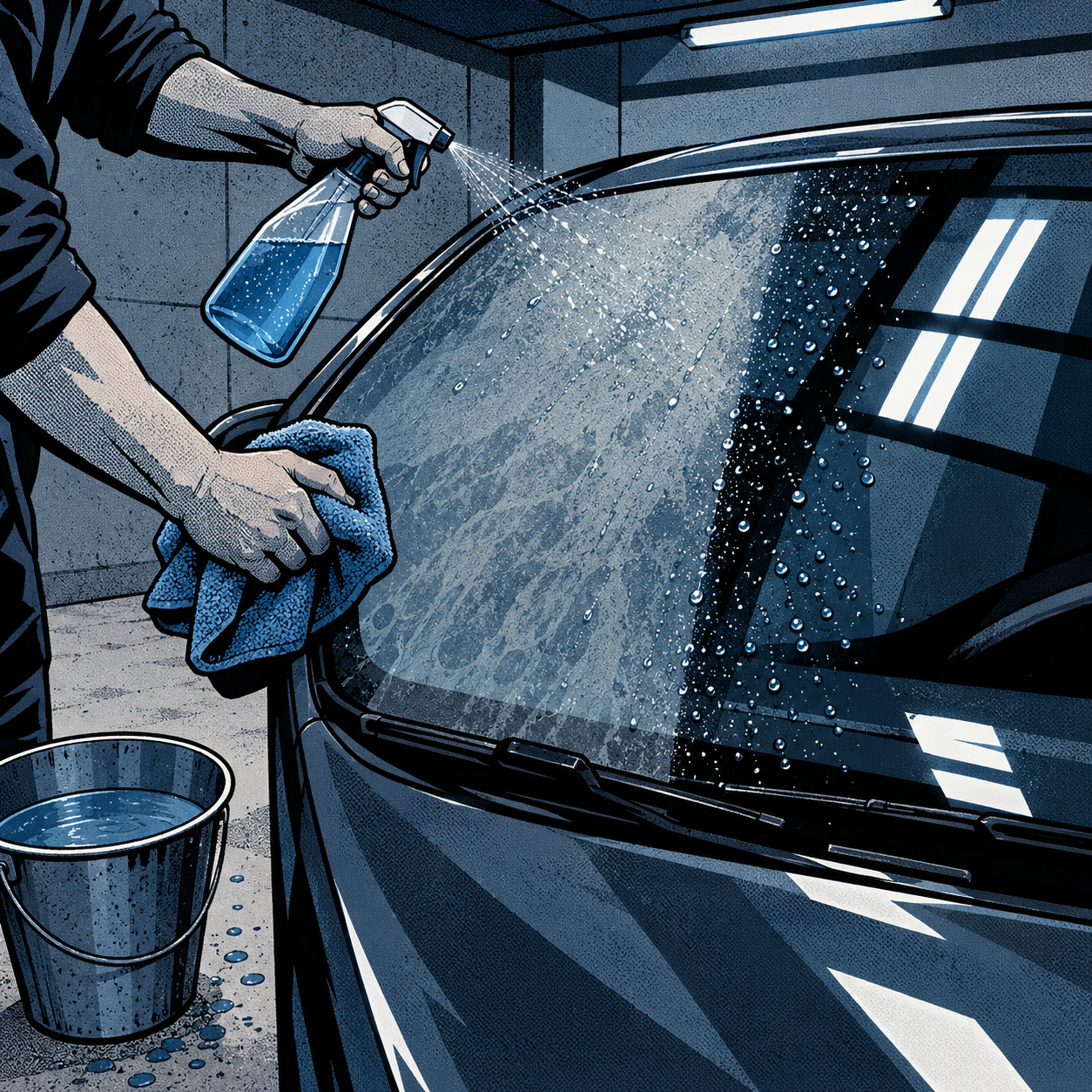
A windshield that smears instead of clearing, hazes over after rain, or develops a oily film that the wipers just push around is one of the most common complaints techs hear from customers — and one of the easiest to misdiagnose. The fix usually isn’t a new set of wiper blades (though that helps). It’s almost always a surface contamination issue: either something is on the glass that shouldn’t be, or the glass has two competing surface conditions fighting each other. Here’s a practical, step-by-step breakdown of what’s actually happening and how to clean it right the first time.
Why Windshields Get Hazy and Oily in the First Place
There are a few distinct causes, and they call for different fixes, so diagnosing correctly matters before you reach for a product.
- Road film after a dry spell. When it hasn’t rained in a while, oil, antifreeze, and other fluids dripped by vehicles accumulate on the road surface. The first rain after a dry stretch kicks that oily residue up as spray, and it lands directly on the windshield. Wipers can’t remove oil — they just smear it into a thin, hard-to-see-through film.
- Wax, sealant, or ceramic coating overspray. If a customer applied wax, Rain-X, or a ceramic coating to the paint and some got onto the glass — or used a “ceramic” glass cleaner — the glass can end up with an uneven hydrophobic coating. Water beads oddly on part of the glass and sheets normally on the rest, which reads as smearing and haze in that transition zone.
- Automatic car wash treatments. Many touchless and tunnel washes apply a rinse-aid or “protectant” that isn’t formulated for sustained clarity. Over a few washes, it builds up into a film.
- Interior film. Off-gassing from interior plastics, vape residue, and general grime builds a thin haze on the inside of the glass that’s easy to overlook because attention naturally goes to the outside.
- Environmental sources. Parking under trees adds sap and pollen oils; parking near a grill or restaurant exhaust vent can deposit rendered fat directly onto glass. One documented case traced recurring haze to beef fat from a nearby grill — worth asking the customer about parking habits if the cause isn’t obvious.
A quick way to narrow it down in the bay: run a plain water rinse with no wipers. If the water sheets evenly, it’s likely surface contamination (oil/film) you can strip with detergent. If water beads unevenly in patches, suspect uneven wax/coating residue.
The Dish Soap Method: Fast, Cheap, and Shop-Tested
For general oily road film, a dish soap solution is the standard fix used by professional window cleaners and detailers, and it costs pennies per application. The original “blue” formula dish soap is specifically favored because it’s a strong degreaser without the added moisturizers found in some newer scented or colored variants.
- Fill a spray bottle about halfway with water.
- Add dish soap until the water turns a light, pale blue — not dark. A little goes a long way; too much soap leaves its own residue.
- Spray the glass liberally and let it sit a few seconds to break down the oil film.
- Wipe with clean paper towels, a microfiber towel, or — for genuinely stubborn haze — crumpled newspaper, which many longtime detailers still prefer for a streak-free finish.
- Rinse with plain water and do a final dry pass with a separate clean microfiber towel.
Two shop notes worth passing to customers: keep dish soap off the paint and trim, since it can strip wax protection and is harsh on clear coat with repeated contact. And if the vehicle uses washer fluid with Rain-X or similar additives, that fluid itself can be the ongoing source of film — switching to a plain washer fluid is worth trying if haze keeps coming back within days of cleaning.


Removing Wax, Sealant, and Coating Residue From Glass
If the water-bead test shows uneven hydrophobic patches, dish soap alone often isn’t enough, because wax and ceramic products are designed to resist exactly that kind of detergent. Step it up:
- 0000-grade steel wool with glass cleaner. Fine (0000) steel wool is soft enough not to scratch automotive glass but abrasive enough to cut through wax films, water spot mineral deposits, and coating residue. Keep the glass wet with cleaner while working and use light, even pressure.
- Bon Ami powder. A mildly abrasive, non-scratch cleaning powder that’s long been used in automotive testing environments specifically to strip contaminants from glass before sensitive measurements. It works well for general residue removal without steel wool’s learning curve.
- Dedicated glass polish. Marine and boat glass polishes are formulated to cut through heavier buildup than automotive glass cleaner and leave a clearer, smoother finish. These are a good step up for customers who’ve had the same haze problem recur despite regular cleaning.
- A cordless buffer with a microfiber pad. Speeds up residue removal significantly, but keep the speed setting low and keep the pad moving — dwelling in one spot or running it too aggressively can introduce heat-related swirl or, in rare cases, stress the glass.
Always clean the inside of the glass at the same time you address the outside. A thin interior film builds slowly and is a common reason haze seems to “come back” right after an exterior-only cleaning.
PRODUCT_SEARCH: automotive glass polish and 0000 steel wool kit
Don’t Overlook the Wipers
Wiper blades pick up and hold the same oily film as the glass, and a dirty blade will re-deposit grime onto glass you just cleaned, undoing the work in one swipe.
- Wipe the full length of each blade edge with an isopropyl alcohol prep pad to strip oily buildup.
- Inspect the rubber edge for nicks, curling, or a glazed/shiny look — any of those mean it’s time to replace the blade rather than just clean it.
- Replace wiper blades roughly every 6–12 months, or sooner in high-sun or high-contamination environments, since UV and road grime degrade the rubber edge well before it looks visibly worn.
- After a glass polish treatment, blades should glide with far less resistance and no chatter — if chatter persists, the blade itself is the problem, not the glass.
Quick Diagnostic Checklist
- Run a plain-water rinse: even sheeting = contamination/oil film; patchy beading = uneven wax/coating residue
- Try the diluted blue dish soap spray-and-wipe first — it resolves most road-film and car-wash-treatment haze
- If haze persists, step up to 0000 steel wool, Bon Ami powder, or a glass-specific polish
- Clean the interior glass, not just the exterior — interior film is an easy miss
- Check washer fluid additives (especially Rain-X-type formulas) if haze returns within days
- Wipe wiper blade edges with alcohol and inspect for wear; replace if glazed, nicked, or chattering
- Rule out environmental sources: overhanging trees, nearby grills/exhaust vents, recent ceramic coating application
PRODUCT_SEARCH: automotive glass cleaning and detailing supplies

Adjustable Fiberglass Extension Handle w/ Metal Tip - 72 to 144
Mfg: Carrand
Part #: 92509


Frequently Asked Questions
Is dish soap safe to use on a windshield regularly?
Occasional use for cleaning is fine and widely used by professional window cleaners. For routine maintenance cleaning, a dedicated automotive glass cleaner is gentler and won’t risk stripping nearby wax or trim treatments if it drips onto the paint.
Why does the haze only show up after it rains?
Dry-weather driving lets oil, antifreeze, and brake dust accumulate on road surfaces undisturbed. The first rain lifts that film into spray that coats the windshield, and the wipers smear rather than remove it since wipers aren’t designed to break down oil.
Can a basic gas station car wash fix this?
It can help reduce the film but usually won’t fully remove it. Automatic washes lack the contact scrubbing needed to break an oily bond to glass; plan on a manual soap-and-wipe pass, or a steel wool/polish treatment for residue-based haze.
Will Windex or regular glass cleaner work instead of dish soap?
Standard glass cleaner is a reasonable first try and is gentler on surrounding trim and paint. If it doesn’t fully clear the haze, move to the diluted dish soap method, then to steel wool or polish for residue that glass cleaner alone can’t cut.
Could my washer fluid be causing the problem?
Yes. Washer fluids with Rain-X or similar hydrophobic additives can leave a film that builds over repeated use, especially if it’s not paired with equally fresh wiper blades. Switching to a plain, additive-free washer fluid is a simple test.
Is it safe to use steel wool on a windshield?
Only 0000 (fine) grade steel wool, used wet with glass cleaner and light pressure. Coarser grades or dry use can scratch automotive glass. If unsure, test on a small corner section first.
Tools for Windshield Care
The solutions outlined above—from diluted dish soap to 0000 steel wool, glass polish, and microfiber techniques—all depend on having the right supplies on hand. Our Windshield Tools & Auto Glass selection covers everything from basic detailing cloths to specialized polishes and replacement wiper blades.
- Glass polishes, automotive compounds, and abrasive products for residue removal
- Fine steel wool, squeegees, and microfiber cleaning cloths
- Wiper blade replacements and isopropyl alcohol prep pads

The Toolsource Technical Team blends decades of real-world automotive service experience with up-to-date technical research. Our writers collaborate with professional mechanics, shop owners, and diagnostic specialists to deliver practical, workshop-ready guidance you can trust.


Follow us on social media